Struggling to hold yourself to a calorie-counting regimen? Ignore the conventional advice on losing weight, says science writer Gary Taubes – what constitutes a healthy diet needs to be drastically re-evaluated
Having read your book, Why We Get Fat, I agree with you that the conventional wisdom on how to eat healthily and lose weight needs to be closely scrutinised. We’ve been told for years to observe the food pyramid, which seems, on the face of it, very sensible. And yet we are in the midst of an obesity epidemic, so either these recommendations are wrong or the vast majority of people are unable to follow them.
My purpose in writing Good Calories, Bad Calories was to get people to pay attention to an alternative hypothesis. In an ideal world, the book would have been called The Alternative Hypothesis, but my editors were not going to let me write a book – which they hoped would be very popular – with the word “hypothesis” in the title. I became more of an advocate in the second book, Why We Get Fat. As I say in the author’s note, this was partly to force the issue, especially with the research community. But it was also because I was getting such positive feedback that it seemed a risk worth taking.
Before we get to your alternative hypothesis, I want to hear more about the view you are critiquing. Are you saying that the scientific evidence for the food pyramid the government recommends is lacking?
Yes. The [US] government, to its credit, has dropped the food pyramid for My Plate. But the general message hasn’t changed much, which is that most of our calories should come from carbohydrate-rich foods and fat should make up as little of our diet as possible. But we have never done a clinical trial or experiment that could demonstrate that this approach actually makes people healthier. The existence of the obesity epidemic in association with this message certainly suggests that the message could be wrong.
So you advocate a more open-minded approach?
I advocate an open-minded approach that takes into account all the evidence and not just part of it. I would argue that this a scientific approach, although the people who disagree with me would argue that the last thing I am is a scientist.
In your book you argue that conventional wisdom started going down the wrong track in the 1940s and 50s. Is that why a lot of the books you’re recommending are quite old?
Yes. Before World War II in Europe, there were two general themes that were running through nutrition and obesity science. One was that the refinement of food – particularly the refinement of carbohydrates and sugars – was causing major health problems. Obesity and diabetes were the most obvious results, but there was a general decay of health in populations that ate diets rich in refined grains and sugars. The other was that clinicians studying obesity had come to believe it was foolish to think obesity was caused merely by people consuming more calories than they expended. They thought it was a hormonal, enzymatic disorder, just like any other growth disorder. If you have gigantism, when people grow far too tall, or dwarfism, when they don’t grow to a normal adult height, it’s to do with grown hormones and growth hormone receptors.
“Before Weight Watchers recommend we eat a lot of fruit, they should do some clinical trials. They can’t just assume that if Adam and Eve ate it then it’s good for us. Look where it got them, anyway.”
These researchers argued that what was true of vertical growth disorders was almost as surely true of horizontal growth disorders – obesity, in other words. All we have to do is fully understand which hormones and enzymes regulate fat accumulation and fat tissue, and we’ll know what causes obesity. Then in the 1960s, long after this European school had evaporated, it became clear that the hormone regulating fat accumulation was insulin. We secrete insulin primarily in response to the carbohydrate content of our diet. This fit perfectly with the pre-World War II observations that populations that ate refined carbohydrates had obesity, diabetes and other chronic diseases, and populations that didn’t eat these foods didn’t. That’s the story I’m telling in my books.
This could help explain something that I’ve never fully understood – that some people who are quite seriously overweight don’t actually eat very much.
Yes, they don’t necessarily eat any more than lean people do. One of the things I try to do in Why We Get Fat is to argue against the concept of overeating as the cause of obesity, and one of the arguments I use is that no one can even define what overeating is. We know, for instance, that [Olympic swimmer] Michael Phelps eats 12,000 calories a day. But he’s obviously not overeating, because he’s not obese. The whole concept of overeating can’t be defined, unless you know the person is obese. There’s a circular logic to it. I can eat 3,000 calories of food and be perfectly lean, and my twin brother can eat 3,000 calories and be obese. The question is why? What’s happening in his body that’s making him fat, while the same 3,000 calories don’t make me fat?
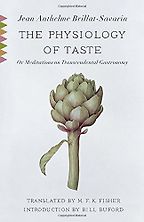
Let’s go through your book choices to find out more. The first one you’ve recommended is The Physiology of Taste by the French lawyer and politician Jean Anthelme Brillat-Savarin, first published in 1825. This is a man who was very much into gastronomy and the pleasures of life. What can he teach us about dieting?
This book used to be described as the most famous book ever written about food. Aside from being a great read – and with [American food writer] MFK Fisher’s annotations it is even more enjoyable – Brillat-Savarin actually has several chapters on the cause and prevention of obesity. He says: I spent 25 years of my life talking to 500 stout or very stout people. Invariably their favourite food is bread, potatoes or pasta. To him, it’s very obvious that what makes people fat is what we would call carbohydrate-rich foods. Sugar on top of that makes everything worse. He says that if you want to be lean, you’ve got to give up these carbohydrate foods. They’re fattening, don’t eat them and get a good night’s sleep. Maybe be a little bit more active. That was his general advice. So it’s a dissertation from a very thoughtful, erudite Frenchman about how carbohydrates are inherently fattening.
I love his point that when you want to fatten up an animal you give it grain: “All animals that live on farinaceous foods grow fat; man is no exception to this universal law.”
That’s an observation actually made by several observers of obesity in the 19th century. They also point out that carnivores never get fat. You don’t find fat lions, you don’t find fat tigers. It’s not because these animals are particularly active, because we know that male lions, for instance, do virtually nothing. They don’t even bother to hunt – they just come along afterwards and eat as much as they want. But they still don’t get fat. Animals that live on grain and vegetable matter do get fat. They don’t get obese, which is interesting, but they have massive fat deposits. So why isn’t that true for humans also?
So in the case of animals, feeding them fat does not make them fatter? I can continue to avoid lean meat and skimmed milk?
No, it doesn’t. The problem is that there are certain strains of rats that they can make fat by giving them fat to eat. I talk about this endlessly in Good Calories, Bad Calories. The experts decide that Americans get fat by eating fat. Then they find strains of rat that get fat eating fat, then they breed those strains. And now that they have found an animal model that confirms their preconceptions they argue that the preconceptions must be true too – obviously humans get fat on fat because the rats do. Then some journalist like me comes along, and says, “What about all the other animals that get fat on grains and vegetable matter?” And they look at you and say, “Oh, you’re one of those Atkins people aren’t you?”
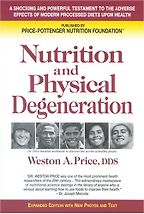
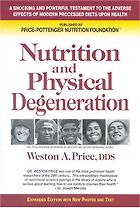
Your next book is from 1939 and is by the Cleveland dentist Weston Price. Tell me how Nutrition and Physical Degeneration fits in.
Weston Price was a great dental scientist and did some really important work. What I didn’t know when I read this for the first time is that Weston Price’s book was the culmination of a long line of dental research in the first half of the 20th century, demonstrating that high fat diets are required in childhood when teeth are developing, to protect against cavities. Weston Price travelled around the world with his wife – whom he refers to as Mrs Price – and did his 1930s equivalent of controlled dietary experiments. He visited populations that were so isolated that they didn’t have access to modern Western foods (ie refined flour and sugar or refined white rice) and he compared their teeth, gums and jaws to people of similar genetic stock that did eat Western food.
He began high in the Swiss Alps, in a village that is a mile above the nearest road, and he compared their teeth and jaws to the Swiss living in one of the major Swiss cities. He visited pygmies in Central Africa, and a variety of African tribes, Native American populations, Inuits and South Pacific islanders. Everywhere he went he took photos of their teeth and jaws. So you’ve got these populations that eat no sugar and refined flour with beautiful white teeth and perfect jaws, and other populations with the same genetic background, but living near Westerns outposts or cities or trading with the West. Not only were the kids’ mouths riddled with cavities, but their jaws were a mess. After reading Weston Price, half the reason I try to keep my kids off sugar is hoping I’ll save money on orthodontics.
Some of the Amazon.com reviewers seem to have been very convinced by this book. One of them writes: “Heck – just look at the pictures!”
That’s the thing. You just look at the pictures. People who were eating refined flour and sugar were a mess, and people who weren’t seem to have been very healthy. It’s hard to tell with this kind of research, but as far as what was done in the era, Price did a pretty good job of convincing readers – he certainly convinced me – that there is something going on when you add Western food to any baseline diet. This is not modern science, it’s not something you can base public health recommendations on, but it is a book that can change your paradigm about what’s healthy and what’s not. And it’s a good read.
It’s not just hundreds of photos of teeth and jaws?
No, it’s also a great travelogue. He’s a great storyteller. There are parts that I didn’t even believe could be true – how pygmies in Africa kill elephants by sneaking up behind them and sawing through their hamstrings over the course of a couple of days. Then they can kill the elephant because it can no longer move. I guess the elephant doesn’t feel this happening. You think this is crazy, and then you turn the page and there’s a photo of Mrs Price, a dowdy-looking middle-aged woman in a pith helmet and a long skirt, standing next to two pygmies with two enormous elephant tusks towering above them.
So he shows that sugar is bad for your teeth, which I think we’re all agreed on. But that’s just one part of your body. Isn’t that one of the problems with studying the effects of diet – that something that might be good for one thing is bad for another? We have all sorts of different issues and diseases we’re dealing with. Say you’re right and a high meat, low-carb diet helps reduce my weight and my chances of diabetes. Won’t it still increase my chances of breast cancer?
One of the fundamental observations that I discuss in Good Calories, Bad Calories is the absence of cancer in populations that do not eat Western diets. We think of cancer as inevitable. But the chief statistician of the Prudential Insurance Company, who later became one of the founders of the American Cancer Society, compiled the observations that populations that don’t eat Western diets don’t get cancer nearly as much.
One of the explanations put forward in the early 20th century was that the meat in Western diets was the cause of cancer. But people at the time pointed out that the same absence of cancer is true of the Inuit, the Native Americans of the Great Plains and pastoral populations like the Masai. These are people who live exclusively on animal products – so whatever is causing the cancer, it’s unlikely to be that.
There is now a growing body of research showing that insulin and insulin-like growth factor are cancer promoters. I actually have a five page article about this research in the journal Science today. The idea is that you avoid cancer by keeping insulin levels as low as possible, which means avoiding these same fattening carbohydrates we’ve been talking about, and arguably eating an animal product, fat-rich diet. It’s the same type of diet we’ve been eating for two million years, prior to agriculture, and the same diet that many of these indigenous populations were still eating through the early 20th century. Actually, while I was doing research for this story I interviewed the head of the cancer research centre at Beth Israel Deaconess Medical Centre at Harvard Medical School, as well as Craig Thompson, the president of Memorial Sloan Kettering Cancer Centre in Manhattan. Both of them told me they were effectively on the Atkins diet – very low carb, high fat, mostly animal products – not because they wanted to lose weight, but because they didn’t want to get cancer.
Let’s talk about Not By Bread Alone, also titled The Fat of the Land, by Vilhjalmur Stefansson. He was a Canadian who spent a long time living amongst the Inuit, who eat 90% meat and fish – basically a zero carb diet.
Stefansson was a Harvard anthropologist who spent a decade or so living with the Inuit and had a lot of adventures, some of which didn’t reflect too well on him. There’s an entire book written about an expedition where he seems to have abandoned the rest of his team when his ship got stuck in the ice. But he came back from the Arctic territories in 1920 or so and said: These people eat a diet completely devoid of fruits, vegetables, and grains and they are the most vigorous people we’ve ever seen! He describes the Inuit men, for instance, with their thick clothing, running alongside the explorers on their dogsled treks for 25 miles.
So the authorities of the day responded: Well, they probably developed a genetic ability to adapt to this environment where there is no fruit, vegetable or grain, so they can survive. Stefansson said: Explorers go up and it doesn’t matter where we’re from or what our genetic background is, we have to live on that diet and we become more vigorous. In fact, he convinced the medical research community and the leading nutritionists of the era, as well as the leading anthropologists, to oversee an experiment in New York in the late 1920s where he and one of his colleagues lived on an all-meat diet. They ate nothing except meat for an entire year, and the researchers measured everything imaginable. At the end of the year, they published nearly a dozen papers on the experiment, reporting that everything was better – even things like bad breath and the fungus on their toenails.
You can actually read an article [PDF] about it directly in the 1930 Journal of the American Medical Association.
There was also a series of three articles in Harpers written by Stefansson. They describe the 1928 experiment in detail and became the book, which was published in the 1940s and describes the Inuit diet in great detail. It contradicts virtually everything we’ve come to believe about what a healthy diet is. The healthiest possible diet is one devoid of all these fruits and vegetables. You don’t need what we now consider a balanced diet, because you can get everything you need from animal products, particularly if you’re eating the right fat and you’re not eating these carbohydrates that can deplete your body of certain vitamins. In the introduction to the book, one of the leading nutrition and metabolism authorities of the era wrote that this one all-meat diet experiment alone showed that the nutrition textbooks had to be rewritten. Again, it’s an amazing read. Stefansson was a great storyteller.
He did this in 1928. What about modern clinical trials? What do they say about a meat-heavy, Atkins-style diet in terms of losing weight, and about the long-term health implications?
This is what got me into all this 10 years ago. I was researching a New York Times Magazine article which was eventually called “What If It’s All Been a Big Fat Lie?”, which turned into a book advance that allowed me to spend five years writing Good Calories, Bad Calories. Only in the early 2000s did people start doing experiments and clinical trials where they compared Atkins-style diets – very low carbohydrate, high fat, moderate protein diets – to the low-fat, low-calorie diet that the American Heart Association wants us to go on.
Get the weekly Five Books newsletter
On the one side, you had all these people eating foods that are supposed to kill us: Fatty meat, eggs, bacon, sausage, steaks, hamburgers without the bun. On the other side, you had people eating wholegrains and green vegetables, skinless chicken breasts, and very carefully counting their calories so they never eat more than 1,500 a day. You do these experiments and you find that not only do the people on the Atkins diet – the ones who are restricting carbohydrates but otherwise eating as much as they want of fat and protein – lose more weight but their heart disease risk factors improve dramatically. So when you actually do an experiment to test which is a healthier diet, the Atkins diet that we’ve all been taught will kill us turns out to be the healthier way of eating.
Is there an article you can recommend in a peer-reviewed academic journal that is particularly convincing on the health and weight-loss advantages of Atkins?
This one, from the New England Journal of Medicine is a particularly good.
What about the counterevidence?
One caveat is observational studies, where you identify a large cohort of people – say 80,000 people like in the Nurse’s Health Study – and you ask them what they eat. You give them diet and food frequency questionnaires that are almost impossible to fill out and you follow them for 20 years. If you look and see who is healthier, you’ll find out that people who were mostly vegetarians tend to live longer and have less cancer and diabetes than people who get most of their fat and protein from animal products. The assumption by the researchers is that this is causal – that the only difference between mostly vegetarians and mostly meat-eaters is how many vegetables and how much meat they eat.
I’ve argued that this assumption is naïve almost beyond belief. In this case, vegetarians or mostly vegetarian people are more health conscious. That’s why they’ve chosen to eat like this. They’re better educated than the mostly meat-eaters, they’re in a higher socioeconomic bracket, they have better doctors, they have better medical advice, they engage in other health conscious activities like walking, they smoke less. There’s a whole slew of things that goes with vegetarianism and leaning towards a vegetarian diet. You can’t use these observational studies to imply cause and effect. To me, it’s one of the most extreme examples of bad science in the nutrition field.
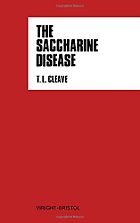
Let’s talk about your next book, by the British doctor TL Cleave – which is available free online. It’s called The Saccharine Disease, which does not refer to the artificial sweetener but means “related to sugar”.
Thomas Cleave was a British naval surgeon who travelled around the world and ran the British naval research laboratory in the UK for a while. He wrote letters to hospitals all over the world, and asked: “What kind of diseases are you seeing in your patients? Tell me what kind of foods they’re eating.” He came to the conclusion that everywhere in the world, where people were eating sugar and white flour they were getting very specific Western diseases, and these are diseases that also tend to cluster together in patients – obesity, diabetes, heart disease, ulcers.
The argument he was making is that there is an evolutionary element to all of this. We evolved to eat certain foods, over two million years during the Paleolithic era. We were mostly living on animal products and some tubers and very hard-to-digest carbohydrates. Then agriculture came along, and we start eating grains and refining grains. Then with the industrial revolution in the late 19th century we are machine-refining everything. White flour and sugar explodes over the world, and wherever people eat these you see the same kinds of chronic diseases.
Cleave and his colleague Campbell get the credit for nailing it. They had a primitive understanding of the mechanisms, but the gist of what they’re arguing is: You take these foods that in their native state are very hard to digest and take the human body a long time to break down. As a result, the carbohydrates enter the bloodstream very slowly and the body responds to them very slowly. But now you refine them and you make them very easy to digest. For instance, in the case of apple juice you can consume the sugar equivalent of eight or 10 apples in a minute. All the sugar is dumped in your bloodstream, and it creates hormonal havoc. All these diseases and their variations are the result of this havoc.
It’s a very compelling read. Cleave of course was perceived by most people as quackish but Sir Richard Doll, the most famous British epidemiologist – he was knighted for linking cigarettes to lung cancer – wrote the introduction to the earlier edition of his book. He said at the time that he thought Cleave was brilliant and that there was a lot to it. I actually interviewed Sir Richard Doll a few years before he passed away, and he told me that maybe Cleave had been right all along, and we just got away from this line of research, which is what I’ve been arguing.
I noticed that at the end of the book there is a simple recipe for brown bread – or wholewheat bread as it’s called in the US – dating from World War II. But I got the impression from your book, and the last book you recommend, that while Cleave singles out white flour you’re sceptical even about the virtues of wholegrain flour.
Basically, you want to avoid highly refined grains and sugars. Then it just depends on how severe the problem is. If you’re 20-30 pounds overweight and you want to lose weight, you get rid of the refined grains and sugars, and the same foods that my mother’s generation believed were fattening – pasta, bread, beer, sweets, et cetera. When I lived in Europe in the mid-1980s, no self-respecting woman I knew would eat the bread that they brought to the table at a restaurant, because they knew it was fattening. If you’re a little bit overweight, those are the foods you don’t want. But I’m also writing to people who are 200-300 pounds overweight. They might have to live on the equivalent of a virtually all-meat diet if they want to be anything even close to lean. I’m arguing that a virtually all-meat diet is actually a healthy diet.
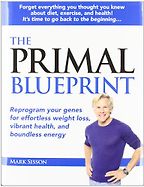
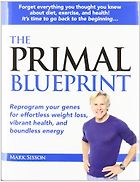
Let’s talk about The Primal Blueprint by Mark Sisson, the only modern book you recommend. It’s coming out in paperback on January 12th and is about “adapting the lifestyle practices of our hunter-gatherer ancestors into modern life”.
So the argument that Cleave made was that we are products of a long history of evolution, and we should eat what we are adapted to eat. Our genes haven’t had a lot of time in the past 10,000 years to come to grips with agriculture, and they’ve had virtually no time to deal with the machine-refining of carbohydrates that has happened since the industrial revolution. In the 1980s this idea was captured in the notion of the Paleolithic diet by a couple of Emory University researchers, and it’s grown into the idea of the Paleo diet. There are a lot of Paleo diet books now. It’s fundamentally a carbohydrate-restricted diet that also restricts some other foods we never ate and that we didn’t evolve to eat, like dairy. I like to refer to them as not-your-father’s Atkins diets – that’s part of their popularity.
Mark Sisson did probably the best job of all these books in capturing the essence of the science. He didn’t go too far overboard with ideas that are not well tested, because there are a lot of ideas out there that still haven’t been tested in rigorous clinical trials. He’s got 10 basic ideas, including everything from avoiding the poisons in your diet – which are mainly processed foods, sugars, grains and chemically modified fats – to getting enough sunlight and play. It’s a very good basis to learn the fundamental ideas, to get enough of the science to convince you that this is a healthy diet, or at least a healthier diet than what you’ve been told to eat by the government.
And he says that weight gain and loss is largely to do with insulin?
Yes, Mark focuses on the insulin connection, which I think is crucial because insulin regulates fat tissue. That’s been known since the 1960s, and all these other disorders – metabolic syndrome and maybe even Alzheimer’s – are all insulin disorders. If you eat the way Mark recommends and the way these other books imply, then you are going to be minimising insulin secretion and eating more like the indigenous populations that never saw Western diets, and the way we evolved to eat over the Paleolithic era.
What about the Japanese? They live the longest of any country in the world, but if they move to the US their life expectancy goes down to US levels, so we have to presume it’s to do with diet rather than innate longevity. In Japan they eat a lot of fish, but they also eat a lot of carbs in the form of rice. How does that sit with your hypothesis?
In Japan they’re not eating a Western diet but they’re eating a relatively carb-rich diet. The question is, what’s the difference? One possibility is that this whole hypothesis is wrong. The other hypothesis – which I argued in a New York Times Magazine article in April, “Is Sugar Toxic?” – is that sugar is required to create insulin resistance. Our livers didn’t evolve to deal with these large doses of fructose that are dumped on them in the course of drinking a glass of orange juice or a Coca-Cola. So the sugar causes the initial insulin resistance, and then when your body becomes resistant to insulin you have to secrete more insulin to deal with the carbohydrates you’re consuming, and now other carbohydrates become bad too.
The Japanese, and East Asians in general, historically ate exceedingly little sugar. In the early 1960s they were eating the amount of sugar that we were eating in the 1860s, back when diabetes appears to have been virtually non-existent here too. In fact, many of the populations that are held up as having the healthiest diets are populations that eat, or at least ate, exceedingly little sugar. There’s the French paradox – the French eat about half as much sugar as we do. The Greeks and the Mediterranean diet analyses of them – particularly the island of Crete where the original Mediterranean diet studies were done – showed that they were eating virtually no sugar. If they sweetened things it was with honey.
What about fruit? Did they eat a lot of that?
Not by our standards. Also, we’ve taken these fruits and bred them to be as sweet and juicy as we can, which makes them both easier to digest and increases the fructose content. One of the reasons why I get in trouble with the conventional wisdom people is I argue that if you’re obese or overweight you’re probably not doing yourself any favours by eating a lot of fruit. Before the government and people like Weight Watchers recommend we eat a lot of fruit, they should really do some randomised clinical trials. They can’t just assume that if Adam and Eve ate it in the Garden of Eden then it’s good for us. Look where it got them, anyway.
With the Christmas season officially ending, I will try the diet recommended by your book and Mark Sisson’s and see where it gets me. My weight is normally pretty stable at 165 pounds, but I grew up in Italy and carbohydrates – especially bread and pasta – are my staple diet. If I cut those out, and your hypothesis is right, the effects should show pretty quickly. I’ll keep track of the results here.
Let me know how it goes. When you switch from eating a carb-rich diet to a carb-poor diet that is rich in fat, you’re switching the fuel on which your body is runs. You’re switching from using carbohydrates for fuel to running on fat for fuel, and usually your own fat too. Which is what you want it to do – you want it to burn your own fat and not have it locked away in your fat tissue. But there can be side-effects to the switch. They’re not deleterious aspects to the diet itself, once you successfully make the switch. But you’ve got to keep an eye out, because often these things happen and then people say that the diet is dangerous. It’s not that it’s dangerous, it’s that you’re literally changing the fuel your body is running on and that can take some fiddling to get right.
One friend said that I’ll feel energyless for a week and then after that I’ll feel great.
Yes, many people get something known as the Atkins flu. Not everyone – I don’t know what the numbers are because it’s never been studied, but anecdotally maybe 10% of people. You can get around that by drinking chicken or beef broth. You actually need more salt on these diets, which is one of the many counterintuitive aspects. You just have to have faith that it’s not killing you. You can even get a heart disease risk factor test and test yourself. You can do it now, and then again in a month or ideally three months from now, and see whether you’ve improved or not.
You said before that you got interested in this stuff because of the science. Was it also personal experience? Were you trying to lose weight?
I got into it because I was writing these big articles for Science magazine, first on the salt and blood pressure issue. I spent a year on the story, and it won the National Association of Science Writers Science in Society award. While I was reporting, one of the worst scientists I’ve ever interviewed in my life – and given my expertise in controversial science I’ve interviewed some terrible scientists – took credit not just for getting Americans to eat less salt, but less fat and fewer eggs. One of the lessons I had learned from my 15 years of reporting on controversial science was that bad scientists never get the right answer.
I put down the phone after I interviewed him, called up my editor and said: When I’m done with the salt story, I’d like to write about fat and cholesterol. If this guy was involved in any substantive way, there’s got to be a good story there. So I started reporting a story that became an article called “The Soft Science of Dietary Fat”. Over a year I interviewed about 120 to 150 people for that one story. While I was doing it, I was up at MIT doing another magazine article, on the mathematics of the stock market. I was interviewing an MIT economist and we got talking about the fat story. He said, “If you’re writing about dietary fat, you’ve got to write about the Atkins diet.” He said he had a colleague at Wharton whose father had lost 200 pounds on this diet. He’s Asian American, and he said that he lost 40 pounds on the diet, basically giving up white rice.
So I went back to California and tried the diet as an experiment. I didn’t have kids, I wasn’t worried about killing myself, and I lost 20-25 pounds of my excess weight in six weeks. The weight just dropped off. I didn’t stay on the diet by the way, though I have since gone back to it now that I understand the science. It’s an experience that every nutritionist, every nutrition writer and every obesity researcher should undergo. [Health columnist] Tara Parker Pope had an article the other day in the New York Times Magazine about how it’s impossible to lose weight, how we struggle with it if we’re predisposed [to putting on weight].
You mentioned that you’re a bit chubbier since having children. It’s not that you want to be chubby, it’s just something that unless you starve yourself you can’t get over. As we get older it gets harder and harder. Then you try this other way of eating and the weight just goes away. You’re not hungry, and actually you can eat as much as you want. One argument I make to these researchers is: Just try it, so you know what is happening here, because this should at least make you ask questions that you’re not asking right now.
Your articles have won awards, your books are very popular. Are you making headway or do you still feel like a voice in the wilderness?
In the past four years, I’ve probably increased the awareness of these issues and ideas, both inside and outside the public health community, a thousand fold. But that means it’s gone from one millionth of the population and the relevant research community caring and understanding these arguments to maybe to one thousandth. I’m actually putting together a non-profit to raise money for research, because there are experiments that I think need to be done that the NIH [National Institutes of Health] is never going to pay for. So we’ll pay for it ourselves. We’re making progress, but the problem is that there’s just so far to go. For example, I’m writing a letter to the New York Times in response to the Tara Parker Pope piece, hoping that we can get several hundred physicians to co-sign it. 200 have so far, after 18 hours up.
In that article she’s arguing – based on her own and her mother’s experience – that once you get fat you’re probably destined to stay fat. You’re saying she’s wrong?
Yes! The reason you can’t lose weight is because you’re trying to cure a hormonal disorder by starving people. It’s not a disorder of eating too much, and starving people isn’t the cure. In all the studies we’re looking at, that remains the underlying assumption – that the way to lose weight is to starve people. People think its impossible to lose weight and keep it off because they don’t understand why they’re fat to begin with, and they’re using the wrong treatment, not because the hormonal disorder can’t be cured or prevented. It’s like doctors trying to cure bacterial infections with antiviral drugs, and then throwing up their hands saying it’s hopeless because the treatment failed. Get the right treatment, the right intervention, and obesity can be cured and prevented in most people. That’s what I’m arguing.
Five Books aims to keep its book recommendations and interviews up to date. If you are the interviewee and would like to update your choice of books (or even just what you say about them) please email us at editor@fivebooks.com
Five Books interviews are expensive to produce. If you've enjoyed this interview, please support us by donating a small amount.
Gary Taubes
Gary Taubes is an American science writer. He has written two books about dieting – Good Calories, Bad Calories and more recently Why We Get Fat – and has won the Science in Society Journalism Award of the National Association of Science Writers three times
Gary Taubes is an American science writer. He has written two books about dieting – Good Calories, Bad Calories and more recently Why We Get Fat – and has won the Science in Society Journalism Award of the National Association of Science Writers three times