When war comes, women pick up the pieces, providing for families and taking up jobs previously done by men. Increasingly, women are to be found on the frontlines of combat too, as the author and journalist explains
Your bestselling book The Dressmaker of Khair Khana revolves around a burqa-clad entrepreneur who started her business under Taliban rule. You’ve suggested that this story could have easily occurred in World War I. What is timeless about the story and about women’s struggles during war in general?
When we think about war stories we always think about men. Yet it’s women who make sure that their families get through conflict, it’s women who make sure that their families can eat, and it’s women who make sure that there’s a place to go back to when the fighting is over. And increasingly, it’s women who are under fire. Yet we never think about war stories as belonging to women. We see women’s stories as being soft, but the work that women do during war is very hard.
I wrote The Dressmaker of Khair Khana because in 2005 I met a young woman in Afghanistan who told me about her business, and how earning an income earned respect in traditional countries. I asked, “I’m barely 30 and I’m pretty sure you’re younger. How do you know this much about business?” She said, as though it was natural, “I had this great business under the Taliban, who supported women in my neighborhood.” In many ways it was the Taliban who made her an entrepreneur, because she had family counting on her to support them. It’s a timeless story, because women have always found ways to get their families through war and almost never get the credit for it. That’s what I saw in the story of my book.
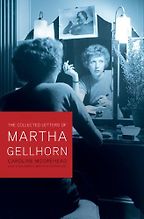
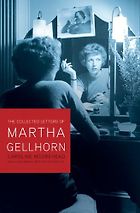
Your five books concern different conflicts and different roles women play during war. Let’s start with The Selected Letters of Martha Gellhorn. Tell us about this famous journalist and her correspondence.
Martha Gellhorn was one of the first modern women war reporters, and she faced a real challenge in getting access. This collection includes a lot of letters about her struggle to get to the front. She fought for an official way into D-Day, and ended up covertly taking a boat over when the Army put up obstacles. She’s funny, charming and compelling about why gender shouldn’t keep her from being able to cover war.
In a letter of June 24, 1944, she says, “Women correspondents have not appointed me their spokesman and I do not wish to imply that I’m writing this letter on behalf of anyone except myself. I simply call attention to the general problem because there is an injustice here, which affects nineteen people.” There were 19 women trying to get accreditation. She said, “I have too frequently received the impression that women war correspondents were an irritating nuisance who very tiresomely kept asking to be allowed to do their job. I wish to point out that none of us would have our jobs unless we knew how to do them and the curious condescending treatment is as ridiculous as it is undignified.” She goes on to say, “I cannot continue to fail on my mission through no fault of my own. It is necessary that I report on this war. The people at home need the most constant and extensive information and my share of that work, humble as it may seem, is my obligation as a citizen.”
It’s a fantastic quote. But aside from reporting her share, do women reporters bring anything special to covering conflict zones?
Oftentimes they’re almost the only ones who are interested in what women are doing, because the main event is seen as men with guns. Yet if you look at how the economy keeps going, how families keep eating, how homes remain standing, it’s because women pull families through despite incredible obstacles. Plus in traditional societies like Afghanistan, it’s much easier for women to have access to other women’s stories. For The Dressmaker, there’s no way that a man could have conducted interviews with women who had never met foreigners. A male reporter would not have been invited inside their homes. Family members would never have allowed it. So without women reporters many stories would go untold.
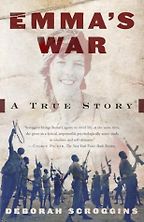
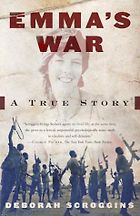
Let’s move onto Emma’s War, the true story of a British aid worker who became a Sudanese warlord’s wife.
Emma’s War looks at how women who enter conflict zones to assist, at times end up getting caught up in the chaos and pathos of war. It’s a story of one woman’s experience, an aid worker who became the second wife of a Sudanese warlord. It’s a journey about idealism and the realities on the ground. And it asks a lot of really powerful questions about what aid does, what aid stops and what aid prolongs. Emma’s War does something that I really tried to do – it brings to life a place that most people will never see and a time that will never be again, in this case Sudan during the 90s. Idealism collides with reality in a number of very painful ways.
What does this strange story tell us about the role of women in war?
It shows what happens when foreign aid workers get caught in the middle of a conflict. When you come face to face with combat, seeing it on the ground really changes you. Emma’s War really reflects what happens when you get caught up in conflict, and what happens when – through no part of your own – you are stranded in the middle of it.
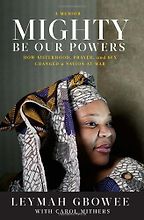
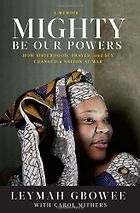
Mighty Be Our Powers is the memoir of Liberian activist
Leymah Gbowee. It starts out in 1989 as she graduates from high school, and as the normal world she knew is being destroyed by civil war. Please give us a précis of this pioneering woman’s story.
Leymah Gbowee starts out as somebody who takes circumstances as they come, but she becomes a woman who helps end the war in Liberia. She goes from being a battered wife to becoming a woman who leads her country to peace. She organised the “women in white”, as her group came to be called for the colour they wore. They went to negotiations, forced their way in and made the world hear their voices. Her argument was simple and powerful. She has this great line: “Why are women, who bore the brunt of war, expected to remain quiet while men debated how to make peace?”
She showed that women in war are far more than victims to be pitied. They’re survivors to be respected, who work around obstacles to create opportunities for themselves and others. She empowered other women to become activists. Together, they couldn’t be ignored.
She famously organised a sex strike.
That’s right. She said, “Women have a lot more power than you think; let’s exercise it.” In fact, Leymah Gbowee has a great story about how she threatened to strip in a meeting unless her group was heard. They would block roads, wage sex strikes, threaten to strip, anything to be heard because war was killing their kids and they wanted a seat at the table to stop the fighting. Many of these women had never told their story. Getting together and talking about how much they had seen and endured because men made war empowered these women to say, “I don’t have to be a passive victim, I can be part of the solution.”
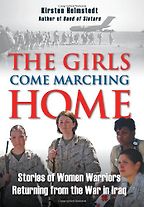
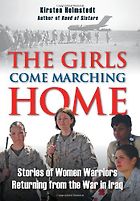
Next is The Girls Come Marching Home, an account of life after combat for the female veterans of America’s war in Iraq.
This book is a moving portrait about what it’s like for women to come home from war. Kirsten Holmstedt interviewed marines, soldiers and airmen who lived through the Iraq war. These women were on the frontlines, and faced the same challenges that men do when they come home from war. Except when most people think about wounded warriors, they think about men. It’s a reminder that although both women and men experience war, we hear less about women’s experiences. Both male and female veterans need support after fighting prolonged conflicts, yet women warriors are often forgotten.
Get the weekly Five Books newsletter
The Washington Post did a great story the other day about the airforce pilot who was going to be the one to knock Flight 93 out of the sky on 11th September 2011. She is one of the first generation of female air national guard pilots, and she was fully prepared to run this kamikaze mission. When I was working on The Dressmaker, people would say “that’s such a cute story”. And I’d say, “This isn’t a cute story, this is an economic story and this is a war story.” When we think of war stories we think about men with guns, when there is so much more going on.
Even though women served on the frontline in a range of combat roles, and suffered the same traumas and wounds that men did during the Iraq War, Holmstedt suggests that their service is seen as less heroic, and that in some ways it is harder for female vets to pick up the pieces of domestic life upon their return. Can you explain what she means?
People think of band of brothers. They don’t think of band of sisters. Because women are not seen as part of the war narrative in America, because their sacrifices in conflict zones aren’t known or understood, when women come home from war everybody expects them to go back to the way they were before. Women suffer from post-traumatic stress disorder, chronic insomnia, economic problems and dislocation within their family. Part of what Holmstedt is trying to do with this book is shake people up so they recognise what female war vets go through.
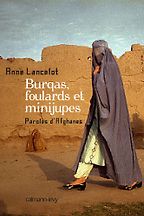
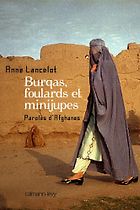
Finally you cite a French title, Burqas, Foulards et Minijupes – burqas, scarves and short skirts. What would I learn about war and women from this?
It’s a riveting book, a series of interviews with women in Afghanistan who lived through the Russian invasion, the civil war and the Taliban. They are incredibly moving narratives about things so awful that you almost can’t get your mind around them. For instance, during the civil war girls were taken from their school and forced to marry military commanders. On the positive side, women became teachers during the Taliban because they needed to support their families. It’s an intimate look at the resilience of women during war.
There was recently a story in The New York Times about how Libyan women are planning to solidify the gains they’ve made during their civil war. Is that difficult for women to do?
I talk about this at the beginning of The Dressmaker. War puts women in unusual, uncomfortable places and challenges them to find a way around the problems they’re facing. While war is raging women move into positions of greater responsibility, just as women did during World War II in the US, as emblemised by that famous image of Rosie the Riveter. Women moved into work that was once closed to them, to pay the bills and meet the needs of their country. The question is, what happens when things go back to “normal”? How do women keep the rights that they have taken for themselves for the sake of their families? That’s an open question and a challenge women face all over the world. But telling and reading stories of women in war is one way to make sure that progress made during conflict is not reversed. Or at least not forgotten.
Five Books aims to keep its book recommendations and interviews up to date. If you are the interviewee and would like to update your choice of books (or even just what you say about them) please email us at editor@fivebooks.com
Five Books interviews are expensive to produce. If you've enjoyed this interview, please support us by donating a small amount.
Gayle Lemmon
Gayle Tzemach Lemmon is the New York Times bestselling author of The Dressmaker of Khair Khana and the deputy director of the Council on Foreign Relations’ Women and Foreign Policy programme. She worked for ABC News for nearly 10 years, and reported on entrepreneurs in conflict and post-conflict regions for The Financial Times and The New York Times. Lemmon has published papers on women and business for the World Bank and Harvard Business School, where she earned her MBA. A former Fulbright scholar, she serves on the board of the International Center for Research on Women.
Gayle Tzemach Lemmon is the New York Times bestselling author of The Dressmaker of Khair Khana and the deputy director of the Council on Foreign Relations’ Women and Foreign Policy programme. She worked for ABC News for nearly 10 years, and reported on entrepreneurs in conflict and post-conflict regions for The Financial Times and The New York Times. Lemmon has published papers on women and business for the World Bank and Harvard Business School, where she earned her MBA. A former Fulbright scholar, she serves on the board of the International Center for Research on Women.