I am intrigued by the title you suggested for this interview. Can you explain it in more detail please?
Much has been written about Africa by Western and other foreign writers. Though many of these books show brilliant scholarship, they tend to be condescending and propose solutions that are culturally inappropriate or impractical. Most Western writers on Africa are hamstrung by political correctness and a fundamental lack of understanding of African culture. They are reluctant to criticise inane policies of black African leaders for fear of being labeled racist. It is always important to distinguish between African leaders and the African people. Criticising the failed policies of black African leaders does not mean one is a racist. Western solutions have not worked well in Africa.
So how do you tackle Africa’s problems?
To move Africa forwards requires a new paradigm. At the centre of this model must be the African people and how they view and analyse their own situation and problems. Ultimately, it is they who must save their own continent, not Westerners or Easterners. The West sees Africa’s problems differently from how Africans themselves see them. It was for this reason that I coined the expression “African solutions for African problems” in 1994, after Somalia imploded in 1991 and the international rescue mission led by the US failed. “African solutions” does not mean solutions crafted by an African. Rather, it means solutions anchored in or in consonance with Africa’s heritage.
Let’s have a look at the some of the books which help with that thinking. Your first choice is the yet-to-be-published book Awakening Giant Africa by Charles Nhova.
This book, by a Zimbabwean, deals with four paradoxes about Africa: Poverty in the midst of abundant natural wealth; stagnant standard of living, despite billions of dollars of “development” finance or foreign aid pumped into Africa over the past 50 years; the gap between borrowed Western development patterns and the real aspirations and needs of Africa’s majority poor; and why neither Western democracy nor Eastern socialism works well in Africa. Rewriting national constitutions to try to improve democratic governance in some countries has also not made much difference.
What is the problem with that way of thinking?
This path has been pursued from a paradigm that ignores the differences in culture, social relations, relations of production and property relations between Africa and northern countries. Much less energy has been devoted to identifying, within that African context, the real aspirations and needs of Africa’s majority poor themselves, and tailoring economic development policy, strategies and action plans to meet those needs. It continues to baffle political scholars the world over why – even with successive changes of regime or political leadership in several African countries – Western democracy just does not seem to work for Africa.
And what do you see as the real aspirations and needs of Africa’s poor?
The basic aspiration of Africa’s poor is to be free. The most important thing for them is security and peace, and they also want to be able to improve their standard of living. They want to lift themselves out of poverty, and they want to make the effort themselves. For far too long in the past there have been all sorts of charlatans, governments and leaders who have promised to do things for them and have betrayed them. A Lesotho chief expressed it best: “Here in Lesotho, we have two problems: Rats and the government.”
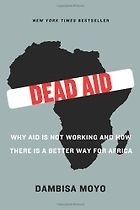
Your next choice is Dambisa Moyo’s Dead Aid, which again reflects the idea that the West is getting it wrong.
Yes. Dambisa Moyo, who was a student of mine at American University in Washington DC, represents a growing chorus of Africans who regard the Western foreign aid-driven development model – or the Washington consensus – to be an abysmal failure. More than $800bn in Western aid has been pumped into Africa since 1960, with little to show for it except a multitude of black elephants, show-airports amid institutional decay, and crumpled infrastructure. Moyo argues that foreign aid actually made Africans poorer by creating a dependency on aid, depreciating their pride and dignity, and preventing them from crafting their own development models. All aid to Africa should be halted in five years, she urges.
Do you agree with her?
I agree with her general theme that Western aid to Africa has worsened Africa’s condition, but not with her contention that it should be halted, and much less with her urging that Africa should look to China as a role model. Firstly, foreign aid has become a huge industry replete with its own lobbyists. I doubt if foreign aid can be stopped. Instead, we should try to improve its effectiveness. Secondly, Africa should look neither West nor East but inwards. China’s state capitalism model has been tried in Africa with disastrous consequences. More pertinently, the enthusiasm for China’s extensive forays into Africa in search of resources to feed its hungry industrial machine has now soured. I call China’s frenetic engagement with Africa “chopsticks mercantilism”. With chopsticks dexterity, it can pick platinum in Zimbabwe, bauxite in Guinea, oil in Sudan, timber in Gabon and so on. China is also engaged in a vast array of infrastructural projects across the continent.
Are Chinese investments in Africa not welcome?
To be sure, Chinese investments – in infrastructure in particular – should be welcome. But China’s tactics are downright reprehensible and objectionable. For one, the deals are on barter terms to China’s advantage. They are opaque, secured through bribery – building presidential palaces in Sudan and Zimbabwe and soccer stadiums in DR Congo, Guinea and Nigeria, and there is outright corruption. A Chinese firm, NuTech, was indicted in Namibia for [allegedly giving] kickbacks to officials in securing a contract for an airport security system. Also, China brings its own workers to work on contracts in Africa, generating little local employment. Thabo Mbeki, former president of South Africa, warned on Chinese investments in Africa of “a new form of colonialism”.
What do you mean when you say Africa should look within for culturally appropriate solutions? Why is culture important in development?
The basic reason why things went so wrong in Africa is because after independence, the leadership – with few exceptions – rejected their own cultural heritage, went abroad and copied all sorts of alien and unworkable systems to impose on their people. The continent is littered with the putrid carcasses of these failed imported systems. The most pernicious were the political and the economic systems. The post-colonial political systems were characterised by Sultanism, undemocratic one-party-state systems and “presidents for life”. The economic systems were marked by statism or dirigisme [heavy state interventionism] under-girded by socialism or Marxism. None of these systems can be justified or defended on the basis of African tradition.
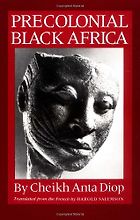
What is the relevance of your next book, Precolonial Black Africa by Cheikh Anta Diop, to this problem?
He wrote about black African civilisation before colonialism. How blacks governed themselves, ran their economies and so on. Africa’s ethnic societies, which still exist, take decisions by consensus not by dictatorship. Traditional rulers – chiefs and kings – are surrounded by councils, without which they are powerless. And these rulers can be recalled or removed for dereliction of duty. The larger polities in traditional Africa – empires (Ghana, Mali, Songhai, Great Zimbabwe) and kingdoms (the Ashanti Kingdom, the Ga Kingdom) – were all confederacies, characterised by decentralisation of power and a great deal of devolution of authority. The modern political systems – military dictatorships and one-party-state systems – are alien to Africa. The relevance of culture in development is increasingly being espoused by Africans.
Get the weekly Five Books newsletter
What about the traditional economic system?
Markets were ubiquitous in Africa before the colonialists set foot in Africa. There were great market towns such as Timbuktu, Kano, Salaga, Mombasa and Sofala in pre-colonial Africa. Prices in Africa’s traditional markets were determined by bargaining, not fixed by chiefs or kings. In West Africa, for example, market activity has been dominated by women for centuries. Free-trade routes criss-crossed the continent, along which people and goods moved freely – the most famous example was the Trans-Saharan trade route. In short, there was much economic freedom in the traditional economic system of free enterprise, free markets and free trade. State interventionism was the exception rather than the rule. Again, the economic systems of socialism and dirigisme imposed on Africa by post-colonial leaders bore little affinity with the traditional system. There is nothing wrong with Africa’s indigenous institutions. All that the leadership had to do after independence was to build upon them. They didn’t. Only Botswana did, and it is doing remarkably well.
Why is knowledge of these institutions important?
These institutions – in particular social, political, economic and legal – define African culture. Let me give you just two examples where such knowledge is important. In agriculture, the vast majority of Africa’s peasant farmers are women, because of sexual division of labour in traditional Africa. The cultivation of food crops has always been the avocation of women, while men preoccupied themselves with hunting, fishing and other dangerous tasks. Women use farm harvests to feed their families, and sell the surplus on village markets. As a result, market activity, especially in West Africa, is dominated by women. Thus, one cannot start an agricultural revolution in Africa using male-driven agricultural machinery.
The second example comes from conflict resolution. In Western jurisprudence, the emphasis is on punishing the guilty. In traditional Africa, the focus is on restitution, reconciliation and restoration of social harmony. For example, if after apartheid was dismantled in South Africa Western jurisprudence had been applied, there would have been few whites left in South Africa. The Truth and Reconciliation Commission which was set up was rooted in African jurisprudence.
Tell me more about “African solutions for African problems”. Why “African solutions”? Are there not universal solutions to all problems?
African solutions are those rooted in African traditions, and there are two areas where they are most needed: Conflict resolution, and governance. If it takes a village to raise a child, as a common African saying goes, then it takes a village to resolve a conflict. To resolve a conflict in a village, the two disputants will be brought before a chief. After each makes his case, anyone directly or indirectly affected by the conflict is also allowed to make their case. There are four parties involved: The two combatants; the chief as an arbiter; and civil society. By contrast, the model often sponsored by the West involves face-to-face negotiations between the government and rebel forces. There is no arbiter, and nor is civil society involved. More than 40 peace accords have been signed in Africa since 1960. Needless to say, they were shredded like confetti even before the ink on them was dry.
Democratic decisions can be taken in two ways – by majority vote and by consensus. Majority vote can be taken quickly in a transparent manner, but the downside is that it ignores minority positions. Consensus takes all minority positions into account, but can take an awfully long time depending on the number of people. Traditional Africa takes decisions by consensus and practices the politics of inclusion. By contrast, modern Africa takes decisions by majority vote and excludes minority positions – the politics of exclusion. Too often in Africa, some group – racial, tribal, religious, political or professional – captures political and economic power and uses that power to advance its interest and exclude all others. This apartheid-like politics of exclusion has been the cause of much political instability and conflict in Africa.
So now what? What model should Africa follow, or which direction should it take?
The object of development is to improve the lot of the people, not just the lives of the ruling elites. An African economy can be divided into three sectors – the modern, the informal and the traditional sectors. The modern sector – the abode of the ruling vampire elites – is centered on urban areas, which also house the government. The vast majority of the African people can be found in the informal and traditional or rural sectors. But these latter two sectors were precisely those that were neglected by the ruling elites, who channeled development resources and foreign aid into the modern sectors where they live. For example, about 80% of Ivory Coast’s development was concentrated around Abidjan, the commercial capital.
The neglect of the informal and traditional sectors is one reason why Africa can’t feed itself, because agriculture is the main activity of rural Africa. And so real development is that which focuses on the informal and traditional sectors – not the development by imitation that the elites tried to impose on Africa. But you cannot develop these sectors without an operational understanding of how they work – an understanding which many Western development experts and African government elites lack.
Your next book, Africa’s Greatest Entrepreneurs by Moky Makura, explores who might be able to develop the informal and traditional sectors.
Yes, this book looks at some of the successful African entrepreneurs. They are often known as the “cheetah generation”. This is the new and angry generation of young African graduates and professionals, who look at African issues and problems from a totally different and unique perspective. They are dynamic, intellectually agile and entrepreneurial. They may be the “restless generation” but they are Africa’s new hope. They brook no nonsense about corruption, inefficiency, ineptitude, incompetence or buffoonery.
They understand and stress transparency, accountability, human rights and good governance. They also know that many of their current leaders are hopelessly corrupt, and that their governments are contumaciously dysfunctional and commit flagrant human rights violations.
The cheetahs do not look for excuses for government failure by wailing over the legacies of the slave trade, Western colonialism, imperialism, the World Bank or an unjust international economic system.
The outlook and perspectives of the cheetahs are refreshingly different from those of many African leaders, intellectuals or elites, whom I call the “hippo generation” – intellectually astigmatic and stuck in their muddy colonialist pedagogical patch. They are of the 1960s-era mentality – stodgy, pudgy and wedded to the old colonialism-imperialism paradigm with an abiding faith in the potency of the state. They lack vision – hippos are near-sighted – and sit tight in their air-conditioned government offices, comfortable in their belief that the state can solve all of Africa’s problems. All the state needs is more power and more foreign aid. Clearly, Africa’s salvation rests on the back of the cheetah generation. I have been trying to rally the cheetahs to venture into the informal and traditional sectors, and take back Africa one village at a time.
Are you having any success?
If you search Google for “cheetah generation” you will get more than three million hits. The response has exceeded my wildest expectations. I dare say that the upheavals in North Africa which caught the West flat-footed and completely by surprise were started by the cheetah generation, or the youth movement. They are vigorously shaking coconut trees in Africa and the Middle East. On January 14 2011, a loud thud was heard in Tunisia. A coconut dropped and smashed! Then another in Egypt on February 11. Asia has its tigers; Africa has its cheetahs.
Your own book, Defeating Dictators, explores where Africa should start with its revolution.
Most Africans would affirm that there has been a catastrophic failure of leadership on the continent. The slate of post-colonial African leaders has been a disgusting assortment of military coconut-heads, Swiss bank socialists, crocodile liberators, quack revolutionaries and briefcase bandits. For reasons of political correctness, the West couldn’t admit or say this. Instead, it naively believed it could persuade, cajole or even bribe African leaders to reform their abominable political and economic systems. But it became clear that reform is anathema to African dictators. They are stone deaf and impervious to reason. They are not interested in reform, period. Under pressure to reform, they only perform the “coconut boogie” – one swing to the left, three swings to the right, a jerk in the air and a tumble for a hard landing on a frozen Swiss bank account. Switzerland froze the bank accounts of Ben Ali of Tunisia, Hosni Mubarak of Egypt and Laurent Gbagbo of the Ivory Coast.
Five Books interviews are expensive to produce. If you're enjoying this interview, please support us by donating a small amount.
Ask African leaders to develop their economies and they will develop their pockets. Ask them to seek foreign investment and they will seek a foreign country to invest their loot. Ask them to establish democracy and they empanel a fawning coterie of sycophants to write electoral rules, toss opposition leaders into jail and hold coconut elections to return themselves to power. Ask them to combat corruption and they will set up an anti-corruption commission with no teeth. And when the anti-corruption tsar sniffs too close to the fat cats, they shut down the commission. Ask them to shrink their bloated bureaucracies and cut government spending and they will set up a “Ministry of Less Government Spending”.
The reform process in Africa has been stalled by vexatious chicanery, willful deception and vaunted acrobatics. Only 15 of the 54 African countries are democratic, only 10 have a free and independent media, and fewer than 10 can be termed economic success stories. But without genuine reform, more African countries will implode. It is clear that the current crop of dictators must be defeated and removed from power for Africa to begin to make progress.
How do Africans start a revolution? By mounting street protests?
Street protests are a start, and draw attention to some social and economic problems. But by themselves, rah-rah street protests are not enough to dislodge a dictator from power. The aid of an auxiliary institution is needed. Among them are the media, the judiciary, the civil service and the security forces. Shut down the civil service and any military regime will collapse. But the media is the most powerful and effective weapon against alldictatorships, which is why it is the first institution they seize and gag.
Get the weekly Five Books newsletter
I was one of the architects of change in Ghana, removing through the ballot box the Rawlings dictatorship in 2000. We did this without violence and Western help, by freeing the airways and corralling the divided opposition groups into one formidable electoral alliance. And if it can be done in Ghana, it can be done elsewhere in the developing world.
Does “African solutions for African problems” mean that the West should not help Africa, and let Africans solve their own problems?
No. The West can support the efforts the African people are making to solve their own problems, rather than seek to supplant them and impose Western solutions on them. That was the bane of the old aid paradigm.
Five Books aims to keep its book recommendations and interviews up to date. If you are the interviewee and would like to update your choice of books (or even just what you say about them) please email us at [email protected]