Food & Cooking » The Best Cookbooks
The best books on Food Writing
recommended by Giles Coren
The London Times award-winning food columnist takes an irreverent look at the world of food writing, from restaurant critics to celebrity chefs


The London Times award-winning food columnist takes an irreverent look at the world of food writing, from restaurant critics to celebrity chefs
As one of the UK’s most popular food critics what first got you interested in writing about food?
I was a writer for a long time before I wrote about food. Food is the thing that people want to read about, so it is the thing that newspapers use to dangle in front of the writers they most want to keep and reward. They offered me the chance to write about food and now I am the only person in England who knows anything about food who isn’t 30 stone! It’s better to have me on the TV because I can still fit into my trousers. The people who know about food are giants and they are all fat.
Apart from being fat, what do you think makes a good food critic?
It is someone who understands that your first job as a journalist is to sell newspapers, and to do that you need to entertain people. Your opinion is neither here nor there. Almost all restaurant critics are rubbish. Worldwide, 99% of them are a waste of time. The only ones that are any use at all are here in the UK and there are probably only three or four who are really any good. The ones who show off about each mouthful of food, trying to show how it was cooked and what was done and give you the biography of the chef, are tedious bores. If you were next to them at a dinner party you would just kill yourself.
“I’m the only person in England who knows anything about food who isn’t 30 stone”
But Adrian Gill and Jonathan Meades, who was my predecessor at The Times, understand that the first job is to tell a great story that people will look at in the weekend paper. Essentially, being a food critic is nothing – it’s not politics, it’s not war reporting. There is no need to see it as something terribly important and become pompous and self-aggrandising about it. We all know who those people are! It is all a bit of fun.
I started doing it in the mid-90s for a thing called The Condé Nast Restaurant Guide. I was about 25 and it was edited by a friend. I reviewed central London restaurants because I lived there. I wasn’t really interested in it, so I read some restaurant reviews and there was all this bogus terminology because it was relatively new in this country. They thought you needed some sort of special vocabulary for it, like you have with critical theorists in other fields. So you would find lobster bisque described as “accurate”.
What on earth does that mean?
Well, it was all made up for people who know about food but can’t write, and are therefore in hock to pre-O-level descriptions of how to write from teachers who will say things like, “Be precise, write what you know, don’t use words like ‘nice’ and ‘good’ because they don’t mean anything”. So you will have a “finely judged hollandaise”. I will happily tell a thousand-word story about my life and say the food was quite nice – seven out of 10 – and frankly that is all the reader needs or wants.
So what about food books that you do rate? I know you are in your kitchen now looking along your shelves. What are you going for first?
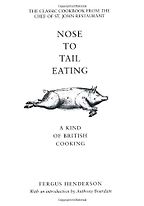
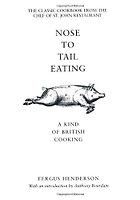
I have chosen Fergus Henderson’s Nose to Tail Eating. I have a treasured first edition of it from 1999. I can’t remember why, but they must have sent it to me at the time and it became the most sought-after cookbook. And then it went out of print and couldn’t be got because there were only a few thousand to start off with. Eventually it was reprinted with grand fanfare and I discovered I had the original one.
You weren’t tempted to sell it?
No.
Why did so many people want to buy it?
First of all, it is a beautiful thing. It is not self-aggrandising. I hate French and Italian food writing, because they are envious, invaded and defeated countries and intellectually bankrupt since the 19th century, so they pour all their energy into this bogus idea of intellectualised cooking. Many English cooks have the confidence to not be like that, and Fergus is the best example of it. It is a black-and-white book which has some colour plates in it, with just the simplest things in the world.
The problem with cookery writing is that the decision to go to catering college comes just after you fail O-level English for the 14th time. Then you get someone who has got a bit of education, like Fergus. His recipes are revelationary because, as the title Nose to Tail Eating suggests, it is all about using the whole pig. People like Gary Rhodes are endlessly wordy but Fergus keeps it simple, with dishes called things like Boiled Ox Tongue or Rolled Pig Spleen. There are no poncy names. He has two phrases that linger most in that book for me. When he talks about chopping parsley he says, “Chop it not too fine, but just enough to discipline it”. And I think chopping parsley to give it discipline is a brilliant concept which simply wouldn’t happen in the brain of someone like Gordon Ramsay. The other time is when he is talking about boiled ham and parsley sauce and he says, “Don’t dress the ham on the plate but put the sauce in a jug on the table and allow your guests to express themselves”.
What a great image.
Yes, I love the idea of expression through parsley sauce. That is where food and writing come together in a bit of poetry.
And do you actually like cooking, considering how many restaurants you must go to?
If I have got time I like to do it. It is like reading or shagging – if you have time to do it properly, then it is great and you don’t have to focus on anything else. I am not massively crazy about catering for 12 people who are going to come round and say, “Ooh, what is the fancy restaurant critic going to feed us?” I love cooking for myself – getting crap out of the fridge and making something. I love cooking for my wife. We take it in turns.
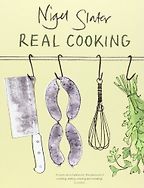
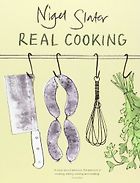
Next on your shelf is Nigel Slater’s Real Cooking.
Yes, I have chosen that one because I think that is the only one of his books you really need.
What do you think about all these TV chefs, because he is my favourite?
He is the worst TV performer, but I like him because he is a shy, gay loner who loves food and cooking and does the TV because it comes along and is part of the package. He doesn’t have a family. As we know from his autobiography Toast, his family background was a bit awful. He doesn’t seem to have any mates. He doesn’t do that Jamie Oliver thing of “I am going to cook up something lovely for all my mates!” It is all a big performance with him.
But that’s because he is very savvy – it’s all a big franchise for Jamie.
Yes. But with Nigel he stands there alone looking a bit sad in his kitchen. Oddly, his TV show doesn’t really gel that much with the writer. When I first read him I thought, interesting, he is gay. And you could tell. There was something about the aesthetic in terms of cooking and his indulgence and the way he talked about it which suggested he was not absolutely of the mainstream. He used a whole chicken and would really focus on the sticky bits on the pan underneath the bird, which struck me as something that a big glunky hetero twat like Gordon would never think of. And, although I am not gay, it was very much the way I felt about food – the idea that cake mix is tastier than cake, the perfection in a burnt roast potato that you can never get in a perfectly cooked one. You could imagine that Nigel, the same as me, would take a belly pork out of the oven and then stand there, while his guests were in the kitchen, mopping the fat up with stale bread and eating it, not even bothering with the joint. There is something offbeat and quirky and brilliant about him and he is also a very good writer. Like Fergus Henderson, he is very direct in his writing and he doesn’t try to show off. He just happens to have it all.
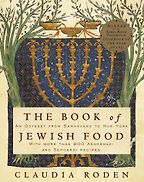
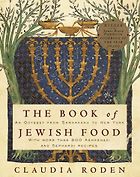
After two middle-class English men, you’ve moved on to Claudia Roden’s The Book of Jewish Food.
Claudia Roden is brilliant, and when I was younger I saw her as lovely, sweet and maternal. My mother wasn’t really into the whole cooking thing. She worked and I didn’t see her that much, and she certainly never went into the kitchen.
So Claudia is a bit of a mother figure for you?
Well, it was good to think of her cooking away in the kitchen. Although I am 100% an Ashkenazi Jew, I wasn’t brought up as one. My mother didn’t really cook Jewish food, although one of my grandmothers did. When I was about 25 I was writing a novel, Winkler, which was about Jewishness, and I started wanting to be able to cook Jewish food. I got some recipes off my mum and then I got this book. The book is divided in half, which the world’s Jews are, between Ashkenazi and Sephardic. Sephardic is the more Middle Eastern kind of food, which is not what I am interested in, although Lebanese food is delicious. Ashkenazi is a sort of Eastern European, sort of Polish-Jewish cuisine.
So what food do you like to make from the book?
I like to make a cholent. This is a dish that my mother did cook, although she had a very modern, quick way of doing it whereas Claudia’s one takes a lot longer. Actually the second Leon cookbook has my cholent recipe in it, which is one that I adapted from Claudia. It is basically beans and barley in a pot with paprika and onions and marrowbones, and then a fatty cut of beef and salt and pepper, and you put it on the lowest heat in the oven, or in the warming pan of an Aga, overnight for 12 hours. If you don’t like it you are not Jewish, because it is not actually that nice. It is a sort of acquired taste.
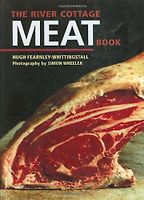
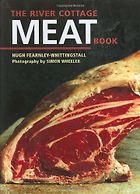
Next up is The River Cottage Meat Book by Hugh Fearnley Whittingstall.
This is often described as the ultimate bloke’s cookery book, which is such a limited way to look at it – as if to say that women are always on diets and just want a piece of lettuce, which is simply not the case. For anybody, this book is crucial because it ties together the ethics of food production with what you put in your mouth, which is quite a hard message to get across. The intolerant right-of-centre in the media are all very pro factory-farming for economic reasons, and hate what they see as lefty thinking with animal rights. And then you get Hugh Fearnley Whittingstall, this pukka English fellow, defending it. On the TV he is a bit of a div. You see him wandering around Tesco saying, “Oh you’ve got to spend a bit more on your chicken”. But I also do this with my writing. I campaign for organic and sustainable farming practices for a bit, and then everyone gets bored with it, so I stop for a while and then start again.
So it is, hopefully, a bit of a drip, drip effect.
Exactly. And this kind of thing waxes and wanes. The thing about Hugh is that he explains the whole meat process. Papers like The Daily Mail are always trying to explode the organic myth, saying it doesn’t make you any happier or live any longer. That is not what we are trying to do. It’s about the welfare of the animals as well. You might not care about chickens but in the end, as Hugh says, they will taste better if they have been properly looked after and aren’t factory chickens. He is also good at explaining food production – where the cuts come from, why an animal tastes the way that it does, why the things that it is fed on matter. It is just this great big book with everything that you could possibly need to know in it.
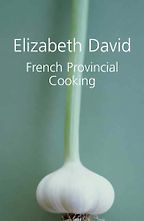
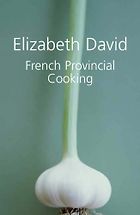
It sounds very useful. Your final book is Elizabeth David’s French Provincial Cooking.
She was the first modern English food writer, although she is basically talking about French food. She never really wrote about English food. When I talked about cholent, that is really just a Jewish version of cassoulet. She has two different cassoulet recipes in it – cassoulet de Castelnaudary and cassoulet de Carcassonne. I used to cook every type of cassoulet when I lived in Paris in my early 20s.
There she was in the 1950s with her incredibly complicated domestic life. In the same way as Nigel Slater, with his difficult childhood and his coming out, she had her issues as well. She was known as a monstrous shagger and I think people with incredibly complicated romantic lives bring something to the table as food writers. Even Gordon with his dalliances and bits and pieces has something.
But considering you are so anti-French cooking and French food writing, why do you like this book?
I just think she is a very good cookery writer. She is trying to explain to people in austere 50s Britain how to make a petit salé or a beef bourguignon. She’ll write things like, “Try and get hold of a bay leaf; you may not have heard of these things. You will sometimes find them in the delicatessens of Charlotte Street”. Bloody hell, what was England like? “If you can’t get ham, use luncheon meat.” So there was this post-war rationing. Her writing is escapism. It started with the English middle-class drift to the Dordogne. She tells endless anecdotes, which really works. One of them is how she tried to get her car fixed but there was a sign saying that they were closed “à cause de cassoulet”. So you actually have French industry stopping for the day to eat a really good dish of goose and beans. She was retelling that story in 1950s Britain when people were eating Spam. It has a sort of poetry to it.
December 31, 2012
Five Books aims to keep its book recommendations and interviews up to date. If you are the interviewee and would like to update your choice of books (or even just what you say about them) please email us at [email protected]
Support Five Books
Five Books interviews are expensive to produce. If you've enjoyed this interview, please support us by donating a small amount.

Giles Coren
Giles Coren has been a columnist for The London Times since 1999. In 2005 he was named Food and Drink Writer of the Year. As well as restaurant reviews in his column he also writes about everything from his personal life to politics
Giles Coren
Giles Coren has been a columnist for The London Times since 1999. In 2005 he was named Food and Drink Writer of the Year. As well as restaurant reviews in his column he also writes about everything from his personal life to politics
© Five Books 2024