The Best Fiction Books » Poetry
The best books on Poetry
recommended by Gillian Clarke
In the first instalment of our Poetry Series, the National Poet of Wales tells us why many teachers are better than actors at reading poetry


In the first instalment of our Poetry Series, the National Poet of Wales tells us why many teachers are better than actors at reading poetry
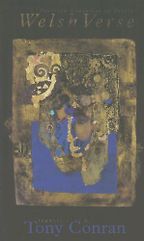
Tell me about the little-known book of Welsh Verse.
Welsh Verse goes back to the sixth century, so it’s examples of some of the earliest British poetry. If no one mentions it, no one will bother to discover it and it’s completely wonderful.
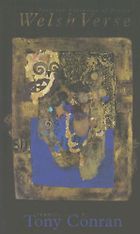
Tony Conran, who translated it, is a great poet himself. He’s an academic, but they’re not academic translations and they’re magical. There are two lovely poems in the anthology I want to pick out. The first is the beautiful seventh-century poem called ‘Dinogad’s Petticoat’, which is a little lullaby to a child. It’s a poem from a Welsh manuscript – and don’t forget nearly all Welsh manuscripts were destroyed by Oliver Cromwell, so it’s remarkable it survived. Anybody would love it; it’s just gorgeous.
I expect not many people know much seventh-century poetry.
Yes, you can’t imagine it, can you? The anthology has lots of other jewels all the way through it, of course. The second one I’ve chosen is called ‘The Shirt of a Lad’ and it’s a love poem. The woman is (assuming it’s a woman) washing the lad’s shirt in a river. Someone asks her to sell it and she says she won’t sell it for a whole mountain of sheep and she gives a list of things she wouldn’t sell the shirt for. The shirt represents her fidelity and it’s just beautiful. The other thing is, the introduction to the book is among the best and most lively and readable introductions to early Welsh verse and it’s beautiful to read. Of course, you wouldn’t expect me not to choose something Welsh. I have two Penguin copies, and Simon Armitage is trying to get one of them from me. I just can’t go anywhere without it.
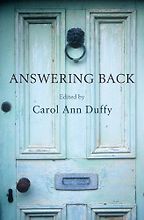
Why have you chosen Carol Ann Duffy’s Answering Back?
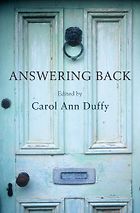
What I love about this book is that Carol Ann Duffy asked a whole load of poets to answer another poet back: to choose a poem by someone long dead, and write a response to that poem. I think that idea will encourage people to read poems. It’s a lovely anthology – although all those Picador anthologies edited by Carol Ann are lovely – but Answering Back is one of my favourites. Wonderful poems excite me and poetry speaks in the world we inhabit. Edward Thomas’s poem, ‘Tall Nettles’, spoke to me every time I passed the nettle patch in our garden, reminding me that I should cut them down, yet somehow saying, ‘Don’t do it’. When the caterpillars appeared all over the nettles, hundreds of them, and became peacock butterflies, I knew they were saved by poetry. ‘And I want to say to the dead, look what a poem sings to life: the bite of nettles, caterpillars, wings.’
Carol Ann and I both had to write a poem for the Today programme on Radio Four. Carol Ann said: ‘I’ll go to sleep and with any luck I’ll dream it,’ and she did. She’s right to say that, so don’t struggle with exhaustion. People who can write usually say wonderful things about writing and friends talking about poetry are worth listening to.
It’s so interesting to see the perspective of a poet on another poet.
Yes, and it’s more than just a collection of lovely poems for popular consumption. It does more than that. They are new poems that have been commissioned and referring to old poems is a lovely idea.
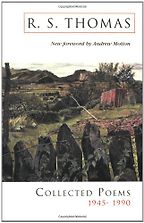
Tell me about the complete works of R S Thomas.
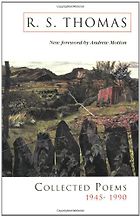
When I walk around my garden or in the fields, I always carry a copy of R S Thomas, or if I am going off in my car to teach a poetry course, I will, without fail, pack R S Thomas in my luggage. I would pack others as well, like Seamus Heaney and Ted Hughes. Of the late 20th-century poets who have died, I think R S Thomas is fantastic. He’s so amazing even though he actually uses some very common language: ‘He’s died you know.’ It’s just what a person might say. There’s a wonderful poem called ‘Zero’, and in ‘Zero’ he says, ‘What time is it? Is it the hour…?’ It’s a fantastic short poem that brings in the whole mythology of Europe, and he brings it to a crisp punch at the end. I love his language. In fact, I knew him and liked him a lot. Yes, he was grumpy, but he was never grumpy with me because I was a woman and he was always nice to women: he liked women and young people. His poems mean a great deal to me and I learned to be a writer from poets like R S Thomas. He said, ‘Get up early and read something substantial.’ (You can just imagine it’s 4am and he’s probably reading Nietzsche.) ‘Then get a piece of paper and see what words will do.’ And I think I’ve always done that – not the early morning bit, but the ‘read something and see what words will do’. I think that’s really good advice and when I’m tutoring courses I always tell students that.
Do you write with a specific audience in mind?
No, I must admit I don’t, I’ve never done that. I used to leave my poems around and my son Dylan used to ask questions about things, and I thought if my 15-year-old son can understand enough to ask a question, then I’m probably doing all right. I also want to go to the edge of mystery with no audience in mind and I listen to the language, as my ear is most important.
When you write a poem, do you walk around the fields and write it in your head?
The words are round the corner of my head when I’m walking in the fields. When I get home, I pick up a pen and a bit of paper and the thing that’s in my head starts to get born. It’s a very strange, very mysterious process and you can’t will it. You can have a go and write a few things down, a phrase or two, but it’ll come or it won’t. When it works, you see something that connects with another something. For example, I’m looking at a river now, from a 12-floor block of flats, and I might have in my head something that occurred a few days ago. And when I look at the river, they connect and a spark occurs, so it all arises from language and metaphor: two images speaking to each other. For me, the pivotal thing is language, the sound of language, and that’s why I must read. I don’t think anybody learns to write poetry unless they read.
Do you practise any other art form?
Yes, the visual arts. I nearly did art in art college but my English teacher persuaded me to do English. But I also love music. I have two musical sons, but I can’t play anything, so all I do is listen – we have a family piano.
I know that you teach. Can you tell me more about teaching poetry?
I co-founded the writer’s house Ty Newydd in North Wales. I used to go to loads of primary schools, but these days I really value working with one group for a week, going deeper each day. But I also teach an MPhil in writing at the University of Glamorgan, to only two students. I’ve been contemplating how I’m going to plunge them even deeper into poetry and knock them about a bit (not literally). With poetry in schools, though, if a teacher is enthusiastic, then a whole class will be won over. Many teachers read poems aloud superbly. I don’t like actors reading poems, though, because I like ordinary human beings reading something they love. I read for something called Poetry Live; along with lots of other poets, we read to 100,000 GCSE kids a year. However, even though I’m allegedly reading to the kids, I’m reading and speaking in my head to the teachers. I’m really saying this to you, so that the teachers can go away and inspire the children. The emails I get from the kids show that they’re not put off poetry at all. My poem ‘Cold Knap Lake’ is being studied for GCSE and I get loads of questions from teenagers about it.
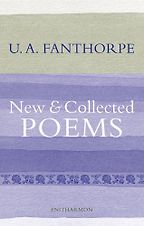
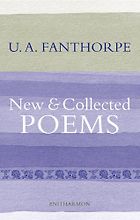
Let’s move on to the Complete Poems of U A Fanthorpe.
Yes – she was an amazing poet. She died a year ago, and they brought out her complete poems. It made you realise what an important poet she was and what an important influence she had on poets. She changed the way we all write. Her language was a common language and it was funny and heartbreaking at the same time. She was one of the finest poets writing in the 21st century. U A loved England and its history and traditions. I recognise that from my love of Wales, and my own history. England is a friendly stranger to me, and its class distinctions, especially, are quite foreign. U A’s poetry enlightens, and explains some of the mystery.
Perhaps one of my favourite of her poems is the one about London rivers, lost now in culverts under the city. ‘Rising Damp’, the title, I think.
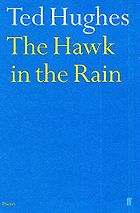
Finally, let’s look at Ted Hughes’s Hawk In the Rain.
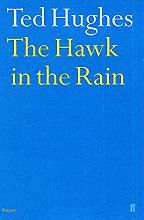
If people have never read Ted Hughes then they’ve got to read Hawk in the Rain. It was his first collection, and it’s wonderful. Ted Hughes is one of the gods of poetry, along with Seamus Heaney and R S Thomas, and I always listen very carefully to what the gods say. I remember Ted Hughes said, ‘Never throw anything away. Put the poem in a drawer and one day an energy will come and the dead poem will come alive.’ His poems have wild power, and the language stays in the mind, as does all good poetry. No stormy night happens without my thinking, ‘This house has been far out at sea all night’, and every hawk in the rain is his. His manners are biting off heads, I think, when I see the elegant, beautiful red kite over our garden.
Seamus Heaney is another god, and I feel like I’ve got a lot in common with him: farming ancestors and the Celtic background. He said he liked to write a sonnet and rough it up a bit. The roughing up a bit, he says, sets them free. So gods like Seamus and Ted Hughes would tell you not to obey rules mindlessly.
Interview by Rebecca Slack
April 4, 2011
Five Books aims to keep its book recommendations and interviews up to date. If you are the interviewee and would like to update your choice of books (or even just what you say about them) please email us at [email protected]
Support Five Books
Five Books interviews are expensive to produce. If you've enjoyed this interview, please support us by donating a small amount.

Gillian Clarke
Gillian Clarke is one of the central figures in contemporary Welsh poetry and the National Poet of Wales. Her own poems have achieved widespread critical and popular acclaim (her Selected Poems has gone through seven printings and her work is studied by GCSE and A-level students throughout Britain) but she has also made her cultural mark through her inspirational role as a teacher, as editor of The Anglo-Welsh Review from 1975-1984, and as founder and president of Ty Newydd, the writers’ centre in North Wales. The Welsh landscape is an important influence in her work, together with subjects such as war, womanhood and the passage of time.
Gillian Clarke
Gillian Clarke is one of the central figures in contemporary Welsh poetry and the National Poet of Wales. Her own poems have achieved widespread critical and popular acclaim (her Selected Poems has gone through seven printings and her work is studied by GCSE and A-level students throughout Britain) but she has also made her cultural mark through her inspirational role as a teacher, as editor of The Anglo-Welsh Review from 1975-1984, and as founder and president of Ty Newydd, the writers’ centre in North Wales. The Welsh landscape is an important influence in her work, together with subjects such as war, womanhood and the passage of time.
© Five Books 2024