The President Emeritus of The New York Botanical Garden in the Bronx, New York tells us about the books that all aspiring gardeners should have on their bookshelves, from reference works to the most fun guide to making the best of your garden
For those of us who haven’t had the opportunity to visit the New York Botanical Garden can you tell us what it is like?
We are located in the northern edge of New York City in the borough of the Bronx. We are about the same distance from central New York as Kew Gardens are from central London. We are 250 acres, which is curiously almost exactly the same size as Kew. We were founded in the 1880s to be a classical botanical garden and a picturesque public garden with plant collections for the enjoyment of the public. We also have a very large-scale plant research and conservation programme, which is run on an international basis, and we have specialised for many generations in the plants of the Americas.
Yes, you are building a new garden which is dedicated to that.
That is actually in the garden itself, but in terms of research we have specialised in the plants of the Americas. We are actually an organisation very like Kew, shaped the same way, and our founders had Kew in mind as a model.
Sounds like a good model. Let’s have a look at some of your five books.
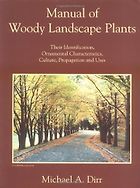
Your first choice is Michael Dirr’s Manual of Woody Landscape Plants, which is a classic manual offering lots of information on woody trees and shrubs.
This is an American book, a very comprehensive book about woody plants. It is absolutely for the serious gardener. If you are in a nursery and you are looking at a magnolia and you are not sure whether it is just the right magnolia for you, all you have to do is to whip out your Dirr and check it out. He will tell you what growing conditions it would prefer. He will have many rare and unusual varieties listed. It is a very fine guide to what you plant.
Why do you think trees are so important for landscaping?
Trees are often the bones of a garden. Many people have tree collections alone. Small trees and flowering trees are very gardenesque. Trees are important in so many ways. They add a lot of summer protection. You want the shade of your trees to grow your shade-loving plants or just to make your house more comfortable in hot summer weather. Trees give scale to a garden and nobility. I don’t think any garden feels right without its trees. Maybe there are a few – something like an Alpine garden doesn’t need trees. But every other type of garden does.
Robin Lane Fox’s Thoughtful Gardening is all about how to garden in harmony with nature.
That’s right and I put it on the list because it is also a fun book. I think he is the most important garden writer writing in English today. He belongs to the great pantheon of 19th and 20th century English garden writers who have informed the whole world, not just British gardeners, about good gardening. These articles that he wrote for The Financial Times are all very informative and highly amusing. It is a very good read. I think among all the current gardening books this is the most useful and fun.
When I speak to English gardeners there is a big theme about how gardeners are trying to get back to nature and work with nature. Is that something which is popular in the US as well?
There is a great fashion here now for native plants. You mentioned the native plant garden that we are building. We have always had a native plant garden to show the plants of the northeastern United States. That was mainly didactic, whereas the new one is meant to be very glamorous and beautiful to show people how they can use native plants in the same ways that we have always used more exotic plants, such as delphiniums and irises and peonies. None of these are American but we have always used them to make our flower gardens beautiful. But there are important ways that people now understand how to use native plants. They are more disease resistant because they belong here. There are many sunflowers from this part of the US that are much easier to grow than white delphiniums, for example. That doesn’t mean we won’t grow white delphiniums – we do – but we are expanding the plant palette.
“Trees give scale to a garden and nobility. I don’t think any garden feels right without its trees.”
And this is not just an American interest right now. It has also been a great interest in Germany. And with people like Piet Oudolf, a Dutch designer who uses many native American plants. There is a major garden at Wisley [the Royal Horticultural Society’s flagship garden in Surrey, England] where many of the plants are native to North America. It is a kind of prairie design aesthetic.
It sounds lovely, and I wanted to talk to you about what you see as the American style of gardening. I know that there is a much more varied landscape than here in the UK, but do you think there is a style that typifies what you do in the States?
Our climate is less hospitable. I know you all complain about your climate all the time but it is actually very good for flower gardens. Our climate is much harsher. We have harsher winters and harsher summers. We have more humidity in the summer. We have more violent storms and the wind is a greater issue here than it is for you. So here it is harder to grow refined flowering plants in your garden. We still do it, but native American plants are tougher and easier to grow, so we blend the two palettes.
Also, there is a new American style, which uses ornamental grasses and other very tough plants that are happier in this difficult climate. In this new American style, there is often a sweeping landscape full of a single ornamental grass or two or three used in very large grandiose swathes. There are fewer walled gardens or traditional mixed borders surrounding a clipped lawn – that English model – although it does still exist here.
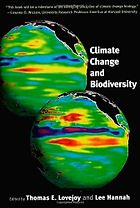
So things are changing. Next up is Climate Change and Biodiversity by Thomas E Lovejoy and Lee Hannah.
This is a very serious scientific book. There is a little theme in this set of books that I have chosen. They are all books that a serious gardener would want on his or her bookshelves. Some are useful in terms of reference books, or they are books that would make a gardener well informed. This is a very fine book if you are interested in the whole subject of climate change.
In here there are some chapters which relate to the timing of when plants do things. For example, when can you expect your snowdrops to flower? There has been a lot of scientific study now about climate change and the change in timing for plants flowering. Your lilacs will probably flower between one and three weeks earlier than they ever have before. The studies have been done over 10-year periods. It is pretty interesting for gardeners to know that an old garden book that tells you your lilacs will flower around Memorial Day, which is at the end of May, is now out of date.
It sounds like this must be changing the way people design their gardens and when they plant.
I think it may, especially for something like a seaside garden. So this is a scientific book in which gardeners don’t need to read every article, but some of the articles relate very directly to the concerns of serious people who are also gardeners.
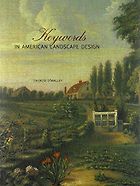
Tell us about Therese O’Malley’s Keywords in American Landscape Design.
This is also a reference book. It is a very fascinating book. It is a production of the Center for Advanced Study in the Visual Arts in the National Gallery of Arts in Washington. Therese O’Malley is a scholar who led the team compiling the book. It is a great book because what they have done is, using literature about landscape design and garden history going back about 300 years, they have pulled out key words and written very detailed essays, which are beautifully illustrated, around those words.
Get the weekly Five Books newsletter
These words all describe garden landscape elements. Let me just read some of them to you. For example they talk about different types and styles, such as deer parks and gardenesque. Or there is a section on orangeries, so if you look up that essay you will find every important citation of an orangerie in literature over the last 200 or 300 years. Another one is picturesque which is all about that style. There are about 115 key words and many of these styles exist today. This is an illustrated history which tells you about those styles. It is very much a compendium which leads you to the literature.
How interesting. So it points to what styles were popular and when, by the fact that they were being discussed in important works of literature.
Yes, you can trace the history of the use of those designs and know when they were in vogue. It is a major work of scholarship by an American team.
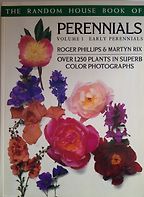
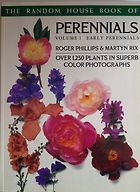
Your final choice is The Random House Book of Perennials.
This is a very handy book. There are a lot of books about perennials for your garden, but I use this book at home and I am sure all of the gardeners here at the New York Botanical Garden use it as well. I probably use it more than any other book on this list and the great thing about it is that it arranges perennials for your flower garden in order of when they flower in the season. So it starts off with hellebores because they start so very early in spring.
Yes, I love it when they come out – you finally feel, after a long winter, that spring has arrived.
That is exciting and they are important for a perennial garden. There are pages and pages of hellebores, you can find any hellebore you could ever want to grow, and so it continues through the year listing the perennials as they flower through the season. You get through Volume One, which takes you to midsummer, then you move on to Volume Two and you end up going all the way through to the end of the growing season and finish with ferns.
It is really a guide to a year of gardening, and good for showing you what you need if you have gaps in your garden at a particular time of year.
Yes, exactly. You can compare your own established garden with this book and if in the middle of summer you don’t have enough colour, it will show you what you may need.
July 11, 2011
Five Books aims to keep its book recommendations and interviews up to date. If you are the interviewee and would like to update your choice of books (or even just what you say about them) please email us at [email protected]
Five Books interviews are expensive to produce. If you've enjoyed this interview, please support us by donating a small amount.
Gregory Long
For the past 21 years, Gregory Long has been president and chief executive officer of the New York Botanical Garden. He is responsible for overseeing its restoration and revitalisation, and turning it into one of New York’s most prominent cultural institutions
For the past 21 years, Gregory Long has been president and chief executive officer of the New York Botanical Garden. He is responsible for overseeing its restoration and revitalisation, and turning it into one of New York’s most prominent cultural institutions