Time to get out your old CDs and LPs. The music journalist picks five books from Bob Dylan’s hinterland to confessions of a rock ’n roll groupie, and explains why good criticism is like writing fiction
“Critical essays are really where it’s at.” You start your most recent book with that quote from The Doors’ Jim Morrison. You’ve been writing about rock almost since he said those words in 1967.
That was from the first interview I ever read with The Doors. It was in a little fanzine. I wasn’t even writing about music then, but for some reason I always remembered that line.
What do we get by reading critical essays?
You get one person’s developed response to something, whether it’s a novel, a movie, a public event or a piece of music. Whatever it might be, the critic spends his or her time thinking about his or her own response, trying to understand what brought forth that response and what’s different about the subject of their scrutiny. That’s not what most people do. Most people don’t examine their own reactions. Ideally, someone can read critical essays and value their own responses in a way that they haven’t before – in other words, trust their own instincts and their own tastes. That’s a good thing.
Do we strengthen our relationship to a work of art by looking at it through someone else’s eyes?
That’s certainly true for some people – it’s true for me. God knows, if it wasn’t for Pauline Kael’s movie criticism I wouldn’t have realised how much more there was in a film. Her work helped me make sense of my own confused responses. Without it I would not have had the same relationship to certain movies that I have now.
In much of your writing, you use the music as an overture to a wider ranging exploration of American culture. Why is rock the foundation of your work?
It’s a spur for my thoughts. Most of my thoughts begin with a song, or maybe something a song reminds me of, makes me think about or makes me want to know more about. That’s just how it works for me.
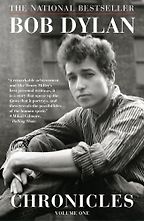
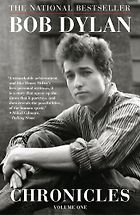
We’re starting with Bob Dylan’s autobiography. Why did you select Chronicles?
Dylan has had a career of extraordinary richness and variety. Yet here he is writing a memoir that completely ignores everything which made him a world figure. It ignores all of his most famous songs, it ignores all the periods in which he was a great star. It’s all about times when he was trying to learn, when he was confused and lost but absolutely alive with the thrill of discovering new ideas, new singers, new information.
It’s a marvellous, eyes-wide-open partial-autobiography. It’s also wonderfully written; the words are alive on the page. It clearly wasn’t co-written or talked into a tape recorder. It’s a great piece of writing.
You’ve written so sweepingly about Dylan that a collection of your thoughts on his work came out last year. Why is he a focus of such enduring interest for you?
His is probably the most complexly expressive voice that I’ve heard. There’s just no end to the shades of meaning that come out of the way he shapes a word. The way he shapes a phrase can leave you hanging – he can take you so far with just a turn of a syllable. That’s really it. It comes down to his singing.
You wrote that becoming a Bob Dylan fan made you a writer. How so?
He gave me something I wanted to write about.
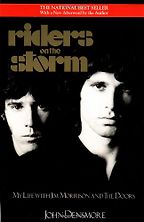
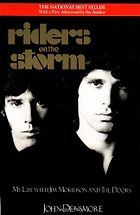
Riders on the Storm is an autobiography by Doors drummer John Densmore in which the author is upstaged by his bandmate. Please tell us about it.
John Densmore was a drummer for The Doors, a band from Los Angeles of enormous depth and popularity in the late sixties. Their music has never been off the radio in 40 years. You may hear more Doors on the radio today than 20 or even 40 years ago. The staying power of their music is quite remarkable.
John Densmore was writing about his few years in the band from ’65 until ’71 when Jim Morrison died. What I love about this book is that it’s so confused. It is somebody struggling to make sense of what he was doing, of what was going on around him, of the people he was working with. It’s that sense of struggle that I find captivating.
Densmore starts his book by talking about a visit to Morrison’s grave. What does the death cult that has sprung up around musicians who died too young tell us about the power of rock music?
I don’t know. I don’t think people visit Janis Joplin’s or Jimi Hendrix’s grave the way they visit Jim Morrison’s. I did – I went to Père Lachaise cemetery in Paris. But what’s really fascinating about that place is Balzac and Oscar Wilde and Sarah Bernhardt’s graves, and the Holocaust memorials. It’s a really fascinating place. Jim Morrison’s grave has just been turned into a graffiti site. It’s kind of embarrassing.
In your new book The Doors, you focus on the group’s music, which you heard live in concert during the five years when they topped the charts. Tell us about it.
It’s a listening book, it’s not a biography. It’s about listening to the Doors – getting lost in the songs and coming out with a story about how the song plays, how it communicates. The Doors’ music is unlike anybody else’s. Song to song, their music is not even like itself. There is a constant attempt to tell truth in their music and in the way Morrison’s words are shaped. My book is not a survey of a career, it’s about taking the songs and trying to put into words what makes them so special.
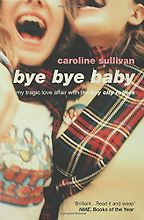
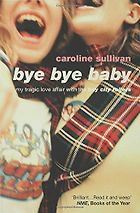
The author of your next selection is a noted rock journalist. Tell us about Caroline Sullivan and Bye Bye Baby.
Caroline Sullivan is an American woman who became a completely obsessive fan of the Bay City Rollers, a Scottish group that dressed in all tartan costumes in the early to mid-seventies and were momentarily huge. Like a lot of teenage girls, Caroline Sullivan fell in love with them, but unlike most of their fans she proceeded to devote her life to them. She ended up moving to the UK to follow them around, to become part of their world. Bye Bye Baby, which was the title of one of their songs, is a hilarious and entertaining book about crazy fandom. It’s completely gripping and what it comes down to is: Will she ever sleep with one of them? And the answer is left ambiguous.
Sullivan is now The Guardian’s music critic. What makes for great music criticism in your view?
You’ve got to care about what you’re writing about, and you have to be able to write. I don’t think that there’s any more to it than that. If you just do it because you want to get free records or you want to meet famous people or because you’re a frustrated musician, then it’s going to feel false and it’s not going to work. If you don’t care about writing, if you’re not alive to style – the style in other people’s work and the style in your own – then it’s going to be leaden and boring and lifeless.
I read a piece recently that a young writer had sent me. He wanted advice on how to publish it. It was a profile and it read like a thousand other ones that you and I have read, where someone is trying to convince you that somebody is really of importance and you should care about him. But there was no emotion in it – it was incredibly slick and everything in it seemed secondhand. It was a flood of clichés, not because the writer didn’t care about what he was trying to write about but because he didn’t care about or understand writing.
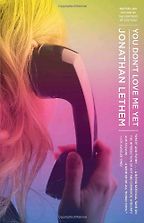
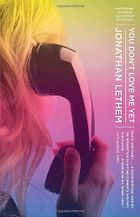
Next, Jonathan Lethem’s send-up of the alternative rock scene, You Don’t Love Me Yet.
This is a short novel that Jonathan Lethem published a few years ago about a bunch of young people who form a band in Los Angeles. They’re writing songs and trying to rehearse. In the course of the book, before the band breaks up, they play maybe three times – once at a radio show, once at a party and one other time. That’s their whole performing career.
I’ve never read anything, whether it was fiction or nonfiction, that so completely captured the way people come together to create a piece of music that transcends anyone’s ambitions, and what each of them brought to that piece of music in terms of talent or creativity. It captures how people working together can create something that stands apart from them, and takes on its own existence and its own reason for being. What they create is alive – in a way even more than they are. It’s the Frankenstein theory of art.
Lethem captures this with wonderful charm. His characters will be playing and it will all come together. As they realise what’s happening, they’re almost awestruck at what they’ve created. Then they’re terrified that it’s an illusion and that the music will somehow vanish. And that’s what happens. I’ve never read anything that captures that feeling so well.
Does fiction capture something about music-making that’s impossible to fully explain through nonfiction?
I think really good criticism is a kind of fiction.
When you’re deeply engaged in a song, and you’re trying to render it in words that don’t just describe it but account for its specialness, ultimately you are creating a kind of story. The words and the musical phrases in the song are the characters, and what happens to those words and phrases – what kind of drama and emotions they generate – becomes the plot. So writing about a song that way becomes a kind of fiction.
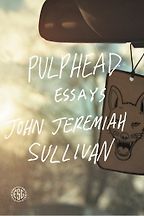
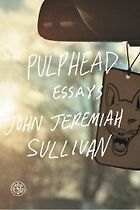
Finally you recommend a compilation of essays by award-winning writer John Jeremiah Sullivan. Please tell us about Pulphead and its author.
This is a new book by a writer in his mid-thirties, about all kinds of things. A lot of it is about the South, some of it is autobiographical, there is a long and quite wonderful piece about going to a Christian music camp.
But what I love most about this book is an essay about old country blues, and about the way in which music made by people in the twenties and thirties – African Americans from Mississippi or other parts of the South – can create an aura of enigma. You desperately want to find out how these magical sounds were created, and what kind of lives lay behind them. So often this kind of knowledge is absolutely inaccessible – you’ll never find the answers to these questions but the questions never go away. Nobody has dramatised that as well as he has in this book, so I’m really recommending it for one marvellous essay about old country blues.
I read that Sullivan started out as your fact checker, and like you he ranges far afield from music in his writing. Is he following the path you beat? And does his work give you that proud papa feeling?
I think he’s ploughed his own road. It just so happened that he was fact checking an article I wrote about an old blues singer named Geeshie Wiley. We both became completely fascinated with this person, who recorded in 1930 and about whom absolutely nothing is known. We don’t even know her real name. We don’t know when she was born, where she was from or when she died, assuming that she has died. I think she left behind five or six recordings, one of which is one of the great works of American art, a blues song called “Last Kind Words Blues”. I wrote an essay about trying to get to the heart of that recording. Then he went off and tried to get to the heart of who Geeshie Wiley was. So in that sense we shared a quest. But he’s certainly his own writer.
What do these five books capture about rock that has kept you listening for a lifetime and writing about rock for almost 45 years.
I guess anywhere you look you can always be surprised. You can be surprised by somebody’s insight, by the way they turn a phrase, by a jump in a melody. You can always hear something you haven’t heard before. That’s what keeps me paying attention.
Five Books aims to keep its book recommendations and interviews up to date. If you are the interviewee and would like to update your choice of books (or even just what you say about them) please email us at editor@fivebooks.com
Five Books interviews are expensive to produce. If you've enjoyed this interview, please support us by donating a small amount.
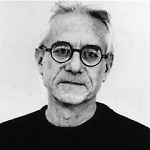
Greil Marcus
Greil Marcus is a music journalist and cultural critic. He is notable for producing scholarly and literary essays that place rock music in a much broader framework of culture and politics than is customary in pop music journalism. His newest book is The Doors
Greil Marcus is a music journalist and cultural critic. He is notable for producing scholarly and literary essays that place rock music in a much broader framework of culture and politics than is customary in pop music journalism. His newest book is The Doors