What is happiness?
That is a very elusive question. There are something like 15 academic definitions of happiness. I used to be a lawyer and what comes to mind is what Justice Potter Stewart said of obscenity, “I know it when I see it”. But I think it’s more helpful to think about being happier. Next week you could be happier, instead of worrying about achieving happiness.
Your bestselling book is about applying happiness wisdom to your own life, but the books you’ve selected aren’t works of science.
I didn’t set out to only look at the science. I wanted to look at the wisdom of the ages, current scientific studies and lessons from popular culture. My research encompassed incredibly diverse sources.
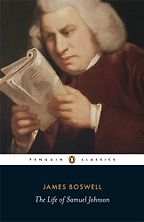
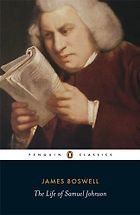
You called Samuel Johnson “the patron saint” of your book The Happiness Project. Let’s start by discussing Boswell’s classic biography.
Samuel Johnson has such insight into human nature. His devoted fan and friend James Boswell wrote The Life of Samuel Johnson. It’s charming to read. He had so much to say about self-knowledge and what it means to be happy. In the book, he quotes a Spanish proverb that was well known in his time: “He who would bring home the wealth of the Indies must carry the wealth of the Indies with him.” I came to feel that it had enormous meaning for happiness, that I could only find it if I brought it.
Johnson, an eccentric 18th century lexicographer, essayist and editor, is the patron saint of my happiness project in that I am guided by his epigrams. He wrote, “Grant me God to resolve a right and to keep my resolutions”. He made and broke resolutions throughout his whole life and yet always came back and tried to do more. And he has this great line: “No money is better spent than what is laid out for domestic satisfaction.” I’m an under-spender, so this one helps me break out the wallet to fix the blender. I am basing my next book on his epigram, “to be happy at home is the ultimate result of all ambition”. When you think about all the different elements of life, being happy at home is most important.
Johnson formed a social group called “The Crowd” that eventually included Joshua Reynolds, Edmund Burke and Adam Smith. I understand research shows that strong social relations support happiness.
Benjamin Franklin did something very similar. One of my most successful happiness project resolutions is to join or start a group because, as you say, strong relationships with other people are the key to happiness. Being part of a group is an efficient way to maintain a lot of relationships; social networks are stronger than isolated relationships. If your group is formed around something that you feel passionate about, it’s also a way to make sure that you spend time on what gives you pleasure.
People are so busy they don’t make time for things that are important to them. Since I started my happiness project I’ve joined or started something like 15 groups. My favourite groups talk about young adult literature. I thought I might be the only adult in New York City who would want to do this, but the first group got so big it had to close to new members. I started a second group and then a third.
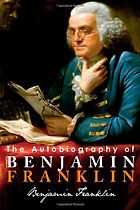
Benjamin Franklin’s autobiography is your next choice. Please tell us what it taught you about happiness.
I copied Franklin in my own book. He believed that we all could determinately sit down and come up with practical steps to make changes in our life. He identified 13 virtues that he wanted to imbue in himself and made a weekly chart to help him track his daily progress. I copied my resolutions chart from him.
Franklin was incredibly polymathic. He was an author, a printer, a diplomat, a postmaster, an inventor.
Franklin’s life teaches us that when you love what you do and your life reflects your values, you can accomplish an unimaginable amount. What I found in my own modest attempt to follow in his footsteps is that if what I do really reflects what I want to do and like to do, instead of what I think I ought to do or what seems like it would be the smart thing to do, than I am happier and more successful. When you see someone who seems to accomplish a superhuman amount, I think it’s because they’re doing what comes naturally.
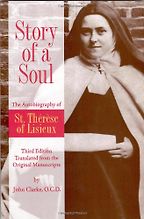
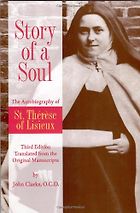
Next, Story of a Soul is the posthumously published autobiography of a French Carmelite nun who died of tuberculosis at age 24 in 1897. Did you receive this at your first communion?
I’m not Catholic so I had never heard of St Therese, which is like not knowing about the Beatles. She’s a superstar saint. I had been reading Thomas Merton’s Seven Story Mountain, his own spiritual memoir, and he mentioned “the little flower”. I was so surprised that this macho grouchy guy wrote with reverence about this young woman. She lived in a cloistered convent in France where several of her biological sisters became nuns. Therese talked about how she wanted to do great deeds but she couldn’t because she was a young nun so she had to do little things. Mother Theresa, who did enormous good in the world, took her name from Therese, not from Theresa of Avila, because she identified with the little flower. Therese explains in her introduction that great souls are like roses or lilies but little flowers in the field are also pleasing to Jesus.
Story of a Soul is her spiritual memoir. She was a great writer and very, very funny which is surprising in a saint. One of my favourite, favourite lines about happiness comes from her. She said, “For love of god and my sisters so charitable toward me, I take care to appear happy and especially to be so”. This quotation gets at a key to happiness. Another person’s happiness can affect our own happiness and one of the best ways to make other people happy is to be happy ourselves. Although her last days were filled with agonising pain associated with TB, those who saw her said she seemed happy.
She was canonised less than 25 years after her death.
Yes, she rocketed to sainthood in violation of all the rules. There was so much popular support for her and so much belief in her spiritual gifts. Her memoir was published for other convents after she died and it just spread. She died an unknown but within a few years of her death, they had to put guards around her grave because people were coming in and trying to get relics. There was so much enthusiasm that the Church felt they needed to fast-track her.
Let’s move onto two works of fiction. More readers may be familiar with the 1992 film The Enchanted April than the 1922 novel, so tell us about the novel and its author.
Reading novels about happiness or seeing movies about happiness doesn’t necessarily make you feel happy. Sometimes you want to read a book that makes you feel happy and The Enchanted April is just one of the most charming books. It’s about four women who are each unhappy in their own ways and decide to take a break from grey England by renting a house in Italy, and their lives are completely transformed. It sounds very syrupy but because von Arnim is such an astute writer it has a biting edge – it’s not all fairy dust.
I can understand deriving happiness from reading it, but what would we learn about happiness from reading it?
There’s so much in here. Each of the women is unhappy in her own way and each one is dealing with unhappiness in her own way. It shows you different mistakes people can make and how we can fix them.
You’ve said that it’s very hard for artists to steer clear of sentimentality when portraying happiness. Is trying to avoid treacle part of what makes it hard for us to be happy?
I think it’s funny that some people connect happiness with shallowness. I just don’t see that. In Buddhism they talk about skillful emotions. Happiness is a skillful emotion for most people. Some are born with happy genes, but for most people it takes work to be happy. To think that you shouldn’t want to be happy because it’s too superficial or because there’s too much suffering in the world? Happiness equips you to worry more about the world around you. People who are happy can turn outward. Studies show that happiness makes people more altruistic.
The Enchanted April is about a holiday in Italy. Is travel a reliable path to happiness?
Studies show that novelty and challenge make people happier. So going to new places and doing new things does tend to make people happier. And it’s definitely true that being in a beautiful place makes people happier. That was established by the department of studies that didn’t need to be funded.
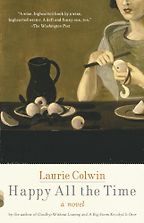
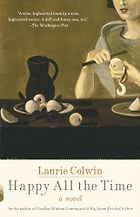
Let’s end with Lauri Colwin’s Happy All the Time.
That’s a book that will make you happy and it’s a quick read. It’s about how two couples come together and what happens when your happiness is bound up with another person’s happiness.
Is getting married a good idea for someone seeking to be “happy all the time?”
In general, married people are happier. It’s true that happy people tend to make better dates and better spouses, so they tend to get married and stay married. But it also seems like marriage itself causes happiness because it’s the source of the companionship and intimacy, two things that people need to be happier.
Your happiness project was a year-long endeavour. Are there shortcuts to happiness that you can point us towards?
I tried shortcuts. Hypnosis. Acupuncture. Exercise is one shortcut that actually works, as studies show. The fact that I spent a year on my happiness project doesn’t mean that others need to do the same to get happier. I executed my happiness project in an extremely over-the-top, type-A way. Just doing one or two things differently can make you much happier. The important thing is to keep moving in the right direction.
We all fall short. As Benjamin Franklin said when reflecting on his own happiness project, “though I never arrived at the perfection… I was, by the endeavour, a better and a happier man than I otherwise should have been had I not attempted it”.
Five Books aims to keep its book recommendations and interviews up to date. If you are the interviewee and would like to update your choice of books (or even just what you say about them) please email us at editor@fivebooks.com
Five Books interviews are expensive to produce. If you've enjoyed this interview, please support us by donating a small amount.