NPR host and former foreign correspondent offers practical and anecdotal guidance on reporting the news. Says, "I don’t buy this idea that there was a golden age in journalism"
First of all, what are you trying to get at with this choice of books? What groups them together?
In my mind, there is a clear connection between George Orwell, Christopher Hitchens and George Packer. All of them are truth-seekers. In the case of Orwell and Packer, they both went to a place with the intention of seeing success, or seeing something happen that they had sympathy for, and both of them came out of this experience deeply affected and disappointed. A lot of it is about truth-seeking. It’s almost a quaint cliché, but it’s really at the heart of what we do.
Are we talking mainly about foreign reporting? That’s your own background – is that what you’re attracted to?
There’s no question that I am. And Dan Schorr, George Orwell, George Packer and to some extent Hitchens were foreign journalists. A lot of it is about courage. People have this picture of Dan Schorr or George Orwell or even Christopher Hitchens as these really courageous men. And they are. But it’s not easy. There’s a lot of turmoil that happens in their lives, both personally and professionally. They pay a price for it. Courage is a really underrated side of what we do. Not all of us have it. There are certainly times when I wish I had been more courageous than I was. These books are a baseline for me; I read them and it reminds me of what we should all be, how we should all approach what we do.
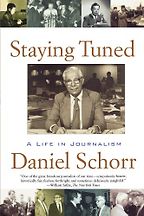
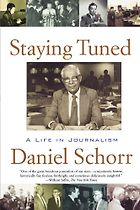
So tell me about Staying Tuned, the autobiography of Daniel Schorr, the last of Edward R Murrow’s legendary CBS team.
My first job at NPR was as Dan’s assistant. It was toward the end of his career, his last 13 years as a working journalist. He worked right up to the day he died last summer [age 93]. I had this incredible opportunity to learn from this guy, who was a living legend. Dan was not the kind of boss who would take people aside and offer bits of wisdom. He was the kind of person who probably thought that would be presumptuous. The way he taught you was by making demands for excellence. His standards were very high. They weren’t always pleasant demands, but they were important. He was uncompromising in the best way.
I had skimmed through it before, but I only fully read Dan’s autobiography after attending his memorial service last summer. I already knew the contours of his life – that he’d opened up the first American TV news bureau in Moscow, about his interview with Khrushchev, how he was eventually kicked out of Russia. What I didn’t know were the personal details. A lot of people thought of him as the consummate insider, always with a seat in the inner circle, always going to the White House and meeting with the presidents and getting background briefings. He wasn’t at all. He was the opposite of that. He was an outsider in almost every way. Even at CBS. Many of the guys he worked with at CBS were Ivy League patricians. Dan was a scrappy, Bronx-born, poor Jewish kid, who didn’t have a dad. Many of the other Jewish reporters he worked around at CBS in the 1950s did everything they could to hide it. Dan didn’t. He was who he was.
If you really are a truth-seeker, aren’t you always going to be an outsider? People don’t like giving you access if you’re going to write something harsh about them.
I think that’s probably why he was so effective at finding out the truth and getting it from people. Dan wasn’t the kind of journalist who called people up asking for favours. He didn’t cultivate sources by schmoozing and going to cocktail parties. He wasn’t good at small talk, and he didn’t suffer fools. He was just a really serious and honest reporter, committed to exposing wrongs and falsehoods.
People went to Dan to tell him things because they knew he could understand the gravity of what they had to say. Dan had this amazing ability – he outlines it a little bit in the book – of being able to discern how important a truth was. People also knew he wouldn’t betray them as a source.
Get the weekly Five Books newsletter
Another part of Dan – and this really goes to the core of who he was as a journalist, and what all of us should aspire to be – is a very short story he tells towards the end of the book. He was working for CNN and in 1984 they asked him to be a commentator for the Democratic and Republican conventions. He was told he would be paired with John Connolly, the former Texas governor and Treasury Secretary under Richard Nixon. Dan said, ‘I’d be happy to interview John Connolly, but there isn’t a chance in hell that I’m going to sit on the same side of the table as Connolly.’
He says he told his bosses at CNN that ‘putting a journalist with a politician is like mixing apples and oranges.’ If you think, when you turn on television today, how many ex-politicians and political operatives have rebranded themselves as news analysts and sit on the same side of the table as working journalists, it seems almost quaint to read Dan’s objections. But he was right. He was right then. He was right now. It cost him his job. CNN didn’t renew his contract a year later, but Dan wasn’t willing to play that game.
Let’s go on to Writing News for Broadcast, which is more of a how-to book.
This book is a classic. It’s filled with advice from Murrow, Sevareid, Trout, Rather and Cronkite. All men. There are no women in this book. It’s very old school. I think the first edition came out in the early 1970s or late 60s, and it hasn’t been updated for years.
But it’s still a classic, because it outlines the basic commandments for writing for broadcasting. Write in a conversational way – speak to your audience, like you would anybody else. Be concise. Use active and not passive language (‘Mr Smith baked an apple pie today,’ rather than ‘An apple pie was baked by Mr Smith’). And then something that print journalists wouldn’t think about is the rhythm of what you say. The way a long sentence sounds next to a short sentence, the cadence. When I write a script I really think about that rule. It essentially says to you, once you’ve written down what you want to say, read it out loud and don’t even pay attention to the meaning of the words. Just listen for the rhythm of the way they sound. That’s an essential part of writing for broadcast. It’s not just about the information, it’s about the way that information is absorbed, in one ear…
One cool thing in the book is that it includes scripts that Edward R Murrow rewrote. Scripts that were handed to him, and it shows how he rewrote them. For example, one he was handed said: ‘Mao Tse-Tung has relinquished one of his posts,’ and Murrow changes it to: ‘Mao Tse-Tung has given up one of his top posts.’ It’s things like that. You wouldn’t use ‘relinquish’ on the radio. You don’t say ‘prior to’, you say ‘before’. You don’t say ‘protracted’ legal battle, you say ‘long’ legal battle.
Compared to print journalism, isn’t it a huge challenge – in television in particular – that segments are so short? It must be very hard to explain something in so little time.
The book says: focus on the important ideas you want to get across. It means you’re careful with numbers and statistics. It doesn’t mean you eliminate details. It’s about painting a picture in the mind’s eye. You can go back and read an account of an event as Edward Murrow covered it, and then compare it to how an AP or UPI wire reporter covered it. It might as well be a completely different event. Murrow will talk about: ‘the sound of footsteps running quietly through the streets of London.’ That will be the opening line as the bombs are falling. The UPI report will be: ‘Axis warplanes launched an aerial assault on London.’ It’s a completely different way of communicating. When it comes to straight news writing, this book is still invaluable. I refer to it at least once a week; it’s in my office, and it’s just a great source for checking up on yourself.
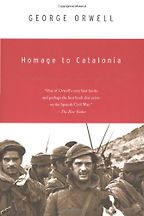
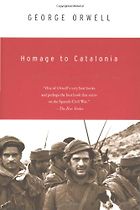
Next you’ve got George Orwell’s Homage to Catalonia.
So Orwell goes to Spain.
But does he go as a journalist? Doesn’t he go to fight?
He went to fight, but he also went with the intention of chronicling what he saw. But yes, he picked sides. He wasn’t one of these reporters who would interview the killer and the victim with equal weight. He believed there were times when one side was wrong. Like the Holocaust. You wouldn’t interview a member of the Einsatzgruppen and then one of the victims and get two sides of that story. There aren’t a whole lot of cases in history where it’s so clear-cut, but Orwell saw the Spanish Civil War as one of those cases. And then he gets there. He doesn’t lose faith in the righteousness of those fighting to preserve Republican Spain, but he becomes deeply disillusioned. Orwell was a person of the left, and then eventually, over the course of his life, became someone who was difficult to categorise because he wasn’t willing to hold back. He was willing to acknowledge and expose things. The left regarded it as a betrayal, and many of them just attacked this book. When it came out, it didn’t sell well.
But as Arthur Koestler said, quoting Thomas Mann: ‘A harmful truth is better than a useful lie.’ I love that because it’s so true. The book is just tragic. Orwell believes in this cause and simultaneously is just breaking it open and taking it apart. I’m sure it was very hard for a lot of his fellow leftists.
The other reason I picked this book is that Orwell, like Dan Schorr, was an outsider. When he went to Spain, he was an unknown. He wasn’t Hemingway. He wasn’t a well-connected intellectual. He just had this amazing eye for detail. He was an amazing observer, and he could write so powerfully. This book, to me, is just one of the classics of foreign reporting.
But as a journalist, aren’t you supposed to be objective? Isn’t it the worst thing to believe that one side is wrong and other right?
You are. But I don’t think Orwell would say that he was not objective. Quite the contrary. He would say the book shows just how objective he actually was as a reporter, because he wore his heart on his sleeve. He went to Spain with a letter from one of the Communist groups in London, and he wrote something that infuriated them and that they never forgave him for. That’s because he was a truth-teller. He wasn’t going to be part of a propaganda campaign.
I think in many ways this is the kind of book that should be handed out in journalism school. It says that all of us have viewpoints – and that to say that, as reporters, we’re robots, is a lie. And if you do say that, you shouldn’t be a reporter. If you have no opinions of your own, if you have no views, beliefs or passions, you shouldn’t enter the profession. But if you can’t also fight against your biases, then you shouldn’t enter the profession either. Orwell fought against his own beliefs and his own views – that’s the thing about the book that makes it so extraordinary. And he took a huge risk because he was unknown. He needed the work; he needed the money. That could have pretty much been the end of his career. And, for a while, it was.
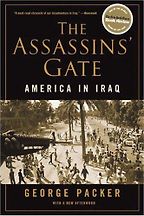
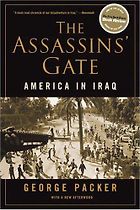
Tell me about New Yorker correspondent George Packer’s book about America in Iraq, The Assassin’s Gate.
Packer is open about his views. He didn’t go to Iraq to fight, obviously, but he was a liberal interventionist, cautiously supportive of the invasion of Iraq, believing that it would liberate people from living under the tyranny of a madman. His intention was not to go to Iraq and cover a failed experiment.
I spent a lot of time in Iraq as a reporter, and I would inhale Packer’s reporting in The New Yorker. Every time something new came out, it was the first thing I would read. He’s not one of these bang-bang war reporters, rushing to the scene of battles, just to then sit down at night with a bottle of Scotch and other stubble-faced journalists, regaling each other with stories of their close calls. It’s not his style. He’s the kind of guy who goes two or three levels down. He will sometimes talk to the top people, but he doesn’t get the best information from them. That’s an important lesson that I learned from reading Packer.
Packer can tell you the tragedy of Iraq through the story of an actor who worked in the national theatre, or one of Saddam Hussein’s former bodyguards. He could tell you more about Iraq with one line…
Can you give me an example?
In the book, he says that one of the first things that struck him when he got to Iraq was that people looked so much older than they actually were. He describes the leathery, hollow cheeks of the men, their grey stubble. There’s a scene where he’s in a taxi cab and the driver asks him how old he is. Packer says 42. And the cabdriver has to stop and write it down, he’s so shocked. He had assumed that Packer was in his 20s. Packer, meanwhile, had assumed the driver was in his 60s, when he was, in fact, 40. It just told you so much about what had happened there. People just aged faster because of the tragedy of what had happened in their country over the previous 20 years.
There’s a feeling I get from this book that’s like the feeling I get from Homage to Catalonia. Packer was so deeply disappointed with what happened in Iraq – almost as if it were a personal betrayal. A project that had potential was completely betrayed by the people who were in charge of it.
Isn’t that his central argument, that Iraq needn’t have been a disaster if Washington, the Bush administration, had planned it better?
Yes. And that those people who mismanaged the war also betrayed a lot of the people who went to Iraq to try and make it work. Because there were some really smart people there. I was in Iraq in 2003-4, the period the first part of the book is about. A lot of people don’t want to hear this, but the fact of the matter is that you would walk around the streets of Baghdad and people would say to you: ‘Thank you, America!’
But Packer got it pretty early on that it was not working. A lot of journalists were blamed by the Bush administration for being naysayers. But a lot of reporters were pointing out the problems and mismanagement precisely because they wanted to see the plan work. To me, Packer’s book is still the best account of what went wrong there.
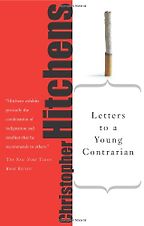
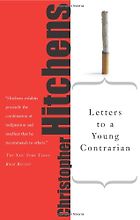
Lastly, you’ve chosen Christopher Hitchens’s Letters to a Young Contrarian.
I don’t think there is a better journalist than Hitchens writing in English. The power of his arguments – they’re so crisply written, they’re so forceful that, if you are on the other side, they almost strangle you. There’s nobody more compelling to read. Every time I read him, I learn something from him. His arguments are so tight, they’re hermetic. It’s very difficult to take them apart. I certainly don’t agree with him a lot of the time, but you can’t but be in awe of the way he can build an argument.
In terms of what it means to be a journalist, is Letters to a Young Contrarian saying that your job is to be a contrarian – to go against the prevailing view?
It’s open to interpretation, but I think the answer is no. I don’t think so. A lot of what he is saying to you, as the journalist reading the book, is, ‘Don’t trust yourself. Always, always second guess yourself before coming to a conclusion. And once you’ve come to a conclusion, keep second-guessing yourself.’ His loyalty is to truth. He does not have a political home – I don’t think you can call him a conservative or a liberal. But you can call him a person of great principle. He rejects equivocation. He rejects moral relativism. Hitchens is the kind of reporter who says, ‘Don’t be afraid to pick a side, but always be prepared to be disappointed, and to watch your viewpoint unravel…’
Support Five Books
Five Books interviews are expensive to produce. If you're enjoying this interview, please support us by donating a small amount.
The other thing about the book is that it has some really memorable quotes. There’s one: ‘In an average day, you may well be confronted with some species of bullying or bigotry, or some ill-phrased appeal to the general will, or some petty abuse of authority. If you have a political loyalty, you may be offered a shady reason for agreeing to a lie or half-truth that serves some short-term purpose. Everybody devises tactics for getting through such moments; try behaving “as if” they need not be tolerated and are not inevitable.’ That to me sums up that book, and who Hitchens is.
What’s your feeling about the state of journalism right now? We missed the financial crisis, we believed too much of what we were told in the run-up to the Iraq war… Everyone is cutting costs. I feel morale in the profession is pretty low.
I don’t believe we’re in crisis. Obviously newspapers are folding. But there is nothing that has changed about the way people absorb information. We read it, or we see it, or we hear it. That’s how we’re hardwired, and whether you get it from a newspaper or a digital platform makes no difference. The demand for information is still there, and it always will be.
Also, I don’t buy this idea that there was a golden age in journalism. CBS in the 60s and 70s was a golden age in television reporting, partly because they really threw money at it. CBS gave airtime to documentaries, to stories that exposed injustices in America and overseas. They didn’t worry about whether one of Murrow’s documentaries was going to make it a lot of money – because they felt it was a public service to do it.
Reporters today – there’s no question they’re capable of doing that kind of work. I served as a judge for the Goldsmiths Awards a couple of years ago at Harvard. The kind of investigative reporting that is done every day in this country at newspapers like the Pittsburgh Post Gazette, or at ProPublica, is amazing. There are amazing reporters at CBS, at the New York Times, at NPR, at CNN. What has happened is that in some cases there isn’t always a clear outlet for their work. News has become commoditised, and it can’t always be commoditised.
But it’s an easy narrative to say that journalism isn’t the same as it used to be. It took most of the press corps years to expose the failings of Vietnam. Walter Cronkite only made his famous remarks in 1968. Before that, he would go to Vietnam, do profiles of men and officers and generals and describe what they were doing, sometimes in an uncritical way. We forget that. It’s not all that different. Reporters are human. They don’t always have crystal balls.
And the fact of the matter is that in the old days, it was mostly men. Especially in Washington, they were very cozy with the people they covered. Back in the day, the White House correspondents really did know the president. They hung out with him; they played poker with him; they had drinks with him. It’s a completely different world now. There’s no question in my mind that there is far more of an adversarial relationship between the president and the people who cover him. Does it result in better reporting in aggregate? I would say yes.
My own big gripe with being a reporter today is the ubiquity of PR. I’ve mainly done financial reporting, and in China, where I worked before, I could just get on the phone and ask people what was going on. In the US, you can’t do anything without going through a PR person. If you do an interview, a PR person is on the line, once you’ve completed it, they want to change what the person said. On balance, it’s a lot easier covering the corporate sector in China than it is in New York City.
I was overseas for six and a half years. Reporting on a war, from a combat zone, there are a whole host of challenges, obviously. You want to survive. But from a reporting perspective, it’s some of the easiest reporting I ever did. Because you literally go outside, hold your microphone out, and do a story. In Iraq – certainly in 2003 – you could walk into a ministry building, and there was a good chance you could go and talk to the minister. They would say: ‘Wait here…’
One of the hardest jobs I’ve had is covering the Pentagon – trying to make that beat interesting to our listeners, day in and day out, when that was all I covered. It was incredibly difficult to find sources who were not only willing to talk, but willing to talk on tape. Talk about an impenetrable place.
March 19, 2011
Five Books aims to keep its book recommendations and interviews up to date. If you are the interviewee and would like to update your choice of books (or even just what you say about them) please email us at editor@fivebooks.com
Guy Raz is the weekend host of NPR News's signature afternoon news magazine All Things Considered. He spent six years as a foreign correspondent, reporting from over 40 countries and including a stint as CNN’s Jerusalem correspondent. For his reporting from Iraq, Raz was awarded both the Edward R. Murrow Award and the Daniel Schorr Journalism Prize.
Guy Raz is the weekend host of NPR News's signature afternoon news magazine All Things Considered. He spent six years as a foreign correspondent, reporting from over 40 countries and including a stint as CNN’s Jerusalem correspondent. For his reporting from Iraq, Raz was awarded both the Edward R. Murrow Award and the Daniel Schorr Journalism Prize.