Heather Brooke's investigative journalism was the catalyst for the MPs expenses scandal of 2009. With an eye to how power corrupts, from Orwell's Animal Farm to an apartheid memoir, she looks at importance of sticking to one's principles and the dangers that arise when we don't
The Silent State: Secrets, Surveillance and the Myth of British Democracy by Heather Brooke
Holding power to account has played a big role in your career as a journalist.
Most people have a sense of justice. They don’t like to see people with power abusing that power. It happens to be the focus of my career, but that is largely because I’m a journalist and holding power to account is what journalists are meant to do.
Your book Your Right to Know is about the Freedom of Information Act that came into force in the UK in 2005. How did the act change your career?
It started with some civic activism I was doing in my neighbourhood in east London. I wanted to know fairly basic things about where I lived – how many policemen were on duty at any one time, for example, because there were some incidents when I phoned the police and they never showed up. There were other mundane things, like why litter wasn’t picked up. Even there I couldn’t get answers.
I kept coming across an awful attitude of obstruction whereby the council didn’t want to give the public any information. I’d been a journalist in America and I was used to getting quite a lot of information from local government. The more I looked into Britain, the more I discovered a culture where the public didn’t have any rights to official information.
Then I found out that the Freedom of Information Act was coming into force in 2005. I had an idea of writing a book that would serve as a guide for citizens in Britain on how to use this new law and start asking challenging questions of public bodies.
You were born in the States and lived there for quite some time – do you think that public bodies in the US act in a similar way to the UK?
It is very different, particularly in local government which is how most of us experience government. When I lived and worked in America, most public officials understood they were working for the public and that their livelihood depended on the citizens. When I was a crime reporter in South Carolina, the amount of information I was able to access – in a supposedly backwater state – was leagues ahead of what the public can access today even in a major British city like London.
Why do you think there is such a difference in attitude?
In Britain there is still an attitude almost of feudalism – that the common person can’t be trusted with information. Maybe it’s a holdover from the class system, but there is a sense that the people at the top know what is best for the rest. We’re also dealing with an ancient bureaucracy. The civil service has been in existence for many hundreds of years, so the people working there see it less as public service and more as their own fiefdom.
They don’t want to share information with the public. Information is power and many people see the sharing of information as the diminishment of their power, so they refuse to disclose.
Let’s move onto your books. Your first choice is George Orwell’s allegorical Animal Farm.
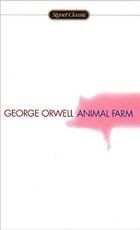
It was a toss-up between Animal Farm and 1984. I picked Animal Farm because it is an allegory about power and its seductive and corruptive influence on people regardless of their initial good intentions. As one moves up the ladder and accrues power, the tendency is to forget principles – instead the ends come to justify the means. Once principles are cast aside, however, it is a short way towards becoming exactly the thing one fought against. What you see in Animal Farm is an imaginative depiction of exactly how this happens.
“Information is power and many people see the sharing of information as the diminishment of their power, so they refuse to disclose”
There are two main characters – the pigs Napoleon and Snowball – and they lead an animal-liberation revolution on the farm: “Two legs bad, four legs good”. They write a declaration of rights on a wall and the main tenet is equality, but soon a power struggle develops and Napoleon ditches these principles to focus on concentrating power in himself. He does so primarily through the manipulation and control of information. By the end of the story, the pigs are no better than the humans they deposed.
I have seen this in politics quite often. In my latest book I looked at Wikileaks, and the dynamics of that organisation offered a living example of this book. It was bizarre to see how Julian Assange, a supposed campaigner for truth, manipulated information to build up a cult of personality around himself – and also to see how many people fell for it.
It seems a lot of us are looking for a saviour, someone who will do the hard work of making society just. We want to outsource the hard graft of democracy and then we wonder why that person fails to live up to our expectations. It’s because they are fallible human beings, as everyone is.
The main problem is they start to believe their own hype. If you look at any dictator, most started out from a position of powerlessness. They desperately crave power, but even when they have it they can’t shake that internal feeling of powerlessness, which is why they covet more power and will do whatever it takes to keep it. It is that kind of dynamic which makes power so seductive and dangerous.
How can we hold people like that to account?
The main point is that power – when concentrated – is dangerous, and the only way to counter that danger is to build into a political system a series of checks and balances that are constantly monitored. For that monitoring to be effective, there need to be robust laws on freedom of speech and of information.
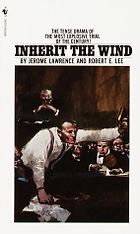
Your next choice takes us from a novel to a play. Inherit the Wind is a fictionalised account of the 1925 Scopes Monkey Trial.
This is another allegorical tale, about a preacher who is against the teaching of evolution. He thinks it is a sin. The preacher’s power comes from his ability to control what people think, and this is done by controlling what they are allowed to know.
When a young schoolteacher, Bert Cates, reads Charles Darwin’s OriginofSpecies to his students he’s locked up. The play focuses on his trial. One of the most interesting characters in the play is a newspaper reporter named Hornbeck, based on the wonderfully acerbic HL Mencken who covered the Scopes trial. I’ve always loved Mencken’s work and he’s a journalistic role model for me.
He looks at threats to intellectual freedom and what can be done about them.
Yes, and the play is about the ability of people to communicate ideas without persecution or obstruction. The way the Reverend Brown uses censorship and suppression maintains his position at the top of society. He actively stops people from thinking differently in order to maintain the status quo – the point being that by controlling information you control people.
You are well known for your part in breaking the parliamentary expenses scandal in the UK. When you were trying to get information, what obstacles were put in your way?
Mostly I encountered relentless obstruction from the authorities. They would not give an inch, and whenever I won in court they would appeal. The whole process took approximately five years, but when the material was eventually published it had the most profound impact on British society. Never again would people blindly trust authority.
“Once principles are cast aside, however, it is a short way towards becoming exactly the thing one fought against”
Along with the expenses scandal, I wrote about many of the double standards that existed between citizens and the British state in TheSilentState, and in May 2010 a new government was elected on a platform of greater transparency. That gave me a tremendous sense of achievement and it does show that sometimes one person can make a difference.
Did you ever feel guilty about the situations you put people in?
Oh God no! I was disappointed with parliamentary officials and politicians because I felt they were short-sighted. By fighting so hard against a changing tide in society, where people want more information from their leaders, they gave energy to the story.
Parliament was very much stuck in the past, not wanting to share information at all. Rather than reform gradually they tried to shut the portcullis – which only made the scandal that much more catastrophic when it finally broke. Because they were so resistant it went on to become a huge scandal.
But I was also surprised at other journalists. Many times I would be interviewed, on BBC Radio 4 for example, and the journalist would defer to the status quo – not asking MPs why they were so secretive but asking me why I thought I had a right to know. “Why are you so interested in what an MP spends on a pint of milk?”, that sort of thing. I would reply, “If an MP is so miserly as to charge the taxpayer for a pint of milk, why shouldn’t the public know? It’s our money.” There was an assumption held by most mainstream journalists at the time that it wasn’t the done thing to ask these rude questions to the right honourable gentlemen.
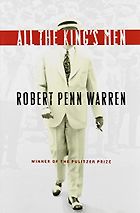
And the scandal leading to Liam Fox’s resignation just goes to show how things have changed. Your next book is the novel All the King’s Men by Robert Penn Warren, which tells the story of the fictional politician Willie Stark.
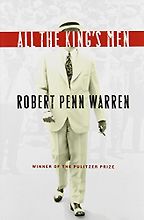
This is a great mix of politics and journalism. It shows the way the two work together in a symbiotic relationship where they both need and hate each other. The newspaper guy is Jack Burden and he goes to work for Willie Stark – who starts off as a fresh-faced, incredibly idealistic and very ambitious man-of-the-people politician.
Willie Stark is based on Huey Long, governor of Louisiana from 1928-32.
Yes, he was a great populist politician. The narrative is his rise and inevitable fall. Again, it is a story about power and how Willie Stark changes as he gains it – his values corrode so that by the end of the book he is as bad as the politicians he initially decried.
Because he only wants to retain his power.
Exactly. You see the corruption of Jack Burden as well. He starts off wanting to use his journalistic skills to help Willie Stark, but then as Willie becomes a powerful politician Jack also becomes corrupted and turns his reporting skills to digging up dirt on Willie’s enemies. At the end he, too, questions his own integrity.
That is the problem with a lot of journalists. They are meant to fight for truth and justice, but in reality there are power deals and choices about what to reveal and what not.
That is always a danger for journalists, particularly when you cover powerful people. In order to get access you start making compromises. You forget who it is you are working for. You are meant to work for the public at large, but what you are possibly doing is working for the interests of the powerful – because they give you the stories. That is the crisis point where we find journalism today.
“That is always a danger for journalists, particularly when you cover powerful people. In order to get access you start making compromises”
Most media organisations today are big corporations; the editorial staff is thinly resourced but their production quotas are high. You just can’t do good journalism if you have to produce three or four stories a day. So journalists end up rewriting what is given to them.
They don’t do what a journalist needs to do, which is verification – finding out if what is said is actually true. Good journalism is about taking nothing at face value, being intensely sceptical, finding from outside sources whether or not what is being said is true.
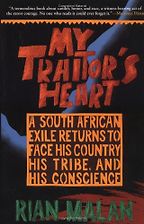
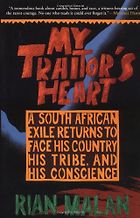
Rian Malan’s My Traitor’s Heart touches on the importance of journalism in South Africa, as well as telling the story of how he fled the country to escape the military draft, because he didn’t want to carry the gun for apartheid.
I like this book because it is an intensely moving story. Again, it is about a journalist and power. Rian Malan felt the injustice of apartheid when he was growing up and wanted to do something to change it. He was from a well-known Afrikaner family in South Africa, but instead of going into politics he became a journalist.
I mentioned his book in a recent lecture to journalism students at City University [London] because Malan talks about the importance of the newspaper in fighting for justice. In South Africa it was often the last port of call for wronged people. They would turn up in the newspaper office, desperate to tell their story. They wanted people to bear witness to what had happened to them.
An example of journalism at its best – being used to serve the public and to hold the powerful to account.
Exactly. Newspapers played a very important role in campaigning against apartheid. That is why South Africa has very strong media laws today, in acknowledgement of how important the media was in fighting against the injustices of apartheid.
I also like the book because it is an autobiography, and in covering the story of his life he also tells the story of South Africa. He doesn’t take anything as received knowledge but subjects it all to scrutiny and muses on what it means in terms of human nature.
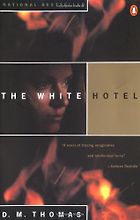
Your final choice, The White Hotel by D M Thomas, is very different from your other choices.
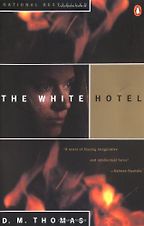
It is a novel, and one of my favourite books. It begins with an intense, lush, erotic poem. I picked this as my last book because it shows yet another way to use writing to hold the powerful to account. You can do it through journalism. You can dramatise an issue through a play, as in Inherit the Wind. All the King’s Men is a fictionalised story based on real people, and Malan uses his own life story. The White Hotel runs the gamut – it starts off with an erotic poem, there’s a short story, a pseudo-journal entry, letters, but overall it is a novel. And this is the direction I’d like to go with my writing.
I like the way you can explore issues through fiction. D M Thomas is exploring the Holocaust, though you don’t realise that initially. It ends with the massacre at Babi Yar, a site outside Kiev where 30,000 Jewish people were killed in one and a half days by the Nazis. One could write that as straight history, though it is hard because of the lack of documentation or eyewitnesses. Instead, the author uses his art to build an emotional impact.
It’s another way of telling a story of this great lesson about power that we all seem to need to learn over and over again. Namely, that we must be ever vigilant and never let power concentrate in any one person or institution.
Do you think it is possible to have the ultimate political system?
Yes. The only system that I have seen where people have really sat down and thought about power and how it can be contained was the founding fathers and the American Constitution and Bill of Rights. That framework was constructed so that no one branch of government could ever capture the other. The problem is that now we have the issue of political funding, and there exists another source of power in the form of corporations. We need to evolve a way to put corporations into that power mix without them having undue influence.
“The problem is that now we have the issue of political funding, and there exists another source of power in the form of corporations”
Of course, everything humans do is always flawed because “out of the crooked timber of humanity, no straight thing was ever made” [Immanuel Kant]. We are never going to create the great utopia, and it is naïve to think so. What we can do is have a sound understanding of human nature and of what our fallibilities are, and based on that understanding be more thoughtful about how we build political systems.
August 19, 2012
Five Books aims to keep its book recommendations and interviews up to date. If you are the interviewee and would like to update your choice of books (or even just what you say about them) please email us at editor@fivebooks.com
Five Books interviews are expensive to produce. If you've enjoyed this interview, please support us by donating a small amount.
Heather Brooke
Heather Brooke is an award-winning reporter whose investigative journalism and legal action against the British Parliament for disclosure of MPs' expenses was the catalyst of the expenses scandal of 2009 that led to the biggest clear-out of politicians in decades and the first forced resignation of the Speaker of the House in 300 years. She is Professor of Journalism at City University, London.
Heather Brooke is an award-winning reporter whose investigative journalism and legal action against the British Parliament for disclosure of MPs' expenses was the catalyst of the expenses scandal of 2009 that led to the biggest clear-out of politicians in decades and the first forced resignation of the Speaker of the House in 300 years. She is Professor of Journalism at City University, London.