Women’s historical role in politics wasn’t always as limited as we might assume. Medieval historian Helen Castor tells us about powerful women in British history and how they were constrained or conspired against.
You studied history at Cambridge and for many years you were the director of studies in history at Sidney Sussex College, Cambridge. What first got you interested in history?
I can’t really remember a time when I didn’t love it. When I was tiny what caught my imagination, like so many other people, were the Tudors. You can hardly get a better story than Henry VIII and his six wives, and it grabbed me when I was really very, very small. I grew up reading whatever I could get my hands on, initially about Tudor England, and then I worked backwards into the Middle Ages, which became the thing that I ended up specialising in. But history, for me, has always been about the human story, combined with the question of how power works. I’m very much a political historian. And narrative is what I love writing, which is why my career has taken the path it has.
And, why, in particular, queens and power?
That’s the interesting thing. My background isn’t in social history, gender studies or women’s history – I’m a political historian. So I came to this from the power angle, rather than the women angle. But if you’re interested in the 16th century, women loom very large in that history – but not in an unproblematic way. So I was thinking about the point in the middle of the 16th century in England when there were enormous convulsions in the political landscape caused by Henry VIII’s attempt to have a son – only for the son that he eventually did have to die at the age of just 15.
“History, for me, has always been about the human story, combined with the question of how power works.”
The difficulty is, when we look at this period, we know so well what’s coming next so it can be quite hard to investigate it without hindsight. But it suddenly struck me that this was the point at which England was going to have a reigning queen, come what may, because the only people left on the Tudor family tree were women. So that then made me think about women and power in the Middle Ages. And it turned out to be a fascinating and fruitful area of history to explore.
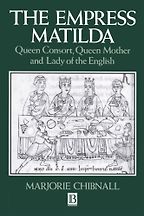
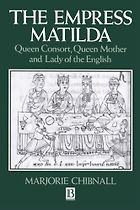
Your first choice is a biography of the 12th-century Empress Matilda by Marjorie Chibnall
This is a wonderful piece of authoritative medieval history. Marjorie Chibnall is a historian I admire enormously. The book isn’t aimed at telling a rollicking good story, but it is careful in its judgement and superbly scholarly. What it opened up for me was all the possibilities of the 12th-century world. I came to this as a late-medieval historian, because the area that I worked on first of all was the 15th century. I taught all the way back to the Norman Conquest, but I hadn’t actually written about the 12th century before.
I think we often imagine that historical developments are more linear than they really are. So we imagine that the further we go back in history, the more restricted the role of women is likely to have been. When I looked at this book, I realised that wasn’t the case. It really opened up for me all the unpredictability and possibilities of the post-Conquest world.
This was the Norman Conquest.
Exactly. In the century or so after 1066 there weren’t clear precedents about how things should be done in this newly Normanised England. And there weren’t enveloping institutions that had their own established ways of doing things. And this meant that women actually had much more room for political manoeuvre because everything was up for grabs. So this very scholarly and deeply researched book helped open that up for me.
What was Empress Matilda like as a person?
It’s difficult to paint a very personal picture of her. What we don’t have is anything personal that comes directly from her, other than the most formal and legal documents. But in the 12th century there were extraordinary chroniclers – so you do get a powerful sense of Matilda as a formidable woman. She left England at the age of eight to marry Henry V, the Holy Roman Emperor, and was brought up in Germany as the consort of this most powerful king. She had a formidable political education, which meant that when her husband died relatively young and she came back to England as a widowed empress, she really knew her stuff, and had a real sense of her own majesty.
This puts a very interesting slant on the fact that she was then, by her opponents in England, labelled insufferably haughty, arrogant and proud. But the people who were accusing her of being domineering would never have said that about a powerful king, such as her father [Henry I] had been.
Even though there were no rules to say she couldn’t inherit her father’s throne, once she got to the brink of power there was a sense that it wasn’t acceptable. And that’s the interesting thing I wanted to tease out – and this book provides the foundations for anyone wanting to do that.
It also helped me focus on the different things that I wanted to do in writing for a rather different audience. For example, when Matilda was married to the Holy Roman Emperor they travelled from Germany to Italy in February 1116 – and there’s a single sentence in Marjorie Chibnall’s book where she remarks that they took an army over an Alpine pass in February.
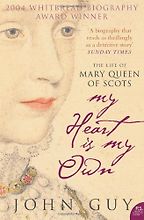
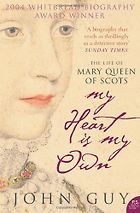
Your next choice is about an even better known queen, Mary, Queen of Scots. This is John Guy’s My Heart Is My Own.
The thing I admire so much about John Guy’s work is his ability to go into the archive and bring an extraordinary forensic eye to bear on documents which have already been pored over by generations of historians – and yet to bring something new to it.
What new evidence does he have for his readers?
He re-examined the Casket Letters, which are the letters on the basis of which Mary, Queen of Scots had been accused of responsibility for the murder of her husband, Lord Darnley.
And then she went on to marry his supposed killer.
Yes, and the Casket Letters are the documents that supposedly prove her guilt. But what John Guy did was to go back and unpick them and not be satisfied with transcripts. Instead he looked at the physical documents in order to construct a new argument that suggested that Mary had been framed. It was the forensic skill with which he did that which was so good.
Did you find his argument compelling?
I did find it compelling. I’m no expert on the life of Mary, Queen of Scots – but I think there is so much excitement in history when someone can go back to the original evidence and express their detailed findings in a book aimed at a wide readership. Again, I’m interested in different ways of writing history and that seemed to me to be a phenomenally interesting combination of things.
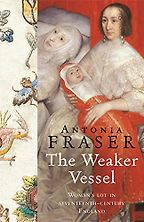
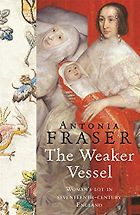
Next up is the queen of historical biographers, Antonia Fraser, with The Weaker Vessel.
This is one of the idiosyncratic things on this list, because the obvious thing to choose would have been another of her books, The Warrior Queen, which is much more obviously about queens and power, and is a great book as well. But The Weaker Vessel, which is a social history of women in 17th-century England, was really the first book that, a long time ago, made me think about the experience of being female in history.
All the pervasiveness of the social, cultural and historical assumptions about what it means to be male or female come into play in this book. Even though it’s a book about the 17th century and I work in previous centuries, I still find it very thought provoking about the personal experience and the social assumptions that have an effect when you’re confronted by the idea of a woman who rules. Antonia Fraser starts her preface by quoting another historian she’d been talking to, who asked, “Were there any women in 17th-century England?” – and I know exactly what it feels like to be confronted with that kind of question.
Women just weren’t chronicled in the same way as men.
Absolutely. Even Matilda – who clearly did end up featuring in the chronicles – was for a long time left in the margins of her own story, precisely because of the difficulty for a woman of having political agency.
So although you say that history isn’t linear, the evidence suggests otherwise, in that women were perceived as the underlings and not really accepted by men when they were in power.
I’m saying developments aren’t always linear – but there are a lot of continuities. In fact, the striking thing writing about female rule in the medieval and Tudor periods is how striking the parallels are with 20th- and 21st-century politics.
Yes, the parallels are extraordinary. People often say, “Well, these problems can be overcome – look at Elizabeth I or Margaret Thatcher.” But what those two women both did was not say, “Women can rule, women can hold power.” They both said, “Yes, OK, most women are pretty feeble, but I am a special woman.”
The Iron Lady of Britain.
Well, exactly. Look at the iconography of them both, and it’s all about being the exception to the rule. There was Margaret Thatcher presiding over an all-male cabinet. Both of them distanced themselves from other women. Elizabeth I said she had “the body of a weak and feeble woman, but the heart and stomach of a king” – and that battle is still with us.
Look at the cabinet now: There’s Theresa May, and we know more about her shoes than anything else. And in other parts of the world where women have taken positions of leadership, it’s often been possible because politics is dynastic. If you look at India or Pakistan, it’s much more akin to a monarchical system where dynastic legitimacy can validate a woman. The parallels are very interesting. So, coming back to your question, there is a lot of continuity – but, within that, for example, there are much more clearly articulated arguments against women’s rule in the 16th century than there are in the 12th. So it isn’t completely linear, and we need to be wary of assuming that.
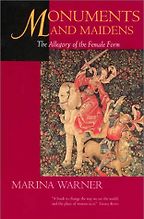
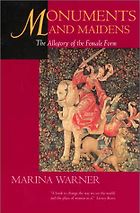
I see what you mean. Your next book, Monuments and Maidens by Marina Warner, is more about the symbolism of women than actual historical figures.
Yes, and my last two choices make an interesting pair for me, because they’re both about culture, symbolism and language. And I think Marina Warner’s work is phenomenally interesting. It’s the kind of history I could never write, so I love pouring myself into it.
How does this feed into your idea of power?
What’s so interesting is the way in which, in our culture, female figures become a vessel for abstract ideas. It’s interesting, too, that Antonia Fraser’s book has that word in its title. So the figures of justice, victory and liberty, for example, are all female. And Marina Warner comments in her conclusion that, “Meanings of all kinds flow through the figures of women, and they often do not include who she herself is.” In other words, the difficulty for women is agency; it’s doing something and being an actor in the narrative. Being an abstract embodiment is what women can do much more easily in our culture, which is why I think having queens now works quite well – because monarchs are required to be, rather than to do. But if you go back to the 16th century, monarchs had to rule – and that was where it became much more difficult for women to take that role.
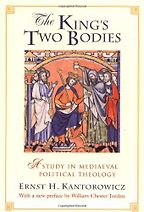
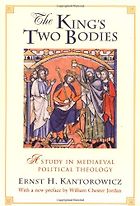
Your final choice is Ernst Kantorowicz’s The King’s Two Bodies, which is all about medieval political theory and explores the idea of the divine right of kings.
The whole idea of The King’s Two Bodies is that of the divide between the king’s natural body and his representation of the body politic, a more abstract political authority. Those two things come together and have to be worked out in law and authority and language – but it’s always a male body. The physical being of the king is part of that relationship, and the fact is that the very different connotations of the female body make the relationship between a queen and the body politic much harder.
The male body is politically neutral, but the female body is sexualised, whether as sinful Eve or the Virgin Mary. It’s very difficult for a queen, as a woman – who’s constructed after all in biblical terms as the lesser being – to find neutral political ground to stand on.
Which is why Elizabeth I sometimes chose to dismiss her body as this weak and feeble thing?
Yes, but sometimes she would also harness it in ways that were going to bolster her. For example, her virginity became a useful political tool over the years, but it was a complex process. The emphasis on her virginity in some senses emphasised her sexuality, and she did run a very sexualised court, with all her courtiers required to be “in love” with her.
But of course if her virginity bolstered her power in the present, it also meant she couldn’t do the one thing that all kings are meant to do which is to continue their line and produce an heir.
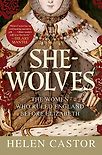
And with your own book, She-Wolves, what did you discover about queens and power?
I think I discovered that it’s a narrative which is still with us – and that’s one of the things I loved about telling those women’s stories. It’s frustrating, of course, to look around us in the modern world and discover those same things still happening to some extent – but I love that sense of the connectedness of history, that sense that the past is with us. And the other thing that became profoundly important to me as I was writing was the extent to which hindsight dictates our understanding of the past more often than we think it does.
That’s not a new thought – but I think it affects us more than we realise. That quest to go back to the moment and see the past through the eyes of the people who were there is so exciting to strive for as a historian.
August 29, 2011
Five Books aims to keep its book recommendations and interviews up to date. If you are the interviewee and would like to update your choice of books (or even just what you say about them) please email us at editor@fivebooks.com
Five Books interviews are expensive to produce. If you've enjoyed this interview, please support us by donating a small amount.
Helen Castor
Helen Castor is a historian, writer and broadcaster. Her latest book, She-Wolves, tells the stories of the medieval and Tudor queens who ruled England before Elizabeth I. It was selected as one of the books of the year for 2010 in The Guardian, The Times, The Sunday Times, The Independent, The Financial Times and BBC History Magazine. She regularly presents the BBC Radio 4 programme Making History, and is a speaker at Hire Intelligence
Helen Castor is a historian, writer and broadcaster. Her latest book, She-Wolves, tells the stories of the medieval and Tudor queens who ruled England before Elizabeth I. It was selected as one of the books of the year for 2010 in The Guardian, The Times, The Sunday Times, The Independent, The Financial Times and BBC History Magazine. She regularly presents the BBC Radio 4 programme Making History, and is a speaker at Hire Intelligence