I like the idea that if I read these five books you’ve selected I too will end up a glamorous woman.
Only if you read my book as well!
I did. I was relieved to find out that I can continue to eat foie gras and don’t have to breastfeed. But I never realised that matching underwear was so important.
French women believe strongly that the way you look is linked to the way you feel and the way you behave. It is hard to be in a bad mood when you are wearing exquisite La Perla underwear, for example. And looking at it the other way round, they also feel that a lack of care of yourself is a reflection of an unintelligent mind and lack of thought and possibly laziness.
Oh dear.
But my feeling with glamour — and it’s very much a French feeling, which is why my list is quite French dominated — is that glamour is not only to do with how you look. It’s also to do with how you act, and how you feel, and how well read you are, and how interesting you are. Because a woman can be extremely glamorous even if she’s not pretty. It’s not really to do with prettiness at all. It’s to do with a whole kind of style, a feeling of self-worth, and confidence, and all sorts of things that I think come with knowing how to live, more than anything else.
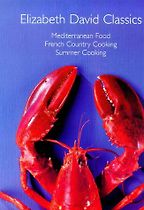
Which is why one of the books I chose is a cookery book, Elizabeth David’s Mediterranean Food. Eating is fundamental to life and to some extent defines you. You don’t look good if you live off McDonald’s and Diet Coke. There’s a huge difference between the Mediterranean style of taking time over meals as opposed to just throwing it down or getting takeout. And I think being able to cook well gives a woman a great sense of confidence.
“It is hard to be in a bad mood when you are wearing exquisite La Perla underwear.”
I also chose that book because Elizabeth David was extremely glamorous, and I think she injects a bit of her glamour into everything she does. She left England in 1939, with her lover, intending to travel around the Mediterranean. Then World War II broke out, and she had to leave France. She arrived in Italy only to end up being deported to Greece. And I think she spent the war living a Bohemian kind of lifestyle on one of the Greek islands along with Lawrence Durrell. It was only after the war that she went back to England and started writing about cookery. Mediterranean Food was her first book and it made her famous. And to give you an example of how groundbreaking it was, at that time, in the early 1950s, the use of olive oil in cooking was so uncommon in England that she advised her readers to look for it in pharmacies, where it was stocked as a remedy for earache.
So why is it still useful to you today?
For a start, it’s so refreshing to be able to find a cook book that focuses on the actual food rather than the person writing it. Nowadays everything is so celebrity chef-oriented, so terribly hyped up, but in Elizabeth David’s day there was no such thing as a celebrity chef — what joy. She was a terribly low profile person, and she did extremely well.
Her cookbook is very simple and devoid of any hype or any nonsense around it. She uses very simple ingredients, very classic ingredients, and that’s in a way the person she was – she was very simple and very elegant and very classic. And I think that elegance comes across in her cooking.
So Mediterranean Food is extremely straightforward and very good. It’s filled with the sort of classic recipes that never go out of style, classic dishes that are also easy to cook.
And it’s also Mediterranean food. Nowadays you can get Mediterranean food anywhere, there’s an Italian theme to cooking everywhere. The ingredients aren’t hard to get hold of any more. So really it’s a classic book, yes, written many decades ago, but it seems to reflect very much the way we eat now. The recipes in it are is still very good. Her manner is very stylish, she has a great appreciation for the simple things in life. For example, one of her other books is called An Omelette and a Glass of Wine which really sums up her approach. An omelette and a glass of wine is a very simple meal, but actually it’s one of the great combinations, one of the great things in life.
It’s important to have a cookbook that you know you can rely on for the basic things you want to eat, compared to most of the cookbooks that come out these days, where you kind of lose sight of what the basics are, in favor of trying to be too clever by half .
Is there a recipe in there you particularly like?
I like the pasta ones, because I’m mad about pasta. One I particularly love is with tomatoes and basil. It’s classic, simple and always delicious.
So onto your next book, Out of Africa How does it relate to glamour?
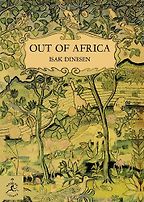
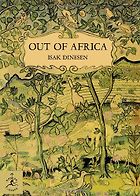
I chose Out of Africa because I find Karen Blixen one of the most inspirational women that I’ve ever come across. And this again goes back to my theory that being glamorous is not just out about being beautiful. Karen Blixen wasn’t very beautiful, she was very striking, and the thing about her that made her so appealing was her imagination, and her brain, and her curiosity about life and other cultures, and her capacity for love and her very sympathetic character. I found the book itself inspirational, and I found the fact that a woman had written it doubly inspirational. It’s quite a manly topic, trying to make a living out of a coffee farm. In some senses she is very masculine, and she even wrote the book under a male pseudonym, Isak Dinesen. But she is also clearly very sexually appealing and lands the best boy on the block, Denys Finch Hatton. Who sadly then dies in an airplane crash.
The book doesn’t seem to bear much relation to the movie. It’s certainly not about her love affair with Denys Finch Hatton — the Robert Redford character. He barely gets a mention.
No, the book is much more about her love for Africa. I think it’s really one of the most lovely declarations of love for Africa ever written. I think if you go to Africa, there is something about it that really captures you, there is something very addictive about it, there is something so romantic about it. And for the English, that’s true of Kenya in particular — we have a romantic image of it because of our combined history and the White Mischief era.
It is a beautifully written book — particularly amazing if you think that English was her second language, that she was not writing in her native tongue. Or maybe that’s exactly why it is so beautiful. Even just the opening line: “I had a farm in Africa, at the foot of the Ngong Hills…”
When I was in Kenya I visited her house. You can see the Ngong Hills in the distance. It’s still beautiful there even though the suburbs of Nairobi have slightly started to surround it. But yes, she twice nearly won the Nobel prize, but lost out to Ernest Hemingway and Albert Camus.
So your next choice is a book by Colette, and is called The Cat
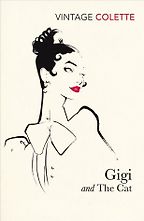
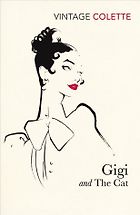
Colette is just one of my icons, she is just endlessly inspirational in so many ways. This is a woman who was dancing half-naked on tables when she was 50, and who created one of the most glamorous heroines of all time in Gigi. Gigi was dramatized for Broadway and also made into a film, and it was the play that made Audrey Hepburn — who was personally chosen by Colette — a star.
But I actually chose The Cat, which is a novelette, really a longish short story. So it’s the story of a newly married couple and a cat. And the wife is incredibly beautiful and chic. But the husband is in love with the cat. He lies, he pretends, but he can’t get away from it. And she gets very jealous and I won’t tell you how it ends. But the reason I chose The Cat, is that it’s not a very well known book, and it’s also a very good example of how even being beautiful and well groomed is not enough. You have to have something else to captivate a man. There has to be something else that entices his imagination and makes him fall in love with you. As opposed to his cat.
Get the weekly Five Books newsletter
Colette’s book Chéri is also about this. It is a story about a young man whose mother sends him off to an ageing courtesan, Léa, to educate him. And he falls deeply in love with her. And when the time comes for him to marry a suitable young woman, he can’t give Léa up. Aged 49, she holds more allure for him than his young wife does. Again, it’s this idea of attractiveness having some kind of spiritual or intellectual element that the younger woman he is marrying doesn’t have.
Which actually is another thing that is an important part of the French sense of glamour. In France a woman can be sexy at any age. Ageing is not something that has to be feared or countered with a botox injection. And Colette herself was famous for having a string of young lovers who found her irresistible, even in her old age.
But generally, when you read Colette she is such a glamorous icon, everything she does, there is a woman in there that you want to be like, that you find completely compelling. She also came out with one of the funniest quotes: “Nothing ages a woman like being in the country.”
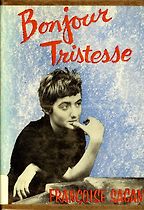
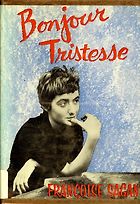
What about Bonjour Tristesse, written by Francoise Sagan when she was just 18?
I think this book is just compulsory reading for women of any age. It’s a wonderful book, apart from anything else. It gives an amazing insight into that awful stage of becoming a woman. And I think part of what we’ve been talking about — whether you want to call it glamour or sexual attractiveness or whatever — is really about being a woman. And Bonjour Tristesse describes that transition into adulthood very well.
I love the main character in the book, the young heroine Cécile, but also Anne Larsen, the woman whom the father loves falls in love with. I think she is just this very chic, iconic, French woman, 42 years old, who makes an effort to look good at all times, which is something French women are very good at. So even when Anne comes down to breakfast, she’s wearing lip gloss and an ironed shirt and even though she’s casual, she still looks gorgeous in every way. I think this book is just such a classic and it gives you a very strong sense of French glamour, French style. There’s a real style about this book.
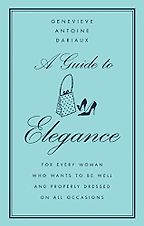
What about your last book, A Guide to Elegance by Genevieve Antoine Dariaux?
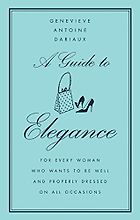
I bought this book while I was researching my book about French style. It was written many, many years ago, but it’s been recently reissued. Even the cover exudes elegance, just two colours, light blue and black. What Dariaux does is she offers tips on elegance, which she divides up alphabetically. Under the letter “L,” for example, there are entries on leather, lingerie, luggage, luncheons and luxury.
And the reason I picked this book is that one key thing about French women’s style is that it’s timeless. If you look at someone like Coco Chanel, or Catherine Deneuve, right up to contemporary women, like the supermodel Ines de la Fressange, there’s something about the allure of French women that doesn’t change. So however long ago this book was written, and I believe it was in 1964, it’s still very pertinent and relevant. Obviously some things change, but I think it’s an interesting insight: that the kind of things that were important back then, still remain the case today. For French women, the basic tenets of being chic from your head to your toes, from your toes up to your coif, and no matter what situation you’re in, responding with elegance and style, is somehow very deeply ingrained into them at a very early age. I guess because they’re brought up hearing about people like Coco Chanel, who comes up with brilliant quotes like “elegance is refusal” to make sure you never get fat.
So what’s a good example of one of Dariaux’s tips?
Well, one thing I have found is that French women will always go for a lotion or potion rather than exercise. They firmly believe that an exfoliating and cellulite cream is the way to stay in shape. It may or may not be, but it makes you feel great so why not go for it? And Dariaux very much believes such things are indispensable. She says: “Products that are related to beauty, such as cosmetics and perfume, are presented to us as indispensable allies in any conquest, and to refrain from buying them is the equivalent of retiring to a convent.”
October 9, 2012
Five Books aims to keep its book recommendations and interviews up to date. If you are the interviewee and would like to update your choice of books (or even just what you say about them) please email us at editor@fivebooks.com