The Istanbul-based author and former foreign correspondent Hugh Pope discusses the legacy of Atatürk, the country’s convergence with Europe and why no book has yet been written on Erdogan and the AKP. He picks the best books to help understand Turkish politics.
It’s a critical moment in Turkish politics right now, with a lot of military leaders on trial, accused of planning a coup in the so-called Sledgehammer plot. I interviewed Harvard economist Dani Rodrik in December; he is Turkish, and his father-in-law, Cetin Dogan, is one of those on trial. He’s absolutely outraged at what is going on, and has written a number of articles about the alleged fabrication of evidence. Some Turkish newspapers, on the other hand, are depicting it as a big step forward for civilian versus military rule. So I asked a friend who knows a lot about Turkey what he thought, and he agreed with Rodrik that it was outrageous: people have been put in prison without trial, etc. But he added that people ‘disagree strongly on the matter’ and that ‘Turkey is incredibly complicated’. Is that how you see it as well?
Yes. And Cetin Dogan is an interesting case. He was a senior officer during military interventions in politics, in an army that routinely used medieval methods against those it saw as enemies of the state. At the same time he is a gentlemanly person. He was one of the generals that everyone – including me – tried to talk to in the mid-1990s to find out how things were going in Ankara. The army at that time was half in charge of the country. Most of us here assume that some people in the army have been plotting against the government in a serial manner. Cetin Dogan was very senior in 1997 when generals boasted about having challenged the elected government of Turkey by running tanks through the street, which is not exactly your typical democratic behaviour. But did he plot a full coup? Because of the murkiness that is endemic to countries like Turkey – where no one, neither the military nor the courts, quite wants full accountability for their actions – you can never be quite sure what has happened or who exactly is responsible. It’s very slippery. People don’t trust the system. It’s the reason Turkey is in the second division of countries of the world. It’s a bit like Turkish football. Turkish clubs compete in European tournaments, and sometimes, by a miracle, they win. But it’s almost accidental when they do. The system is not strong enough yet. For a big country, they should be doing much better in international football – but their football leagues are plagued with the same sloppiness and lack of good systems that the judicial system and probably the army itself are.
That’s why we hoped for so much from the EU convergence process – because the standards it set would push the boundaries of Turkey’s systems to a new level.
So when Rodrik argues that these documents are fabricated, that could well be the case?
There are definitely some real documents that they’ve found. I suppose that some of them may have been fabricated. When you look at the indictments, you can see there’s a kind of conspiracy theory mentality that is motivating the prosecutors. They’ve taken the assumption of a problem and then logically gone back to the evidence – instead of taking the evidence and moving it forward to a conclusion. That’s very common in this part of the world. For so long, people have felt weak and powerless over their own fates, that great powers are manipulating them. So you line up the evidence to suit what you’re thinking, instead of approaching it by considering, ‘Well, maybe this is all a bit confusing, maybe no one really knew what they were doing and maybe it’s actually a series of coincidences that have led to this.’ That’s never considered possible.
But in answer to your question, is he guilty or isn’t he, I don’t know. People have told me vicious things about Cetin Dogan. And sometimes Cetin Dogan was fighting vicious people. It’s no reflection on Dani Rodrik – it’s just the way things are.
I also know that the Turkish military created Turkey out of the wreckage of the Ottoman Empire in the 1920s, and to some people in Turkey they remain a great safeguard that has managed to keep Turkey on track for all these years – and out of international wars since 1923. It’s one of the reasons Turkey is making some progress, whereas the rest of the region has remained a hopeless mess. Should the Turkish army and people like Cetin Dogan be thanked for doing this? A fair number of people in Turkey would say, ‘Yes. The army deserves to be supported for what it has done.’ But the trouble is, when you allow an army to do that, it takes on a political role. In the period that these indictments came up, the army was losing power. It has very much lost political power now. And, as it was losing power, it’s clear that some people in the military were scrambling to try to retain their influence, their economic leverage, all their privileges. It’s a country where there have been many attempts at military coups. Would they suddenly have miraculously stopped, just when they began to lose power? I don’t know.
Historically, the army has intervened a number of times to re-establish democracy. Do they see intervention as part of their role?
Yes. They think the internal regulation law which governs their activities allows them to be the ‘safety valve’ – according to their own judgment of what democracy should be.
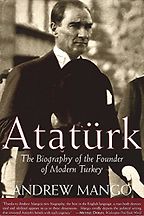
A lot of this goes back to Mustafa Kemal Atatürk, and your first book is Andrew Mango’s biography. You mentioned in your email that this book holds the key to much of what goes on in the country today.
Yes. Andrew Mango has exactly the right background to understand Turkey. He knows the country inside out. He was brought up in Istanbul, speaking several languages, and was the head of the BBC Turkish Service. He’s a great collector of all the memoirs and biographies about what happened to make Atatürk the man that could found the modern state of Turkey. A lot of what the Republic has turned into derives from the decisions taken in that period.
Such as?
The elements that are important are: Firstly, the role of the army as the backbone of the new Turkish state, which we’ve just talked about. Secondly, a very strong positivist ideology that wanted Turkey to catch up with Europe – which in Atatürk’s mind was synonymous with civilisation. The question remains open today whether Turkey wants to join Europe or just be its equal. That’s an eternal question for Turkey, and Mango gives evidence of what Atatürk thought about it. There’s also the question of democratic participation. He isn’t rose-tinted-spectacled about Atatürk at all. He shows how Atatürk crushed opposition after he came to power; he shows how the one-party state worked. If you think about the period, the 20s and 30s, it wasn’t unusual to have authoritarian government. The trouble is that Turkey took a long time to shake it off. It was only at the end of the Cold War that Turkey really started moving away from the Kemalist legacy.
What I love about Mango’s book is the detail, and the clarity. He has all the evidence marshalled. You can read the footnotes and find out where everything has come from. It’s so different from Turkish historiography, which is very emotional. The bestselling book in Turkey about that period is called These Crazy Turks. It’s basically novelistic. The reader thinks he’s getting history, but basically it’s a transport of imagination by a quite well-informed writer.
Because Mango is so detailed, and gives such weight to first-hand material, you get a really good feeling of how Turkey sees itself, through Atatürk and his friends. People are quite prejudiced about Turkey in the West, especially in Europe. Mango shows how they’d been threatened, and how for about 200 years they were in retreat, until Atatürk picked them up. He chose the highlands of Anatolia as the place where the Turks would take their stand, defended it, got it nailed down in the Treaty of Lausanne and made the country safe for his community. At great cost, of course. The previous decade saw the ancient minorities of Turkey wiped out: the Armenians deported and massacred, the Greeks transported out and also, to some extent, massacred. On the other hand, Turkey was itself invaded by Greeks, Italians, French, British and Russians. It was an absolutely disastrous decade, bloodbaths all around. But at the end of it, Atatürk managed to create a state. It wouldn’t surprise me if 100 years from now, Atatürk was still being revered almost as a prophet, as he is today. He still is very, very important for the Turks.
The way he decided to modernise Turkey was pretty extraordinary – adopting the Roman alphabet and all the other changes he made, seemingly overnight.
These ideas didn’t come out of the blue. For instance, a few years before Turkey changed its alphabet, there had been a meeting of all the Turkic peoples in Baku, and they’d decided there that they would all have a common Latin alphabet. But he implemented it much earlier, and much more rigorously than the rest of them. People talk about the acquis communautaire: Turkey is gradually taking over bits and pieces of European law as it converges with Europe. Atatürk wrote everything into Turkish law from a whole range of European models: the Italian penal code, the Swiss civil code, German maritime trade rules, and the French concept of secularism. Turkey as a society must have had extraordinary indigestion from this wholesale adoption of all these Western things. But because it was a revolutionary period, and he had such tight control of power, he was able to do it.
Today, the idea of going back to Arabic script has almost zero support. But you have to wonder what it must have meant to this old and deep-rooted society that suddenly no one could read anything written before 1928. The literature was all cut off. Only now are people rediscovering it. Some of the most popular TV series now, the sitcoms, are Ottoman. Everyone is busily rediscovering the Ottoman Empire. Atatürk spent a lot of time reviling the Ottoman heritage in order to make the Republic look good, even though he was actually an Ottoman gentleman and officer who had been quite close to some members of the Ottoman royal family. The people who came after him spent quite a lot of time reviling the Ottoman Empire as well. It’s taken 100 years for Turkey to make peace with its past. That’s unfortunate because Turkey lost a lot by not appreciating the good things about the Ottoman Empire. The Ottomans were quite a tolerant lot. That also comes through in Mango’s book. He shows how the Ottomans tried to maintain the multicultural, multi-ethnic nature of the Empire for much longer than perhaps was realistically possible.
Is there also a big pushback against Atatürk’s secularism now?
Atatürk was a Macedonian from Salonica. He was brought up speaking Turkish, but there may have been some Albanian in his background. The people that came with him to Ankara, his inner coterie, were from Salonica. That’s another interesting aspect of Mango’s book. Very roughly, about a third of the population of Turkey today are muhajir or refugees from the Balkans, the Caucasus, southern Ukraine and Russia, and the old Ottoman holdings in the Arab world. They came and converged on the cities of the Ottoman Empire, often taking the place of the deported and massacred Armenians and Greeks. This was a group of people who wanted to build a new state, who were quite well educated, who wanted to build something new that would be strong enough to stand up to the Europeans. Those were the Kemalists who took power.
Then you have the rest. When Atatürk came to power, Turkey’s population was about 80 per cent rural – most of them peasants, struggling, ploughing the land with sticks dragged by oxen. Their lifestyle was very primitive, their knowledge of even their own religion unsophisticated. What’s happened since the 1960s is this huge migration to the cities, and now only 30-40 per cent of the population is rural. Half the population of the country has moved from being peasants to being developing urbanites. This is the basis of the party that took power in 2002: Erdogan and the AKP. They are generally more relaxed, more open-minded, more pragmatic, more willing to deal with foreigners in a trusting way and also more religious. By the time AKP came to power in 2002, the tensions between these two groups almost amounted to a class war. You have people who will not talk to each other from the two sides of this social divide – the old Kemalist urban people, and the nouveau riche, the bourgeoisie that has developed from the newly urbanised rural folk. They’re often quite rich, ready to spend money on clothes, but with a headscarf, because that’s how they’re comfortable. The two sides often can’t stand each other. That goes back to the very beginnings of the Republic. You can find people from the rural AKP side who give lip-service to Atatürk, but in private they’re much more ready to be critical of the Kemalists.
And they’re the majority now?
In the last general election, the AKP got 47 per cent. According to the opinion polls, they’re not far from that figure – we’ve got an election in June. They’ve given quite good government because it’s easier for them. The country was pretty much sorted out when they came to power in 2002. Turkey had gone through a very bad decade; it was the Kemalists who sorted it out, but in the election it was the AKP that won. They’ve kept it fairly steady as it goes, up until recently. Now it’s a bit more turbulent, but there’s still enough money in the treasury. Especially, the local government of the AKP is pretty effective and much less corrupt than in the old days. If you do have to make contributions, you can see what it’s used for much more easily. But the book on the AKP still hasn’t been written. There is no good book in English on Erdogan or what he’s done. I think it would be quite a scary enterprise to write it.
Why?
He’s quite thin-skinned. We’ve seen the anger he can have for people who challenge him. There are lots of question marks – those who are close to him have become quite wealthy now. How deeply can anyone pry into this while he’s still in power?
You’re not going to write it?
You’d have to be brave. You have to be careful how you deal with power in Turkey. As a preliminary judgment, I would say that Erdogan is more of a consolidator than a revolutionary. The real revolutionary was Turgut Özal from 1983-93. He really broke the bonds that had been holding Turkey back.
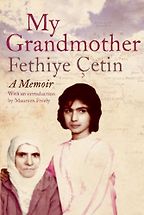
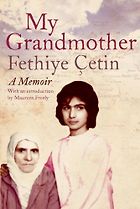
Your next book, My Grandmother, is about the Armenian genocide. Some of the reviews made it sound almost Anne Frank-like, a very moving book that anyone might want to pick up.
That’s exactly right. It’s a very empathetic, straightforward read. It’s short. It gives an insight into the ethnic origins of Turkey today that no one has been talking about until very recently. A lot of Armenians were deported and a lot were massacred, but a lot also stayed behind in Turkish families. This book is about someone discovering, quite unexpectedly, that her grandmother is one of these people. She’s been a good Muslim all her life, because when Armenians joined these families, they became Muslims of Armenian heritage and culture, believing in Islam, but also making Armenian cakes on Armenian religious days.
Support Five Books
Five Books interviews are expensive to produce. If you're enjoying this interview, please support us by donating a small amount.
I have a number of friends who have discovered that their grandmothers were not what anyone thought they were. Muslim in culture and practice, but who had come from a very different place. It’s an aspect of Turkey that no one has wanted to talk about because of the idea that ‘We’re all Turks’ and ‘We’ll only be safe if we’re all the same.’ But suddenly people are discovering that it’s OK to be different. Perhaps we should admit that, in the east of Turkey, a lot of people are of mixed ancestry.
The power of this book is the relationship between a granddaughter and a grandmother, and how the story suddenly spilled out. It’s been very well translated by Maureen Freely, which makes it an easy read. (Freely also translates Orhan Pamuk.) Some people have criticised her translations for making it too easy for people to read, but the fact is, she has made a very accessible book of it.
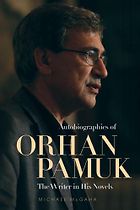
Speaking of Panuk, the next book you’ve recommended is Michael McGaha’s Autobiographies of Orhan Pamuk.
Orhan Pamuk is one of the best things that Turkey has managed to produce in recent decades. He’s a symbol of someone who has managed to escape from the Turkish context, where there’s an ingrained tendency for emotions to rule the intellect, to be unclear in order to protect your own sloppiness. Orhan Pamuk is very different from this. I remember even back in the early 80s, he was clearly set on winning the Nobel Prize for literature. He did everything possible to make his Turkish experience into something that would be universally recognised as a high point of literature and worthy of a great prize. I think he got it earlier than he expected, possibly because of a political accident, but he managed it.
Are his books popular in Turkey?
He still sells quite a lot in Turkey, but among the intellectual elite there’s a great jealousy towards him, and petty comments.
Why didn’t you choose a book by Pamuk?
The reason I am recommending a book not by him, but about him, is that it’s the first book one should read. My criticism of Orhan Pamuk is that he has become so grand that no one edits his books anymore. A book like Snow, which I enjoyed, could have been cut by 20 per cent. He even repeats lines – something a good editor would have caught. OK, he’s very fussy about not being cut, but it’s all a bit wordy. Snow was accessible, but some of his other books, which are deliberately highly intellectual, are too difficult for me. I want a good, quickly digested read. But once I’d read Michael McGaha’s Autobiographies of Orhan Pamuk and he’d pointed out what these books are actually about and how you should read them, I wanted to go back and have another go.
Translations also make an amazing difference. For instance, the Dutch translation of My Name is Red made it into a bestseller because it was so well done. The same is true with the English translation of Istanbul by Maureen Freely. This is the sort of thing you learn from the McGaha book. Maureen Freely’s translations won the best translation prize in Britain, while her rival, who was the old translator, was panned. But she won a prize for translating another book of Pamuk’s because their intentions were different. The old translator was very American, very precise. She wanted to get everything right and exactly deliver Orhan Pamuk’s words. Maureen Freely, on the other hand, was very intent on making it easy to read.
Also, the political context of Orhan Pamuk is very important. You have to understand what a child of privilege he is in Turkey, and what that means about the way he writes. He’s very different from the Nobel Prize winner in Egypt [Naguib Mahfouz], who is very much a man of the people.
On the political context of Pamuk: doesn’t the McGaha book also home in on the 2005 row about the Armenian genocide?
Yes. He really breaks it down and shows how Orhan Pamuk was bravely speaking out about the issue in a way that was quite edgy for Turkey. On the other hand, Pamuk didn’t say anything deliberately so that he could become a death-threat target and therefore win the Nobel Prize. This is the narrative in conspiracy-minded circles of the Turkish literary elite – that Orhan Pamuk deliberately set out to win the favour of the West by admitting the genocide in order to win the Nobel Prize. Which is clearly not the case. You can tell that from this really good book.
I’ve been frantically trying to work out which book I would choose for the history of the modern Republic. It’s really hard. Jeremy Seal’s book, A Fez of the Heart, is really readable, but he’s gliding too quickly. He’s not as bad as Tim Kelsey’s Dervish, which is terribly prejudiced. Seal’s book is lightly prejudiced in a British-travel-writer fashion, but I decided it was taking too many liberties with Turkey. There are many journalists who have written modern histories of Turkey: Marvine Howe’s Turkey: A Nation Divided Over Islam’s Revival is very nice, as is Chris Morris’s The New Turkey from the BBC. You get very pro-Turkish books like Stephen Kinzer’s Crescent and Star and there are others, like Tim Kelsey’s, that are very critical of Turkey. But I’m not sure any of them quite do justice to the overall subject. Perhaps you’re never going to get a really satisfactory picture of the whole country. It’s extraordinarily diverse. You can stand up almost any theory and make a person believe it, because you will find some evidence to support it.
Ultimately, you’ll have to settle on one!
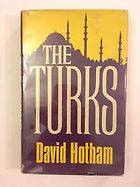
Hmmm. OK, I’ll go with The Turks by David Hotham. It’s from the 60s and 70s, but he gets it, as an outsider. The Turkey of the 2000s has not been written, but a lot of the vectors you can find in this book.
Tell me a bit more about it.
It’s from 1972. It’s written about a Turkey that’s just started out on the track that would bring it to negotiations on EU accession, which is an ongoing situation. It’s about why the country wants to be part of the West. He goes through the issues that are more or less eternal in Turkey. You’ll find that all of these books will deal with the Kurds, the Muslim conservatives; some will go as far as to do the Alevis (who are a minority somewhat inspired by Shia ideas), the economy, the rural population. Turkey and Europe, Turkey and the Middle East, the Turkish military, Turkey and Russia/the Cold War. All those themes are eternal and everybody deals with them. And people normally come away with almost the same answer.
Which is?
Turkey is Turkey. You can’t put it in a block; you can’t pin it down; it will always make its own decisions. The old adage that ‘a Turk’s best friend is a Turk’ is uppermost in most people’s minds. There’s not much trust in the outside world. Look at the latest WikiLeaks, about when Turkey is offered negotiations on full membership to the EU. It comes through in December 2004 and WikiLeaks has the reaction of the Dutch, who held the presidency of the EU at that time. The Dutch prime minister is really upset because he’s just offered the same thing to Croatia, Bulgaria and Romania, and they’re absolutely delighted, backslapping and hugging each other. The Turks, on the other hand, show no sign of appreciation whatsoever. They’re absolutely po-faced, and then they go back to Ankara and criticise the way the decision was given. David Hotham gets it. It’s a little unfair to choose his book ahead of the others, but I think it’s very interesting to go back to a book written a generation ago and find that actually not much has changed.
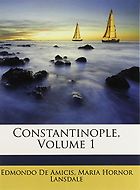
Your last choice, Constantinople, is more than a century old.
This is by Edmondo de Amicis, an Italian travel writer. He’s an observer; he doesn’t go into philosophical depths about anything. The book is very well translated, so it’s very accessible. The reason I like it is that the late-19th-century, early-20th-century Ottoman Empire shares a lot of commonalities with today. As a society, it was an easy-going place, and Turkey today is much more easy-going than it was. Istanbul at the time was the imperial capital and it was connected to the Balkans, and connected to the Middle East. It was a hub; it was a place that had to be taken into account, it had a sense of destiny. De Amicis has this great description of walking over the Galata Bridge, flows of people from all over the Empire wearing different costumes, and the great heterogeneity of Istanbul. That’s what we have again in Istanbul today. I live on Istiklal Street, which is now a pedestrian precinct, and I’m absolutely astonished at the Tower of Babel of languages that are coming past, five abreast. People are not dressed that differently any more, but you do have this feeling of a huge variety of lifestyles.
I still treat Istanbul with some caution, because when I came 23 years ago Turkey was a very proud, end-of-the-road and difficult-to-know place. Now people treat it as a party town, a place where things are happening. De Amicis’s book captures that sense of a very diverse city, a hub with a great regional reach that you can really feel now if you go to Istanbul airport. When you look at the departures board, it’s like reading a map of the Ottoman Empire and all the places in Central Asia and even Africa that the Sublime Porte once connected with. I feel that many of those old connections are coming alive; this book gives you a feel of that.
So is the Ottoman Empire really making a comeback?
It’s definitely being reassessed. The Turks are reassessing it. So are the Arab countries – especially the Baathist countries. They spent a great deal of energy dissing the Ottoman Empire to try to legitimise their own revolutions that were going to be so different and so new. They’ve given up a bit on that recently.
The Arab world takes an interest in what is going on in Turkey? They don’t feel it’s something completely different that’s got nothing to do with them?
They used to feel that way. They used to feel very resentful of the Turks, and they viewed the Kemalist regime as godless infidels who had stolen one of the Muslim peoples and hammered them unwillingly and unnaturally on to the flank of the Western behemoth. Now you have a completely different view. There are Turkish products everywhere in the Middle East. Turkey is seen as commercially attractive. Turkish sitcoms are now all translated into Arabic and viewed all over the Arabic world. It’s also political. Erdogan has won several completely free elections and proven himself to be a very effective, legitimate leader. He’s clearly independent of the West, speaking critically about Israel and other matters close to Middle Eastern hearts. There is no one in the Middle East who can do that in the same way. Arab societies feel that the pluralism in Turkey, and the commercial dynamism, is something they would like to have. I don’t think anybody wants to become Turkey, but they’re definitely very interested in learning more about the Turkish experience.
Five Books aims to keep its book recommendations and interviews up to date. If you are the interviewee and would like to update your choice of books (or even just what you say about them) please email us at [email protected]
Hugh Pope is a writer, speaker and author of books on Turkey, the Middle East and Central Asia. As well as editing his father's book on sortition, The Keys to Democracy, he is a member of the advisory board of DemocracyNext. Previously, he spent 15 years working for International Crisis Group, the independent conflict-prevention organisation. Prior to that he was a foreign correspondent for 25 years, most recently spending a decade as the Wall Street Journal’s Turkey, Central Asia and Middle East Correspondent.
Hugh Pope is a writer, speaker and author of books on Turkey, the Middle East and Central Asia. As well as editing his father's book on sortition, The Keys to Democracy, he is a member of the advisory board of DemocracyNext. Previously, he spent 15 years working for International Crisis Group, the independent conflict-prevention organisation. Prior to that he was a foreign correspondent for 25 years, most recently spending a decade as the Wall Street Journal’s Turkey, Central Asia and Middle East Correspondent.