What do you think makes a good royal biography?
I think it has to be well researched and informative and, if possible, will give a really good insight with new information, good character analysis and so forth. I think it is good if it is a human portrait. A lot of royal biographies that were done in the past could not be published these days because they were too bland.
Do you agree with the idea that you need three types of biographies to get the best picture of someone – the official biography, the unofficial one and the memoir?
Not necessarily. I am not sure what is meant by an official biography, but if it means something that is written in such a way that someone is forever looking over your shoulder, then I don’t agree with that. But then, as I am someone who wrote an unofficial biography of the Queen Mother after many years of research and knowing quite a lot of her friends and spending quite a lot of time with her – to some extent I feel that that may be of more interest in the end. But you do need to have both.
The Queen Mother was quite a complicated person. Many people see her as the smiling old granny and she came out well in the film The King’s Speech, but quite a few people are uncomplimentary about her.
Cecil Beaton once said that she was a marshmallow made on a welding machine. I worked on The King’s Speech and I told that to Helena Bonham Carter and the image very much appealed to her. I spent a lot of time with Helena helping her to interpret the Queen Mother. We looked at things like the way she spoke. The question that I used to ask people was how many Queen Mothers were there? There were quite a few different ones. The smiling granny certainly was one of them. But there was the woman of steel underneath and she needed to be strong, but she used her strength in a very positive way.
And is it true that she didn’t want the film to be made until after she was dead?
I don’t believe all that. I would love to see the letter people say she sent. I think that the filmmakers probably wrote to her office and the Queen Mother, through her private secretary, expressed reluctance and they took that as the answer. I certainly don’t think she wrote saying, “Oh please don’t do it”. It was not the way she operated.
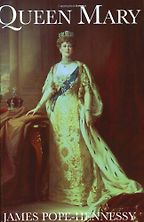
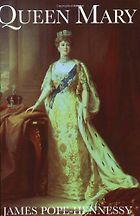
That sounds plausible. Your first choice is Queen Mary by James Pope-Hennessy, whom you see as a bit of a role model as a royal biographer.
Yes I do, and one of the reasons is that it is the first royal biography that I ever read. I bought it when I was 13 on 30 January 1965 and I remember that date because it was Churchill’s state funeral. The next day I rather nervously told my parents that I had bought it, expecting to have my head bitten off, because that had happened once before when I expressed an interest in buying a book on the royal line of succession. They said, “Why do you want to be bothered with that sort of stuff?” But this time they seemed to be quite interested that I had done this. And so that really opened the floodgates and I have bought a lot since.
So I read it then, and I have read it several times since. And I did subsequently read James Pope-Hennessy’s papers so I know how he wrote it and what he was trying to do. Of course this was the official biography, but what I like about it is the fact he got away with so much. It is so beautifully written and it is terribly funny and you can read a lot between the lines. Let me read one of my favourite paragraphs. It is a description of Queen Mary at Marlborough House in the late 1940s not long before she died. He writes:
“In the midst of this shimmering Georgian enclave in bedraggled post-war London, visitors found Queen Mary herself, upright, distinguished, dressed perhaps in purple blue or in blue velvet or pale grey, around her neck her ropes of matchless pearls. Awed strangers talked of Queen Mary as a representative of another epoch but this was a misjudgment, for the Queen Dowager was in no way isolated, a magnificent relic, in these 18th century surroundings. She would sally forth from Marlborough House to the young court for juvenile delinquents – ‘It was most interesting but I have never heard so many lies told in my life’ – or to enjoy Oklahoma!or Annie Get Your Gun.”
I love that sort of stuff.
So she was truly modern then. As a young boy, what was it about the royals that so fascinated you, even though you weren’t particularly encouraged by your parents?
Well my mother did certainly like the royal family. But I think perhaps she was concerned about how my interests were going. It started a bit like trainspotting and then continued. She took me to see the state visit of the Shah of Persia in 1959 and I enjoyed it so much I asked her to take me out of school to see that of General de Gaulle in 1960 and that made a great impression. And then as I grew older I wanted to find out more and more about these people.
And was it the other worldliness and the spectacle that attracted you?
I think it was spectacle partly and also [the waxworks museum] Madame Tussaud’s helped me a lot. These days, like so many things, it has a kind of theme park atmosphere, but in those days it had all the royal family and little biographies of each one so you could find out who they were. And I used to pore over the wonderful guidebook, which I still have, which had six or seven lines about each person. And that is how I got to know who these people were.
So you are a real mastermind on it?
Yes. And I also found another brilliant book called Concise Universal Biography, which gave me extra information on the royals, and when I went back to my prep school my markers were still in place.
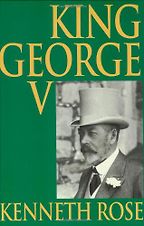
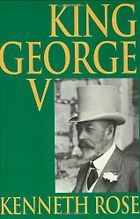
You started young! Your next choice is King George V by Kenneth Rose, who introduced you to the literary form of litotes. Can you explain what that is?
Litotes sounds like a tropical disease but in fact it is confirmation of the affirmative by the denial of the negative, as in the line, “The King was not unknown for toying with his food”. What is so wonderful about Kenneth Rose’s book that it is again very funny. He writes things like:
“It was always a memorable day when the King visited an exhibition. At the opening of the Tate Gallery extension he stood before the French Impressionists and called out to the Queen, ‘Here is something to make you laugh, Mary’. In the National Gallery he shook his stick at a Cézanne. In another room he confided to the director, ‘I tell you that Turner was mad. My grandmother always said so!’… The King’s instinctive dislike of modern painting was reinforced by the treatment he received from leading artists…”
It is the dry and wry way of writing that I like very much. He paints a wonderful picture and throws off what must have been months and months of research very lightly.
And really brings them to life, by the sounds of it.
Yes. I remember someone saying about his book that there was not a dull word about an essentially very dull monarch, which is a great achievement. And aside from the funny bits there is a lot of it of great merit as well. The book revealed that really the King had not rescued the Tsar, at which point the Queen Mother’s private secretary told Kenneth Rose, ‘Your chances of an MVO [honour] have just floated down to 20 to one!’ Rose also revealed in a subsequent edition of the book the fact that [the royal doctor] Lord Dawson murdered King George V by sticking a needle filled with morphine into his neck in order to speed his death so it would reach the first edition of The Times, which was seen as more seemly than the evening papers.
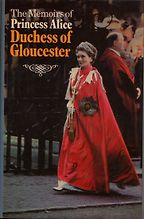
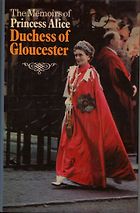
So biographies such as this really make headlines. Your next choice is an autobiography, Memoirs of Princess Alice, Duchess of Gloucester.
Yes, she lived to be nearly 103 and I went to see her a couple of times. She was very shy and wonderfully dry. When she spoke she always put an emphasis on the wrong word. She was a very attractive person. I reviewed the book when it came out. I just found myself laughing on every page. I was gripped and again it was this wry quality that attracted me.
For example, she wrote about the Duke of Gloucester in Australia and how at one point I think he was at the dentist and a lot of people spotted him there. She wrote about how crowds gathered but “it did seem a rather unnecessary display of loyalty!” She also talks about how her maid went off for a walk in Ethiopia and found two figures on a gibbet and came back rather white-faced.
Get the weekly Five Books newsletter
But she also wrote very movingly. She lost her son Prince William in an air crash in 1972, which is pretty much the worst thing that can ever happen to a mother. And she adored him because he was the wild child. She wrote very touchingly in the book about that. By that stage the Duke had had a stroke and he couldn’t speak and she said, “I never knew whether to tell Prince Henry or not but I think he understood from watching the television,” and on her own reaction to her son’s death: “I have tried to persuade myself that it was better to have known him and lost him than never to have had him at all.”
But you say she was shy so I am interested to know why she would decide to have her memoirs published?
That surprised everyone! I think she was persuaded by her family that she had an interesting story to tell and as a widow and having lost her son she had a bit of time on her hands. She wrote this very charming book.
Many people think autobiographies are somehow less reliable than biographies, in that people find it so hard to be subjective. Do you agree?
Yes of course it is hard to be subjective. But they are putting their records down which have many very interesting things. I always thought a book ought to be written in which people took selections from people’s autobiographies when they skipped over things. For example, if someone says, “The war years were quiet years for me,” you might say – hello, actually they weren’t at all quiet. This chap was in [the British foreign intelligence service] MI6.
I think with autobiographies sometimes it is really helpful to have somebody’s impression of their life and how they see the people they have met. I am a little bit suspicious of ghosted memoirs. I have just done this book about the Duchess of Windsor. Her memoirs were ghosted and the ghost actually said that the big problem was how to get rid of the first two husbands. The first one they turned into a sort of alcoholic, whom the Duchess rather warmed to, to the point where the ghost had to say to her, “Steady on, the readers are going to want to go drinking with this guy – he sounds like too much fun”.
The second husband had to be made into a dull bore to explain why she had to get rid of him. So I am a little suspicious of ghosted memoirs but I think some memoirs are really beautifully written. Of course they cannot be subjective – how can we be about ourselves? But on the other hand they can be very interesting.
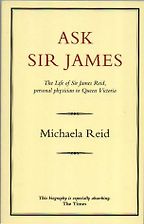
Definitely. Michaela Reid’s book, Ask Sir James, focuses on Queen Victoria’s physician.
Sir James Reid was her doctor and it was said of him that she consulted her doctor like some people consult the stock market – three times a day. He never examined her, which was an extraordinary thing. It would have been very helpful if he had been allowed to do so. And he only discovered all sorts of things after she died. But it is a wonderful description of life in Queen Victoria’s court – the awful Munshi [her Indian servant] – which of course is fascinating. This book describes the last days of Queen Victoria and the Kaiser arriving and all the different people in the court so it really is very interesting.
Over the years there has always been someone close to royalty who is happy to kiss and tell. What do you think of their roles in royal biographies?
I would put it slightly differently. One hopes that there is a good diarist recording court life. Their works really are fascinating. That is what we biographers look to find. We need the person who was a benign observer with an acute sense of what was going on.
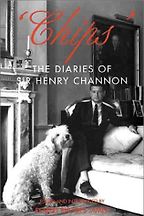
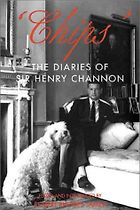
Your final book is more of an aristocratic biography than a royal one: Chips – The Diaries of Sir Henry Channon. He was an American-born British politician who kept diaries that were published after his death and provide quite a lot of gossip on the royal family.
I chose him because he gives one of the most wonderful day-to-day accounts of the abdication. He was very keen on royalty. But not only that: I discovered in it the person I wrote my first biography of. That was someone called Gladys Deacon who was the Duchess of Marlborough and there is an amazing description of her in that book which set me on the quest to find her, and I did.
She was in a geriatric hospital and I went to see her during a couple of years and wrote my first book about her, which was then read by Cecil Beaton, who then asked me to do his biography, and off I went!
So this book was a great starting point for you.
Yes. And what I particularly liked were his extraordinary descriptions of royal dinners. At one point he said: “My own big dinner. As usual the house played up and looked very grand and glittering. It was lit up and full of yellow chrysanthemums from Kelvedon. I laced the cocktails with Benzedrine, which I find always makes a party go. Noel Coward arrived first … then the Queen of Spain arrived punctually and I was on the doorstep to meet her. Five minutes later, the Queen of Romania drove up so there was just time to make the presentations to Spain before Romania arrived,” et cetera.
And people don’t do those sorts of things anymore. This was a very rich man who was married to a [member of the wealthy] Guinness [family] and he was a very good observer of the party scene so those diaries are really enjoyable.
And they inspired you to keep a diary – why?
Because I take slightly the Mae West line about diaries, which is, you keep a diary and one day it will keep you! And also because when I first started writing biographies I met so many interesting people who told me lots of very interesting things that were not strictly relevant to the book I was writing but I felt those things ought to be written down. Actually, with Behind Closed Doors, this new book I have written, I transcribed about 60,000 or 70,000 words about the Windsors from my own diaries.
So a great source of material. And considering that you like Sir Henry Channon’s book about the abdication and you have recently written a book about it – it’s a topic which obviously fascinates you. Why?
Because as Lady Diana Cooper said after the Duchess of Windsor died, “No man ever gave up so much for one woman”. Men don’t give things up for women, so why did he do it? That is what is so interesting about it. To give up reigning over two-thirds of the world at that time on account of this rather strange, not particularly good looking and perhaps not particularly interesting woman.
And why do you think he did it?
Ithink psychologically he wanted to escape and she was a way of escaping. I think she was horrified when it happened because I don’t think that was what she had in mind at all.
She was vilified wasn’t she?
Yes she was, and I seem to be leading a sort of one-man crusade to ask people to think about it in a slightly different way. Every time something happened, like when the Duke of Windsor died, somebody like James Pope-Hennessy or Kenneth Rose would write a very well reasoned article saying it was not the great love story of the 20th century and everyone would say that is really interesting, and then they would go back to saying, oh, but it is the great love story.
Because people want that, don’t they? We want the great love story.
They do want that. I remember the Duke’s private secretary saying that when they were at the Mill, which is a house they had outside Paris, if they didn’t have guests, after dinner they would go through to the drawing room. They had nothing to say to each other, but they weren’t tired enough to go to bed. The decanter of whisky would come out and it would just go down, down, down.
Five Books aims to keep its book recommendations and interviews up to date. If you are the interviewee and would like to update your choice of books (or even just what you say about them) please email us at [email protected]
Five Books interviews are expensive to produce. If you've enjoyed this interview, please support us by donating a small amount.