Before we discuss the books that have influenced your work, I want to ask about your creative process. What impact do the books you read have on your own writing?
I think of my writing, reading and thinking as all part of one continuous activity. These books weren’t read for research or for any specific purpose. They’ve just helped shape my thoughts on certain matters, and those matters have emerged one way or another, sometimes in a very submerged or indistinct form, in the fiction I’ve been writing.
How does the germ of an idea evolve into a novel for you?
I tend to leave long gaps between novels; I’m quite happy not to write for months on end. I don’t have anxieties about writer’s block either – I don’t even believe in the concept – but I’m a great believer in hesitation. I think there’s nothing wrong with pausing when you’re not sure how to proceed. And in that rather dreamy, floating kind of mental state (one which I long for once I’ve started a book and can no longer have it) I go where my reading and thoughts and travels take me.
Sometimes I experimentally write out a first paragraph – or middle paragraph, even – of a novel which I feel no obligation to write. Those kind of dabblings I always set down in a green, ring-bound A4 notebook. It’s full of paragraphs from novels I will never complete, or hardly start. But sooner or later, one of those paragraphs will snag my attention, and I’ll come back to it asking: why does that interest me so much, why does that seem to offer a peculiar kind of mental freedom? And so I might find myself adding a page or two. It was with a complete free hand, for example, that I once wrote what turned out to be the opening of Atonement – with no clear sense that I was committed to anything at all, I was just playing with narrative positions, with tone of voice, with a certain descriptive moment. Or I might decide that what I’ve written belongs to the middle of a novel, and then I’ll spend some idle time tracing out a beginning. Then abandoning it. It’s a way of tricking myself into writing novels.
Can you tell us more about the everyday process of how you write?
I sit in front of the computer, but I often have a pen in my hand. Word processing seems to me a blessing, a vast improvement on the mechanical clattering of typewriters. Close, indeed, to mental processes, in the sense that passages, pages, chapters, whole novels are held in a memory. I like the special, privileged nature of prose that’s not yet been printed out, held in some special space that resembles a private thought, or a secret.
So what’s the pen for?
Sometimes thoughts come in a rush, and I need to jot down five or six key words. It’s easy to lose the idea of a whole passage if you don’t get the markers down quickly. Or sometimes a pen is useful for trying out more complex sentences. But I mentioned the pen in my hand simply to say that longhand and word processing go nicely together.
Let’s start on your book selection. Your first choice is What Science Offers the Humanities, by Edward Slingerland. Tell us a little about the book first.
It’s a rather extraordinary and unusual book. It addresses some fundamental matters of interest to those of us whose education has been in the humanities. It’s a book that has received very little attention as far as I know, and deserves a lot more. Edward Slingerland’s own background is in Sinology. Most of us in the humanities carry about us a set of assumptions about what the mind is, or what the nature of knowledge is, without any regard to the discoveries and speculations within the biological sciences in the past 30 or 40 years. In part the book is an assault on the various assumptions and presumptions of postmodernism – and its constructivist notions of the mind.
“I don’t have anxieties about writer’s block – I don’t even believe in the concept.”
Concepts that in neuroscience and cognitive psychology are now taken for granted – like the embodied mind – are alien to many in the humanities. And Slingerland addresses relativism, which is powerful and pervasive within the humanities. He wants to say that science is not just one more thought system, like religion; it has special, even primary, status because it’s derived from empiricism, or it’s predictive and coherent and does advance our understanding of the world. So rather than just accept at face value what some French philosopher invents about the mirror stage in infant development, Slingerland wants to show us where current understanding is, and where it’s developing, in fields such as cognition, or the relationship between empathy and our understanding on evil. Slingerland believes that there are orthodox views within the humanities which have been long abandoned by the sciences as untenable and contradictory.
I don’t need to ask what the influence on your novels is here, as science plays a big part in many of them – most noticeably in Solar, but also in Saturday and Enduring Love. What is the nature of your individual relationship, as a writer, with science?
I would like to inhabit a glorious mental space in which books like Slingerland’s would not need to be written. In other words – and this comes back to the notion of mental freedom – your average literary intellectual, just as much as your average research scientist, would take for granted a field of study in which the humanities and sciences were fluid, or lay along a spectrum of enquiry. This is the grand enlightenment dream of unified knowledge. If you think of the novel as an exploration or investigation into human nature, well, science undertakes a parallel pursuit. Of course, much science is concerned with the natural world, but increasingly it has invaded the territory of the novelist. Neuroscience routinely deals with issues not only of consciousness, but of memory, love, sorrow, and the nature of pain. I went to a fascinating lecture on revenge and the reward system by a German neuroscientist a few years ago.
I’m sometimes asked by a literary intellectual in an on-stage discussion – often through the medium of a puzzled frown – why I’m interested in science. As if I was being asked why I had a particular fascination for designs of differential gears in old Volkswagens, or car-parking regulations in Chicago in the 1940s. Science is simply organised human curiosity and we should all take part. It’s a matter of beauty. Just as we treasure beauty in our music and literature, so there’s beauty to be found in the exuberant invention of science.
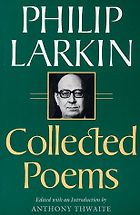
Beauty in literature is as a good a segue as any to Philip Larkin. Your next book is his Collected Poems. What do you love about Larkin, and how has he influenced your writing?
I have a careless theory that the poetry of Larkin has had a profound effect on the prose writing of my generation. There are many writers of my age who are steeped in Larkin and, like me, incorporate the cadences of his lines, often without being aware of it. His poems are part of my mental furniture. Yesterday I slipped outside to get a sandwich at lunchtime, the sun was out, I looked at some rowan trees across the street, and I thought – ah yes! – ‘The trees are coming into leaf / Like something almost being said’. That’s Larkin’s poem ‘The Trees’. It has some almost Shakespearian lines: ‘Yet still the unresting castles thresh / In fullgrown thickness every May’.
On that note, I want to ask about style. I would describe Larkin’s style as conversational, but also with extreme precision and clarity of reflection, and he engages very directly with everyday experience. Prose and poetry aside, do you model your style on his at all?
Well Larkin’s style is deceptively conversational; narratively, it’s extremely and artfully compressed. Perhaps that’s why prose writers admire him so much. T S Eliot said that aesthetic revolutions in poetry are about the return to the rhythms of everyday speech, and Larkin fulfils those terms with clarity and restrained dark humour.
How does this affect my prose? There’s something in those cadences. There are times when I look back over some piece of work and I think, ‘I know where that rhythm comes from – it’s something out of “The Whitsun Weddings”, or out of “Self’s the Man”.’ It can be something so small, like a sentence that seems to miss its final beat in order to deliver something a little flat. There’s one other element too – a kind of morose scepticism, Larkin’s reluctance to be moved. And when he is moved, as he famously is in ‘High Windows’, the effect is all the more powerful.
Martin Amis and I used to meet up before going out in the evenings in the 70s, and spend an hour downing a bottle of wine and reading aloud and celebrating Larkin. I’m sure Martin would also acknowledge the curious power of Larkin in his work.
In terms of theme, do you draw from Larkin also?
Not directly. But I think that ‘Aubade’ is the greatest poem about death, from an atheist perspective, that has ever been written. And every writer ends up writing about death. Unless you cling to some infantile hopes of an afterlife, how can you dodge stark lines like ‘Not to be here, / Not to be anywhere, / And soon; nothing more terrible, nothing more true’.
Every writer also has to write about sex at some point. Your novella On Chesil Beach seems to have an implicit epigraph in Larkin’s famous line, ‘Sexual intercourse began / In nineteen sixty-three’.
Well I avoided actually using that. I thought it was a bit too obvious. Every reviewer quoted it for me. I don’t think I would go to Larkin for sex, as it were, largely because he had such a tortured relationship to it. He writes ‘no more…sweating in the dark’, but I think perhaps he did a lot of sweating in the dark: in love again, in bed wanking at half past three. We were a luckier generation than his – we allowed ourselves, or history allowed us, far more freedom and delight and mutuality than poor Larkin ever found in his lifetime.
Would you go to Updike for sex, if not Larkin?
I think some of the descriptions of sex in Updike are extraordinary. I could never follow him down his route because his gift is one I’ve never hoped to emulate, which is the visual. In a sense he almost debunks or destroys the thing he’s describing, because of his clinical eye, but it does take my breath away. In this realm he’s a master of the hyper-real.
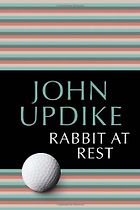
Talk a little about John Updike if you will, who died not long ago, in 2009. Your third book is Rabbit at Rest, the fourth of his ‘Rabbit’ novels.
Updike has been a very important writer for me, the one I’ve admired most, read most, and returned to most often. I was deeply touched by his death. I felt that we had conversations unfulfilled – we got to know each other a little in the last six or seven years of his life, and we had a correspondence.
What was he like, his character?
He was impenetrably courteous. At first, quite difficult to get beyond his very gentlemanly, polite and considerate shell. He protected himself. Behind this shell was all of his work. It was easier to get a more intimate Updike by writing letters. If I wrote, I’d get a response by return of post, apologising for being so quick, just as I would be apologising for my delayed replies. He said it was the only way he could keep his desk clear. But of course it was not that at all. This was a highly organised mind with boundless creative energy. He could turn in 1200 words of fiction in a day, write a review or an essay, and still address his correspondence.
You’ve called him ‘the greatest novelist writing in English at the time of his death’. What is it about Updike that deserves that praise?
Great sentence-maker; extraordinary noticer; wonderful eye for detail; great fondler of details, to use Nabokov’s phrase. Huge comic gift, finding its supreme expression in the Bech trilogy. A great chronicler, in the Rabbit tetralogy, of American social change in the 40 years spanned by those books. Ruthless about women, ruthless about men. (Feminists are wrong to complain. There’s a hilarious streak of misanthropy in Updike). He reminds us that all good writing, good observation contains a seed of comedy. A wonderful maker of similes. His gift was to render for us the fine print, the minute detail of consciousness, of what it’s like in a certain moment to be another person, to inhabit another mind. In that respect, Angstrom will be his monument.
You say feminists are wrong to criticise him, but there is that criticism – that he has a ‘male gaze’. Do you face the same challenges when you write female characters?
I have done occasionally. It means nothing to me. This is a visual form. Remember Conrad’s exhortations in the preface to The Nigger of the Narcissus: ‘I am trying…by the power of the written word…to make you see.’
Harry ‘Rabbit’ Angstrom was, I gather, an inspiration for Michael Beard, the protagonist of Solar?
I crouched in Updike’s shadow. I set myself the problem of having an unsympathetic hero, and enticing a reader to stay in his company for the length of a novel. With Rabbit, Updike showed us how this is achieved. Rabbit is not the nicest of men, his is a narrow consciousness, he’s of limited education, deeply ungenerous in the private life – remember how he makes love to his son’s wife? Grumpy, irritable, bigoted in some respects, and yet somehow Updike succeeds in making him the prism through which 40 years of American social change is observed, and 40 years of close shifts within family relations, adulterous affairs and the tragedy of a lost child.
How does he do this? Well, he invents an altered or heightened realism. He gives Rabbit his own – Updike’s – thoughts, and yet somehow he makes them plausibly Rabbit’s. Rabbit has reflections on mortality that could only be, in any realistic frame, Updike’s. But he makes them Rabbit’s; he shoehorns them into this limited mental space. It’s a rhetorical trick. In short, what Updike succeeds in doing is to make Rabbit interesting. He might not be good, but he’s interesting, and we travel with him for that reason alone. I can’t claim for a moment to have come anywhere near this with Michael Beard, but that was the example at my side.
When I feel my faith flagging in the whole enterprise of fiction – and all writers experience this – a few pages of Updike will restore my energies and optimism.
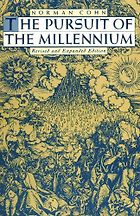
Let’s move on to your next book, The Pursuit of the Millennium by Norman Cohn. We’re sailing into new waters here, so why don’t you begin by telling us what the book is about, and about the concept of millenarianism and end-time thinking.
This celebrated book has been in print for over half a century. It’s a historical account of the fanatical millenarian sects that swept across Europe from the 11th to 15th centuries: sects that were driven by certainty of the world coming to an end. Clearly, it has relevance for our times. And when the world ended there would be deliverance for the elect. Your enemies would be damned just as you would be saved. These sects were extremely violent, and they came from the poorest, most deprived, marginal sections of society. They surged across Northern Germany, killing Jews, priests, the bourgeois.
Frank Kermode, in his famous book The Sense of an Ending, elaborated on Cohn’s masterwork by suggesting that actually it’s very common for all of us – especially artists – to feel that we live at the end of times, and that our own demise means all the more to us because we’re not simply dying in the middle of the plot, in medias res. Our lives take on significance because as we decline we notice our society is declining all around us. It’s part of a yearning for narrative significance. As Kermode said, no one can hear a clock saying, as it does, tick tick. What we hear is tick tock. A beginning and an end. We impose this order.
Cohn’s book found its way into conversations in On Chesil Beach, and it’s present in Solar, when Beard reflects sceptically on the environmental movement. The epigraph to Solar is a quote from Rabbit is Rich, in which Rabbit is pleased to note that the Earth is decaying, just as he himself is. We’re bound to ask ourselves, if we’re thinking of matters like climate change, whether we are indulging our time-honoured tendency for end-time thinking. Of course, even if we are, that doesn’t make climate change any less real. In On Chesil Beach it’s raised within the context of a discussion of the nuclear arms race: the fear that the Earth could be obliterated in a matter of hours. And again, we do now have the technological capability to destroy ourselves – whereas in medieval times the imagined destruction had supernatural causes. It was God’s revenge.
The other reason I mention this book is because in its final section, in what I think are rather resounding pages, Cohn notes that this European tradition of end-time thought fades after the 15th century, or at least becomes less bloody, then re-emerges in the 20th century in secular form, in two great totalitarian movements which derive their momentum from the millennial of the Middle Ages. One of these was Nazism, with its deliberate echoes of the Book of Revelation – the thousand year Reich. The Aryan master race will be the elect, the saved, while the Jews would be damned. And again in Soviet communism: the State will wither away, the proletariat will be the elect, the enemies – the bourgeois, the kulaks – will be destroyed. Again there is a sense of deliverance through blood and fire.
So what is the millenarianism of our times, environmental apocalypse to one side?
We now live in a kind of dazed, post-totalitarian world. You see little reawakenings, in the more extravagant and radical forms of Islam, and in even tinier groups within Christianity. But basically those two great movements consumed so many in the fire that we’re still recovering – the smoke still hangs in the air. So we have nothing, and we are lucky to have nothing. Those grim utopian movements defined the 20th century in its first half. Whatever progress we make now, we’ll have to achieve it in small steps.
Returning to Islam for a moment, or rather Islamism, you’ve written that ‘Islamic eschatology from its very beginnings embraced the necessity of violently conquering the world…a notion that in past decades has received new impetus from Islamist revivalist movements.’ Can you talk about Islamism in the context of millenarianism?
Well, I see it through the sceptical eyes of Isaiah Berlin. Always distrust utopian thinkers. People who believe they can deliver us to happiness for ever are bound to think, rationally enough, that the means will justify the ends. If it will bring the peaceable kingdom to pass, then break the eggs to make that everlasting omelette! And I think utopian radical Islamism or jihadism is a smaller and more scattered version of what so powerfully dominated the 20th century. The jihadi preference for instant rage, slaughter and martyrdom repels everyone, including nearly all Muslims. And the list of radical Islamist dislikes is too long, too much against the grain of human aspiration for their cause to have much appeal in the long run – sexuality, free thought, music, gays, evolutionary biology, unveiled independent women, pluralism, democracy, curiosity, fun, tolerance, fashion, humour…
Get the weekly Five Books newsletter
I saw a demonstration along the Euston Road in London the other day – about a hundred chanting fellows in beards, with the women well to the rear, as you’d expect, head to toe in burqas, and many carrying banners demanding ‘Sharia law now’. The rush-hour traffic was edging round them; no one was paying much attention. They were a minor nuisance, like a failed traffic light. They didn’t look threatening so much as comically hopeless. How marvellous: no one was shouting or throwing stones at them, no one was much bothered. They were exercising their well-protected (I hope) right to demonstrate. A right they would surely never grant to others, if they had their way. They seemed not only puny but politically illiterate – some of their banners said ‘Hands off Gaddafi’. Well, he’s been a scourge to Islamists in his own country, so how on earth they thought he was someone they would want to support, I don’t know.
In your speech accepting the controversial Jerusalem Prize in February, you said, ‘When politics enters every corner of existence, then something has gone profoundly wrong.’ It’s a disingenuous question, but does politics belong in novels then?
Politics belong in novels when novelists want it. If you were, let’s say, a Polish dissident writer in the 70s and 80s, you wouldn’t feel you had much freedom not to address your situation. But in our relatively settled polis in England there are people writing every conceivable kind of novel. No one is criticised for not writing about the banking crisis or cuts to the Arts Council. It’s a luxury and a freedom to let your mind go wherever it wants. Israeli and Palestinian writers do not have this freedom. It’s a conscious and hard choice to ignore the ‘situation’.
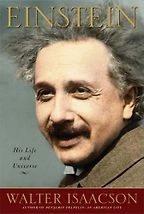
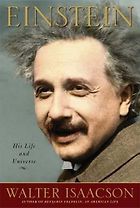
Your final book is Walter Isaacson’s biography of Einstein. You’ve chosen it, I presume, with Solar in mind.
It had a direct influence on Solar, yes, but this is a biography that happens to be a treatise on creativity. I was about to say scientific creativity, but I think I mean creativity itself. It shows us the creative exuberance of a man with an extraordinary visual imagination, able to recast certain problems in surprising ways. During two particular episodes in his life he fundamentally rewrote our understanding of the physical world. During four months in 1905, his annus mirabilis, Einstein wrote four papers – on light quanta, size of molecules, Brownian motion and special relativity, and started a revolution in physics. Again, in 1915, in a matter of weeks, he formulated in his general theory of relativity what Max Born called ‘the greatest human thinking about nature’. Paul Dirac said it was the greatest discovery ever made.
If Einstein is a creative genius, then Michael Beard in Solar is a creative parasite. His Nobel was for a conflation with Einstein’s work, and his crowning achievements in solar energy were nicked off a young prodigy.
Yes, Beard was a flea hitching a ride on the juggernaut of Einstein’s thinking. But whether quantum mechanics describes the physical world, or whether it’s simply a system that helps us make useful predictions about it, that is something Einstein spent the next 50 years grappling with. He couldn’t cross to the wilder shores of quantum mechanics, even though he himself had laid its foundation with his 1905 paper on the particulate nature of light. Some of that finds its way into Solar.
Also interwoven with Einstein’s creative fury is the story of a man with two children, going through a difficult divorce. Then there’s his long journey with the possibilities, then the reality and finally the consequences of nuclear weapons. On top of all this, the rise and rise of Einstein as a super-celebrity, a cultural icon. In his Andy Warhol moment he becomes the eternal face of genius.
One astute comment in Isaacson’s book is that a contributing factor to Einstein’s fame – besides his science, or for that matter his hair – was the fact that the world, at the end of World War I, was looking for an international celebrity who would transcend politics. And here was this German, pacifist, Jewish scientist who turned physics on its head.
All that. He was always resolutely anti-nationalist. He fell out with fellow scientists like Fritz Haber, who helped develop poisonous gases for use in trench warfare. Einstein was deeply distrustful of Prussian nationalist sentiment. Whatever the world happened to be looking for, he was his own man, a true internationalist. And also a very gifted musician.
What’s impressive about this biography is that Isaacson – who is not himself a scientist, he’s a biographer and journalist – does a very good job of setting out for the layman the central ideas in Einstein’s work, and without resorting to mathematics. That’s an achievement, to help the reader get his mind around ideas which are now taken for granted in physics, like the fact that gravity is explained by the curvature of spacetime.
This theory, I take it, was dramatically proved correct when scientists observed the movement of stars behind the sun, during the solar eclipse of 1919?
Interestingly, a sequence of solar eclipses never quite proved as much as was claimed at the time. There was a troublesome margin of observational error. We didn’t have conclusive proof until after the war, with radio-telescopy. It’s possible that the beauty and elegance of Einstein’s equations forced the pace – that an aesthetic element accelerated their acceptance. Too beautiful not to be true, as Watson said that Rosalind Franklin said, when she saw their model of DNA in Cambridge.
I included this book in my list because I think it’s a knowing exposition of the nature of human ingenuity. It’s the kind of book that makes me feel – to come back to our starting point – that there could exist a mental realm in which we could blend sciences and the humanities in the joys of creativity.
I have one last question, in coda. We’ve talked about books that have influenced your novels. So what books are you reading now, to spin our readers a clue about your next one?
I’m reading a short book by Simon Baron-Cohen, Zero Degrees of Empathy, on the nature of evil, arguing that many of the terrible things that people do to each other are a consequence of a failure of empathy. The word ‘evil’ is unhelpful. It stops us thinking too closely. And I’m re-reading To the End of the Land, by David Grossman. I’m deeply touched by that novel, which was inspired, if that’s the word, by the death of his son in 2006 during the incursion into Lebanon. I’ve just finished David Lodge’s superb novel about H G Wells. I’m also reading Somerset Maugham’s Ashenden – a thinking man’s Bond, set during the First World War.
As for my next book, I’ve started a novel, I’m about 20,000 words in, but it’s far too fragile to discuss.
Five Books aims to keep its book recommendations and interviews up to date. If you are the interviewee and would like to update your choice of books (or even just what you say about them) please email us at editor@fivebooks.com
Five Books interviews are expensive to produce. If you've enjoyed this interview, please support us by donating a small amount.