South Africa has 11 national languages and a pluralistic population of 50 million. Does South Africa have a literature?
Although we have 11 official languages, we all speak one. English is completely dominant. There is a small Afrikaner literary scene but it’s pretty insular. Everyone in it is revered as a prophet or a god. But South African literature is pretty much based around English. Does South Africa have a literature of its own? Every new democracy has a parliament, a code of laws, a constitution and a literature. We have glimmers of an imaginatively interesting one, I think.
In accepting a 1983 award, JM Coetzee said, “South African literature is a literature in bondage. It’s less than fully human.” What did he mean?
He’s complaining that South African literature bears too much of a political burden and that South Africa is not an imaginatively sophisticated enough place in which to be a real writer. In South Africa you feel, “Do I really need to write about such a crude, materialistic, violent society? And who’s going to read about it anyway?” That’s the nature of the South African writer’s situation.
Is having injustice good for a country’s literature?
During the late 20th century, the black-white struggle in South Africa interested Americans because it looked like an African version of the civil rights movement. But it never was. We seem to have fulfilled some imaginative need in the 1980s and 90s. We were grateful for the interest. But we’re not actively persecuting anybody nowadays. As a result, people aren’t particularly interested in what’s happening here any more, except for the occasional Aids, infidelity and polygamy controversy. Nowadays, people are more interested in reading about how terrible Zimbabwe is. They’ve moved on.
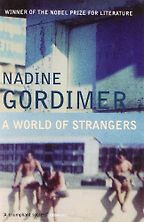
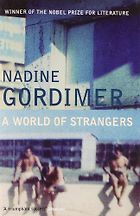
Nadine Gordimer was the first South African to win the Nobel prize for literature. Tell me about her and her 1958 novel A World of Strangers.
I went to visit Coetzee on the day that Gordimer won, to see if he was grumpy. He wasn’t. But he did say that living in the same country as a writer, you see their faults more clearly. I think that makes sense, particularly with regards to South African literature. Ninety per cent of our readers tend to be overseas. So South African writers who are successful are successful because they’re read out of context or read in an international context.
A World of Strangers is Gordimer’s best novel. It’s reminiscent of EM Forster’s Passage to India – it is written in a very British mode. It’s telling that a writer who grew up in a provincial town, the child of Jewish immigrants, adopted an extremely English, refined way of writing about South Africa. It tells you the difficulty of writing about this country. You can adopt entirely urbane voices for writing about it, which don’t quite fit, or specifically African ways of writing about the country, which don’t quite fit either.
It’s about a young Oxford graduate who comes from London to live in Johannesburg.
It starts on the boat ride over, as the protagonist stops at various African ports along the way and has dalliances with various Englishwomen who are voyaging to live with their husbands. The protagonist is going to take over a branch of his family’s publishing company in Johannesburg. In Johannesburg he runs into a few black people and comes to like one and see him as alive – then the same person gets killed in a car accident. There were lots of attempts at coming to terms with new urban life in the 1950s and 60s. This is the most successful literary attempt.
The first sentence reads, “I hate the face of peasants.” It informs the reader that race, class and identity will be a subject right from the start. What do we learn about the polarities of South African society by reading Gordimer?
First, we learn just how difficult it is to imagine it properly. The peasants he is talking about are actually what he thinks of as British peasants. So it’s Gordimer transferring British class contempt to an African setting. The story of South Africa in the 20th century is in part about repressive urbanisation. In some ways the book is about what happens to people when they come to a big city and how South African black people – who were 98% rural at the beginning of the 20th century – become urbanised, semi-residents of the city, where they had to have a pass and exist on sufferance at all times.
This book was banned under apartheid for 12 years. What was so combustible about its content?
It’s hard to see in retrospect. There’s been some interesting work on censorship. The records for those years were well-preserved, so we can tell what they were thinking – and mostly they weren’t really thinking. For example, a book called Black Beauty, about a really beautiful horse, was banned on the basis of the title. In this case, it was probably just the scenes of racial mixing at parties that upset them. Censorship was always quite good for South African writers’ careers. Because most of our readers are abroad, banned writers lost few readers at home and the ensuing publicity increased their audience abroad.
At the end of the first chapter the protagonist proclaims, “let the abstractions of race and politics go hang!” But race and politics were hardly abstractions during apartheid, and Gordimer certainly didn’t ignore politics – she joined the African National Congress when it was banned and now she’s active in Aids causes. Is it possible for anyone to be non-political in South Africa?
Although Gordimer has always been a conventional creature of the left, in her novels she’s quite ironic towards leftists – towards their interest in bridging the gap between the races and wanting to be poor or to look like the poor. She’s even ironic about black leftists. The conflict between her politics and her literary irony makes her writing more interesting.
Is possible to be non-political? South Africans are very non-political. We may seem political from overseas but we are a country that’s devoted to money, to escaping poverty, to staying away from poor people and not thinking about them. So day-to-day life is quite non-political. I work at the University of Cape Town. I spend 80% of my time in rooms filled with white people who are not inhibited by political correctness in any way. Surprisingly, these rooms can be much less diverse than in the United States, where the racial figures are obviously much different.
Before we move on to the book you’ve chosen by JM Coetzee, can you explain to me what he meant by the term “white writing”?
In some ways it’s a form of self-criticism because he sees himself as part of this long-standing colonial project, which was political and social but also literary. Writing about the land rather than the people is the oldest trick in colonial writing. I think he was talking about that whole body of work. He talks about the various tricks and evasions in that kind of writing. Coetzee tried not to repeat those tricks or repeats them only in an ironic way.
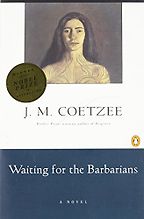
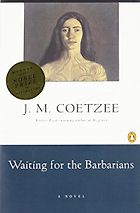
On to Waiting for the Barbarians. Tell us about the novel, and JM Coetzee.
Waiting for the Barbarians was the Coetzee book that I was always most attached to – I think it’s the Coetzee book that most South Africans are attached to. Coetzee takes the mood of the 1980s state of emergency – when people were being detained and disappearing and there was a fear of communist or black madness on the borders – and he makes it more interesting by creating this partial allegory of some unnamed empire. The whole point of the book is contained in the title. It’s a bit like The Importance of Being Earnest. It’s a book you can’t imagine with a different title.
It’s about a magistrate. He works for the empire, you don’t know what the empire is and you don’t know what century it’s taking place in. The magistrate is trying to administer law and order, he’s trying to be a figure of some kind of justice. And all the time there’s fear that the barbarians are about to invade and take down the empire. All sorts of draconian measures and violations of decency are carried out in the name of emergency. Needless to say, it ends unhappily.
There is always a personal subtext in writing and part of the interest in this book is that it’s hard not to see the magistrate, a failed liberal, as a version of John himself. It’s quite a beautiful book, spare and controlled and strange. The opening scene, where he’s talking about seeing his interrogator’s sunglasses for the first time, is unforgettable. Especially if you know that African security police loved wearing sunglasses. I don’t know why.
Coetzee approaches apartheid through allegory. What message does this allegory carry for white South Africans?
It’s hard to consider that question without thinking about Disgrace, which John wrote just before upsetting everybody by emigrating. People tend to think of arts and literature as constructive – there’s a way in which John’s career is the opposite. My sense is that white South African identity is something John sees as so damaged that he wanted to destroy it. And in some ways his literary career is about destroying it. I can’t think of a single person whose emigration caused as much disturbance in South Africa as his decision to decamp for Australia in 2002.
You took classes with him as an undergraduate at Harvard. What did you learn?
That’s a difficult question because I’ve always been unteachable and John has never been much of a teacher. He did tell me one thing that was useful. He said that he wrote four hours a day. I tried that for a couple of years and almost killed myself. Now I try to write two to three hours a day. It’s useful to think of putting in hours instead of putting down words. So even if I only make one word of headway, I can feel like I’ve done a day’s work. If he hadn’t relayed that wisdom I might have done something useful with my life, like become a lawyer.
He praised the “comic wizardry” of your first novel The Wedding, which was set in South Africa. What role does humour play in South African literature?
Almost everything Coetzee says is ironic, so you shouldn’t take that blurb as an endorsement. But your question was about humour in South Africa. We have a number of funny writers. Herman Charles Bosman is quite entertaining. So is Pieter-Dirk Uys. There’s a robust tradition of humour in South Africa, perhaps because we’re an inherently ridiculous society. We think about race all the time, but we can’t talk about it. Humour is a way of being racist without being responsible.
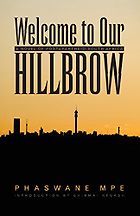
When picking up an award for your most recent novel, you quoted Israeli author Shlomo Sand as saying, “I don’t think books can change the world, but when the world begins to change, it searches for different books.” Hopefully you can explain how South African literature has changed since apartheid as we talk about your last three choices – starting with Welcome to Our Hillbrow, which was published in 2001.
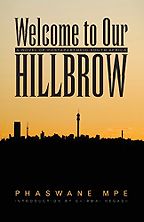
Hillbrow is a notorious suburb of Johannesburg. Johannesburg, as far as I can tell, is the most notorious city in the world. Hillbrow is Johannesburg’s Johannesburg. People in Johannesburg are scared to go to Hillbrow, even those that live there.
So Phaswane Mpe mined Hillbrow for subject matter.
This book was one of the first looks at what it meant to be young and black and relatively hip in the post-apartheid period. It’s a great book but I also chose it, in part, to indicate how many African writers we’ve lost. They just died – as Phaswane did, too young – of some unknown illness. I feel abandoned because I don’t have my tribe of black writers next to me.
Eerily, Phaswane wrote about such unexplained deaths in Welcome to Hillbrow: “Strange illnesses courted in Hillbrow could only translate into Aids.”
Has anyone risen up to take his place in your literature?
There are several wonderful black writers. One is my friend Zuki Wanner. She’s been writing novels with incredibly funny premises, like one about an upper-class black woman who gets a white woman as a maid, which in South Africa is an absurd idea. There are some others. But South Africa is not a country conducive to serious writing. I don’t mean serious in the sense of solemn, but serious in the sense of someone taking two to five years out of life to write. The economics aren’t there, the readership isn’t there and the career structure isn’t there.
Your prize-winning 2010 novel High Low In Between, takes on the topic of Aids. Can you talk about the impact of Aids in South Africa and its literature?
It’s immense and hidden. About 20% of our adults are infected. It’s slowing down now and the government is taking it seriously. But in the late 1980s and all the way through the 90s people were dying at a rate of something like 1,000 a day. We have so many people and such high unemployment and such little care for each life that we lost this huge number of people, about 2.5 million, almost without noticing. Now we have a vast orphan problem. But the key thing about South Africa is, if you are a member of the middle class, you can live here and have almost no contact with its problems.
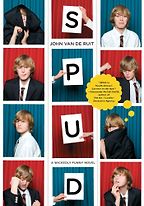
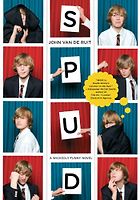
Let’s move on to the light-hearted Spud, by John van de Ruit.
In our country, even the white writers have unpronounceable names. It’s about a South African boarding school, a pseudo British school – like the one I attended, which pretended it was Harrow – where life is regulated by rules, hierarchy and a mix of proud and humiliating traditions. People in South Africa, particularly white South Africans, love these schools. They get rid of their children as soon as possible, in my case at the age of nine, to send them to these schools. Spud is about an underdog white kid who gets up to the usual tricks at one of these schools. Spud is funny but I think its popularity demonstrates nostalgia for the old order that these schools represented.
It’s been compared to Catcher in the Rye. Does it merit that comparison?
Yes. Like Catcher in the Rye, it is a bestseller. Spud is the largest-selling novel in South African history. It sold something like 80,000 or 100,000 copies. We didn’t even think that there were that many South Africans who were literate.
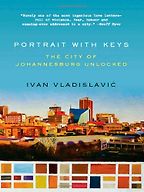
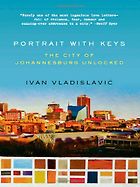
Finally, Portrait with Keys takes a look at crime, poverty and urban vitality in Johannesburg, a city that tourists tend to skip on their way to safari. Tell us about the book and the author, Ivan Vladislavic.
Another unpronounceable name. His dad may have been from Croatia or something. It’s always suspicious when people immigrate to South Africa. But Ivan is the most interesting writer on modern urban South Africa. Portrait with Keys is a fictionalised set of little stories. I thought it was a memoir at first but in the book he has conversations with a nonexistent brother. So I decided to classify it as a novel. It’s called Portrait with Keys because everywhere in Johannesburg is locked up, often not just with one door, but with multiple doors. When you stay overnight in a house, they lock all the exterior doors and set the alarm, then go upstairs and lock interior doors just in case somebody breaks in downstairs. So those are the keys.
It’s compared to Dubliners.
The tone is very different. Dubliners is elegiac, Portrait with Keys is eccentric. But both are really good books. As a writer I have misgivings about all writing, but I don’t have that many misgivings about this book.
What can we learn about crime and poverty in urban South Africa by reading this book?
I don’t know if it is a very good guide to those problems. Have you ever played the video game Doom? I always thought of Johannesburg as like the world in Doom. The moment you are out in a passageway, someone is trying to kill you; the moment you go through a door, there are shots. Ivan does a great job of exploring how human life can continue in those circumstances.
Get the weekly Five Books newsletter
The tourist bureau will not be happy with you. In your novels you’ve explored Aids, diaspora, Asian-African identity. What’s next?
My next novel is about what we call taxis. The central vehicles of South African transport are these little vans that pick people up. The owners get together, divide up territory, and wage war on rival companies. They constantly have shootouts. It’s incredibly violent and fascinating.
Is there more freedom to write in the absence of apartheid?
There’s quite a lot of freedom to write in the absence of readers and in the absence of money. With the exception of the author of Spud, no South African writer has ever become rich, except by marrying rich. There is quite a lot of freedom when you have no attention, no readership and no royalties.
Five Books aims to keep its book recommendations and interviews up to date. If you are the interviewee and would like to update your choice of books (or even just what you say about them) please email us at [email protected]
Five Books interviews are expensive to produce. If you've enjoyed this interview, please support us by donating a small amount.