The Best Fiction Books » Crime Novels
Irvine Welsh recommends the best Crime Novels
We learn much more from failure than we do from success, says Irvine Welsh. The author of Trainspotting recommends his own favourite crime novels.


We learn much more from failure than we do from success, says Irvine Welsh. The author of Trainspotting recommends his own favourite crime novels.
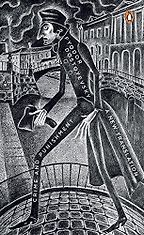
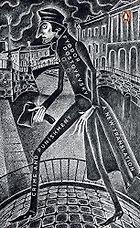
We’re talking about crime novels and your first choice is the classic Crime and Punishment by Fyodor Dostoevsky. What made you pick this one?
I think it was because it is probably one of the first books I read that you could call a crime book. It is not a crime book in the way that we understand crime fiction today. Instead it is like an existential psychological thriller. You watch the protagonist slowly unravel. He’s a student called Raskolnikov who kills his old landlady and covers it up, and it seems like the perfect crime. But what he doesn’t realise is that there is no such thing as a perfect crime because the individual has to deal with it and bear the consequences.
One of the things I really like about it is that no matter how bad the characters are, you always see why they are behaving in that way and the consequences for them and the people around them. That is the power of Dostoevsky’s novels.
You say that it is not like modern thrillers – how would you say they differ?
Well, if you pick up any modern mass-market book, basically the villains are just cardboard cutouts that have to be locked up or arrested or shot by the good guys. Modern crime is an entertainment genre. It is about resolution, which you don’t get in real life. Although I have a bit of a reaction to this, it can be very good entertainment if it is done properly.
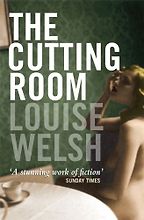
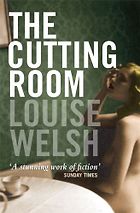
Your next choice is a thriller set in Glasgow – The Cutting Room by Louise Welsh, who is no relation to you?
No, she’s not, although funnily enough our mothers are very good friends! I think she is a very interesting writer. To my mind she is not really a crime writer. She is a very serious literary writer working in crime. She is a bit like Dostoevsky in the way that she uses the existential thriller and the crime genre as a way of exploring individuals’ relationships with society.
Support Five Books
Five Books interviews are expensive to produce. If you're enjoying this interview, please support us by donating a small amount.
She has this very interesting protagonist Rilke, who is this predatory homosexual, and that’s the kind of character you don’t really see in standard British crime books because the people in there are normally white male divorced alcoholics who listen to jazz. So, for me, that is interesting. The plotline is basically the same as that terrible film 8mm with Nicolas Cage but it is one hundred times better written.
It shows a very different side to Glasgow from normal.
Yes, it is about someone who finds a snuff movie and he wants to find out whether it was a mistake. When he is chasing the crime it goes into the underbelly of Glasgow and is very atmospheric. It makes Glasgow seem this very dark Gothic and Victorian city, which it obviously can be. You have beautiful descriptions of walking through parks and the mists and fogs. There is a lot of spectral imagery conjured up. Rilke is this kind of walking cadaver stalking through the town.
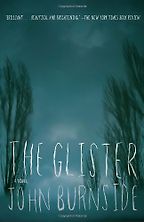
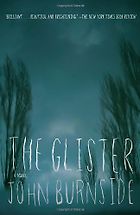
Even darker for me is your next choice, The Glister by John Burnside, which sounds well and truly bleak, with feral children running about a disused chemical plant.
I did a review of this for The Guardian and it is a bit of a misnomer to call it a crime book. The thing that I like about this book is that there is this chemical plant that has poisoned everyone, which becomes a bit of a character in the book. John Burnside is a fantastic writer and a great poet as well and you can see the poetic influence in the writing. It really draws you in and you actually feel like you are in the plant. It is just very, very spooky.
So what is going on?
It is basically a bunch of kids in this town blighted by unemployment, which could be anywhere. These kids start to go missing and it is suspected that there is some kind of predatory serial killer on the loose. And this bright kid goes down into the chemical plant and gets entangled in the world down there.
Your last two choices are very much exploring the dark side of the places they are set in, and that is the same for many of your books. What is it that so fascinates you about the dark side of life?
I have always been interested in failure and how we fail and why we fail. I want to know why we self-sabotage and why we are drawn to doing things that make us uncomfortable. I think that we learn much more through failure than success. I think that success just teaches you to be smug and complacent. Failure is basically the human condition and that is why we are so fascinated by death and decay because it is where we are going.
Which could be why crime and thrillers are such popular genres?
Yes, but I think the classic crime novel in the high street book stores is more about the avoidance of that, because everything is resolved and life goes on. People want to read about how the dark side can be beaten and treated.
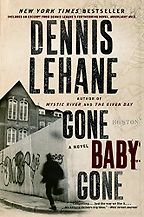
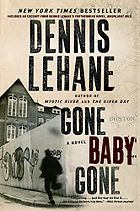
Next up is Dennis Lehane’s Gone Baby Gone, which is a classic detective novel.
Yes, a classic detective novel from a classic detective writer. And he brings so much to the table as a thriller writer. His sense of place with this novel, which is set in Boston, is pretty much unbeatable. He is one of the few classic thriller writers who really writes about contemporary social issues. The quality of the writing is absolutely superb and it moves you along.
And the book is about two private detectives, Kenzie and Gennaro, working with a drug dealer to track down a kidnapped four-year-old girl.
Yes. One of the things I like about Lehane is that he is very strong on character. I am often disappointed with a standard crime book because genre fiction is all about the plot and not about character. But I like really strong characters in a book. I am really interested in characters. I kind of feel short changed by a lot of genre fiction but I don’t get that with Lehane.
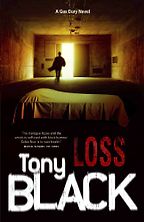
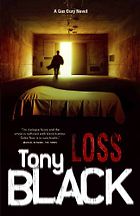
Your last book is Loss by Tony Black.
I have chosen this book because, coming from Edinburgh, I see Tony Black as a guy who really writes well about a working-class Edinburgh punter with his main character Gus Dury. And this is a character I recognise. Most of the fiction books about Edinburgh are geared for the tourist but this is actually geared for the punter – the kind of young guy on the dole, sitting in Robbie’s in the afternoon with a pint of lager and a dog-eared copy of a book, which is probably one of Tony Black’s books. It really evokes the place.
In Gus Dury you have a very Edinburgh character. If Trainspotting’s Begbie’s younger brother had gone to university and become a journalist he might have been something like Gus Dury.
It sounds like character and a sense of place, rather than just plot and resolution, are what you think are part of a really good crime novel.
I can take a good plot-driven book on holiday with me and, in defence of genre fiction, sometimes people with too literary novels forget about plot, which is another bugbear of mine. You have to tell a story and have twists and interesting things happening in it. It is necessary but not sufficient for me. I like a character to develop, change and be tested and have an emotional life too. I really like a sense of place as well because I think in this globalised world things are becoming more and more similar so it is nice to have a strong sense of place and sense the history there.
I think that is part of the reason why The Girl with the Dragon Tattoo series has been so popular, because it takes people to somewhere which is seen as right off the beaten track. In the English-speaking world it is seen as somewhere really exotic, covered in ice and snow. And there are really interesting characters and great story lines as well.
December 13, 2010
Five Books aims to keep its book recommendations and interviews up to date. If you are the interviewee and would like to update your choice of books (or even just what you say about them) please email us at editor@fivebooks.com

Irvine Welsh
Irvine Welsh is a Scottish novelist, playwright and short story writer. His novel Trainspotting, was made into a film. He has written plays and screenplays, and directed several short films.
Irvine Welsh
Irvine Welsh is a Scottish novelist, playwright and short story writer. His novel Trainspotting, was made into a film. He has written plays and screenplays, and directed several short films.
© Five Books 2025