Obviously it is too early for any of your five book choices to reflect what has recently been happening in the Arab world – but what for you are the key things that have happened in the past few months?
Aside from the obvious things like dictators being toppled, I think that there has been a big mental change which has taken place in the Arab world. For example, recently in Egypt, the former director of the International Atomic Energy Agency, Mohamed ElBaradei, who is a potential future president of Egypt, is calling for the creation of a bill of rights. He thinks that it should be a starting point for a constitution or an election. This prioritising of human rights was unheard of before. You are seeing in Tunisia the debate over the election for [a body that will rewrite] the constitution of the country. For the first time you have a sense that what people want from their government is not some grand ideal like pan-Arabism or socialism or divinely ordained monarchies – instead, people are focusing on basic human rights and basic dignity.
And it is a big change, because now people expect these as rights that they should all have.
Exactly. There is a sense, which has gradually grown over the last few decades, that the way the state is ordered – putting questions of nationalism and identity over basic human rights – needs to change.
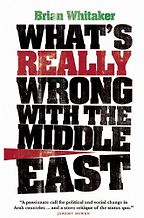
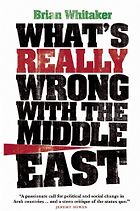
Let’s have a look at your books, which will give us some good background on all this. First up is What’s Really Wrong with the Middle East, written by the former Middle East Editor at The Guardian, Brian Whitaker.
What Brian Whitaker did with this book is very interesting. It’s considered a controversial book. Critics see it as a Westerner criticising Arab culture and the Arab world. The sort of criticisms we have seen from Western scholars and journalists tend to be tinged with racism and not properly contextualised. But Brian Whitaker is someone who is known as being sympathetic to Arabs. So for him to write this book, giving this critical take on a region that he had been working in for years, was quite original. He argues that the real problem is not terrorism, but rather the lack of personal freedom in the Arab world. He writes about this culture of paternalism, of people feeling that they can police other people’s behaviour.
“He argues that the real problem is not terrorism, but rather the lack of personal freedom in the Arab world.”
I reviewed the book about two years ago when it came out and I myself was critical of parts of the book. But I like the book because it asks hard questions, and does it through Arab eyes by profiling a number of activists who speak about their experience, raising issues such as gay rights, sexual harassment of women and the family as oppressors.
But do you think he is right that people in the Middle East need to take responsibility for their situation and try to move forward?
I agree that these are important issues to raise. But in the Arab world there are many conservatives and we have to work out how to argue for these rights, which are taken for granted in Europe, within the context of the dominant conservative culture of the region. It will certainly be interesting to see what happens regarding those issues as these countries come out of the Arab Spring. And the book is a very good starting point to think about these things.
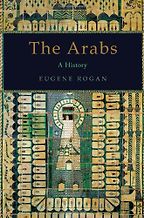
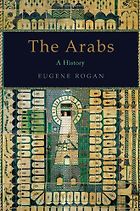
Your next choice, Eugene Rogan’s The Arabs, looks at the political history of the Arab lands since 1517. How do you think he helps us understand what is going on in the Arab world today?
I chose this book because I think the weight of history and the historical context is really important. There have been a number of general histories of the Arab world. What Eugene Rogan does in this book is to provide a very well written, comprehensive and general history of the Arab world in modern times. What he does well is to highlight how much interaction there has been in the Arab world with outside forces, especially the West, and how so much of the modern region has come out of that experience – imperialism, colonisation and so on.
The United States and its foreign policy in the region stems from this time. For me, knowing a little bit about the history of the region is a basic requirement to understanding what is going on now. You just can’t start from the point of there being a revolution in the Arab world without looking to the past to see how it came about.
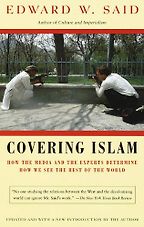
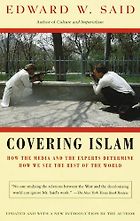
That makes sense, and your next book, Edward Said’s Covering Islam, carries this theme on. A misunderstanding of history can lead to misconceptions which feed into the popular media.
Edward Said is one of the most famous Arab intellectuals in the Western world. He wrote a book in the late 1970s called Orientalism that laid the foundation of the critique of Western approaches to the Middle East. But actually, I think that this book, although less intellectually challenging, is very important as well. In a sense it is even more important and accurate than Orientalism. He wrote this book initially in 1981. As a journalist who reads a lot of things about the Arab world, I find that I often criticise the media coverage. There is a staggering amount of misinformation about the Arab world in the Western media.
What kind of misinformation have you seen?
It can be generalised, pernicious ones, such as that Islamic countries are always very austere and everyone is in veils. There’s also often a very shallow understanding of local culture and history, or even the history of conflicts – particularly controversial ones like the Israeli-Arab conflict. And then there’s the tendency to look at enemies of the West as irrational actors, kind of villains, without understanding their motives. But things have got better to some extent, particularly as you have more journalists who speak local languages.
Why do you think this misinformation persists?
Partly it is because of the journalists that are being employed. Often they don’t have a long experience of the region so they get things wrong. Arab journalists do this too, but because of the balance of power being to the West’s advantage, it is more damaging to us when Western journalists get it wrong. It can be serious things, like Americans getting things wrong about people’s religions, or silly things. One of my favourite ones is that whenever there is a picture of Arabs beating someone with their shoe, journalists always write that hitting people with shoes is very offensive in the Arab world – as if somehow it isn’t in the West!
“There’s the tendency to look at enemies of the West as irrational actors, kind of villains, without understanding their motives.”
For example, Said has a whole chapter on the Iranian Revolution. He explains how the question of Islam became such an overwhelming, dominant issue after that. This is a book that was written 30 years ago. My own experience comes after 9/11 when everything started being seen through the lens of 9/11, although 99.999% of Muslim people had nothing to do with that. But I think that in more recent years, in part because of the critique of the media that is taking place in blogs, the media has changed. People have learned to be more sensitive and to be more nuanced in their treatment of the region – even if you still have Fox News and the like.
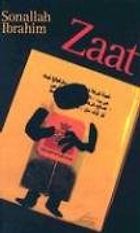
Your next choice, Zaat by Sonallah Ibrahim, is a novel about an Egyptian woman who lived during the regimes of three presidents – Nasser, Sadat and Mubarak.
I chose this novel, which was written originally in Arabic in the early 1990s, because I think Sonallah Ibrahim is one of the greatest novelists of his generation in Egypt. This isn’t necessarily his best book but not all of them are available in English. Zaat is a book that captures the suffocating nature of the Mubarak regime, and not just in the last few years when everyone was complaining but way back in the 1980s and 1990s. He writes a chapter in traditional narrative format and then he will often have newspaper clippings and little reports from contemporary radio or TV which he transcribes. It really gives you a picture of a society that is quite compelling.
Sonallah Ibrahim is worth mentioning because of the symbolic role he played in the recent uprising in Egypt. In 2002 he was awarded a major award by the ministry of culture in Egypt, and when he came up to the podium to accept it he gave an impassioned speech refusing the award, and saying that the government lacked the moral authority to give it to him.
What happened to him?
All the pro-government intellectuals attacked him, but the people on his side cheered him. And it was one of the moments during the last decade when people started to speak out against the Mubarak regime. He played an important role in this becoming a more acceptable thing for people to do.
An important figure. I was also wondering what role you think women have played during the Arab Spring?
Sonallah Ibrahim is good at highlighting what the situation is like for many women. Women tend to be more oppressed than men in many parts of Arab society. I think this is one of the issues that is being worked out at the moment. Women played some very important roles in the revolution, despite the cultural taboo of mingling with men. For example, they spent the night in Tahrir Square [in central Cairo] and this was criticised by the regime who brought out propaganda against them, saying there were sex parties taking place. They tried to use the idea that it was inappropriate for women to be out by themselves to stop women going there.
“Women played some very important roles in the revolution, despite the cultural taboo of mingling with men.”
I think that this is one thing that is changing. We are seeing women speaking out more strongly for themselves on various issues. But many women are concerned there will be a backlash and things will get worse for them because the situation in Egypt still isn’t stable, and conservatives and Islamists are a major political force. The Mubarak regime used a very superficial progressive policy for women to give a positive image of itself to the West. But, frankly, if you don’t have decent human rights generally, you don’t have real women’s rights either.
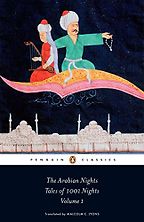
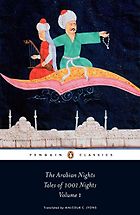
Your final choice is The Arabian Nights, translated by Malcolm Lyons and edited by Robert Irwin.
This is a very personal choice. It is a book that I have read since I was very young in many different versions. It is a book that is endlessly fascinating. Although the stories are Arab, Persian and Indian, it is a book that is associated with the Arab world and is different from the Arab world that you see on TV, which is all about violence and war and things like that. This shows a tradition of literature which I think is universal.
The Arabian Nights was given a second life by its rediscovery by Westerners in the late 18th century and it is still influential today in Western perceptions of the Arab world. For better or worse, a lot of Westerners learn about the Arab world early on in life through these stories. Whether you like it or not, it is an important book.
This translation, which is the latest English translation to come out, is really significant. The editor, Robert Irwin, is a great scholar of Arab and medieval literature. He also did a fantastic job of putting things in context and it is really a beautiful edition of one of my favourite books.
Five Books aims to keep its book recommendations and interviews up to date. If you are the interviewee and would like to update your choice of books (or even just what you say about them) please email us at editor@fivebooks.com
Five Books interviews are expensive to produce. If you've enjoyed this interview, please support us by donating a small amount.