Celebrated food historian selects five books on cooking that reveal much about our history. During the period that the French and English were at war, roast beef was all the rage and anything 'Frenchified' was suspect
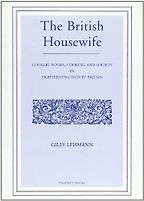
Let’s talk about Gilly Lehmann’s book, The British Housewife.
The British Housewife is really an academic survey of the cookery books of the 18th century. The male cooks of the 17th century tended to be flamboyant characters who worked in very wealthy households. Their recipes were just show-off things – they’ve got enormous numbers of ingredients, all of which are expensive and some very impractical. The 18th century was the time when female cookery writers started to really emerge. The 17th century recipes were trimmed down and simplified by ladies who had a real eye for economy, simplicity and for not wasting materials – and their books started to sell much more quickly than their male counterparts. Gilly Lehmann, in a very eloquent way, traces this very interesting phenomenon which is very much still part of the British pattern of culinary life – we have a huge place for the domestic in our cookery literature, rather than just the fancy, professional approach.
It talks about the movement away from the Continental style of cooking, too.
Well, one of the things that she points out is that during that period France and England were at war. It was not considered terribly patriotic to read books on French food, and the very wealthy who still kept their French cooks did so very quietly. Good old English roast beef and plum pudding was seen very much as a symbol of patriotism during this period, and anything that was Frenchified was seen as a little bit suspect. Nevertheless, some of the ladies who disparaged French food still included a lot of French recipes, and French cookery certainly had a huge effect on our own. Many French recipes that died out in France carried on in this country. One delicacy which started out in France was a pie-like dish called a poupeton with a forcemeat crust on the outside rather than pastry. It died out in France, but carried on in England and eventually became known as a pulpatoon, which is a very English sounding name. So lots of French ideas were implanted on English soil and they remained here. Her book is probably one of the best works on the subject. Another book which I can really recommend is actually one about French cookery.
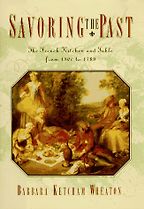
Is this Barbara Ketcham Wheaton, Savouring the Past?
Yes. It’s a superb outline of the development of French food from the medieval period through to the 18th century. She lets the story unfold in a really interesting way – it’s superbly researched and it’s got some really strong arguments in it. It’s written by an American, but the French actually gave her a very important literary award for this book, so it’s very much appreciated in France as well as in the Anglo-Saxon world. It’s much more than just a history of French food – it helps you to understand the whole development of European food. It’s full of cross-references, and it’s based on a lifetime’s research and incredible erudition. She’s the honorary curator of the culinary collection at the Schlesinger Library, Harvard, so she has a great resource.
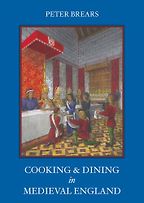
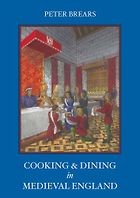
Let’s talk about Peter Brears’s book.
Cooking and Dining in Medieval England is really his masterwork. It is a book that is very important – it acts as a foundation for any further research in British food history. He has looked at the period after the Norman Conquest through to the rise of the Tudors in a way which no one else has ever done. He’s done his own investigations of medieval castles and manor houses, where he’s scratched around and found many forgotten and overlooked domestic features. His revelations are so extraordinary that they actually mean that some of the investigations of military historians, who’ve looked at castles from a defensive point of view, are often mistaken. Things they assumed were places for storing gunpowder and cannon balls turned out to be places where the malt was made for beer. Most of the time these buildings were not actually in a state of conflict – there were long uneventful decades where people were living in them just leading everyday lives, and they had to be fed and they needed something to drink. So he looks at that culture – and it’s a remarkable book. He deserved to get the André Simon award for the extraordinary research that it’s based on.
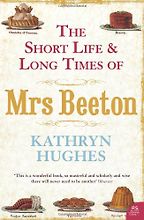
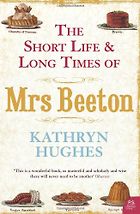
Your next recommendation is by Kathryn Hughes – The Short Life and Long Times of Mrs Beeton. I’m a fan of Mrs Beeton, especially her household management tips pertaining to the care of sick people.
Well, to tell you the truth, I’m not a fan of Mrs Beeton at all.
Ah. OK.
I find Mrs Beeton in some ways, from the point of view of a historian, a bit of a distraction, because she was a publishing phenomenon rather than an original cookery writer.
Was she the first of the celebrity cookbook writers?
Well, she never knew that she was going to become a celebrity because she died before her book got any kind of recognition. It would probably be forgotten if it were not for one thing – the very enterprising publishers Ward Lock who bought the rights of the book from her husband, Sam Beeton, its original publisher. They realised that her book would become dated very quickly because in the second half of the 19th century things were changing enormously, with new equipment coming out and new recipes. So every time they brought out a new edition, they basically rewrote it, and included new images of the latest kitchen equipment. She became a brand. Kathryn Hughes very skilfully looks at this phenomenon. Mrs Beeton probably never cooked very much – she was not someone who had time in her life to learn to cook. In my words, she cruised on the Victorian internet and copied other people’s material, and she did it in a very skilful way. The reason for that was that she was a journalist; her early work was fashion writing for her husband’s magazine and she could get copy together very quickly. She based her books on much better ones that were written earlier in the century.
Such as?
There’s an encyclopedia of domestic economy by a man called Thomas Webster, which was published in the 1840s, which was getting a little bit old-fashioned by Mrs Beeton’s time. Her book was very much modelled on that – it doesn’t just tell you how to cook of course; it tells you how to manage a large household. It was aimed as a wedding present for a young bride. Ward Lock who published it in the late 1890s identified that market. People were getting better off and moving upwards, and more and more people were able to afford servants. These 19-year-old virgins who were marrying merchant bankers and moving into new villas in Islington…the poor things didn’t have a clue how to run a household. And Isabella Beeton’s book, like Thomas Webster’s before her, gave them those secrets.
Get the weekly Five Books newsletter
Kathryn’s book is a very well researched biography, and it’s full of a lot of surprising things. It’s not known for instance, that Mrs Beeton probably died of syphilis, because her husband Sam was a philanderer and messed around with prostitutes – he was a real bounder. She was only 27 when she died. It’s curious because the whole nation has this picture of Mrs Beeton as being a rather portly lady with a pinny and flour on her hands, when in fact she was a young woman in her mid-20s when she started that book, with no real practical experience of cookery that we know of. She produced a book which is in no way original – there are much better cookery writers in the 19th century than Mrs Beeton. Kathryn’s book is a very good read, it’s very entertaining, and it’s been put together by a scholar who really knows her subject.
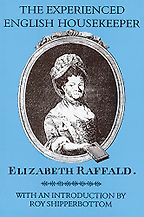
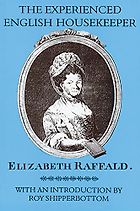
Shall we talk about The Experienced English Housekeeper?
This book was first published in 1769 in Manchester. Its author was a lady called Mrs Elizabeth Raffald. She was a confectioner and housekeeper and also ran a registry for servants, like an employment exchange. Her cookery book is one of the most original of its period, and it’s one of the great English cookery books. I rate it very highly myself – it’s certainly much more important than Jamie Oliver’s books. It’s very readable, and every single recipe in it works – she’s obviously tested them. And they are her own recipes.
Have you replicated them?
I’ve replicated many of them. The editor of the Equinox edition of this book, Roy Shipperbottom, who was a close friend of mine, tried every single one of them before it was published, and found that they all worked perfectly – hundreds of recipes.
Would they still be to modern tastes?
Nearly all of them are, yes. One or two are difficult – she deals with things like turtle soup, which is not a thing you can do nowadays. Of all the 18th century cookery books, her book is probably the one that would appeal to modern taste more than any other. It’s a universally good book, and much more original than Mrs Beeton – yet most English people would never have heard of her, and she deserves to be better known.
January 1, 2010
Five Books aims to keep its book recommendations and interviews up to date. If you are the interviewee and would like to update your choice of books (or even just what you say about them) please email us at [email protected]
Five Books interviews are expensive to produce. If you've enjoyed this interview, please support us by donating a small amount.
Ivan Day
Ivan Day is a celebrated food historian and the author of several books on the history of food. He has worked as a broadcaster, in both television and radio. His collections of antique books and equipment and re-creations of historic table settings have been exhibited at venues including the Philadelphia Museum of Art and the Museum of London. He is also a talented cook and confectioner with 40 years’ experience in period cookery, and runs courses for the public at Wreay Farm in the Lake District.
Ivan Day is a celebrated food historian and the author of several books on the history of food. He has worked as a broadcaster, in both television and radio. His collections of antique books and equipment and re-creations of historic table settings have been exhibited at venues including the Philadelphia Museum of Art and the Museum of London. He is also a talented cook and confectioner with 40 years’ experience in period cookery, and runs courses for the public at Wreay Farm in the Lake District.