The books you’ve chosen are all incredibly interesting, but how do they tie in with Jerusalem specifically? Your first choice is James Kugel’s How to Read the Bible.
Even in this secular age, the Bible is a pillar of the Western imagination. Everybody has a stake, both in Jerusalem and in the book that really defined it, which was the Bible. The city of Jerusalem is what invented the Bible, and it happened when the people of Israel were kidnapped from Jerusalem and brought to Babylon in the 7th century BCE.
It was only when they were outside the city, in exile, that they looked back and realised what it was and that they had become different from their neighbours. They couldn’t worship at the temples in Babylon, because they had a God in Jerusalem who was very different. It was when they looked back and saw how different that God was, that they became the Jews. This was the beginning of the Jewish religion.
“The Israelis and the Palestinians are caught in a corner that is 5000 years old, and it’s one that they did not create”
The irony is that the religion begins with a view of Jerusalem from the outside, from far away. Jerusalem is the source of this breakthrough in the human imagination – the idea that God the Creator is the God of all people, not just of the tribe. We call this idea monotheism, but monotheism is a very slim word for the powerful reality that this insight reveals.
A powerful affirmation that God is the God of all people is the principle of peace, because it means that all human beings are children of the same God. That gives me my main understanding of the Bible, which I see as an on-going, cross-generational act of resistance against violence. The reason there’s so much violence in the Bible is that violence is its subject. And what you have in the Bible is a record of people looking for ways to mitigate, resist and eventually even end violence. Jerusalem is the cockpit of violence.
That’s the irony.
All of the great empires of the ancient world – the Babylonians, the Egyptians, the Cretans, the Greeks, and, ultimately the Romans (with devastating consequences) – went to war with each other in Jerusalem; it was at the crossroads. And that continued. The Crusades centred on Jerusalem; the European Christian imagination centred on Jerusalem.
What was Lord Allenby doing when he went to Palestine in 1917? Conquering Jerusalem. What was the great battle hymn of World War I in Great Britain? ‘Jerusalem’. Jerusalem is the centre of war, and it’s also the centre of human efforts to resist war. If you have that context in the background, then the Israeli-Palestinian conflict does not look nearly so impossible to understand. The Israelis and the Palestinians are caught in a corner that is 5000 years old, and it’s one that they did not create.
How does the Kugel book fit into all this?
It illuminates this breakthrough that took place for the Jewish people. Their God was the God of all people. Also, their God was not able to be represented, hence the condemnation of idol worship. Their God transcended representation. I would argue that this is the key religious breakthrough in the human imagination: that our God is present to us, but present through a kind of absence. We can’t possess our God, and therefore we can’t go to war in the name of our God. No one possesses God.
The perfect symbol of this is the fact that, when the Jewish people returned from Babylon to Jerusalem, they reconstructed the Temple. But it was different, because the Holy of Holies in the Jewish Temple, from then on, was vacant. God is present through a kind of absence.
Get the weekly Five Books newsletter
That’s a brilliant, complicated, paradoxical insight. It’s a principle that shaped Jewish religion from then forward. When the Romans destroyed the Temple, God was present to the people in exile. The Jewish people could leave Jerusalem and be a permanent diaspora – but they constantly remembered Jerusalem. So Jerusalem became imagined. They carried it with them, praying wherever they were – in Poland, Ukraine, London… ‘Next year in Jerusalem.’ Jerusalem lives as an imagined city.
So that is an important part of the book?
Yes – the invention of an imagined Jerusalem. And the understanding that God is present to Jerusalem by being absent from it, that paradox.
I read reviews of Kugel’s book which also said that the author is looking at the Bible through the eyes of a modern scholar.
It’s true. What Kugel does is read the Bible with a view to understanding it historically, which is what I’ve suggested you do here.
What about your second book, John Crossan’s God and Empire: Jesus against Rome, Then and Now?
The second book takes the next step in the story, because it explains how, once Jesus comes into the story, the temptation to violence reasserts itself. Jesus comes to resist the violence of Rome. The one thing we know for sure about Jesus is that he was a person of non-violence. He issues a kind of prophetic call to his fellow Jews for non-violent resistance to Rome.
The tragedy, and the manifestation that Jerusalem is always the place where violence comes back, is that the followers of Jesus embraced their own violence against the Jewish people. Coming out of the revelation of Christianity, we have a religion of peace that immediately begins to violently scapegoat the Jewish people. That is the original sin of Christianity. It plants the horrible seeds of anti-Semitism, which will ultimately, across the centuries, lead to savage violence against the Jewish people, often in the name of Jesus. Which is a profound betrayal of Jesus himself, who was, of course, always and only a Jew. So Crossan’s book gives us the Christian elaboration of the Jewish faith, but also shows how, especially once the Empire embraces Christianity, the Christian faith betrays itself.
Is Jerusalem a central part of this?
Christians embrace the Roman idea that Jews must be in exile from Jerusalem. We know that God has rejected Jews because the Temple has been destroyed, and they have been banished from Jerusalem. Christians begin to point to the Jewish banishment from Jerusalem as proof of Christian claims. Jerusalem remains central to the Christian vision – but now it’s Jerusalem without Jews. And Jews then are in exile from Jerusalem whenever the Christians are in control of it. That theological position is relevant to the ambivalence people have today about Jews at home in Israel.
Then the story changes again when Islam arrives in Jerusalem, not long after Mohammad dies in the 7th century. The first thing the Islamic armies do is to move against Jerusalem, and they take it – non-violently, by the way. The Islamic claim to Jerusalem is almost as strong as the Islamic claim to Mecca. Muslims embrace the idea of Jerusalem, and one of the first things they do after taking over Jerusalem is to invite the Jews to come back into it. So that by the 7th century, you have all three religions rooting themselves in Jerusalem.
“America is the new Jerusalem, and the most common place name of all the towns and cities in the United States of America to this day is Jerusalem.”
So Islam takes control of Jerusalem, and, just as Jews were forced into exile after the Roman destruction of Jerusalem in the 1st century, now Christians are forced into exile from Jerusalem. Like Jews, they imagine a fantasy city which begins to define Christendom, European Christian civilisation. As soon as European Christian civilisation has the power to do so – in the 11th century – it assembles armies and moves against Jerusalem. Europe comes into itself during the three centuries of the Crusades; the Crusades represent an obsessive longing to take possession of Jerusalem, and one army after another goes to Jerusalem to take it back. They succeed in taking Jerusalem for a few decades. But then they lose it again. This is important because now Jerusalem is not just a city, but a fantasy. From then on, western Christianity and the civilisation it generates imagines Jerusalem as the solution to every problem. The fantasy of Jerusalem comes into tension with the reality of it. Muslims are in charge of Jerusalem, and they allow both Jews and Christians to be there in peace. But they become the fantasy enemy of western Christianity.
Then there are the adventurers of colonialism. What was Christopher Columbus looking for when he sailed to the West in 1492? It’s quite explicit in his journals: he was looking for a new route to Jerusalem. The fantasy of Jerusalem defines what Christopher Columbus was doing, but also then defines the new world that follows from his discoveries. What were the British religious dissenters looking for when they went to the New World in the early 17th century? They were looking for the city on a hill, which is, of course, Jerusalem. That becomes a foundation of the American myth. America is the new Jerusalem, and the most common place name of all the towns and cities in the United States of America to this day is Jerusalem.
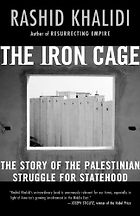
What about the Rashid Khalidi book, The Iron Cage: The Story of the Palestinian Struggle for Statehood?
This is part of the Islamic story. The Khalidi book is about the contemporary struggle of Palestinians. But Arab attachment to Jerusalem, and why Palestinians are fierce in their attachment to it – it all goes back to the 7th-century arrival of Muslims in Jerusalem.
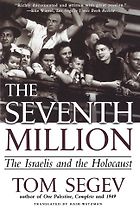
Next is Tom Segev’s book, The Seventh Million.
This book tells the story of the great interruption in European history – the Holocaust. It’s no accident that the Jewish reaction after the Holocaust was to return to Jerusalem. Zionism had been ambivalent about Jerusalem, but, after the Holocaust, that was no longer the case. Tom Segev’s book explains why. The title refers to the six million who died in the Holocaust; the seventh million are the Israelis who were traumatised by what happened.
He gives us a clear look at how Jerusalem in Israel was redefined and rediscovered. The climax of the Israeli reckoning with the Holocaust comes with the trial of Adolf Eichmann in Jerusalem. The Jewish reckoning with the Holocaust really took place in Jerusalem, so this solidifies the Jewish attachment to Jerusalem, setting the ground for the present tragedy. Muslims, Jews and Christians are all absolutely defined by their relationship to this city. Is it possible to imagine that they can each be in Jerusalem, at peace one with the other?
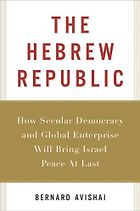
Is this where Bernard Avishai’s The Hebrew Republic comes in?
Yes. It gives us a portrait of what reconciliation could look like. The Hebrew Republic is a wonderful description of the two state-solution: what the fulfilment of a Jewish commitment to a democratic Israel, and a free democratic Palestine, will look like, and what it will mean for Jerusalem. It’s a profoundly hopeful book. My own point of view on this story is that even though it is rooted in tragedy and violence, it is still profoundly hopeful. Because Jerusalem itself is the source of the most powerful human symbols of peace and reconciliation.
How has the book been received? Is what Avishai proposes realistic?
It’s been received powerfully. It’s a portrait of a possible peace based on interviews Avishai has conducted recently with Olmert and Abbas, the former prime minister of Israel and the leader of the Palestinian Authority. In its review, the New York Times called Bernard Avishai a new Theodore Herzl. It’s a new vision of Zionism that is democratic and faithful to Jewish commitments, but also respectful of the civil rights of Palestinians and Arab Israelis.
Has it caused a lot of controversy?
It is a contentious subject at this point. This book, like all visions of peace in this pre-peace period, has its critics. But it is, in my view, a profound articulation of what a reconciled Israel-Palestine would look like – and what it means for Israel to be firmly committed to democracy and equal rights for all of its citizens, even while continuing to be a Jewish state.
When you did research for your own book, did you spend a lot of time in Jerusalem?
I go to Jerusalem every year. I’m part of a Jewish-Christian-Muslim theological conversation that takes a place at the Shalom Hartman Institute in Jerusalem, and I’ve been going for the past 12-15 years. Even through all these periods of terrible conflict in Jerusalem, this conversation among Jews, Christians and Muslims – Israelis, Palestinians, Europeans and Americans – has continued. That’s the main source of my own firsthand experience of Jerusalem.
Get the weekly Five Books newsletter
I don’t pretend to be an expert; I don’t speak Arabic, and I don’t speak Hebrew. But I’m a committed Catholic Christian, and this is the single largest question of my life. Jerusalem is at the centre of my imagination, and I’ve really discovered how and why as I’ve written this book, Jerusalem, Jerusalem. It’s also at the centre of my imagination as an American. We Americans are not sufficiently aware of how deeply into our consciousness the theme of Jerusalem goes. The ‘Battle Hymn of the Republic’ – the lyrics, ‘Mine eyes have seen the glory of the coming of the Lord’ – that’s all about Jerusalem. The Americans fought the Civil War for Jerusalem, in the same way that the British fought World War I for Jerusalem.
It’s a fantasy city, and the tragedy is that in its name, we of the West have killed for it again and again. There is that moral paradox embedded in it. The City of Peace has been a City of War. Can it go forward as a city of peace? I think it can.
Five Books aims to keep its book recommendations and interviews up to date. If you are the interviewee and would like to update your choice of books (or even just what you say about them) please email us at [email protected]
Five Books interviews are expensive to produce. If you've enjoyed this interview, please support us by donating a small amount.