What personal experience, in all your years as a journalist, do you think has taught you most about Islamic militancy?
It was when I was in Najaf in August 2004 in the middle of a very intense street fight between local Shia militants and some American marines. It is important to remember that Islamic militancy is not just limited to Al-Qaeda or indeed to Sunni militancy. So these Shia militants were fighting the Americans who had tanks and the tanks were advancing up the streets, firing as they were advancing.
I was with a group of the militants in the centre of town who were panicked by the Americans and their tanks. They were shouting at each other about where to find the rocket-propelled grenades that they hoped, rather optimistically, would stop the tanks. And they were shouting things like, “Ali, Ali, where are the RPGs?” And the response was, “They are in Hussein’s house.” And then the others would say, “But where is Hussein?” – “I don’t know. I think he left town.”
So they had all these chaotic conversations about where the weapons they needed might be and no one seemed to know – and that was when I realised that Islamic militants are normal people who are often incompetent, not particularly well informed, not particularly well prepared and certainly not the classic vision of the Islamic terrorist with his shemagh [headscarf] around his head and two eyes peeping out, full of implacable hatred. They are not these inexorable, unstoppable killing machines.
So they are a lot more amateur than we might think?
Yes, basically you are talking about people, groups and a social activity – a criminal, violent, deeply abhorrent, but nonetheless social activity like many other social activities.
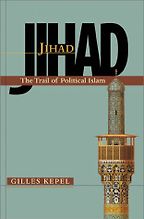
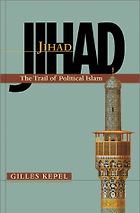
Let’s look at some of your choices which reflect that idea. Your first book, Jihad by Gilles Kepel, is an overview of the history of modern Islamic militancy.
Kepel is one of the best-known French experts on Islamic militancy. And the French, for a variety of reasons, have produced much of the best analysis of Islamic militancy over the years, pre- and post-9/11. It is partly due to their own history and partly due to their interest in social sciences. It is also partly due to government investment very early on.
Kepel’s book is a brilliant overview, both broad-brushed and detailed, of the last two or three decades of Islamic militancy and its antecedents. It came out just before 9/11 and had to be updated, but its thesis stands the test of time. That thesis is that the radical violence in Islamic militancy is in large part a response to the failure of political Islamist activism.
So much of it is to do with the frustration that stems from that?
Partly the frustration, but what Kepel does is to show the various ideologies that have been dominant in the Middle East and much of the Islamic world. First of all he looks at anti-colonialist nationalist agitations, often containing some religious element, in the first half of the 20th century, followed by two or three decades of often socialist or nationalist secular ideologies, followed by a surge of Islamist ideologies in the 1980s. And he looks at how all of these successive projects have failed to solve the very deep problems in those societies.
He also talks about the role of the “bazaar”.
Yes, he focuses in part on the two elements that he sees within radical militant groups. There are the poor, if you like, the lower working class and – and this is where I think he is brilliant – the lower middle class that have aspirations. These latter are often the first generation that have been educated and often the first generation that are living in cities. And he shows how their views and their values are often drivers of activism of all sorts, but particularly, recently, of militancy.
Is this a way for them to forge a new life for themselves?
In part, it is a reaction to social change which sees new groups contesting the position of old elites.
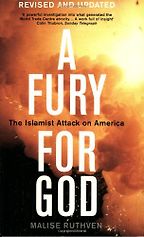
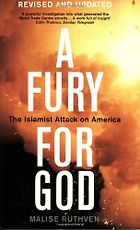
Next up is A Fury For God, by Malise Ruthven, which explores the whole question of modernity and Islam.
Malise Ruthven is one of the grand writers on the Islamic world and on Islam. He also wrote The Islamic World, which is a classic, and I was thinking about choosing that. But A Fury for God is a book that I learnt an awful lot from. Often with books it is what they bring to you. What Ruthven was saying in 2002 immediately after 9/11 has been said and re-said many times since. I read this book in northern Iraq in 2002 and it taught me an enormous amount about the complexity of the engagement in many societies that have a strong Muslim identity with what in the West we know as “modernity”.
He is very good on Sayyid Qutb, a leading member of the Egyptian Muslim Brotherhood, Islamic activist and ideologue in the 1950s and 1960s and one of the foundational authors of modern militant Islam. He explores Qutb’s reaction to what he saw as the licentiousness and the moral degradation of the West. The book is very good at explaining how Islamic militants view the West, particularly on the moral side of things.
And it also explores their frustration with the West’s refusal to conform to what they see as the right path.
It more about how they see it as a threat to their own society, and how the answer to that threat is to return to the fundamentals of religion as they interpret it.
Your next book is by a not-so-well-known author, but nevertheless a very good researcher. This is
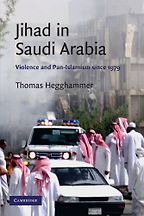
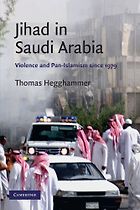
Thomas Hegghammer’s Jihad in Saudi Arabia, which looks at the homeland of Osama bin Laden.
Yes, I have chosen it because it is a very, very good example of the sort of books you need if you are working in this field. It is meticulous, it is neutral, it is detailed and it is written with one sole aim in mind, which is to tell people what is happening, what has happened and why it has happened, in terms of radical Muslims and Islamic militants in a key country.
So an excellent source of information.
A fantastic source, and if we had one book like this on every major country which has had problems with militancy and written by an author like this, who fluently speaks the local language and has spent a lot of his time there researching his topic, it would be incredibly useful and we would be much better off. It is just the opposite of so much which is written about Islamic militancy which is badly researched, heavily commercial or slanted and very unhelpful.
Do you still think Saudi Arabia is the heartland of radical Islamism?
Saudi Arabia is certainly the heartland of rigorous conservative Islamic practices and clearly the homeland of Osama bin Laden, but then if you look at the senior leadership of Al-Qaeda today you have got as many Egyptians and Libyans in there as well.
What kind of changes have you seen in Islamic militancy over recent months since the death of Osama bin Laden?
It is too early to tell in a sense. What you can say is that Bin Laden’s death feels very much to me to be a marker on a road that we have travelled a fair way down already. The critical years for me, for the conflict with militants – which I have called the 9/11 wars in my new book – were 2005 and 2006. That is when there was the critical intensity of the conflict. It looked like Al-Qaeda’s plan to plunge the world into some kind of global conflagration that would pit Muslims against the West might work. But since then Al-Qaeda has been increasingly on the back foot.
Why?
A very simple reason. They had one key objective back in 1988 when they formed Al-Qaeda – to use spectacular acts of violence to radicalise and mobilise the Islamic world to use force and rise up against local rulers. That goal has not been achieved because Muslims across the world have shown themselves to be revolted by violence when they see it up close. That is critical. When, early on, the violence was in America or a long way away, it was much easier for communities to feel supportive of what was going on.
Because it was an ideology rather than a reality for them?
Yes, it was idealised. You didn’t see what it actually meant. When the violence actually came to Pakistan, to Saudi Arabia, to Jordan, to Egypt, to Morocco and to Algeria in successive waves in the middle of the last decade, then the support for any kind of violence dropped away very rapidly.
It is very similar to how people are in the West and shows we are all more similar than we might think.
Exactly. It goes back to my earlier point that Islamic militants are ordinary people just like us. The communities they come from are ordinary.
I’m intrigued by your next choice, The Secret Agent by Joseph Conrad, which is actually set in London and is about a spy.
Basically, anything you want to know about how terrorism works you can find in this book. It is not necessarily about who is behind terrorism because in this book it is a shadowy foreign state that wants an agent provocateur in London to explode Greenwich Observatory to make a point.
But the broad picture that Conrad paints of how ideologies work, of how people get drawn into violence and how amateurish it can so often be, is true of much of terrorism worldwide. It goes wrong in The Secret Agent, by the way, and the wrong person ends up getting killed.
Get the weekly Five Books newsletter
And thankfully, militants are often very amateurish as well. So this book strikes me as a deeply useful reminder of what this kind of religious or political activism is about. I would just like to mention a brilliant line in the book when Conrad is talking about violence and he says, “the way of even the most justifiable revolutions is prepared by personal impulses disguised into creeds”.
That is very true for many things.
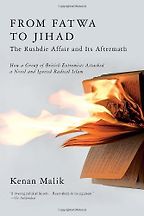
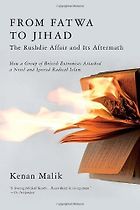
Your final choice is From Fatwa to Jihad by Kenan Malik.
I liked the book for a variety of reasons. It is well written and well researched and makes a series of good points. The most interesting point to me was about identity. Kenan Malik’s own background is as a left-wing activist and campaigner. This book is all about the fatwa which came out against Salman Rushdie after he wrote his book The Satanic Verses in 1988.
What does it show you about Islamic militancy?
The real point which he makes, which I really like, is that back in the 1980s he was angry, campaigning and politicised but on a race basis. It was all about being black. Kenan Malik is of Indian background and he lives in England. Nowadays you don’t hear much about people campaigning on those types of issues. Colour has changed to religion in that now you will hear, “It is because I am a Muslim,” rather than, “It is because I am black.” Second generation British-Indians are far less likely to talk about politics along the old lines of white, black, left wing, right wing and I think that shift is a very important one. I wonder what the next shift will be.
Five Books interviews are expensive to produce. If you're enjoying this interview, please support us by donating a small amount.
And isn’t there also the idea that this fatwa brought religion on to a global scale when Ayatollah Khomeini could reach out and say it is not just within my own country I have decreed this? Fatwas are so powerful they can go beyond borders to the West.
Absolutely. The fatwa was about globalising Islam. What is also interesting about the fatwa is that it didn’t actually have a real effect. Salman Rushdie is still alive and writing. It wasn’t this huge event that everyone thought. And the argument I make in my book about why Islamic militancy has failed in the way that it has failed is because people, on the whole, are much less global than we have been led to imagine. I am afraid I think that societies are primarily ruled by what happens locally. That could be in villages, in neighbourhoods, among their friends and their brothers. One of the primary predictors of militant behaviour is having a member of your family engaged in the same activity rather than some big global reason. And 90% of terrorist acts, even if spectacular events like 9/11 get most attention, are committed within a few miles, at most, of where their perpetrators live.
Five Books aims to keep its book recommendations and interviews up to date. If you are the interviewee and would like to update your choice of books (or even just what you say about them) please email us at editor@fivebooks.com