What groups all these books together?
What I tried to do was forgotten Cold War thrillers. They’re my favourites, but they’re pretty obscure: most people probably wouldn’t know them.
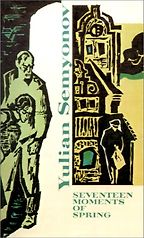
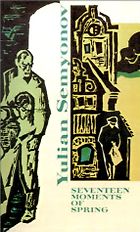
Your first choice is Seventeen Moments of Spring, which was a Soviet attempt to create a rival to James Bond.
I’m not sure it was as specific as that, but it did turn out that way. It was part of the Soviet government’s effort in the Cold War to rehabilitate the idea of the secret agent and to get recruitment. It’s quite a fascinating novel from a propaganda point of view, which is basically what it amounts to. But it’s also a very, very good novel.
The premise is a little bit strange, if you’re reading it now, because the hero is a Soviet agent dressed in a Nazi uniform. He’s managed to infiltrate himself as a medium-grade Nazi and it’s set in the last two weeks of World War II. It’s a slightly weird thing – you’re supporting him, you’re following him, but he’s actually loyal to the Soviet Union. But it works. It’s extremely tense, very tautly plotted and very convincing.
It’s a fictionalised version of some real events that happened, where the Americans were thinking of making a separate peace deal with the Germans that would exclude the Soviets, and this guy’s job is to stop that happening. It’s so convincing that a lot of people in the Soviet Union thought it was a true story. A lot of people in Russia today are convinced that this agent, Maksim Isaev, was a real guy. It’s bigger than James Bond, it’s like James Bond, Robin Hood and King Arthur: he’s a complete mythical figure in Russia. It’s very interesting to read and to see a spy story from the other side of the Iron Curtain. But it’s also just a very exciting thriller.
And it’s still a popular TV series in Russia?
I don’t know when they last ran it, but they just made a prequel. It’s one of these classic TV series they made in the 70s that had a very famous theme tune, and they did it all in black and white. When they rerun the series apparently the crime rate drops in Moscow because everyone is inside watching it.
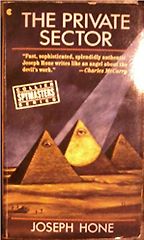
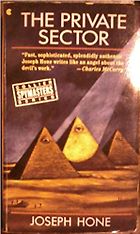
On to your next choice, The Private Sector by Joseph Hone.
Hone is pretty much completely forgotten now, but I think he rates with le Carré, and he’s quite similar to le Carré in prose style. The difference is that it has a lot more suspense than le Carré, quite a lot more melodrama, a lot more twists and turns in the action. But it’s beautifully described. It’s like reading Graham Greene or Eric Ambler – but yet it has quite a modern, twisty-turny feel to it as well.
“Hone has a lot more suspense than le Carré, quite a lot more melodrama, a lot more twists and turns in the action. But it’s beautifully described.”
I discovered this book by pure chance in a second-hand bookshop in Brussels years ago and I have read all of the novels Hone has written – I think there are five. But this is probably the best one. It’s set in 1967 mainly, in Egypt, and it’s to do with double agents, and also triple agents. It’s just brilliant characterisation but also an incredibly bleak picture. I quite like bleak novels about espionage and this one is very much of the old school: very cynical, hard-hitting spies betraying each other the entire time. But also the depiction of Egypt is fantastically atmospheric; it’s a brilliant book.
It’s also about the run-up to the Suez crisis?
It alternates between two different times. It’s about Suez, and it’s also about the Israel-Egypt stuff that went on 1967. It alternates between the two. At the centre of it is a classic mole hunt, which was very common in all of those British spy thrillers of the day, with a kind of Philby-esque character in it. But it’s about a guy who is an English teacher at a small English school in Cairo, which is based on an English boarding school, and he gets dragged reluctantly into this spy ring. It’s just brilliantly done.
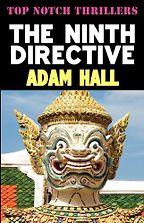
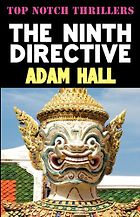
Tell me about The Ninth Directive.
This is much more of an action adventure thriller. It’s part of a series of books by a guy called Elleston Trevor, who wrote The Flight of the Phoenix, which was made into a famous film. But then under the pseudonym Adam Hall he wrote 19 of these novels. I think it’s criminally forgotten, this series.
You’ve read all of them?
I’ve read all of them, yes. The 19th one came out after he died, and it had a very short print run, and I spent ages and ages looking for it. I finally found one in a bookshop in Antwerp, for 3€, and I very calmly went up to the counter and bought it. Meanwhile it was going for more like 1,000€ on eBay. So I got very into the series. The main character, Quiller, is a sort of James Bond character, but he’s also a complete mess: he’s completely neurotic and paranoid. If you haven’t read them before and like the Bourne films with Matt Damon, or even the new Daniel Craig-type James Bond films, they’re really that kind of thing – nail-biting, white-knuckle rides. They’re all told from his point of view, they’re all first-person narratives, so you’re really inside his head.
“The 19th one came out after he died, and it had a very short print run, and I spent ages and ages looking for it. I finally found one in a bookshop in Antwerp, for 3€, and I very calmly went up to the counter and bought it. Meanwhile it was going for more like 1,000€ on eBay.”
I think The Ninth Directive is my favourite of the series – he has to go to Bangkok and the basic set-up is that someone is going to assassinate Prince Philip on a visit there. They don’t say it’s Prince Philip, but it is. The agent’s mission is to figure out who is going to assassinate Prince Philip, who is always referred to as ‘the Person’ and then assassinate that assassin before he manages to carry out his mission. It was written five years before The Day of the Jackal, but it’s very much the same kind of forensic analysis of a secret mission that’s incredibly convincing and keeps you on the edge of your seat.
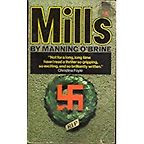
Let’s go on to Mills by Manning O’Brine
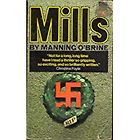
This is a very obscure novel now, and I’m not quite sure why. Manning O’Brine is a very mysterious figure. I haven’t been able to find out much about him, but he wrote quite a few novels. The central character is a British agent, Mills. It’s a bit in the Len Deighton vein. It starts off with a fantastic scene in Germany. But basically this British agent has decided that he’s had enough, and he’s going to quit. Unfortunately for him, that means MI6 presume he must be a double agent, the CIA get interested and the KGB think he’s got some secret LSD weapon, so he vanishes to Italy and all these spies start chasing him around. It’s almost a travelogue; it’s done in a very calm way. He takes up with, obviously, a beautiful woman, who is a hotel guide in his little village in Italy. In a way he doesn’t really care that much that all these people are chasing after him, but you get this cat-and-mouse chase around Italy. It seems quite sedate, but the tension gradually mounts…
It sounds wonderful.
Yes, it’s really compelling, and what’s great about it is that the guy clearly knows Italy. There are flashbacks – Mills goes to Italy because he’s been in Italy in the war. So a lot of it becomes about the war. But the descriptions of Italy are just majestic, and so obviously real. My second novel, Free Country, which I’ve just written, is set in Italy, and part of the reason I wanted to do that was because of this novel. Because when you read it you just feel, ‘My God, I want to get on the plane right now and go to Italy.’ And I think that is one of the great things about thrillers when they do that. I love thrillers that take you on a journey and want you to get involved, and I think this book really does that.
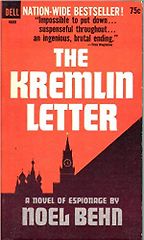
Your last choice is The Kremlin Letter.
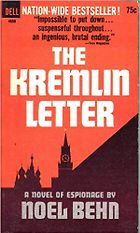
This is the only American book on my list, written by Noel Behn. It was made into a film, which I haven’t seen, by John Huston, with lots of stars in it (Orson Welles, Richard Boone and others). On the surface, it’s one of those men-with-a-mission things, like The Guns of Navarone. On the back, it goes through the characters: you have the highwayman, the puppet-maker – they’re all called different things.
The thing that’s striking about this book is that it’s just unbelievably bleak. You’re almost wincing reading it, because it’s just not the sort of behaviour that should be in thrillers. It’s basically these assorted mercenary spies who are on a mission to get this famous Kremlin Letter, which is nothing – I can’t even remember what it’s about. The thing that is impressive is that the guys who are doing it are so cynical they will do absolutely anything. So they have honey traps, they betray everyone. You get a feeling that it might be an Alistair MacLean, but when you read it, you feel like you’re reading Chekhov or something. It’s an incredibly dense, incredibly dark, incredibly closely described novel, and it’s only really nominally about espionage. What it’s really about is extraordinarily brutalist and cynical men betraying each other. It’s a very dark but quite fascinating read.
It really makes your stomach turn?
Yes, it’s the only spy thriller that I’ve read that I really thought, ‘Oh God, that is just a bit too unpleasant.’ They’re just so nasty. Though that’s probably what it’s like. You probably really do have to have a stomach made out of steel to do what these people are doing…
One of the reviews of your book Free Agent praised it for its accuracy, that you get everything right. Have you done a lot of research into what spies actually get up to?
I have. You’re probably completely terrified that I’m an absolute nutter, reading all these Cold War spy books. I got really into them and read dozens and dozens and dozens of them. And that is what led me to want to write one myself. But then I had to unlearn all of it, because of course lots of them are just nonsense. They’re not about how real spies are at all. So when I began to do my own, I put all of that a little bit to one side, and started researching MI6 and the CIA and the KGB. There are a lot of writers who have had experience of intelligence work. I have no experience of it as a person, so it’s all second-hand; talking to people and reading books. But I don’t think you probably want to make it too realistic, otherwise it could just be boring.
Five Books aims to keep its book recommendations and interviews up to date. If you are the interviewee and would like to update your choice of books (or even just what you say about them) please email us at editor@fivebooks.com
Five Books interviews are expensive to produce. If you've enjoyed this interview, please support us by donating a small amount.