In this interview two celebrated chefs discuss the best books to help you capture the complex flavours and colours of Persian food. Along the way they describe their favourite Persian treats, including mouth-watering lattice window syrup cakes and rice with saffron and morello cherries.
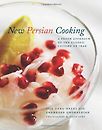
New Persian Cooking by Jila Dana-Haeri and Shahrzad Ghorashian
I wanted to say first that I have been cooking from your book recently and I love it. For my Mum’s birthday I made the chicken in walnut and pomegranate syrup; it turned out really well. I have recommended it to all my friends.
Jila: Fantastic. That is really encouraging for us, because that’s what our aim was – that somebody who is not very familiar with Persian cooking could easily follow the recipes and get results that are good enough.
Some of it’s very easy. I also did the orange and chilli salad, and last week I made your rice pudding.
Jila: That’s really good! Many friends I’ve spoken to have said they find the recipes easy to follow. Persian cooking can be really convoluted and we wanted to make these recipes accessible.
It’s true that there are a lot of different bits to it, but individually, each bit is easy. If you follow the recipe, it turns out right.
Shahrzad: It does what it says on the tin!
So, which is your first book?
Jila: The first book I’d like to mention is an old Persian cookery book which is unfortunately not translated into English – but it’s the book we really started getting our ideas from. It’s called Neshat Khanoom and is by a lady who worked at the royal court in the early 20th century. Her father was a cook there.
So it’s not that old.
Shahrzad: No, but given that we don’t have that many old cookery books in Iran, this is one of the few that you could refer to for traditional ways of cooking.
“My mother was a brilliant cook but she could never give you a recipe. I just looked and learnt.”
Jila: The thing about the Neshat Khanoom is that it’s the first time you come across somebody who gives some measurements in their recipes. Of course, the measurements are incredibly large, for court consumption, but still you can get some idea how much of different things to use. Before her there are recipes but they don’t give you measurements at all.
What kind of recipes does the book give us?
Shahrzad: Everything. From sweets to drinks, stews, rices… everything.
Do you have a favourite? I think most people probably have no idea what’s in Persian food. When I first had rice with cherries, I was really surprised.
Jila: One recipe I found very interesting in that book was a spin on a traditional aash – a thick soup with herbs that she cooks with noodles, and it’s delicious. It’s a meal on its own and it would be interesting to vegetarians because you add noodles and it’s sort of like a version of minestrone.
Is there anything sweet in the book? Because everything I’ve made so far has had either nuts or fruit…
Jila: Yes, there’s a recipe for Shirin Polo: rice with almonds, pistachio, saffron and sugar as a syrup. They make it for celebrations like weddings or other important events.
Shahrzad: This is probably one of the few books that has a substantial part of it devoted to sweets, cakes and biscuity-type things. We have these metal frames, like lacy frames, that you dip into a batter, then dip into oil and then dip into syrup. She has quite a few of these lattice window cakes. She goes on to sweets made with honey, biscuits, cakes.
Jila: Our New Year is March 21st and making sweets at home is a traditional thing to do; this book is good to use for that. You can make the honey sweets with almonds and pistachio – an important sweet for New Year.
When you say you’ve never seen a book with so much written down about how to make sweets, it that because it would normally be passed on from mother to daughter?
Jila: Exactly. The family structure was very strong and people used to live together and would get together in the kitchen and tell stories and talk, and daughters learnt from their aunts and mothers. My mother was a brilliant cook but she could never give you a recipe. I just looked and learnt, and when I came here thirty years ago I started trying to develop these recipes with some kind of measurement.
What do you make that your mother also made?
Jila: The saffron chicken, which is in our book, with barberry rice.
I made that rice!
Jila: You did? That was one of her favourites and she made that very well. The other one that was fantastic was the morello cherry rice – sometimes with chicken and sometimes with tiny meatballs. Again, that’s in the book.
That’s the other thing I made – the tarragon meatballs.
Shahrzad: That’s one of my mother’s favourites! It’s more of an Azeri dish. It’s very delicious.
It was incredibly popular. When I made the chicken with walnut and pomegranate all the adults went mad for it, while the children only liked it. But the children absolutely loved the meatballs. I made so much I thought I would have leftovers, but I could have made the same again.
Shahrzad: The trick there is that it’s quick and easy to make. Meatballs have a tendency to fall apart, but because you’re dropping them into the boiling sauce, they very rarely disintegrate.
My only problem with them was that because they’re put together with rice, I didn’t want to serve rice with them.
Shahrzad: You usually serve them with bread.
Jila: Yes, they’re much nicer with bread. You can of course use potatoes as well, but in Iran we do it with bread.
Tell me about your next book.
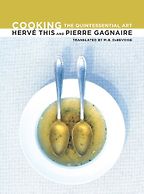
Shahrzad: I’ve chosen Cooking: The Quintessential Art, by Hervé This and Pierre Gagnaire. The writing is fantastic and it goes through the philosophy behind cooking and behind every aspect of it – the aesthetics, the development of the taste. When I read it, I had to stop and read passages to my husband, who took it off and read it himself afterwards.
What would it inspire you to cook?
Shahrzad: It gives recipes – unusual recipes – but it also features passages from Japanese, Chinese, Greek and Roman philosophers, cooks and writers, so it’s not a straightforward read. It’s enjoyably intellectual. ‘Consider the idea of making a soft or gentle dish. It doesn’t necessarily have to be sweet, though the recipe that follows is sweet. The main thing that becomes clear is that there is an essential difference in cooking between sumptuousness and gentleness.’ Then: ‘In practise it is a vanilla, rum or Sauterne sabayon. A sabayon is either lobster juice or coffee. Both are sumptuous but when they are made with vanilla, rum or Sauterne they become gentle. To make them work you have to turn them away from sumptuousness to a softer register. I serve this in small quantities with mangoes and a salad of fresh herbs like cilantro and fresh tarragon. Yes, this is a dessert.’
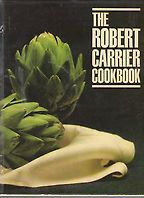
It sounds delicious. What about The Robert Carrier Cookbook?
Jila: When I came to England thirty years ago, I wanted to experiment with other recipes, and I remember that Robert Carrier was very important and there were weekly cooking magazines with beautiful pictures, very easy-to-follow recipes.
“I always cook duck from Robert Carrier, even when I want to cook it in a Persian way with walnut and pomegranate”
I’ve still got his magazines in my kitchen. The other night for my sister’s birthday I went back to his recipe for beef stroganoff – so I have used his books and magazines for years. It was a brilliant help for me to cook something different for the family. I always cook duck from Robert Carrier, even when I want to cook it in a Persian way with walnut and pomegranate. I cook the duck according to Robert Carrier and then I make the sauce separately.
I learnt to cook from him too. He is like Delia Smith – there is a recipe for everything in Robert Carrier. Pancakes, steak, apple crumble. Everything.
Jila: Delia Smith is another one I like. Her books are so easy for home cooking. You don’t need to go through incredible steps to make nice food. The big Delia collection is very useful and helpful. I always cook Christmas from her – her turkey and all the trimmings.
“My mother comes from the south of Iran and the fish recipe in our book is very popular in southern Iran. They always cook fish with stuffing in it and they used to cook them in clay ovens outside in the garden”
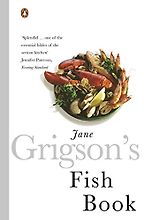
Shahrzad: Like Jila, I started cooking western food when I came here. Fish is difficult for us because we don’t have many Persian fish dishes – and there is a huge variety of fish that is available here and not in Iran. The book I always found particularly helpful was Jane Grigson’s Fish Book. She has recipes for Dover sole and all the fish we have here in England. Her approach is very straightforward, takes you all the way through from preparation to cooking and you are assured of a good result at the end. It’s very simple and practical.
Get the weekly Five Books newsletter
Jila: Fish is very interesting because it’s always very important to have recipes that won’t go wrong. I like Rick Stein’s fish books. He’s not too ‘cheffy’ in his approach.
You do have a couple of fish recipes in your book, though.
Jila: My mother comes from the south of Iran and the fish recipe in our book is very popular in southern Iran. They always cook fish with stuffing in it and they used to cook them in clay ovens outside in the garden. Of course, I grill or bake it. It’s got coriander, garlic, onions and chilli with dried lemon powder and turmeric as a stuffing, and you can do it with trout, sea bream, salmon… For New Year we always have fish with herb rice and it works very well with salmon. It adds layers of aroma to the fish.
Last book.
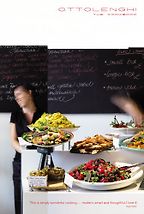
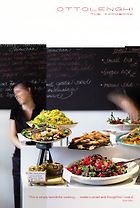
Jila: I’ve chosen Ottolenghi. His tastes and aromas are very similar to Persian cooking. Especially one recipe, which I cooked and enjoyed – chicken in harissa sauce. It really brings the chicken to life. The layers of taste are not overwhelming. There are lots of salads with fruit, nuts and different kinds of greenery. I found out about zatar through Ottolenghi. He makes zatar and chicken.
Shahrzad: I read the interview with him on your site! I have the book. I haven’t used it as much as Jila, but I do find the salads inspiring. The combinations are really imaginative.
Shahrzad, tell me what you’ve made this weekend.
Shahrzad: Well, my son-in-law is British and when I make something for him I wait with bated breath to see if he enjoys it or not. The kind of Persian tastes we enjoy are not always considered delicious here. When I want to fuss over him I make him saffron chicken and barberry rice to cheer him up. He wasn’t feeling well this weekend so I made him this dish.
Jila: In my family, weekends are divided between me and my brother-in-law. He is a good cook as well; he makes Italian food and I make Persian food. This weekend was very good – we made saffron, yoghurt and chicken upside-down rice, which is in our book. That was lunch yesterday and worked very well. Tonight I’m going to make kebab, very easy to do with plain rice.
April 17, 2018
Five Books aims to keep its book recommendations and interviews up to date. If you are the interviewee and would like to update your choice of books (or even just what you say about them) please email us at [email protected]