From magical realism to political upheaval, John King, Professor Emeritus at Warwick University, recommends five essential works of Latin American fiction – and reveals what Jorge Luis Borges was like in person.
What got you interested in Latin American fiction?
When I went up to Oxford in 1972 to do a BPhil in Latin American Studies, I really hadn’t read much Latin American literature at all. Then I took a trip down to Argentina in the summer of 1973 to do some work on an Argentine writer, Adolfo Bioy Casares. I arrived at a very interesting, effervescent time in Argentina because the former President who had been exiled – Juan Domingo Perón – had come back and everyone was out in the streets. I got to meet a number of writers, the most famous of whom was Bioy Casares’s close friend, Jorge Luis Borges. Borges might these days be a literary star, but at that time he was a rather timid, isolated, elderly man who was delighted to have someone read to him in English because he was blind.
I had rather a strange time in Argentina. On the one hand, I witnessed all this political ferment, and at the same time there was this extraordinary writer holed up in his small flat, getting me to read him 19th century poems, correcting me when I got the English cadences wrong and talking over me because he knew so many passages by heart. The Chile coup happened two months later [in September 1973] and I met up with a number of refugees who started coming over to the UK in 1974. So I was caught up in something which was both very political and also very literary.
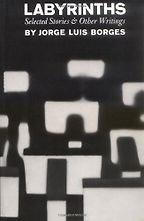
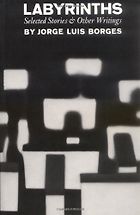
Your first book is by the man himself – Jorge Luis Borges’s Labyrinths.
This is an anthology that includes a number of his famous short stories and also some key essays. If you are going to think about Latin American literature, Borges is always a good place to start. But if you are looking for the sights and sounds of Buenos Aires, where he lived all his life, you won’t find too much of that in his stories, although some of his work, especially his poems, do concentrate on that.
There is a famous essay in this book, “The Argentine Writer and Tradition”. He says something along the lines of, “Why do we Argentines always have to write about local colour? Why do we have, in our literature, to be roaming around with gauchos on the pampas, or wallowing in the slums in Buenos Aires? If you look at the Quran you will notice that there are no camels in it [strictly speaking, this isn’t true]. We Argentines can emulate that – we can just write good literature that does not have to abound in local colour.”
What I like about Borges is the jewel-like precision of his short stories, and the ways in which he deals with complex metaphysical and literary questions but all within the confines of beautifully wrought, very organised stories. He really is somebody that taught a whole generation in Latin America how to write, and how to avoid endless naturalistic descriptions and to concentrate more on telling a good story. I think he does that as well as anyone I have ever read, and obviously being able to read to him was a great bonus.
What lasting image do you have of him?
I think it was his passion for literature, particularly when I looked into his luminous eyes which – even though he was completely blind – seemed to light up when he talked about literature.
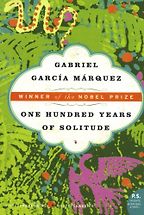
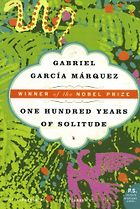
Absolutely. Borges never published, for example, many more than four or five pages at a time, and his narrators tend to navigate that more abstract world of literature and ideas. Whereas what García Márquez does is tell a story of the history and culture of Latin America from the point of view of the ordinary person. He manages to do that through this deadpan narrator who can mix the savagely real with the wonderful, and narrate a family saga which is also a history of Latin America. This book really put Latin American literature on the international map because it is a novel which, while deeply Latin American, is also accessible to all readers.
García
Márquez was very much of the magical realism school. For those who haven’t come across the term, can you describe what it is?
For me this is the place where the western, rational, realist mind collides with a much more oral, popular culture. What magical realism does is narrate events from a popular world view, but within a novel, which is a western rationalist form. So a young woman can ascend to heaven clutching sheets because that it how people want to remember her disappearance. García Márquez is so good at this but it is a very difficult act to follow. Many people have tried to emulate his style, not very successfully. And the term “magical realism” is often used sloppily by western critics to patronise so-called “third world” literature.
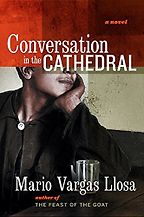
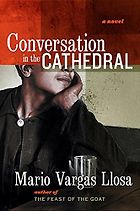
Mario Vargas Llosa came on everyone’s radar when he won the Nobel prize for literature in 2010. What made you choose Conversation in the Cathedral?
It was a difficult choice because he has written some 14 major novels. He is a writer who changes with every novel, adopting a range of different styles. But when I was reading around the Nobel prize, I learned that all the Nobel committee members read this novel when they were deliberating about the prize. And even though I have about four favourite novels of his, that seemed a good reason for picking this one. Conversation in the Cathedral represents a time in the late 1960s when Vargas Llosa was still very committed to the hope of radical social change in Latin America. In this novel he analyses the nature of a corrupt, unjust, hypocritical society that was the Peru of his adolescence, under a military regime. He thought that if you could expose the nature of the corruption you might move on and replace it with something better.
Support Five Books
Five Books interviews are expensive to produce. If you're enjoying this interview, please support us by donating a small amount.
He finds ways of telling his stories which are really quite extraordinary in terms of their architecture, their formal complexity and elegance. The title sounds like a religious topic but actually the cathedral turns out to be a seedy bar in downtown Lima. The whole novel circles around a young man who accepts social failure because he can’t bear the world of his father and the world of the dictator [Manuel Odría] so he tries to opt out of it. He asks a question at the beginning of the novel, “At what precise moment had Peru fucked itself up?” and the novel tries to answer this question. The protagonist meets someone who used to be his father’s chauffeur and also, he discovers, his gay lover. They have a conversation over three or four hours, and as the conversation develops it moves back and forth in time and involves a polyphony of different voices.
Vargas Llosa sometimes has the reputation, in novels like this, of being a “difficult” writer due to the scale of his ambition. But this is misleading. If you just persevere, you discover he is a great storyteller who drives the novel forward.
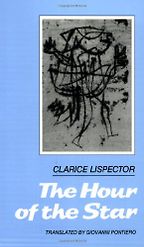
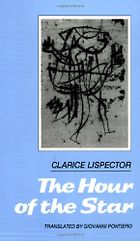
Your next book is The Hour of the Star by the Brazilian writer Clarice Lispector.
With this choice I am giving just one out of a myriad of possible examples of women writing in Latin America, in a field that still tends to be dominated by big-name male writers. At the time that these male writers were reaching international prominence in the 1960s and 1970s, Clarice Lispector was writing with much less fanfare very interesting short stories, usually about a crisis in the consciousness of middle class Brazilian women.
The example I have chosen is a very short novel and her last published work, written when she was dying of cancer. In it she depicts ordinary women in Brazil. The ones who are migrants and come from the north-east, fetch up in Rio and try to make their way in very menial jobs. The story, which is told by a self-absorbed male narrator, plots the life and early death of Macabea, a poor young woman from the north-east who ends up in Rio working as an incompetent typist. What is interesting is that through this male narrator, who both loathes and is fascinated by his fictional creation, Lispector is exposing the nature of patriarchal society in Brazil. She also evokes an enormous tenderness for women who don’t have a voice and can’t make sense of life, and yet just get on with it. It is only about 100 pages long and it is a really beautiful novel.
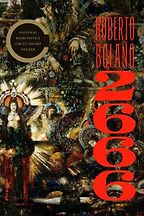
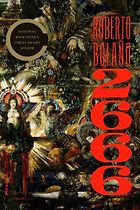
Let’s finish with your final choice, 2666, by the Chilean novelist RobertoBolaño, who lived in Mexico for many years.
I have read this once and I keep dipping back into it because it is endlessly fascinating. Roberto Bolaño is a writer who has found a really important way of dealing with the horrors that the 1970s and subsequent decades have inflicted on Latin America. If you look at Borges, García Márquez and Vargas Llosa, in a sense they grew up in times of optimism, of high modernism, with the hope, at least initially, that change might be possible. Whereas someone like Bolaño was a young man at the time of the Chilean coup in 1973. He drifted around and went into exile in Mexico and then moved to Spain, a witness to the end of the dream.
Get the weekly Five Books newsletter
He started publishing from the mid-1990s and in an extraordinary surge of creativity produced a number of short novels and stories, a splendid novel called The Savage Detectives and finally, as he was dying, he wrote this novel 2666. It is really five novels in one, telling a number of different but interlocking stories involving literary critics, exiled writers and lost authors, all involved in different forms of detection. All of their investigations lead them, and the reader, closer to what is going on in a place called Santa Teresa – which is really Ciudad Juárez, in Mexico, the heart of darkness and site of the violent killing of hundreds of women. It is a forensic account of violent death and an extraordinary exploration of evil and horror, but also a compassionate depiction of everyday lives. Bolaño is both a very literary and a very anti-literary writer. He offers a new voice – sardonic, defiant and at times lyrical. There is something of Bolaño mania among critics today but, for once, all the hype is very justified.
June 6, 2011
Five Books aims to keep its book recommendations and interviews up to date. If you are the interviewee and would like to update your choice of books (or even just what you say about them) please email us at [email protected]
Emeritus Professor John King has taught Latin American literature and cultural history at Warwick University since 1976. His books include The Cambridge Companion to Mario Vargas Llosa (2012), co-edited with Efraín Kristal, and an edition of the essays of Varga Llosa, Waves (2011)
Emeritus Professor John King has taught Latin American literature and cultural history at Warwick University since 1976. His books include The Cambridge Companion to Mario Vargas Llosa (2012), co-edited with Efraín Kristal, and an edition of the essays of Varga Llosa, Waves (2011)