How did you first get involved with studying Cromwell?
I was inspired by a schoolmaster, when I was still at high school. He himself was very interested in the Civil War – he was more interested in regional conduct, but he introduced me to the figure of Oliver Cromwell. Then, when I was an undergraduate, I did a long essay on the allegiance of the Civil War, which also brought me closer to Cromwell, and I’ve been studying him – well, he’s been on my agenda – for a long time. In recent years, I’ve really made him the centrepiece of my work.
When I was at Cambridge, the module that covered Cromwell’s reign was by far the most popular for history students. Why do you think people find Cromwell so charismatic?
He’s still someone who arouses very strong feelings. On the one hand, he represents a very precocious commitment to religious liberty and a government accountable to the people; on the other, he is seen as someone who used excessive violence in the conquest of Ireland and Scotland, and therefore he’s very unpopular there. He was also, allegedly – this itself is contested – violently anti-Catholic, so he also raises very strong feelings amongst people for that reason. Beyond all these things, he’s a common man, born in very modest circumstances, who finishes up head of state – that’s very unusual, obviously, in British or indeed European history. Someone who dies in his bed having risen in that way is clearly a great man, even if he’s not necessarily a good one.
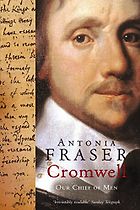
The first book you’ve chosen is by Antonia Fraser. What does this tell us about Oliver Cromwell?
Fraser luxuriates in a skilful way with all the detail. It’s a book that narrates the story in a very rich way, and is written for a general audience at an appropriately intelligent level. Whereas most of the biographies are written for students, this is the one that anyone can access, and if they’ve got the stomach for a long book, then it’s a very good, leisurely read which has a lot of fascinating detail in it. For example, it gives an amazing account of the way Cromwell’s body was treated after he died – the bungled attempts to embalm it, its treatment by the vindictive regime two years later (when it was dug up and hanged in its shroud), and, of course, the long and complicated story regarding the treatment of Cromwell’s skull, which many people think is now buried in his Cambridge college chapel. All that kind of rather macabre detail Fraser handles really well. It’s an intelligent book for a general audience.
How has her portrait held up against more modern scholarship?
Well, it’s clearly not at the cutting edge interpretively. It doesn’t attempt to demonstrate an advanced knowledge of Calvinism or of the kind of religious movements that Cromwell engaged with. It’s very much a “how” and “what” book, rather than a “why” book. Given that this is the case, one wouldn’t normally give it to students – students are normally answering “why” questions rather than “how” questions. But if you’re interested in how Cromwell gets from one place to another, and what explains the twists and turns in his career, this one is good.
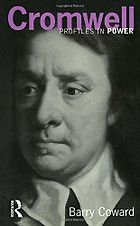
Your next book, Barry Coward’s Oliver Cromwell, is one all students probably do read. Can you tell us why you think it’s useful?
Barry Coward is a writer of a number of general works on the 17th century. He brings extreme lucidity and conciseness to the topic. It’s a short book, which is – and doesn’t claim to be more than – a very clear account of the main debates about Cromwell. It doesn’t argue a very strong line itself; it simply represents the different strands of thought there are about Cromwell. For instance, if you read Cromwell’s own words, he comes across as a sincere man trying to teach the English the responsibilities of liberty. He’s freed them from tyranny under kings and bishops; now they have to learn the responsibilities of liberty. That’s one view. Another view is that actually, behind this rhetoric of liberty, lay a man ruthlessly pursuing a career and bent from an early stage on personal power. Coward looks at the evidence for both those points of view. So it’s just an admirable summary of the state of play as it was when he wrote it, which is not that long ago – things haven’t moved on that much.
And it’s more analytical than the Antonia Fraser.
Yes. It’s a very good first book for students, and it also gives general readers a much stronger sense of all the major debates in the field.
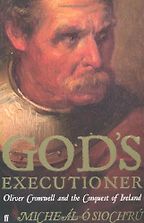
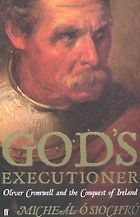
Your next choice, God’s Executioner, is specifically about Cromwell in Ireland. I know that’s something you’ve spent a lot of time studying. Do you think that, in general, people don’t know much about this part of the story?
Oh, I’m sure they don’t. A century ago, GK Chesterton said that the tragedy of the English conquest in the 17th century was that the Irish couldn’t forget it and the English couldn’t remember it. And it is amazing how little people over here know about the whole thing. Despite the title, this book is actually pretty balanced – in fact, it’s far more balanced than some of the extreme views that have been expressed, even in recent times, about Cromwell as a ruthless killer of everyone he encounters. Or, in the view of another book that was written ten years ago, someone who didn’t kill any civilians at all. Siochrú has studied the Irish sources much more thoroughly than anybody else, and he’s found new sources too. He gives a very balanced account – though one which has some harsh judgments on Cromwell along the way – and it’s extremely well-written.
Can you tell us briefly what it is it that most English people don’t know, but should, about Cromwell’s conquest of Ireland?
First of all, Cromwell was coming over to avenge the worst massacres that have ever happened in recorded history in these islands. Many thousands of people were killed. Second, in order to conquer Ireland – something the English had never succeeded in doing before – he needed to be able to use radical force. So he had a very clear policy: Surrender, and I’ll give you generous terms. Refuse to surrender, and I will massacre a significant number of the armed defenders. For Cromwell, carrying out that policy is highly controversial, but it works. And it leads on to the greatest redistribution of land in post-Roman Western European history. In nine years while Cromwell is head of state, the amount of land owned by Catholics born in Ireland drops from 65% to 15%. Half of the land of Ireland is transferred from Catholics born in Ireland to Protestants born in Britain. That is a very dramatic story, and I don’t think most people know it.
Get the weekly Five Books newsletter
I should mention that Micheál Siochrúand I have been involved for the last six years in setting up a website which has transcribed the depositions of 8000 survivors of the massacres of 1641. So if you have any interest at all in Ireland, you can use it to find which people shared your name – or exactly what happened in any parts of the country with which you have associations. Or, of course, if you have no ties, you can simply dip into the documents to see the kinds of things that were happening in Ireland in the 1640s – which were not dissimilar from some of the horrors of modern times. The URL is www.1641.tcd.ie, and it’s free for everybody. I’m also producing, for Oxford University Press, a new five-volume edition of all Cromwell’s words, which we desperately need. I’m the general editor, and Siochrú is doing the Irish section.
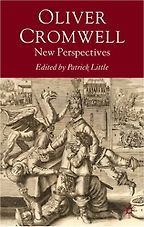
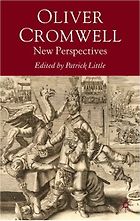
Your next choice is Patrick Little’s Oliver Cromwell: New Perspectives. Why did you choose this one?
This book really represents the best work by the younger generation of people who are rethinking Cromwell. It moves away from ideas of “Cromwell the soldier” and “Cromwell the religious enthusiast”, and looks at the much more material aspects of Cromwell’s life. It looks at his wealth. It looks at his acquisition of property. It looks at his patronage of architecture and the arts, and so on, as head of state. It actually deals with a series of questions which have been ignored by everybody up until now. With this book, we see a much more material Cromwell – though actually one who comes out reasonably well. He doesn’t appear to be too greedy or selfish. This approach offers lots of very fresh ideas about him, and therefore – particularly for those who think they know quite a lot about Cromwell – it adds quite a lot.
In terms of Cromwell scholarship more generally, where do you think the generation after this one is going? What are the hotspots for new research?
I think the time is right for a really major hostile biography. There have been perhaps 30 biographies of Cromwell since World War II, and all of them take his account of himself very seriously. Now, I also do that myself, but there are rumblings. There are scholars who keep saying, “This needs really to be tested – there’s too much of people repeating themselves.” I think a major new biography could be much more hostile, seeing Cromwell as driven much more by personal ambition, and much less religious than he makes out that he is. The central paradox is that virtually nobody who wrote about Cromwell who knew him personally believed that he was as sincere a Puritan as he made out. They all think he’s a bit of a hypocrite. And on the whole, historians think they’re wrong, and they explain why they think people are wrong to misjudge him. But the time has come to turn that on its head and say, “If we take all this contemporary criticism seriously, what does it add up to?” I think that’s going to be the next major development in Cromwell studies. And if it’s well done, there will be a much more interesting debate.
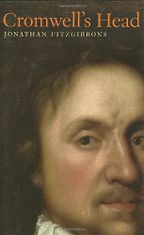
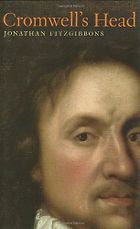
Your final choice is John Fitzgibbons’s book, Cromwell’s Head. What do you think fascinates people so much about the story of Cromwell’s head (and body) after his death?
John Fitzgibbons, first of all, is a very gifted young scholar in Oxford – he is an expert on the short career of Richard Cromwell, Oliver’s son, who was head of state for a year after his father’s death. So Fitzgibbons already has enormous expertise in the immediate period after Cromwell’s death. The extraordinary adventures that Cromwell’s head had – hung at Tyburn in 1661, exposed on a spike at the palace of Westminster for 20 years (it eventually fell off), used as a circus trick, kept in private houses and brought out at dinner parties, and, finally, buried at Sidney Sussex College, Cambridge – allow Fitzgibbons to tell the story of the hugely conflicted history of Cromwell over the last 300 years. Why he matters, why he’s been so debated, how he is a key figure in many of the great arguments about political and religious liberty. So it’s really a history of English radicalism since the time of Cromwell, through the adventures of his head.
Why does it matter where Cromwell’s head is?
I don’t think it does, actually. I think I said once on the radio that it doesn’t matter where his head is, because his soul goes marching on. It matters only insofar as the story of the head is in some rather curious way the history of England. This might be a macabre detail to add, but when the head was buried, it was at a time when the Sidney Sussex College Chapel floor was being relaid, so the five people who witnessed the burial are taking the secret of exactly where it is to their graves (in fact, only one of them is still alive today). I think after this long, long period – during which the head had been handed around, sold, displayed and so on – the idea was that he should just be allowed to rest.
Five Books interviews are expensive to produce. If you're enjoying this interview, please support us by donating a small amount.
Ironically enough, the head was buried just before DNA testing came in, and we could actually have done some very interesting DNA tests on the head. First of all, to establish for absolutely certain that it is him, because there is a claim by another family that they’ve got the body buried in Yorkshire. I think it’s 90% certain that the head in Sidney is Cromwell’s, but there is another story, which Fitzgibbons goes into (as does Antonia Fraser), and it goes like this. After his death, the body is dug up at Westminster Abbey to be taken to be hanged at Tyburn, but on the way, it’s kept in the back room of a pub in High Holborn for two nights. Now why on earth, if you’re going from Westminster to Marble Arch, would you go via High Holborn? One of the theories is that it was so the body could be swapped – so the family of Cromwell’s son-in-law could actually buy the body from the soldiers, in order to give it a decent burial in Yorkshire. If we go by this narrative, it was some other man’s corpse that was hung. So there is just a possibility that this thing isn’t Cromwell. On the other hand, the head in Sidney Sussex was examined by doctors before it was buried. They confirmed that it had been embalmed at death, and had been exposed to the air for a long time – not many heads in the early modern period would have had that experience. There’s obviously lots of macabre interest in this. There’s mystery involved. But there’s also the history of the head as it passes from being a freak-show, to dinner table treat, to being buried in a Cambridge college. It’s a fascinating story, and it’s a story linked to major issues in the history of Britain.
Five Books aims to keep its book recommendations and interviews up to date. If you are the interviewee and would like to update your choice of books (or even just what you say about them) please email us at editor@fivebooks.com