The Victorian era was a golden age for fiction, says Victorian literature specialist John Sutherland, Emeritus Lord Northcliffe Professor of Modern English Literature at University College London. He talks us through the some of the best novels written during the Victorian period, and what they reveal about the people who wrote them.
You are something of a Sherlock Holmes when it comes to Victorian novels.
It always seemed to me that we shouldn’t read these books with closed minds. These works create worlds which I explore. I look at the nooks and crannies and oddities and puzzles. One of the things about great fiction is that we never finish explaining it. For example, it’s the bicentenary of Dickens next year but we have never really worked out whether Great Expectations is a novel about a snob – which is one major critical reading of it – or about how you become a perfect gentleman. These quarrels and uncertainties seem to me the essence of fiction. There is this very enigmatic, but at the same time extremely satisfactory, way of understanding the world around us.
Can you give me an example of one of the inconsistencies you found in your detective work?
I think that the first chapter of Great Expectations is the finest thing of its kind that Dickens ever wrote. Pip goes down to the graveyard, sees the graves of his parents and dead siblings, and while he is coming to terms with their deaths he raises his eyes and sees a gallows in the distance – which is very important because of the father figure, Magwitch, who will face hanging when he comes back from Australia. And Pip suddenly becomes aware of himself for the first time. It is a bleak late afternoon in winter, he is in the graveyard by himself, and he realises that he’s Pip. Then suddenly, from behind the gravestone, leaps this monstrous figure who is a grotesque parody of a father figure – an escaped convict of course. He has a huge iron fetter around his leg. It is a scene which, once you see it in your mind or on screen, stays with you forever – like Oliver and the gruel in Oliver Twist.
“It wasn’t just a golden age for British literature – it was more particularly a golden age for fiction.”
But later on, some 40 chapters into the book, Dickens says that Magwitch escaped from one of the prison hulks at anchorage in the Thames estuary, and swam ashore, quite a long way, with a great ball and chain around his leg. As a reader you want to know if this is a huge mistake. But actually it isn’t, because in Victorian times they didn’t know much about swimming. They may have had bathing machines, but they didn’t know that you can’t possibly swim with a great big ball and chain around your leg. This kind of thing is quite interesting, in that it gives you an idea of how people thought in Victorian times, and what seemed possible to them. These questions – which on the face of it seem like bloopers, as they are called by film buffs – actually invite you further into the world of the novel and the time it was written.
Looking through your choices, it feels like the Victorian era was a golden age for British authors.
It was. And it wasn’t just a golden age for British literature – it was more particularly a golden age for fiction. You can sum up why that was the case in one word – Scott. At the beginning of the 19th century, which you might call the prelude to the Victorian era, Walter Scott had demonstrated that you could be a gentleman and write fiction. Up to that point, it was regarded as rather low compared to great literary forms such as satire, epic, tragedy or even lyric. What Scott had done was create a market and also a form – a three-volume novel, which did very well and made a lot of money. (Scott lost a lot of money as well, and then remade a fortune to pay off his debts.) So to some extent the stage was set for a great novelist to come along – the question was, who would it be? It was Dickens, who came along in 1836.
Which leads us to your first choice, Great Expectations, which we have already touched on. Some critics argue it is all about upwards mobility.
It is, yes. In the early paragraphs he refers to the universal struggle of life, a term which he lifted from Darwin. And it is a very Darwinian novel. There is a lot of struggle in it. But it is a novel not just about survival of the fittest and evolution. It is also a novel about the ways in which you make your way in the world, and how it is that you can reach a place in life which is different from where you started.
It is not just like Samuel Smiles’s 1850s “self help” manual on how to be successful. Dickens is particularly good at showing the problems that come when you rise above your station, which he himself did, of course. He was the son of a clerk who was imprisoned for bankruptcy in a debtor’s prison, something which is traumatically recalled in OurMutualFriend. Charles Dickens could have been a noble, “Sir Charles” – he could have taken a title if he had wanted it. Instead, he ended up one of the most famous British commoners of his time, and one of the most revered.
He bought a house in Rochester in his later life. He had looked at this house through the railings of the garden as a boy, and came back to purchase it. It was triumphant, but at the same time he never threw off among his enemies the sense that he was slightly vulgar. They made comments about the too-colourful waistcoats that he wore. They saw him as jumped-up. There was too much cockney about him.
You could argue that the English upper class was very good at making people feel inferior if they felt threatened by them.
Yes, and I think Dickens had to combat that. In Great Expectations, Pip rises in life by, in a sense, casting off his true friends. Later on, we see him suffering a great fit of remorse after his illness. He rushes back to the village where he was brought up and proposes to his childhood friend Biddy, only to find that she is just about to marry someone else – his old guardian, Jo. So his isolation is the price of his success.
A theme that is still relevant today. Do you think it was also typical of Victorian times?
I do think so. Growing towards the light, they called it. But the further you grow towards the light, the further you grow away from your roots. That was something that Dickens couldn’t make his mind up about – whether it was better to rise in life or to stay in the community you started in. This dilemma is reflected in the two different endings he wrote for Great Expectations. In one of them Pip gets together with Estelle, and in the other he doesn’t.
Get the weekly Five Books newsletter
Let’s move onto Vanity Fair by William Makepeace Thackeray, which stars the conniving and domineering Rebecca Sharp.
Thackeray was born in India. His father was an East India Company official who had a concubine and an illegitimate daughter by his concubine. So William had a half sister who was a woman of colour that he never acknowledged. His fiction was never, for that reason, entirely stable on the issue of race. Vanity Fair is remarkable. The title is taken from John Bunyan’s ThePilgrim’sProgress and Bunyan’s description of London as a place of great depravity, vanity and emptiness.
This was Thackeray’s first major novel. He published it in the middle of his life, at 35, when he had seen a lot of life. It is panoramic – a wonderful conspectus of the 19th century. It starts in the Napoleonic era with Waterloo. He calls it his Waterloo novel, and it was a novel that established the British century. At the same time, it has a large cast of characters. It is a kind of Tolstoyan thing, very unlike the novels that other Victorians wrote. More like Balzac or, as I say, Tolstoy. Tolstoy was, as it happens, a great admirer of Vanity Fair and drew on it in WarandPeace.
Some of Thackeray’s critics say this was by far his best work, and that he isn’t actually as good as his contemporaries. What do you think?
Unfortunately, people vote with their wallets. This is the era of Thackeray’s bicentenary and it has passed – compared to what is going to happen to Dickens – almost without notice. I think that is rather sad. Vanity Fair was serialised, as many of the great Victorian novels were. He finished it in July 1848 and then he started another novel, but that was interrupted by his catching cholera in the great epidemic, and he never really recovered from it. He died quite early in his fifties. To some extent, it was that illness which knocked the stuffing out of him. It was very sad and, arguably, unfair.
Dickens became famous very young, whereas for Thackeray it didn’t happen until a good 10 years later. Thackeray believed you had to have seen something of life. The tone of his books is very middle-aged, because in those days they died a lot younger! If you don’t like that kind of middle-aged tone then the novel isn’t for you. But I do, and as you mentioned it has this most delightful heroine, Becky Sharp, who is just about the only woman in Victorian fiction who commits adultery and murder and gets away with it. She ends up a respectable woman in Vanity Fair.
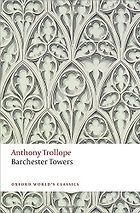
Your next book, Anthony Trollope’s Barchester Towers, is part of his series about the English diocese of Barchester.
Trollope was called in his time the lesser Thackeray, and Thackeray was his god. But I think most people today would probably see him as the greater Thackeray. He took from Thackeray the idea that you could connect your novels into a kind of megafiction. You could have characters moving on from one novel to the next. The Barchester series is six novels long, and Victorian novels are not small things. Barchester Towers is one of my favourites in that six-part sequence.
The thing to remember about Trollope is that he was very innovative. He was a civil servant, and the first novelist to realise that institutions like the Civil Service or universities or hospitals or churches were worlds, and within these worlds you could create microcosms of fictional lives.
Barchester Towers is really about the Victorian church as an institution, rather like the Civil Service, that you could have a career in. It begins, famously, with a bishop dying. A telegram is sent. (Trollope worked in the post office himself; he invented the pillar box and was also instrumental in the introduction of telegraphy.) The telegram is sent to Downing Street for the appointment of the new bishop, and they don’t know if it will be a modernist or a traditionalist. That is a Trollopian theme which runs right the way through the series.
And which is very much of Victorian interest as well.
Exactly. The Victorians didn’t know whether they believed in progress or tradition. In fact, they believed in both. It depended on the time of their life.
Your final two novels are a brace of Brontë sisters. Jane Eyre has recently experienced a revival in the shape of a glossy Hollywood film. Why should we read the book rather than soak it up in the cinema?
There has been a very interesting debate about Jane Eyre which comes through in the latest movie and also in the less-shown earlier movies. It is an idea which was hatched by post-1960s feminism, namely that the real heroine of Jane Eyre is not the plain little governess but the mad woman in the attic, Bertha Mason. No one ever calls her Bertha Rochester, even though she is married to the bad Edward Rochester. If you read the book that way, you can see the mad woman in the attic – who attacked Rochester and burns down his house, who is destructive and angry – to some extent as the other half of Jane Eyre, who is submissive, punishes herself and is obedient to the demands of her lords and masters. Bertha is the locked-up woman inside Miss Eyre. One of the reasons why I think this idea is so popular is because it ties in neatly with ideas about the id which are current at the moment. The new film makes Bertha Mason, who is described as a purple monster in the book, really very sexy and attractive.
“One of the things about great fiction is that we never finish explaining it.”
When I read the book, she was this shadowy, menacing character. But I don’t remember much about her apart from the fact she was threatening.
No, but she is there. When her brother comes back to interrupt the wedding between Jane Eyre and Rochester, and says that Rochester is still married to Bertha, then she becomes instrumental in changing the course of the novel. Rochester asks Jane to stay and be his mistress, and she runs away. This is the least likely part of the novel. She runs away across the moors, across virtually all of England, only to end up fainting on the doorstep of someone who turns out to be her cousin. The Brontës were never frightened of coincidence in their novels.
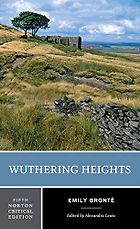
Emily Brontë, in Wuthering Heights, has a completely different type of male character in Heathcliff. Rochester and Heathcliff are two competing types of Victorian hero. What does it tell us about the sisters who invented them?
That’s a very interesting question. Two very important women novelists died virgins: Jane Austen and Emily Brontë. It is very odd, because there is a great deal of sex in both their fiction.
The Brontës had this idea of a Samson figure. Rochester, like Samson, has to be mutilated before he can be domesticated. What is interesting about Heathcliff, in Wuthering Heights, is that he isn’t. He remains this superman. He is greater than a human being. He is named after two elemental things, the heath and the cliff. We never know what his first name is. He doesn’t himself. He may be, in fact, half black. He may be a gypsy, no one knows. He comes from nowhere. He is found in the gutter in Liverpool. Some people think he must be Irish because the novel was written during the time of the Irish famine, although it is set in the earlier 19th century.
All the Brontës, Anne as well as Emily and Charlotte, had this image of a great and powerful man whom they feared and were fascinated by, and rather hoped to be dominated by, after he had been tamed. And mere women like Cathy in Wuthering Heights, Jane in Jane Eyre, Agnes in AgnesGrey or Helen in TheTenantofWildfellHall – how did they tame these men? Taming man is really what the Brontës were all about.
Do you think that is a Victorian theme – the idea of men as all-powerful but whom women can tame?
Things were changing very fast in Victorian life. You can feel the stirrings of women moving towards getting the vote. The important thing about the Victorian novel is that it had a huge female readership. There is a critic called Elaine Showalter, the author of ALiteratureofTheirOwn, who sees it as women having a literature, well, of their own. She sees it as women talking to women across the barriers that are erected between them. So a novel like Jane Eyre is one woman’s conversation with a large number of women. I think that still works today. You could say it is a novel that women readers are privileged in understanding, and that male readers have to struggle, to some extent, to empathise with what is going on.
October 14, 2011
Five Books aims to keep its book recommendations and interviews up to date. If you are the interviewee and would like to update your choice of books (or even just what you say about them) please email us at editor@fivebooks.com
Five Books interviews are expensive to produce. If you've enjoyed this interview, please support us by donating a small amount.
John Sutherland
John Sutherland is an English academic, columnist and author. He is Emeritus Lord Northcliffe Professor of Modern English Literature at University College London, specialising in Victorian fiction, 20th century literature and the history of publishing. One of his most serious works of scholarship is the 1989 LongmanCompaniontoVictorianFiction, a comprehensive encyclopedia of Victorian fiction.
John Sutherland is an English academic, columnist and author. He is Emeritus Lord Northcliffe Professor of Modern English Literature at University College London, specialising in Victorian fiction, 20th century literature and the history of publishing. One of his most serious works of scholarship is the 1989 LongmanCompaniontoVictorianFiction, a comprehensive encyclopedia of Victorian fiction.