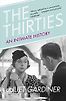
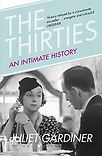
In 2010, you published your book The Thirties: An Intimate History. What sparked your interest in this period?
I have always been interested in the 1930s. I just love thirties design – I even love thirties music and fashion – and obviously the politics are absolutely fascinating. It always seemed to me a very conflicted and interesting decade. I wrote a lot about the Home Front in World War II – three or four books and a television series – and I began to wonder if I was saying that things were different then, and how different were they in fact? I felt that I needed to go back and find out more about the foundations for a lot of people’s attitudes. At the time there was very little written on the 1930s. There were obviously books about certain aspects of it and there were books written contemporaneously, but I just wanted to get deeper. That’s why I called it an intimate history.
The book also calls it “Britain’s forgotten decade”. Why were the 1930s a forgotten decade?
Well, I think the thirties were a bit forgotten because of World War II. People only see the thirties as a prelude to the war, in the same way that they see the Edwardian period as a prelude to World War I, but in a very different way. People often look back on the Edwardian period as a golden age that was ruptured and dislocated by war but regard the 1930s as an inevitable plod towards Armageddon. I really didn’t feel that. I felt that was very much a hindsight view, and – this is reflected in my choice of five books – the thirties was also a period of high modernism, of experimentation and of optimism. Although that’s not to deny all the other aspects, like the Depression and the poverty. It just seemed to me it was an intellectually, socially interesting period. Nobody in the thirties, apart from politicians, really knew, or wanted to know, until 1938, that there was going to be war.
Writers in the 1930s gave contrasting pictures of life. There’s George Orwell’s The Road to Wigan Pier and his descriptions of the bleak living conditions among the working classes in the depression-hit industrial north. Then you have J. B. Priestley’s English Journey, where the focus is more on the growth of new suburbs and consumer affluence. Which one was more accurate?
Both were right. It literally depended on where you were. If you were an unskilled worker in heavy industries that were in freefall – industries like iron and steel, coal and textiles, which had really been in decline since before World War I – they tended to be situated in the north, the northeast, around the Clyde and the Mersey, and in the Welsh valleys. And we mustn’t forget that Cornwall and Somerset were also very poor counties at the time.
On the other hand, if you lived in the south or the Midlands and you were skilled or even semi-skilled and had a job in one of the new industries such as the car industry, which was really burgeoning at the time, or synthetic textiles or pharmaceuticals or domestic goods manufacturing, then you were much more prosperous. So it really was a divided society geographically.
Were the seeds of the postwar social reforms sown in the 1930s?
One of the arguments in my book is that the blueprints for the welfare state were all obviously laid in the thirties and a lot of social experiments were tried out but were never rolled out because of World War II. That’s why I wanted to reclaim the thirties, because it’s often seen as a decade when nothing very much actually happened. My argument is that a lot of schemes ran into the sand at that time but they were there ready to be unrolled when the time was more propitious.
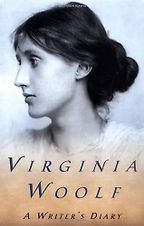
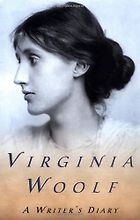
Your first book is Virginia Woolf’s diary. What does she tell us about the interwar years?
I think she is the finest diarist of the 20th century. Nobody comes near her. She is so brilliant, but she’s snobbish and anti-semitic.
Even though she was married to Leonard Woolf, who was a Jew?
It’s not unusual. Casual anti-semitism was fairly pervasive at the time. Of course, Woolf had no sympathy with fascism or anything like that – she was a lifetime Labour supporter and a liberal and a tolerant person. I wouldn’t want to foreground her anti-semitism but it’s there, just as her snobbishness was there. She had a great deal of sympathy with the poor and the less privileged but just didn’t want to surround herself with them. But she writes beautifully in her dairies and letters, as well as her novels – I think she is an incomparable writer. She was absolutely at the heart of things.
“She had a great deal of sympathy with the poor and the less privileged but just didn’t want to surround herself with them.”
Yes, she moved in a very narrow circle of people, but they were people whose work we are still interested in. John Maynard Keynes was a great friend and there was the whole Bloomsbury set. She had advanced views on sexuality. She had this abiding intellectual curiosity so when she goes into a shop to buy something and the shop girl pronounces on the death of the king, the Prince of Wales or the abdication, Virginia Woolf has this acute ear and will pick it up. She doesn’t get down and dirty with these people but she listens to them. As I said, I just think she is absolutely incomparable.
I find her diaries very frank and honest – she says what comes into her mind. She just doesn’t care.
I agree. She’s completely unmediated. And that’s what I mean about casual anti-semitism. It wasn’t a worked-out position. She just makes remarks as they come to her. She’s very honest about people she knows. And then there are her spats with her servants, which she is entirely honest about, too. She is also very good on things like landscape, the country and country walks.
I just think that she is the most superb witness from World War I until her death during World War II. She expresses the dilemmas and has no simple answers. She’s never a propagandist. She always sees the other side. It’s like religion. She’s absolutely not religious but she still has the feeling, one that I think any intelligent person has, that there are things she cannot account for and she doesn’t know how to start. So you get this highly intellectual woman who is beset by very proper intellectual doubts.
The way she talks about her depression in her diary and the letter she wrote to her husband before she killed herself are quite matter-of-fact. She writes in quite an unemotional way.
She does. Also, there’s the way she negotiates her sexuality. Woolf had these affairs or relationships with a number of people, including Vita Sackville-West and the composer Ethel Smyth, yet Leonard was still her boon companion and she was deeply reliant on him. She’s without sentiment. That doesn’t mean she’s not emotional, it doesn’t mean she’s not intimate, it doesn’t mean she doesn’t have feelings. She’s just without saccharin and without sentiment.
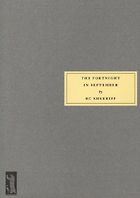
The Fortnight in September is the story of a south London family’s annual holiday to Bognor Regis. Why did you choose this book?
This is an intimate story. I don’t mean in a sexual way, but it’s very detailed and up close. RC Sherriff is best known for the play Journey’s End. He had fought in World War I, had been wounded at Ypres and wrote Journey’s End, which was an immediate success. After that his career had taken a bit of a plunge. But then he went on holiday with his mother to Bognor and suddenly the idea of The Fortnight in September came to him.
It’s about a lower-middle-class family who go every year to Bognor Regis. They go to the same guesthouse, they stay with the same woman. And that’s the point of it. They just absolutely love it. It’s the story of repetition and ritual and absolutely nothing happens apart from the debate about whether they should hire a deck chair on the promenade and whether they should go to the concert on the pier or the grandstand and this sort of thing. It was a wild success. RC Sherriff was very reluctant to submit it to his publisher Victor Gollancz. He said it was like feeding a fruit drop to a lion. He thought it was trivial, and it is trivial, but he is the poet of the ordinary. It is deeply, deeply ordinary but gives a cunning, clever portrait of what mattered to people. It’s hugely about class, which is wonderful for social historians because it’s non-judgmental and is just a straight story.
Why was it such a success?
I think because it was a reflection of so many people’s lives.
Did people think it was funny or ironic?
I don’t think it was because it was funny or ironic, though it is gently amusing. We all think that we want to read things that are different, but the newspaper columnists that you like are the ones that affirm what you already think. I think that in many ways this book affirmed an awful lot of people’s lives. What’s quite significant is that after this RC Sherriff would go on – like much grander people such as PG Wodehouse and Aldous Huxley – to Hollywood, because it was realised what a close observer’s eye he had and how he held English society in the palm of his hand. He went on to write the scripts for Goodbye, Mr Chips and other films. Then he came back and lived out his life in the town of Esher in Surrey.
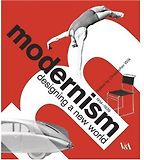
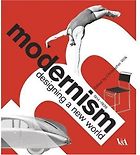
Let’s move on to your next book Modernism: Designing a New World by Christopher Wilk, who curated the modernism exhibition at the V&A in 2006.
This is a huge book. It’s wonderful. I think it’s one of the best exhibition catalogues I’ve ever seen. What I like so much is that it’s a very generous and wide interpretation of modernism and you can enjoy it without ever having seen the exhibition. It looks at modernism in all its forms of design – from furniture to clothes, but above all in architecture. I think that it’s architecture that so expresses the thirties. It’s the dominant artistic vernacular of the period. It’s largely influenced by the Bauhaus. Architectural modernism came to Britain with refugees from Nazi Germany, like Gropius and Mendelsohn. That’s what a large part of this book is about. It’s a section called “Building Utopia”.
At the core of modernism is a rejection of the past and the creation of a better future.
It’s absolutely about trying to create a better future, but in all forms – whether it’s architecture or psychoanalysis. It’s taking a moral stand. It’s the idea that the designer had a moral duty to create a better world. Many creative and scientific people felt that they had the tools to create a better world and a moral responsibility to do so and I think that modernism is a lot to do with that. It’s a rejection of the hypocrisy, the fussiness and the fustiness of Victorianism in Britain, and all the things that were perceived to have led to World War I. It was a rejection of the complacent world that drifted into war.
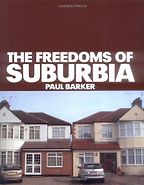
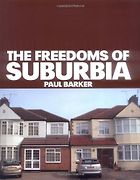
Why have you chosen your next book, The Freedoms of Suburbia?
What Paul Barker is doing, which is so important, is to reinstate and point out that while there were great examples of modernist architecture in the thirties, the real 1930s architecture was suburbia. And there was a great deal of snobbishness about it. There were more than four million houses built between the wars. Three million of them were built by private developers and most of those were suburban. They were either on new estates or on arterial roads, the so-called ribbon developments, until they were stopped. The semi, with the pitched roof and the mullion windows and the faux Tudor beams and the little neat garden, was very much mocked at the time by the “smart”. People didn’t like them because they encroached on the countryside.
John Betjeman was very critical of them.
Yes, and the architect Clough Williams-Ellis, too. They liked a strong division between country and town and hated the idea that people could appropriate the countryside. There was a big debate in the thirties about what the countryside was for because it was no longer really very productive. What was going to happen to it? Was it just going to be paved over? Williams-Ellis talked about the octopus – the tentacles of the city stretching out into the countryside.
What Paul Barker shows so well is that suburbs often exemplified people’s dreams. The sort of people that could afford a suburban semi at this time were not really working class unless they were very lucky. Normally they were lower-middle-class people who had often lived in inner-city areas that were very insalubrious and overcrowded and this was a dream for them. For the first time funds became widely available for mortgages, so people who wouldn’t have been able to get a mortgage before were able to. Most people until the 1920s lived in private rented accommodation, often with unscrupulous landlords or landlords with very little money to make improvements. So being an owner-occupier was a huge social and emotional step.
That’s why a lot of the criticisms of suburbia can be seen to be mean-spirited. These were often palaces to the people who bought them. Paul Barker picks up on all this so well. Like the desire for privacy. If you had been living in a tenement and sharing an outside lavatory with 10 other families you can understand why having your own front gate, your own front door and your own porch became hugely important. The people who scoffed at it were the aesthetes, people like John Betjeman and Osbert Lancaster, posh people. But these houses thrilled the people who lived in them.
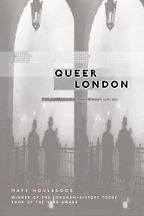
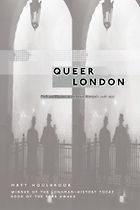
Your final book is Queer London: Perils and Pleasures of the Sexual Metropolis, 1918-1957. So how gay was London in the interwar period?
What Matt Houlbrook’s book is so good at showing is while there was certainly prejudice against ‘nancy boys’, as they were called, and very flamboyant, very exhibitionist homosexuals, generally homosexual behaviour was much more tolerated than you would imagine. It was after World War II that you really got a crackdown on homosexuality. If you look back at the diaries of Virginia Woolf there was obviously a great deal of homosexuality and bisexuality, including Virginia Woolf herself.
Even in working-class communities, homosexuality was much more accepted than one would have believed. One tends to have a Whig interpretation of history, that people have got more tolerant as time goes on, but it’s not necessarily true. You have had great changes in society, but homosexuality was much more tolerated in the thirties than we realise and I think Houlbrook has done a great service in ripping that period apart. Homosexuality wasn’t confined to the avant-garde, to the artists and the writers who were sexually adventurous, but it went right through robust working-class communities.
Houlbrook talks about working men moving freely between sexual relations with men and women and openly bragging about it. It just wasn’t seen as abnormal.
You would have your male mates, your same-sex mates, and there would be sex. Then you would move on and marry a nice girl and settle down with a family, and then you weren’t homosexual any more. You were a heterosexual with a family.
Is it to do with the fact that many of these men didn’t have much contact with women, and that the average age of men marrying in the thirties was quite late?
It’s always the classic thing about public schools that boys have homosexual relationships because there is nothing else available. Yes, I think it’s to do with that. You married late because you had to save up for a bottom drawer – even if you couldn’t afford a home, you had to pay out for your sheets and your towels. That was the social convention. I think it was also partly to do with the view of women.
There were far more separate spheres. As a man you went out with your mates. You went to the pub, the football or the music hall. Women fulfilled a different function and relations with women were much more about courting. You would probably just sit at home or might go out to a dance hall. So there were both these reasons. But the important thing was the lack of essentialism. Apart from, as I said, the nancy boys and rent boys and real exhibitionists soliciting around Leicester Square, who were regarded as something very different.
Five Books aims to keep its book recommendations and interviews up to date. If you are the interviewee and would like to update your choice of books (or even just what you say about them) please email us at editor@fivebooks.com
Five Books interviews are expensive to produce. If you've enjoyed this interview, please support us by donating a small amount.