Health & Lifestyle
The best books on Wrongness
recommended by Kathryn Schulz
The award-winning journalist and the world's leading Wrongologist discusses human error and selects five books on wrongness in both public life and literature


The award-winning journalist and the world's leading Wrongologist discusses human error and selects five books on wrongness in both public life and literature
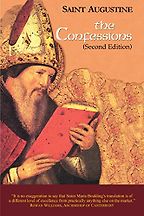
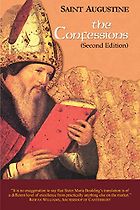
Why did you choose The Confessions?
For several reasons, actually. One is that it really established a form. Augustine gave us the genre of the conversion narrative, and the idea of conversion is central to the idea of wrongness. It’s one thing to realise your hotel is over there when you thought it over here, but it’s another thing entirely to realise: ‘The whole foundation of my life has been ripped away.’ Augustine gave us a model for telling that kind of story – stories about the complete shattering and replacement of a world view. And then there’s the fact that he’s just such an amazing writer and thinker. He’s like Freud meets Chomsky meets Gerard Manley Hopkins meets the Pope. He’s such a patient archaeologist of his own mind, and he’s so deeply engaged with trying to understand how we can be so opaque even to ourselves – how we can be wrong about our own inner universe.
In what way?
He’s incredibly eloquent on the subject of mystifying himself. There’s a beautiful passage that gets at the impossibility of recognising our wrongness in advance, of knowing in the present what we will know and believe – and feel – in the future. Augustine starts out as a zealous adherent of Manichaeism, which was this Iranian Gnostic religion that at the time was one of the most widespread religions in the world. And then he undergoes this massive conversion and rejects it utterly for Catholicism. I should say that, like many converts, he then spends as much energy rejecting Gnosticism as he does embracing Catholicism, which is interesting in itself. It’s fascinating to listen to him describing himself before his conversion. He says something like: ‘I had placed myself behind my own back.’ That’s a physical impossibility, of course, and I love how it gets at an emotional impossibility as well – the impossibility of knowing in the moment which of our beliefs will come to seem like errors in the future.
Now James Sully, on Illusions.
James Sully was a 19th-century psychologist, a contemporary of William James who was very influenced by Darwin, and I chose his book for two reasons. The first is that there’s a vast literature about wrongness, but very little of it is really categorised as such. If you dig around in philosophy and theology and the history of science and so forth, you find plenty of sidelong reflections on error. But Illusions is that rare book that’s explicitly about wrongness. He uses the term ‘illusions’ very broadly, to cover most things that we would call error – not logical fallacies, but errors of memory and perception and belief. And he’s quite smart about these things, so in part, it’s a wonderful catalogue of all the ways we get things wrong. At the same time, it’s also a wonderful entry in the intellectual history of error, because his way of thinking about wrongness so patently reflects the values and beliefs of his era. That’s why I mentioned Darwin: Sully is powerfully influenced by The Origin of Species and he believes, somewhat touchingly, that we are going to evolve ourselves out of being wrong! And then, too, he has this very 19th-century British colonial view that sees error as largely the province of the heathen – you know, like the more we spread the light of Western culture and knowledge, the more we’ll eradicate error.
What made you grasp at the idea of human error?
My interest didn’t come from one massive personal experience of wrongness, although of course I’m wrong all the time. In a way, it was almost the opposite: it came from the fact that the idea of wrongness bubbled up so constantly and in such disparate domains. It simultaneously became clear to me that our attitude toward wrongness influences almost every imaginable human relationship – whether between family members or co-workers or neighbours or nations – and yet we talk about it almost not at all. So I came to think of it as it this hugely important but largely unarticulated category of experience, and I wanted to explore it, to see what happens when we bring it into the light.
Well, Freud’s Civilisation and Its Discontents pretty much wraps it up.
Yeah, pretty much. I thought about choosing that as one of my books, actually. Wrongness is not a new subject. Philosophy, at least in its earliest years, was all about the quest for truth, and if you want to find truth, you have to be obsessed with error. So there’s plenty of dialogue about wrongness in the philosophical literature, but very little in contemporary public life.
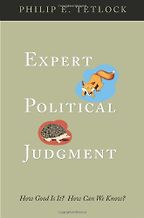
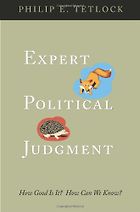
Tell us about Tetlock’s Expert Political Judgment.
Tetlock is a professor of political science, psychology and business, and his book is terrific – funny, sharp, delightfully written. Essentially, what he did was run a series of longitudinal studies of predictions made by so-called political experts – pundits and the like. He looked at forecasts like: Would Gorbachev turn out to be a reformer or a hardliner? Would Quebec secede from Canada? Would war break out in the Horn of Africa? What he finds, as will not surprise you, is that these so-called ‘experts’ are, at least for their intended purpose, seldom more accurate than monkeys throwing darts. But what’s interesting here is that Tetlock tries to figure out what makes people better or worse at making predictions. So for instance, one thing that’s highly correlated with accuracy of forecasting is fame. But it’s inversely correlated: the more famous you are, the more you’re likely to be wrong. When you think about it, that makes sense. Being famous in this context means being a talking head, and these people are rewarded for being completely black-and-white and bombastic – hardly qualities that are conducive to accuracy.
Do you know Isaiah Berlin’s essay about Tolstoy’s view of history, ‘The Hedgehog and The Fox’? The simple version is that the hedgehog knows one big thing and the fox knows many little things, and Tetlock borrows those categories to organise and make sense of his experts. He says, it doesn’t really matter what you think: you’re not more likely to be accurate if you’re on the left or on the right. What matters is how you think. Foxes have this sophisticated, nuanced, on-the-one-hand, on-the-other-hand way of thinking, and, on the whole, they’re more likely to be right. Hedgehogs are committed very powerfully to one overarching ideology, and they’re more likely to be wrong. It’s an important idea, and a humbling and useful book.
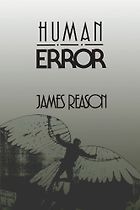
Human Error by James Reason. Good name.
I admit I chose this book out of a slight sense of obligation. I’m mainly interested in wrongness as a cultural idea – in how we think about being wrong, and how we feel about it – whereas Reason approaches error very much as a technical problem to be solved. But he’s one of the foremost thinkers in what you might call error studies, and his ideas are crucial to some of the advancements made in error prevention in domains where it really matters, such as aviation and engineering. One thing he does is taxonomise error: he divides wrongness into slips, lapses and mistakes, and then into all these subdivisions – errors of omission versus errors of commission and so on and so forth. This, too, is part of the intellectual history of this area – a big part, in fact, since one of the main reasons we as a culture think about mistakes is to try to prevent or eradicate them. Reason is a part of that tradition, and specifically he tries to understand the psychology of error in order to figure out what sorts of practices could lead to safer outcomes in high-risk fields. He’s heavily influenced by Daniel Kahneman and Amos Tversky, the Nobel Prize-winning economists, who were the first to really develop this study of heuristics – of the cognitive short cuts and rules of thumb we use to navigate the daily world.
Assumptions, you mean? Like, those lights behind the car in front are another car behind it?
That’s right. The important thing about these assumptions is that they mostly serve us very well, but every once in a while they lead to big mistakes. That’s because they’re just extrapolations from experience, not logical necessities: it’s perfectly possible that one day, the lights behind that car might turn out to be midgets holding torches. So what Reason says is, ‘If our minds fail in predictable ways, we can develop systematic tools to prevent those errors.’ It’s not a gripping read if you’re not an insider, but it represents such an important part of the study of wrongness that it seemed inappropriate not to nod to it. Also, how wonderful that a man named Reason wrote a book on error.
I can’t work out whether you think error is a good or a bad thing.
I’m a champion of error. Error is part of the richness of life. Of course, there are errors that are tragic and unacceptable and that we should seek to avoid, but even there, we’re not well served by an attitude that is horrified and humiliated by mistakes. We need to study and understand them and accept them as realities, and Reason’s book does exactly that.
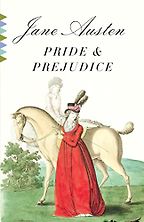
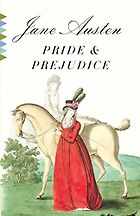
Pride and Prejudice by Jane Austen?
This book doesn’t need me to call more attention to it, but I couldn’t resist. Although it’s not usually read this way, I think of Pride and Prejudice as a great morality tale about the dangers of certainty. When you read it with this lens of wrongness in place, you see that it is, top to bottom, a book about error. I mean, think about that famous first line: ‘It is a truth universally acknowledged…’ etc. This is the most tongue-in-cheek opening ever, and it’s not because Austen is poking fun at Mrs Bennet. It’s because she’s poking fun at universally acknowledged truths. In this book, the more universally acknowledged a truth is, the more you can bet it will turn out to be wrong. What Elizabeth Bennet thinks about Wickham, what she thinks about Darcy, what Darcy thinks of Jane – everything that is strongly felt and seemingly self-evident turns out to completely erroneous. There’s that wonderful moment when Darcy first proposes to Elizabeth and she says something like: ‘If you were the last man on earth I could never, in a million years, marry you.’ I mean, whoops. We all know how that turns out.
Support Five Books
Five Books interviews are expensive to produce. If you're enjoying this interview, please support us by donating a small amount.
But the other reason I chose this book is that it’s not just that Elizabeth and the other characters that are wrong. It’s also you the reader. There’s a long tradition of the readers or the audience being in the know while characters are in the dark: that’s the comedy in Comedy of Errors, for instance. But one of the wonderful things about how Jane Austen chooses to tell this story is that, when you read Pride and Prejudice, you’re right there believing exactly what Elizabeth Bennet believes: Darcy is a jerk, Wickham is a cute young lieutenant, and so forth. So your ideas collapse along with hers. The book is about the pleasure of being wrong. We forget that wrongness can be deeply pleasurable, but thankfully we have literature and art to remind us. In that context, we all love the experience of being wrong: think about the way we take so much delight in red herrings, in suspense, in surprise endings. I wanted to pay homage to that experience – to the delight we sometimes experience in being wrong.
Why do we like it?
To be wrong is to be surprised, and I think in day-to-day life, we’re often disorientated and upset by that experience. But in literature or art it’s safe to explore that disorientation. Pride and Prejudice is like an optical illusion. It looks like one thing is happening, and then, on a dime, it switches and you see that something totally different was happening all along. That experience is exciting as long as it’s not terrifying. In literature, the fear and uncertainty associated with surprise, confusion and error is removed, and we just get to just take pleasure in the infinite different possibilities of the world.
October 18, 2010
Five Books aims to keep its book recommendations and interviews up to date. If you are the interviewee and would like to update your choice of books (or even just what you say about them) please email us at [email protected]

Kathryn Schulz
Kathryn Schulz is an award-winning international journalist, an author and the world’s leading wrongologist.
Kathryn Schulz
Kathryn Schulz is an award-winning international journalist, an author and the world’s leading wrongologist.
© Five Books 2024