You came from an academic, theoretical economics background – but you’ve been chief economic adviser to the Indian government. What, would you say, is the main challenge facing the Indian economy?
In terms of pure energy the Indian economy today is remarkable and, not surprisingly, it is growing very rapidly. At the same time, there are stretches of the country that remain poor – huge swathes of it. The segment of the population that is below the poverty line is very large. It’s a strange dichotomy that the economy, overall, is vibrant beyond measure, but at the same time there is a segment that is getting left behind. This is the central challenge for India today. This is not just about economics. It creates political tensions of a kind that early India did not see.
It’s into this exciting policy cauldron that I arrived, a greenhorn. It’s been a very challenging one year and five months. As one would expect in a newly emergent economy, there is a lot of messy politics, of course, but also, very, very fortunately, there’s a bunch of people – not too many, but a few politicians, bureaucrats, policymakers – who are just wonderful, intelligent and committed people. There is corruption, there is a lot of chaos around that one can see, but there’s also this small group that has made it all worthwhile for me. At the same time, I do hanker for my academic life, and believe I will go back to it eventually. But this has been just a very positive experience.
If you have one focus then, is that how to make Indian society less unequal?
That is certainly one of my objectives. We have to include everybody in the growth bonanza. As an academic I wrote a paper pointing out that very often the equity objective and the growth objective are treated as two separate targets [for an economy] but that is not right. I argued that a good way to evaluate a society is by its bottom 20%. It is a kind of Gandhian-Rawlsian rule that I like. You evaluate the wellbeing of the poorest 20% of the population and also track the growth of this segment. Since joining government, I have written about this interpretation of inclusive growth in official documents. It keeps you sensitive to the importance of growth but it is the bottom 20% you are focused on; so equity comes in through that door.
“Just because the laws of the market are important, we must not become apologists for what currently prevails and the huge inequities that exist in society.”
But I’ve been brought in as chief economic adviser, which means there is a whole set of tasks on my table. I have been working on fiscal policy and macroeconomic demand management, on India’s position in the G20 and inflation management and monitoring. The latter has been quite overwhelming. India is inflating faster than it has done in the past, and faster than many other countries, so that’s been a major challenge.
What’s the inflation rate now?
It’s 9%, and India has not historically been a high inflating country, like so many Latin American countries have been in the past. So 9% in India is considered unacceptably high.
It must be amazing to come from an academic background and then have the chance to implement your ideas.
It is actually amazing, and exciting. Also to watch politics from within is great fun. It’s the first time in my life that I am writing a diary. It is an anthropologist’s dream come true, seeing some of the political manoeuvrings up close, the build up of challenges and tensions and the crafting and implementation of policy.
In the past, I interviewed Eric Maskin– a 2007 economics Nobel laureate – on the financial crisis. He pointed out that to get politicians to pay attention to economic theory is very difficult.
Yes. Luckily, the Indian prime minister, Dr Manmohan Singh, is a natural intellectual and is sensitive to new ideas. But he is in a minority. In fairness, there are Indian politicians who have risen from the grassroots with concerns about inequality and poverty and a genuine desire to do good. But the number of such politicians is limited. By and large, Eric Maskin is right. It is a challenge to hold the attention of politicians on matters of economic analysis.
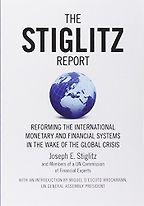
Shall we start with The Stiglitz Report, a UN-commissioned report that was chaired by another economics Nobel laureate, Joseph Stiglitz?
This is a very good book on the financial crisis, I’m reading it right now and, surprisingly for a book on such a dry subject, it is absorbing. I thought I ought to recommend it to readers because it has a very unusual take. It looks at the crisis that erupted in the US and spread to the rest of the world, and talks about the deep defects in the system that need to be corrected. This is one of those rare books where the focus is on what this crisis has done to the poor.
Usually, when people talk about the crisis they are concerned about finance as an end in itself. It’ll be about how to repair the financial system, how to manage risk and so on. Stiglitz does talk about these matters. But it goes on to argue that, in the long run, the biggest challenge comes from the fact that a financial crisis affects poor people. It causes inequality to go up and people at the bottom end, who have very little space to be pushed into, nevertheless get pushed into it by a crisis like this. So I like the take that this book has on the crisis. And, further, one has to remember that Joe Stiglitz is one of the great economic theorists of our time. I happen to know him well, having co-authored a paper with him. I began reading this book to check out a theorist’s take on the crisis and I have not been disappointed.
Stiglitz earlier had a running battle with the International Monetary Fund. Around 1997-98, when the East Asian crisis took place, there was a face-off between the IMF and Joe Stiglitz, with the latter attacking the IMF relentlessly. Given that the IMF is now quite a reformed organisation, whereas Joe Stiglitz, as far as I can tell, is totally unreformed, Joe has to be declared the winner in this strange battle.
What does the IMF do now that is different from in the past?
Recently, I was in Washington for the G20 and IMF/World Bank meetings. I was part of a discussion on growing inequalities in Asia, as part of a panel on the Asian economies. You couldn’t imagine the IMF, 10 years ago, worrying about inequality. It would be concerned about many other things, but not that. It’s true that the inequality problem is being posed in terms of how it impacts economic policy and the way macroeconomics is to be done. But nevertheless it’s directly tackling the question of inequality and social turbulence. This really is a new phase for the IMF. Further, the IMF has now floated a paper recognising how capital controls to prevent excessive flows of foreign capital have a place in policymaking. This is a sharp retreat from its earlier dogma.
What kinds of things does Stiglitz focus on in the book?
One thing he touches on, which appeals to me greatly, is the anti-democratic nature of a lot of global decision-making. Within a country, we talk of democracy and the importance of one person, one vote. But a lot of global decisions are made by just a few countries. He argues that if you want a fairer world, you have to think of giving much more say to countries that may not be economically powerful. Just because they may not be contributing much to the coffers of the World Bank, the IMF et cetera, that doesn’t mean they shouldn’t have a say – just as we believe that, within a country, the fact that one person pays more tax doesn’t mean that that person should have multiple votes. What you want is a similar restructuring of global decision-making. That’s a very nice message from my point of view.
Do you think it will happen?
There is already pressure building up. There is talk about quota revision, giving greater say to countries that in the past have not had that kind of say in global decision-making. But these are small moves. So far there have been no more than tiny moves happening. But ideas put in public space can gather steam and have some effect, and he does that well in this book.
Is the book quite technical and detailed?
It’s very detailed, but I wouldn’t call it technical. It talks about the effects of the global crisis on developing countries. For me, as an Indian policymaker, this is of great relevance, because it’s not just about the US and Europe, it is about Asian countries and emerging economies in general.
Does it say anything particularly about India that you took to heart?
No, it does not. Joe has been in and out of India in recent times so he has been talking a lot about India, but this book does not. Those are things I have to deduce for myself, from the recommendations being made in the book.
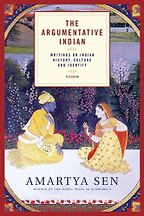
You also chose another Nobel prize-winning economist, Amartya Sen. It’s called The Argumentative Indian.
This is another interesting book, in a very different way though. Again, it’s by a person who began as a theorist. Amartya’s early work was virtually all as a logician: he did absolutely first-rate work on symbolic logic and choice theory. The Argumentative Indian is his post-Nobel prize book. And if the name of the author were suppressed from this book, you would never guess that it was written by the same person who wrote some of the early mathematical economics and symbolic logic works. In this book Amartya Sen manages to reinvent himself and that is remarkable.
What’s so surprising about it?
It’s a beautifully written book. It revolves around a thesis which is not the most persuasive part of the book, I have to say. The thesis is that India is a particularly argumentative nation, and that even the ancient texts, for instance, in terms of number of pages outstripped the Iliad or the Odyssey by – I forget the exact number – 20 times or so. The verbosity of the nation stands out from long back into history. I don’t know about that. Depending how you count, almost any nation could be portrayed as argumentative. But he uses this central theme to range over an amazing breadth of scholarship, from early Indian religious documents, to contemporary concerns about caste, the role of group identity, community identity, religious identity and also nationalism. The sweep is magnificent, and also Amartya is very funny. He was my PhD adviser by the way, so I have some first-hand experience. He writes with a lot of wit and that’s very evident in this book.
Speaking of argumentative or talkative Indians, I’m just remembering Alfred Marshall.
Alfred Marshall?
Alfred Marshall is one of the gurus of our field, and wrote a classic book, Principles of Economics, in 1890. There was an Indian who wrote a letter to Alfred Marshall, the gist of which was, “Great master, how can India do as well as Japan?” And Marshall’s reply, again in gist, was – “If Indians worked more and talked less, the way the Japanese do”. This speaks to Amartya’s theme; this belief that Indians are argumentative and that they talk too much.
But it is the stories in the book that appeal to me. Let me give you an example that is just marvellous and quintessential Sen. The major religious text for the Hindus is the Gita, and the book has a lot of discussion of that. There is one part where the warrior king Arjuna and the god Krishna are having an argument on the battlefield about whether to go to war or not. Arjunais feeling weakened at the thought of the massacre that will occur and doesn’t want to go, and Krishna tells him about the importance of duty: that it is his duty as a warrior king to do it, and he must not think about the fruits of it, which can be good or bad. The standard Hindu interpretation is that Lord Krishna’s advice is the right advice. But Sen says that when you look at the desolation and death caused by the war that occurred you begin to wonder if Arjuna wasn’t right in his hesitation to go into war – and maybe the lesson that we could take away is that one.
There is also a wide-ranging discussion about other writers – the atheists and agnostics and their traditions. Also, something which appeals to me, he talks about the importance of India having a broad, humanist, international identity, and being an open society. Sen writes about the early Indian rulers Akbar and Ashoka, who were in this tradition. I wrote a review of this book a couple of years ago, where I discussed India’s first prime minister, Nehru, at length. For Nehru too, internationalism was extremely important. In fact, there is a marvellous letter that Nehru wrote to all the chief ministers, saying, “We can’t do away with nationalism at this stage of history. Nationalism is an important instrument. But we have to remember that a time must come when we have to go beyond nationalism, and celebrate only our international identity”. For a prime minister to say this is quite remarkable. A lot of Sen’s book is in this tradition. It’s not economics, it’s political economy, history. It’s a book that I could recommend to anybody.
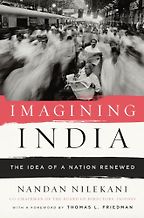
Let’s go on to Imagining India: Ideas for the New Century, by Nandan Nilekani. Do you want to start by explaining who he is?
He is one of a group of six persons who founded one of India’s biggest and most successful software companies, Infosys. He was an engineer to start with and, as he says in this book, if it wasn’t for a stroke of luck where he decided to try his hand at entrepreneurship, he would probably be a software engineer based in New Jersey, commuting to New York City. In India, there used to be a tradition of business houses, where children go into their parents’ business. Infosys was one of the early companies set up by people who had no experience in business, and it became a whopping success. Nilekani, after writing this book, has actually come into the Indian government. He’s in charge of developing a social security system for India, where individuals will be identified electronically using biomarkers. I get to interact with him a lot, both of us being outsiders now working inside government.
This book for me is a very unusual economics book because it is written by someone who is neither an economist nor a professional writer. He’s an engineer-turned-entrepreneur, and he writes about the ideas revolution that can cause India to take off and do well. It’s not entirely prophetic because India was already beginning to do well when he was writing it – but it’s a very enthusiastic book. He says that he is an incorrigible optimist and that comes out. It’s a bit in the tradition of [New York Times columnist] Tom Friedman. The book is teeming with little ideas that India can do.
He talks about his father’s belief in Nehruvian socialism. He rejects this, but it’s not an ideological book. It’s really much more of a workman’s book. You have to recognise that the market is an important instrument and India has to use this instrument to do well, he reminds the reader. He gives a whole slew of advice. He talks about Nehru, like most Indians do, with a lot of admiration. While he is critical of Nehru’s policies, he has a lot of admiration for Nehru as a person. It’s a corporate person’s take on India, and, unlike some recent authors who are gung-ho and chauvinistic about the nation, this is not. It’s optimistic about India, but not in a chauvinistic way and that’s what I like about the book. It’s really a pleasure to read.
Does India still have a long way to go before it is functioning well as a market economy? I noticed one of the references in the book, about entrepreneurs, saying they’ve gone from “Red Tape to Red Carpet”. But I know one or two people trying to be entrepreneurial in India, and they still have enormous frustrations with the bureaucracy and say it is much easier to do business in China.
Let me talk about this, because it is not just part of the book, but also my current job. I have pushed this issue about bureaucracy into government documents. The World Bank, [its private finance arm] the IFC in particular, puts out data on doing business. They’ve developed an index, not too badly done, which talks to the amount of paperwork and bureaucratic hassles you have to go through – to start a business, to close a business, and, in the event of a contract violation, to have the contract enforced. By this criterion, India is ranked 134th in the world, and China is 79th. It’s very visible in India. Lots of ordinary people just feel fed up with the bureaucratic ropes. It’s also related to corruption. India has been in the news of late because of corruption. Very often you have to bribe to get something done.
Five Books interviews are expensive to produce. If you're enjoying this interview, please support us by donating a small amount.
But one of my big surprises when I joined the government of India was to see the quality of the top civil servants in India. They really are very talented people, because it is a highly competitive system of recruitment. But the efficiency of the bureaucracy leaves so much to be desired. It’s like getting a bunch of ace drivers and then getting caught up in a traffic jam and leaving them there. There is something in the system which makes it go very slowly and sluggishly. I’ve felt this frustration as an ordinary citizen before I joined government, and I feel it now because I feel that if we can do better then India’s economy can really take off.
There are two major things that can hold back an economy. One is the physical infrastructure, and the other is this soft infrastructure, which is the bureaucracy. On the physical infrastructure, I’m very optimistic that India is going to change. Even within the next four to five years, you’ll see the change. There is investment happening, the government is putting in money, and it will improve. On the bureaucratic side, it’s very tough. Everyone frets about it, but you don’t quite know where to begin. I’m less hopeful on that. However, the economy has done well despite that because, mercifully, one big difference with China is that India’s government, despite the inefficiency, doesn’t quite have the power of the Chinese government. I’ll give you a simple number that illustrates this. Of the total national income, the fraction that comes out of the state-owned sector in India is about 14%. In China it’s over 40%. So the state is much more all over the place in China than in India, but China’s is a more efficient state. In India, fortunately, the state is not quite as big and all-encompassing, so despite the fact that it is slow and sluggish, there is still a lot space for private enterprise. People who are learning to work the system are doing well and that probably explains why India has been growing almost at the rate of China in recent times. But there is still a great distance to go on the bureaucracy.
There’s no easy solution, is there?
There isn’t an easy solution. I talked to the British High Commissioner to India. He’s a very interesting person. I told him, “Look, we inherited the British system and we remain with it, whereas Britain has nicely got rid of a lot of the old bureaucratic system. What did you do?” He assured me that he’ll get me to talk to people who worked on the revisions of the old system. But, getting back to your question, I don’t see a quick end to this, whereas I can see the physical infrastructure developing in leaps and bounds over the next couple of years.
Is India, like China, doing a lot of high-speed rail and so on?
High-speed rail has been talked about, but no decisions have been made. There will be a total revamping of ports and airports, and we already have big investment going into roads. All this is beginning to take place and in the next five-year plan, we have mega-schemes to boost infrastructure. It’s actually being helped by the flow of people between China and India. Indian bureaucrats go to China and come back having seen the infrastructure.
Next, you’ve chosen a biography of Indira Gandhi.
Yes, by Katherine Frank. This is not an economics book but I still wanted to recommend it, because in terms of readability for me this one was a real page-turner. It does talk at length about the politics of India around the time when the first stirring of the Indian economy took place in the late 1970s and early 1980s. But the book is really an account of Indira Gandhi as a person, and the complexity of the leader. It’s a sympathetically written book – clearly the author likes Indira Gandhi and is fascinated by her. There are two points in the book that read like a Greek tragedy, like fiction. The first is the day before Indira Gandhi declared an emergency and took over dictatorial control of India from 1975-77. This is also discussed briefly in Amartya Sen’s book. The book’s description of the previous day is a chilling account of talking to lawyers and close advisers, the decisions going back and forth, how will she deal with the criticism from the press that would erupt? No one outside her small coterie in India knew this would happen and the next morning she makes this announcement on the radio that she is taking control because India faces a threat. That most remarkable day in India’s history is described beautifully.
The other point where the book really builds up is the day before her assassination. She comes back to New Delhi from some travels in India. The night before her assassination she is somehow not sleeping well and getting up for, I think, water, bumps into her favourite daughter-in-law, Sonia Gandhi, in the kitchen. Indira is full of human warmth and talks very affectionately to her daughter-in-law and in fact tells her that she should feel free to wake up Indira if she cannot sleep. There is a Shakespearean premonition in the air of something dramatic about to happen. They chat, and the next morning she is walking out of her house for an interview with Peter Ustinov and she is shot, point blank, by her own security. The build up to that, and what happens politically in the country subsequently, is recounted wonderfully.
The entire book is riveting to read. The emergency period is described very well and India takes off soon after that. There is an interface with the economy which is not spelled out. The book is not meant to do that, but for an economist there is a lot of subtext that can be read into it too, so I wanted to recommend it for that reason.
What part is most relevant to the economics?
Indira Gandhi, before 1975, was committed to Nehruvian socialism. She was influenced very deeply by her father, and her father was influenced by British Fabian thought. That was the mould in which she had grown up and if you look at the moves she makes, they are in that mould. When she comes back to power in the early 1980s, it’s a very different Indira Gandhi. By then, she is influenced by her sons, who have imbibed new ideas. She is trying out new policies, and you begin to see some changes. In terms of India’s liberalisation, the big moves took place from 1991 to 1993, but there are deep changes that are beginning to take place even in the 1980s. In 1975, she declares the emergency and takes over, running the country with authoritarian control for two years. She then declares an election and loses it in 1977. By the time she wins another election and comes back she is a changed person, mainly in terms of economic policies.
Are you a fan of Indira Gandhi?
She’s a magnetic personality – it’s impossible not to see that. She took on big world powers during the formation of Bangladesh. There was a big showdown with Nixon. India was not a global power at all, but she was steadfast. She had a morally strong position and she stood by it. That was quite a remarkable time. I don’t like the period of emergency that she declared, though mercifully she herself called an election to end it. I am drawn to Indira Gandhi the way one is to those tragic characters in history – flawed but at the same time dignified. If you ask me about admiration, I actually have more for Nehru. He got some of his economic policies wrong, but he gave shape to a secular, broad-minded India. That was very important, and Indira Gandhi was born into that tradition.
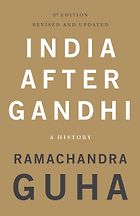
What about India After Gandhi: A History of the World’s Largest Democracy?
Ram Guha’s book is a popular history. As a book on recent India, it’s one of the best, maybe the best, that I’ve read – a mammoth amount of information, put together in a way that anybody can read. He’s a serious historian, but it’s written in a way that really makes you want to turn the page. If one wants to understand contemporary India, this is the book to read. It begins with [Mahatma] Gandhi’s assassination, and it tracks the way the politics and debate takes place in India. There’s jostling for political space between different parties, between Hindu fundamentalists and the secularists, with Nehru and Indira Gandhi in the latter category. If one were to read one book on India, this is the one that I would recommend.
It goes up to the present?
Yes, it comes right up to the present, to just a couple of years ago.
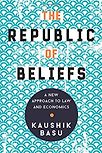
You mentioned in an email to me that your own book, Beyond the Invisible Hand, might be considered left wing, while as a policymaker you’re considered to be very pro-market – but that there is no contradiction between the two. Can you explain that to me?
I can try to. My book will be read by many as a left-wing book, but it is non-doctrinaire left. Left is usually associated with big government, whereas this is actually a small-government left-wing book. It makes the argument that for good policy you have to give space for the laws of the market; you have to give space for individual enterprise and entrepreneurial creativity. At the same time, I’m arguing that a vastly better, vastly fairer and more equitable world is possible. Just because the laws of the market are important, we must not become apologists for what currently prevails and the huge inequities that exist in society. We must not get complacent about that, and say that’s the only thing that can happen.
The book goes into economic theory, but it’s all in words, there is nothing technical in my book. It’s in the tradition of [George] Akerlof, Stiglitz and Sen – the way they have written about the reasons why you need income and wealth redistribution, and how the government should try to deliver on that.
The book talks about inheritance. I argue that it is morally wrong to give people huge advantages at birth. An ideal government isn’t large, it’s lean and small, but it makes transfers, taking from the rich and giving to the poor. It does not fatten itself up like most Communist governments did. A large government is like a sitting duck: it invariably gets captured by individuals and small groups, as happened in the Soviet Union. So, my book argues, we have to think of radicalism in a very different way.
I do believe that the book makes deep analytical points, for instance about how the law works and the limits of methodological individualism. It’s a book that I worked on for a very, very long time. I finished it one week before I joined the Indian government, which is good because I would never have the time to work on it now.
Get the weekly Five Books newsletter
Now to my policymaking work. In our everyday life, we have to practice what I call normal economics. You have to recognise and respect the laws of the market, allow individual enterprise to flourish, international trade has to be open, and all the regular things economists say I would also repeat. At the same time we must not blight our chances of a more idealistic world. My book is based on two views of the invisible hand. For Adam Smith, the invisible hand was the little minions going about their everyday life, unwittingly creating order. That’s true in many domains, and its discovery was a major scientific breakthrough. But I contrast it with Kafka’s view, drawing on The Trial and The Castle, where little minions are going about their everyday chores without thinking about the larger implications of their actions and they create a horrific world. The book argues that both these visions have a role to play. Economists have given complete predominance and priority to the Smithian view, but we should be aware of the Kafkaesque view of what can happen and take guard against such a predicament.
Have you been able to move that into the policy world in your current job?
No. My work as a policymaker is to attend to everyday life. This is what I meant by normal economics. What I do now is normal economics. I have to make sure that prices don’t rise too fast, interest rates don’t fluctuate too much, India’s economic growth is rapid and sustained, and unemployment is low. There is a lot of standard economics that addresses these matters. We need to apply this accumulated wisdom well and that’s what I try to do my best with. To reject all standard economic theory as conspiracy, as some do, is a big mistake. It can only lead to policy failure. But, at the same time, we must not abandon the somewhat utopian project of creating a distinctly better world some day. This needs a lot of analysis and research. The possibility of such a world is what my book is about.
Five Books aims to keep its book recommendations and interviews up to date. If you are the interviewee and would like to update your choice of books (or even just what you say about them) please email us at [email protected]