Keith Slotter has been an FBI Agent for the past 23 years. He chooses five books about crime and says that legalising abortion cuts crime – because the criminals remain unborn
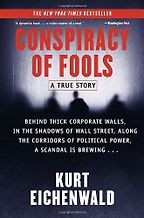
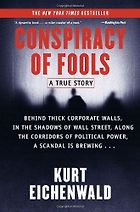
What I like about your FiveBooks is that you have picked different aspects of crime. Let’s start with your first one, Conspiracy of Fools: A True Story by Kurt Eichenwald.
Conspiracy of Fools is one of my favourite books. It came out shortly after the Enron debacle and it actually doesn’t follow the case all the way through. It really ends when the FBI is just starting to get involved, rather than with the prosecution. I like the way the book tells the story from the inside of Enron. I think it is a book that really opened a lot of people’s eyes. Before reading this it was hard to fathom that corruption and greed could be this rampant in any corporation, let alone a Fortune Top 25 Corporation.
You work for the FBI, so you must have seen a lot of different types of crime. Was there not even a suspicion that kind of thing was going on in businesses like that?
There was suspicion, but I can tell you, although we investigated cases like this, there is no question that the Enron case was the biggest white-collar crime case in FBI history. We had upwards of 200 agent analysts working on the case at one time. Normally you would have about ten agents working on a case, so that gives you some idea of the scale of it. This book is great on details. It describes the many different facets and the incredible number of ways, seemingly complex at first, that the executives found to unjustly enrich themselves. And what it all came down to is greed.
Do you think there has been a rise in white-collar crime?
Yes, I think there has been a rise in white-collar crime in this country recently. Part of it is because of the economy. When the economy takes a down-turn fraud rises. There is this unfortunate side of life where people who commit fraud find that when people are more desperate in a poor economy it is easier to de-fraud them.
But the Enron case was during an economic boom.
It was, but that was a different story in that there was a lot of greed and wealth going on at the time. In fairness to the people who work in these kinds of corporations, in the US in particular, there was an incredible escalation, especially in the 1990s boom period when outstanding results exceeding expectation of Wall Street broadcasts were commonly expected – and if you didn’t exceed those forecasts you were considered a loser. And the feeling was you probably shouldn’t be running the company any more. So there was extreme pressure to perform, to be able to show results at all costs.
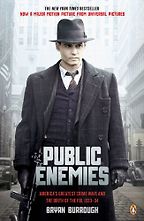
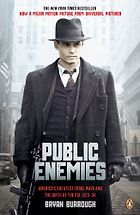
With your next book, Public Enemies by Bryan Burrough, you say it is better to read the book than see the movie. I have seen the movie and I loved it, so why should I bother reading the book?
Well, I have nothing against the movie – it was great. But it really just focuses on the arch villain John Dillinger and the FBI man Melvin Purvis dynamic with very little else. And they are great characters so it makes sense to do it that way. But the book really accomplishes, better than any other book or movie I have seen, a good look at that violent fantastic gangster era in the 1930s. And the book doesn’t just focus on Dillinger, but on all the players: Baby Face Nelson, Pretty Boy Floyd and Bonnie and Clyde. It was a really, really Wild West period for the United States, mainly out in the mid west in places like Chicago.
A big part of the book is the birth of the FBI – how did that come about?
Banks were being robbed, people were being killed, there was a lot of violence. The people in the US finally said, who is going to stop it. The State Police couldn’t because once the gangsters moved across their state lines they have no jurisdiction. So the FBI finally came to the forefront and took control of the situation. And after, frankly, a lot of failures and shoot-outs and problems the bureau finally came into its own.
How did they manage that?
Well, when that era started, FBI agents didn’t even carry guns so it was very difficult to go up against the fire power that these gangs had. So they had to be trained in weaponry. Their mentality had to change and the bureau had to transform itself from working run-of-the-mill, low-level violence cases to dealing with what the most violent criminals that the country had to offer at that time.
What kind of a legacy did they leave for the modern-day FBI?
Everyone has a special appreciation for that era. Everyone knows those gangsters by name. It’s when the bureau gelled and became an institution that really had to be reckoned with. Where we train new recruits for the FBI in Virginia, we have an area called Hogan’s Alley. It is like a fake town where our agents can train and be somewhere that is as close to real life as possible before they go out on the street. In part of that town there is a movie theatre which is the one copied in the Public Enemies film when Dillinger gets killed at the end coming out of the movie theatre.
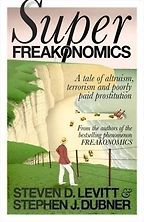
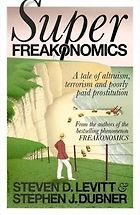
Your next book intrigues me, Freakonomics and its sequel SuperFreakonomics by Steven Levitt and Stephen Dubner. What has this got to do with crime?
These two gentlemen wrote the first book several years ago and SuperFreakonomics just came out. The books are very interesting on crime theory. Their theories are controversial. For example, they link a decrease in crime to the legalisation of abortion. In a nutshell they say that abortion stopped a whole new generation of criminals from being born. And that is because they say abortion is most prominent among the lowest class people. That is, of course, not a politically correct statement to make, but when you go through their numbers and what they have done, sadly there rings a strong sound of truth in their argument. So, I would encourage anyone with an open mind to read these books and give it some thought.
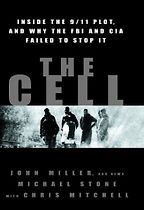
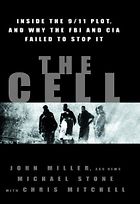
The Cell
by John Miller, Michael Stone and Chris Mitchell is all about terrorism.
I like this book because there have been a million books and some movies, many very good, about 9/11 and post-9/11 and that day in particular. But this book really focused on the decade building up to 9/11 and it talks about many of the plots that occurred, all leading up to 9/11. The FBI, MI5 and MI6 were all trying to get their arms around what was going on in their desperation to try to piece together where this was going and then 9/11 kind of happened out of the blue. When you go back and have that ability of hindsight it is really is rather eye-opening.
And what were the failures – why didn’t they see it coming?
The quote that you hear most often is the failure to join the dots and the inability of some of the intelligence community to share information as well as it could have. Would it have prevented a 9/11? I don’t know.
Linguistics was another problem, the lack of translators, the lack of understanding of different cultures. Now, all around the world, whether it is Britain, America, Canada, Australia or Germany, we are all better at sharing information and seeing ourselves as a global community. Everyone now thinks we can’t let something that big happen because we have seen it can happen.
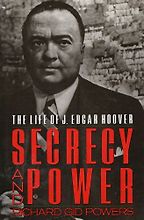
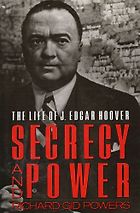
Your final book is Secrecy and Power: The Life of J Edgar Hoover by Richard Gid Powers.
I had to throw that in there because I am an FBI guy! There have been so many books on Hoover I thought I had better put it in. Of the ones I have read this one was by far the best researched book and is probably the most accurate on a very difficult life to understand, of a very unusual person. You have to remember he was the director of the FBI for close to 50 years. Think of one person doing that for 50 years. First of all, it is way too long, but as a result he became iconic to American culture. He became a thorn to many presidents. He had an incredible amount of power in US political circles because of the information he possessed on other people. When he finally died in 1972 things changed in the FBI dramatically.
Get the weekly Five Books newsletter
How so?
Females were hired for the first time; the job became much more open to minorities, priorities changed. We really began to take a hard look at organised crime in a team-like concerted way for the first time ever.
February 1, 2010
Five Books aims to keep its book recommendations and interviews up to date. If you are the interviewee and would like to update your choice of books (or even just what you say about them) please email us at [email protected]
Five Books interviews are expensive to produce. If you've enjoyed this interview, please support us by donating a small amount.
Keith Slotter
Keith Slotter has been an FBI Agent for the past 23 years and currently serves as the Special Agent in Charge of the FBI’s San Diego Division. He deals with everything from white-collar crime to problems with drugs and human trafficking at the world’s busiest border crossing, San Ysidro.
Keith Slotter has been an FBI Agent for the past 23 years and currently serves as the Special Agent in Charge of the FBI’s San Diego Division. He deals with everything from white-collar crime to problems with drugs and human trafficking at the world’s busiest border crossing, San Ysidro.