Religion is often presented as the guardian of moral values. The problem with this, says the author and broadcaster Kenan Malik, is that it diminishes what it means to be human. He picks the best books on morality without God.
The Quest for a Moral Compass: A Global History of Ethics
Many believers think that the only way to be truly moral is to follow a religion which teaches us morality. How would you respond?
Throughout their history, one of the great selling points of religions – in particular the monotheistic religions – has been their importance as a bedrock of moral values. Without religious faith, runs the argument, we cannot anchor our moral truths or truly know right from wrong. Without belief in God we will be lost in a miasma of moral nihilism. “To remove God,” as the theologian Alister McGrath has put it, “is to eliminate the final restraint on human brutality”.
Looking back on history, one might question just how successful God has been as “the final restraint on human brutality”. What really concerns me, however, is the way that religious concepts of morality degrade what it means to be human by diminishing the importance of human agency in the creation of a moral framework. From a religious perspective, it is the weakness of human nature that ensures that God has to establish and anchor moral rules.
In truth, morality, like God, is a human creation. Even believers have to decide which of the values found in the Torah or the Bible or the Quran they accept, and which they reject. What God provides is not the source of moral values but, if you like, the ethical concrete in which those values are set. Rooting morality in religion is a means of putting certain values or practices beyond question by insisting they are God-given. The success of religious morality derives from its ability to combine extreme flexibility – just look at the degree to which religious morals have changed over the centuries – with the insistence that certain beliefs, values and practices are sacred and absolute because they are divinely sanctioned.
Is it just religious believers who look for ethical concrete?
Not at all, secularists often do too. There is, for example, an increasingly fashionable claim that science will decide which values are good and which are bad. I’m as critical of the false certainties of a morality rooted in science as I am of the false certainties of a divinely sanctified moral code. The desire to set moral values in ethical concrete is a yearning for moral certainty – a fear that without external authority, humans will fall into the morass of moral relativism. But there can be no getting away from the fact that as humans we have to stand on our own feet, think for ourselves, create our values and practices, and bear responsibility for them.
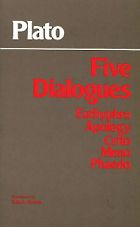
Your first choice is Plato’s Euthyphro from Five Dialogues. Plato was no atheist, was he?
Unlike earlier Greek philosophers, such as Diagoras and Democritus, Plato believed in the divine, and much of his philosophy flowed from his concept of a transcendental reality. He provided the resources for the later Christian view of goodness as a transcendental quality. But in his dialogue Euthyphro he also provides the classic argument against looking to God as the source of moral values, an argument that still resonates 2,000 years later.
In Euthyphro, Plato sets up a discussion between Socrates and Euthyphro, who is about to prosecute his father for the murder of one of his servants. Socrates is shocked by Euthyphro’s action and wants to know how Euthyphro distinguishes between the pious and the impious, the good and the bad.
And how does he?
Well, Euthyphro provides a series of definitions, each of which Socrates knocks down. Socrates’s key question is this: “Is the pious loved by the gods because it is pious, or is it pious because it is loved by the gods?” Unless the gods love something for no good reason, then they must love something as pious because it inherently possesses value. But if it inherently possesses value, then it does so independently of the gods.
Or, as Leibniz asked at the beginning of the 18th century, if it is the case that whatever God thinks, wants or does is good by definition, then “what cause could one have to praise him for what he does if in doing something quite different he would have done equally well?” If, on the other hand, God recognises what is good and promotes it because of its inherent goodness, then goodness must exist independently of God. But God is no longer the source of that goodness, nor do we need to look to God to discover that which is good.
But believers would argue against that.
Yes, a believer might argue that by definition God cannot choose anything but the good. God cannot but be good, so the Euthyphro dilemma is ill formed. If God and the good are one and the same, then we cannot ask whether God chooses good, because it is good – the very question separates that which is inseparable.
But we can restate the Euthyphro dilemma in a different way, to meet such an objection. We can ask: “Is God good because to be good is to be whatever God is; or is God good because He has all the properties of goodness?” If it is the former, then we find once more that goodness is arbitrary, since it would be whatever God happened to be. If, on the other hand, God is good because He has all the properties of goodness, then it means that such properties can be specified independently of God. And so the idea of goodness does not depend upon the existence of God.
Another problem with a religious definition of goodness is that if you look at the Bible, God seems to have condoned many practices which we now see as morally unacceptable.
That’s true. History reveals that God has in the past deemed to be morally acceptable many practices that we now regard as immoral – torture, slavery, the burning of witches, the murder of Jews. Or rather, in the past believers insisted that God had sanctified such practices. Today few believe that. That’s not because God had changed his mind, but because society has. We have come to recognise the moral wrongness of these practices. We live in a very different moral universe from that of 500, 1,000 or 2,000 years ago. And as the moral universe has changed, so have believers’ moral codes. All of us, believers and non-believers, have to define for ourselves, not just individually but collectively, what is good and bad. Believers then attach such moral claims to a God, insisting that he is the source of moral values. Atheists accept that those values are human-created.
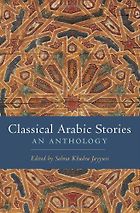
Next up is the blind Arab philosopher Abul Ala al-Ma’arri and The Epistle of Forgiveness, which challenges the idea as to whether Islam has a monopoly on the truth.
It’s almost impossible to get hold of this in English, but there is an edited extract in the anthology Classical Arab Stories. Few in the West will have heard of Abul Ala al-Ma’arri. Indeed, few in the Muslim world will know of him. Yet he is immensely important in the development of freethinking. Al-Ma’arri was one of the greatest poets in the Arab tradition and renowned for his unflinching religious scepticism. In one poem he wrote:
They all err – Muslims, Jews,
Christians, and Zoroastrians.
Humanity follows two worldwide sects:
One, man intelligent without religion,
The second, religious without intellect.
We have become used to thinking of the Islamic world as walled-in, insular, hostile to reason and freethinking, with a single, unquestioned and unquestionable view of God, faith and the Quran. Much of the Islamic world came to be that way. But in the first half-millennium of its existence, especially during the Abbasid period [750-1258], there was within the Islamic empire an extraordinary flourishing of philosophical debate and of freethinking, of a kind unseen since the heights of Greek philosophy, and that would be unseen again until the Enlightenment. Al-Ma’arri was one of the most important thinkers and writers of this golden age.
Tell me some more about The Epistle of Forgiveness.
The Epistle of Forgiveness is his most famous work, in which he describes visiting paradise and meeting Arab poets of the pagan period. It is a work that has been compared to Dante’s Divine Comedy. What is striking about al-Ma’arri’s poetry is not simply its religious scepticism but also its deep strain of pessimism:
We laugh, but inept is our laughter,
We should weep, and weep sore,
Who are shattered like glass and thereafter
Remoulded no more.
Al-Ma’arri had a great belief in the sanctity of life – he became a vegetarian, not wishing to harm other living creatures – but seemed sometimes to be overwhelmed by the ephemeral, pain-filled character of human life. Life’s two gifts, it seemed to him, were pain or death:
Over many a race the sun’s bright net was spread
And loosed their pearls nor left them even a thread.
This dire world delights us, though all sup –
All whom she mothers – from one mortal cup.
Choose from two ills: which rather in the main
Suits you? – to perish or to live in pain?
Sometimes it seemed to him that it would have been better had humans never been created:
Better for Adam and all who issued forth from his loins
That he and they, yet unborn, created never had been!
For whilst his body was dust and rotten bones in the earth
Ah, did he feel what his children saw and suffered of woe.
It certainly sounds like a very pessimistic view about the world.
Yes, the almost un-plumbable darkness of al-Ma’arri’s vision reveals the difficulty of living without God in 10th century Arabia. Modern humanism has its material roots in the ability of humans to transform their world, a world in which the great revolutions – scientific, industrial and political – have provided concrete meaning to the idea of human-driven progress. This was not al-Ma’arri’s world. His was a world in which life seemed forever static and immovable, constrained by the brute facts of nature. In which the idea that humans could transform the world for the better would have seemed not merely hubristic but irrational and insane. In which grief and anguish were as much a natural, ineradicable part of life as the sun rising in the morning and the leaves falling in autumn. It was a world in which without God there seemed no possibility of comfort and solace, no prospect of infusing life with a sense of meaning, no hope of recompense for a life of pain and torment. In such a world it took immense courage to look into the void and accept the darkness, to examine one’s life and acknowledge unflinchingly its unremitting pain.
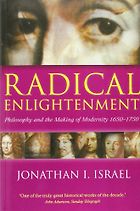
Jonathan Israel’s Radical Enlightenment looks at the intellectual landscape of early modern Europe.
I had in mind to choose Spinoza’s Ethics. In the pantheon of great 17th and 18th century philosophers – Descartes, Hobbes, Locke, Kant et cetera – Spinoza is usually seen as hovering in the back row. He is surprisingly little known. Yet he is arguably the philosopher who more than most has shaped modern thinking about freedom, equality and the possibility of a secular morality. In the end, though, I plumped for Jonathan Israel’s book, which tells the story not just of Spinoza but of the radical Enlightenment as a whole, of which Spinoza was the key figure. Radical Enlightenment is the first in a magnificent trilogy – the third of which, called Democratic Enlightenment, is published this autumn – through which Israel rethinks the history of the Enlightenment and its impact upon the modern world.
The Enlightenment has long been recognised as key to development of secular morality. Israel’s importance is to draw out the distinction between two different Enlightenments. The mainstream Enlightenment of Kant, Locke, Voltaire and Hume is the one of which we know, and which provides the public face of the Enlightenment. But it was the radical Enlightenment, shaped by lesser-known figures such as d’Holbach, Diderot, Condorcet and in particular Spinoza that provided the Enlightenment’s heart and soul.
How did the two differ?
The two Enlightenments divided on the question of whether reason reigned supreme in human affairs, as the radicals insisted, or whether reason had to be limited by faith and tradition – the view of the mainstream. The mainstream, as Israel observes, aspired to conquer ignorance and superstition, and revolutionise ideas and attitudes, but in such a way as to preserve what they saw as essential elements of the past by marrying reason and faith. By contrast, the radical Enlightenment rejected all compromise with the past and sought to sweep away existing structures entirely.
This distinction was to shape the attitudes of the two sides to a whole host of social and political issues, such as equality, democracy and colonialism. The attempt of the mainstream to marry traditional theology to the new philosophy, Israel suggests, constrained its critique of old social forms and beliefs. The radicals, on the other hand, were driven to pursue their ideas of equality and democracy to their logical conclusions because, having broken with traditional concepts of a divinely-given order, there was no meaningful alternative to grounding morality and politics on a radical egalitarianism.
How, historically, have the arguments of the two Enlightenments fared?
The moderate mainstream was overwhelmingly dominant in terms of support, official approval and prestige. But in a deeper sense, and in the long run, it proved less important than the radical strand. The “package of basic values” that defines modernity – toleration, personal freedom, democracy, racial equality, sexual emancipation and the universal right to knowledge – derive principally from the claims of the radical Enlightenment.
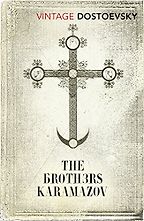
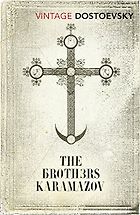
Dostoevsky’s great novel The Brothers Karamazov is seen by many as being all about an exploration of the existence of God, so what made you choose it?
Yes, this might seem an odd choice for a list of books about morality without God. Dostoevsky was a devout Christian and The Brothers Karamazov, his last and possibly greatest novel, was a heartfelt plea for the necessity of faith. The phrase “If God does not exist, everything is permitted” is often attributed to Dostoevsky. He actually never wrote that, but the sentiment certainly runs through much of his work, and most especially through The Brothers Karamazov. But if Dostoevsky wanted to warn of the moral perils of godlessness, he was nevertheless also unflinching in his portrayal of the dilemmas facing believers. So much so that The Brothers Karamazov can be read as much as a novel of disbelief as of belief.
Tell me about some of the characters in the book.
The novel is built around the emotional and intellectual rivalries of the three Karamazov brothers – Dimitri, Ivan and Alyosha. Out of these rivalries Dostoevsky creates a passionately spiritual drama about God, faith, doubt and reason, set against the background of the social fragmentation of a Russia attempting to move from a feudal to a modern world. The key debate takes place between Ivan, a fervent rationalist and would-be philosopher, and Alyosha, a gentle, generous, almost Christ-like figure, who is a novice in a monastery. Ivan refuses to accept God’s authority because He has created a world full of undeserved suffering. “It is quite impossible to understand,” he observes, why the innocent, especially children, “should have to suffer and why they should have to purchase harmony with their sufferings”. He adds that “if all the sufferings of children have gone to replenish the sum of suffering that was needed in order to purchase the truth, then I declare in advance that no truth, not even the whole truth, is worth such a price”.
What about the parable of the Grand Inquisitor?
It’s the most celebrated section of the novel – and perhaps the most ambiguous in its meaning. In the parable, told by Ivan to Alyosha, Christ returns to earth during the time of the Spanish Inquisition. He is arrested by the Inquisition and sentenced to be burned at the stake. Christ’s work, the Grand Inquisitor tells him, is at odds with the vision of the Church. In resisting the temptations set by Satan, Christ introduced the idea of free will into the world. But Christ misjudged human nature. Humanity can never be free, for it is “weak, vicious, worthless, and rebellious”. Free will is a devastating, impossible burden for mankind. “Didst Thou forget that man prefers peace, and even death, to freedom of choice in the knowledge of good and evil?” the Grand Inquisitor demands of Christ. Nothing, he says, “is more seductive for man than his freedom of conscience, but nothing is a greater cause of suffering”.
In giving humans freedom to choose, Christ has excluded the majority of humanity from redemption and doomed it to suffer. Far better, the Grand Inquisitor insists, for Christ to have given people security rather than freedom. Those too weak to follow Christ might still be damned, but at least they would have found happiness and security on Earth, rather than being forced to carry the impossible burden of moral freedom. The Church has “corrected Thy work”, the Grand Inquisitor tells Christ, by taking away freedom of choice and replacing it with security, by rooting human life not in freedom but upon “miracle, mystery, and authority”.
The parable, like the novel, is complex, intricate and subtle, and lends itself to many readings. Dostoevsky himself appears to identify the Grand Inquisitor with atheism – he draws parallels between Alyosha and Jesus, and Ivan and the Grand Inquisitor. Without God, he seems to suggest, there is no possibility of moral choice and therefore no possibility of freedom. Atheism buys security at the expense of morality. Yet this is a reading that sits uncomfortably with the idea that if God does not exist, then everything and anything is permitted. God, in other words, is a form of security, an insurance that while humans may have moral choice they are also constrained in the choices that they have – and in being able to define what is good.
Do you think that the parable can be read in a different way?
If freedom is what truly defines humans, so much so that it should take precedence over security, then of course, it should also take precedence over the security provided by God. For freedom to be truly freedom, it cannot be freedom given by God, it must also be freedom from God. Freedom is not simply the freedom to choose whether or not to accept divinely sanctioned moral rules, but to set those rules themselves and to define what it is to be good. In other words, the freedom to set our own boundaries not have them set for us. It is to accept that the human condition is that of possessing no moral safety net, no God to protect us from the dangers of falling off the moral tightrope that is to be human. And that is the argument that is made in my fifth choice.
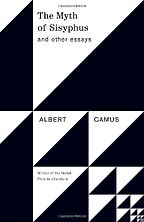
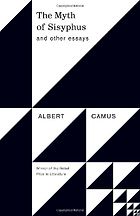
Which is Albert Camus’ The Myth of Sisyphus.
The Myth of Sisyphus is a small work, but Camus’s meditation on faith and fate has personally been hugely important in developing my ideas. Writing in the embers of World War II, Camus confronts in The Myth of Sisyphus both the tragedy of recent history and what he sees as the absurdity of the human condition. There is, he observes, a chasm between the human need for meaning and what he calls “the unreasonable silence of the world”. Religion is a means of bridging that chasm, but a dishonest one. “I don’t know if the world has any meaning that transcends it,” he writes. “But I know that I do not know this meaning and that it is impossible for me just now to know it.”
Camus does not know that God does not exist. But he is determined to believe it, because that is the only way to make sense of being human. Humans have to make their own meaning. And that meaning can come only through struggle, even if that struggle appears as meaningless as that of Sisyphus, who, having scorned the gods, was condemned by them to spend eternity in the underworld, forever rolling a rock to the top of a mountain.
The certainties of religion provide false hope, and in so doing undermine our humanity by denying human choice. So do any other false certainties with which we may replace religion. For Camus, religious faith had to be replaced neither with faithlessness, nor with another kind of false certainty, but with a different kind of faith – faith in our ability to live with the predicament of being human. It was a courageous argument, especially in the shadow of the Holocaust. And it is an argument that remains as important today as it was then.
September 23, 2019
Five Books aims to keep its book recommendations and interviews up to date. If you are the interviewee and would like to update your choice of books (or even just what you say about them) please email us at editor@fivebooks.com