Nonfiction Books » Science
Kenneth Miller recommends the best Arguments against Creationism
Biology professor—and Catholic—Kenneth Miller tells us what we should read to understand the battle being fought between scientists and creationists.


Biology professor—and Catholic—Kenneth Miller tells us what we should read to understand the battle being fought between scientists and creationists.
Before we look at your five book choices, can you tell me a bit more about where you stand in the argument against creationism?
It is really very simple. Like most scientists, I understand the evidence that has been marshalled in support of the theory of evolution. I find the evidence convincing. I find it has predictive power, and also that evolution is the thread by which we tie everything together in life science. A famous biologist once wrote that nothing in biology makes sense except in the light of evolution. And that is absolutely, positively true.
In the States, the word “creationism” is understood to mean the belief that the earth is 6,000 or 7,000 years old, that all living species were created at pretty much the same time, and that the geological formations of the planet do not reflect the world of the past but are simply artefacts of the worldwide flood. And there is this belief that the mechanism of evolution simply doesn’t work. That is what creationists believe, and on every single one of those central points the creationists are wrong. I think the creationists arguments against evolution are wrong scientifically.
Which is interesting because you are a Catholic, but you see your faith as being outside the scientific debate surrounding creationism.
I certainly do, and the important thing on the issue of creationism and faith is a very simple point – that the creationists, or for that matter advocates of intelligent design, would argue that natural processes alone are not sufficient to bring about the world of life as we know it. And I maintain, as I think nearly all scientists do, that natural processes alone are indeed sufficient to bring about the world as we know it. You couldn’t have a starker difference. So where does religion fit into that? Essentially, any person of faith believes that the very existence of those natural processes have to be explained one way or another. And their explanation is the hypothesis of God.
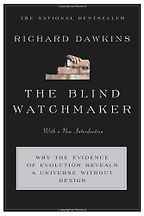
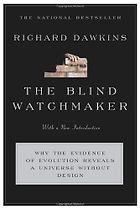
Your first book choice, The Blind Watchmaker, is by the leading British atheist Richard Dawkins. He argues that the only watchmaker in nature is the blind force of physics, rather than a creator who puts us together.
I think that is right. I was torn between two of Richard’s books to recommend. The first one is really a classic, and that is The Selfish Gene. The Selfish Gene is an extraordinary book and I always recommend it to people who want to understand the way in which evolution can grapple with the question of self-sacrificing, altruistic behaviour, because many people regard this as a fundamental problem for evolutionary theory. What Richard did brilliantly in The Selfish Gene was to popularise the ideas of WD Hamilton and others, that explain altruistic social behaviours in terms of kin selection. I am not an evolutionary psychologist, but social behaviour is one of the most fascinating things in evolutionary theory, and Richard’s explanations in The Selfish Gene have stood up very well.
In the Dawkins book I chose, The Blind Watchmaker, he brilliantly explains how complex mechanisms and structures are put together by the process of evolution. It is true that he makes certain theological points that I don’t agree with. In particular, he equates virtually any belief in God with creationism.
Which is not the case, especially from your point of view.
Indeed. I certainly think that is an over-simplification and an invalid connection, but that doesn’t detract from the brilliance of the book. One of my favourite examples is a discussion he puts forward on the evolution of the bat’s auditory system. Bats, as I think most people know, are able to fly about in near total darkness because they use a kind of sonar. They have specialised hearing apparatus and use hearing rather than sight to help them navigate. Creationists might wonder, how could evolution ever produce the integrated system of sound production?
But as Dawkins explains, pretty much all living beings have some ability to do this, and evolution has built upon those basic capabilities. One of the ways in which I demonstrate this to my students is by having one of them come up on stage, I place a blindfold over their eyes and spin them around two, three times. Then I move the large blackboard very close to them and ask them where the blackboard is while they still have their blindfold on. They are not allowed to touch anything, but simply by using their voice and the reverberations it causes they are easily able to locate the blackboard. Richard’s point is that the rudimentary ability to carry out this function is something that many animals have. What natural selection can do is refine that ability – to make it better and better, and eventually evolve it to perfection.
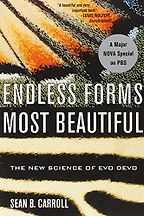
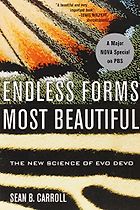
Next up is Sean B Carroll’s Endless Forms Most Beautiful, which explores evolutionary developmental biology. Can you explain what that is?
Sean Carroll is a developmental biologist. He uses molecular techniques to study the ways in which the embryo develops and uses specialised tissues and structures. His book actually comes, he claims, from a question one of his children asked him. The question was: Is the zebra a white animal with black stripes, or a black animal with white stripes? Which when you think about it is a very interesting question. This field in which he is a pioneer is sometimes called “evo devo”.
Which is seen as a red-hot field in science at the moment.
It has indeed become a red-hot field, and is properly known as evolutionary developmental biology. It has become a hot field because the molecular tools by which we analyse development have now got to the point where we can merge them with the study of transformation in fossils – in terms of the way in which certain organisms have developed in structure and patterns. Sean Carroll popularises – and I mean that in the very best sense – some of the most difficult and interesting findings in evolutionary developmental biology. He explains, in a very easy to understand way, the way in which intricate patterns in butterflies come about through the interaction of just a handful of genes, and how very slight changes in some of those genes can result in quite different patterns. It is top-notch research biology.
The title of his book comes from the final chapter of Charles Darwin’s The Origin of Species, which has the phrase: “From so simple a beginning endless forms most beautiful, most wonderful, have been, and are being, evolved.” If a reader wants to know what is going on in molecular biology that is expanding our understanding of the theory of evolution, you could do no better than to read Sean Carroll’s book.
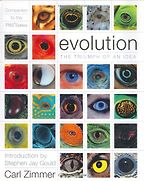
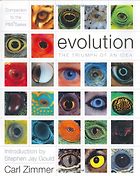
Your next choice, Carl Zimmer’s Evolution, charts how evolution has become one of the most important ideas in history.
This book is an unusual recommendation for me because it was written on commission. About a decade ago, the [PBS] scientific documentary television series Nova put together an eight-hour series called Evolution.They had some help from the BBC with this. They felt that they needed a companion book for the series. So they knocked on the door of the person who is, in my opinion, the best science writer in the United States – Carl Zimmer.
High praise.
Yes, and they asked him to write the companion book. These kinds of books can be deadly dull, but not in the hands of Carl. He took the seven programmes in this series, described them but also amplified upon them. In this book the reader gets an idea as to how pervasive and influential evolution has been as a guiding principle in the study of natural history, of behaviour, of our understanding of human sexuality, and in our efforts to combat infectious diseases.
And also in our efforts to understand how we care for our children. A lot of research to do with that comes from studying how other species do it.
Absolutely. One of the most overriding things about our species, Homo Sapiens, is the way in which we form cohesive social groups, beginning with members of a family looking out for each other. And this, too, lends itself to an evolutionary explanation. Finally, in the last chapter of the book, “What about God?”, Zimmer looks at religion. This, and the final programme in the television series, explore some of the conflicts that swirl around evolution, especially the teaching of evolution in the United States. Zimmer’s book is to be recommended for the broad scope that it gives to the influence of evolutionary ideas in modern biology. It is brilliantly written and above all it is profusely illustrated – a great “coffee table” book. It is a book you can lay on the table and let visitors leaf through and chat about, enjoying the pictures and the fine prose at the same time.
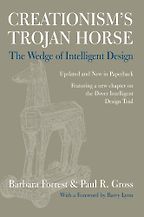
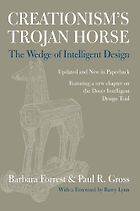
Creationism’s Trojan Horse: The Wedge of Intelligent Design
, by
Barbara Forrest and Paul Gross, is very critical of the whole intelligent design movement, which is often described as creationism in disguise.
Yes, that is true. The two authors of this book have spared no effort to research the rise of the movement called “intelligent design” in the US. This is not an entertaining book in the way that my first three choices are. It is an academic book which was put together with exhaustive research and very thorough documentation. But the importance of this book, in terms of understanding the intelligent design movement in the US and in Europe, cannot be underestimated. The authors have documented a series of very conscious, deliberate moves by the advocates of creationism in the US to re-label and re-brand creationism in a way that might be more politically and legally acceptable. As this book demonstrates, there is precious little science behind the intelligent design movement, but there is a great deal of politics and religion.
And a lot of clever spin, the critics would say.
Oh, indeed. One of the things that I have found on the occasions when I have travelled to Europe is that many intelligent and influential people on the continent and in the UK look at the intelligent design movement as something quite different from what I would call good old-fashioned creationism. They have been taken in by the idea that this is a genuinely new idea, that it goes back to Aristotle and therefore is somehow respectable and something people should be looking at. This book is a fine antidote to intelligent design because of the way in which it documents the movement’s origins, tactics and ultimate motives.
Your final choice is
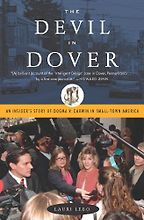
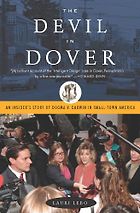
The Devil in Dover by Lauri Lebo. The book takes a look at the court case described by some as the perfect storm of religious intolerance. Now I know you were involved in this court case so what do you think?
Six years ago, Lauri Lebo was a local reporter for the York Daily Record, which is a small newspaper in Pennsylvania. TheYork Daily Record served the town of Dover where a major confrontation between evolution and intelligent design was taking place. The local school board required the teachers in high school to prepare a curriculum on intelligent design. The teachers refused, the board insisted and it ended up in court. The lawsuit was filed by 11 parents. Lauri reported on every aspect of that trial and at the end wrote this marvellous book, The Devil in Dover. To date, four books have been written on the court case but this is the best.
Because it is very personal, isn’t it?
That’s right. It doesn’t just recount what happened in the court room. Because Lauri is a resident of this area and knows protagonists on both sides of the issue, she was able to explain, in a very sympathetic way, the motivations not only of the teachers and parents who stood up for good science and evolution, but also the motivation of the pro-intelligent design people. There were really three stories in this trial. One was the legal argument around the first amendment to the US Constitution, which is what mattered to the court. Second were the scientific arguments around evolution, and third was the personal story of how this issue divided a small town. It is lively, well-written and for any of your readers looking for insight into the character of this debate in the US on a very personal level, you couldn’t pick a better book.
We have lots of readers in the States as well as the UK. Why is this an issue which is so big in the US in a way it isn’t over here in the UK?
There are two reasons. The US is still a very religious country, and as long as you have a third of Americans being told when they go to church on Sunday that evolution is a plot to deprive them of their immortal souls, this is going to be a controversial issue. The second element which is different from the UK and Europe is that education in the US is a local function. That means that, in addition to being concerned about this issue, Americans everywhere think they have the right to control it in their local school. That empowers them to think: We don’t care what the authorities at Harvard, Stanford or Chicago have to say, in our schools we are going to teach whatever we want. For better or for worse, that is part of the American character.
October 12, 2012
Five Books aims to keep its book recommendations and interviews up to date. If you are the interviewee and would like to update your choice of books (or even just what you say about them) please email us at editor@fivebooks.com
Support Five Books
Five Books interviews are expensive to produce. If you've enjoyed this interview, please support us by donating a small amount.

Kenneth Miller
Kenneth Miller is a biology professor at Brown University. He is particularly well known for his opposition to creationism, including the intelligent design movement. He has written two books on the subject: Finding Darwin’s God which argues that a belief in evolution is compatible with a belief in God, and Only a Theory, which explores intelligent design
Kenneth Miller
Kenneth Miller is a biology professor at Brown University. He is particularly well known for his opposition to creationism, including the intelligent design movement. He has written two books on the subject: Finding Darwin’s God which argues that a belief in evolution is compatible with a belief in God, and Only a Theory, which explores intelligent design
© Five Books 2025