You won the 2008 Thurber Prize for American Humour. Do you believe humour writing is a distinct genre?
I don’t know if it’s a distinct genre, but I do know that it doesn’t get respected outside of things like the Thurber Prize. It’s the same in movies and on TV. When was the last time a comedy won an Oscar? When was the last time a comic novel won a Pulitzer prize? I wonder if even Mark Twain would have been respected today, given that much of what he wrote was regarded as pure comic entertainment. There are a lot of “serious” novelists writing things that they think are humorous but just aren’t. And there are great comic novelists who were never really respected.
You’ve said that being funny is a craft. Can you share some guild secrets?
One secret is to have sarcastic parents. Apparently, ending up funny is one potential upside of being teased by your parents. If you didn’t grow up in a comic household, you can try to catch up by reading. Reading a lot of comic writing gives you a sense of the rhythms of it. The final secret is just do it, over and over and over again. But comic writing isn’t for everyone. Almost anybody thinks they can write comedy, but the Internet is littered with evidence that that is just not so.
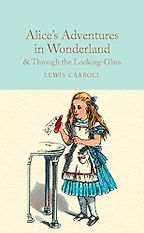
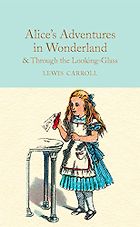
Your first book choice is surprising – I think of it as a children’s book not a comic one. Why did you pick Alice in Wonderland by Lewis Carroll?
I’m reading it to my seven-year-old twins, one of whose name is Alice so it’s easy to get her to listen. It’s about, of course, a girl who falls down a rabbit hole into a strange world populated by strange creatures. You’d have to be a zombie to miss the humour in it – it’s hilarious. Although the book is ancient [1865] the humour feels modern. It’s also very dark. I can’t tell you how many jokes there are about dead children in it.
Did you see it as comic writing when you first read it?
I first read it as a child and again in college. Rereading it now, I realise a lot of my comic style comes out of that book. Carroll understates everything. It’s filled with phrases like “if I should fall on my head I don’t think I’d have much to say about it” – which would certainly be true because she’d be dead.
I guess the Cheshire Cat and the Mad Hatter are pretty funny characters. Carroll was seen as part of a trend of 19th century “nonsense literature”.
The problem, when people talk about humour, is that it becomes so dreadfully serious.
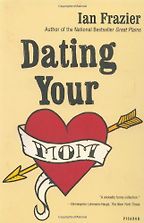
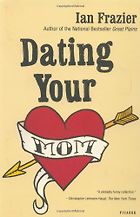
Well before that happens, let’s turn to two collections of short fiction. Dating Your Mom is a collection of Ian Frazier’s comic pieces from the 1970s and 1980s, most of which were first published in The New Yorker.
Ian Frazier is a master of short humour writing. I picked this book because it was the first one of his I read. The piece “Dating Your Mom”, for example, is quite literally about romancing the woman who gave birth to you. It’s an absurd and even disturbing idea, but it’s done in such a cheerful way that it never seems naughty. Frazier points out what the plus sides of dating one’s mom would be – potentially getting pushed around in a stroller, for instance.
There’s another story in there about a guy raised by wolves, adjusting to human customs, and his wolf father shows up every once in a while in the night with a dead deer to show him where all the fatty parts are. It’s filled with wildly inventive and funny comic essays. Frazier has three or four collections out now, and I’d recommend every one.
Frazier is also known for his more serious work.
He’s written for The New Yorker and The Atlantic for years and years, and he just wrote a book called Travels in Siberia. But for me, he is the master of what The New Yorker calls “the Casual”. I learned how to write Casuals from reading his. He writes something that sounds simple, even a single note idea – like dating your mom – and then he twists it so you never see what’s coming, and in retrospect the whole concept seems to make some sort of sick sense.
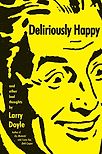
You’ve just published your first collection of short pieces, Deliriously Happy. How did you decide what made the cut?
Anything that wasn’t really embarrassing. I had stuff going back 20 years, so I was somewhat choosy. I cut out what I wasn’t proud of and whatever didn’t make sense anymore. It’s organised in chronological fashion – not in the order I wrote them but in order of the periods of our life cycle they concern. Then there’s a section in the book called “Pieces Left Out of the Collection”, where I put things that didn’t fit naturally into the timeline.
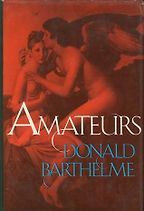
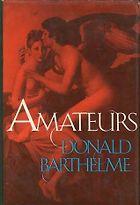
You also chose a 1976 collection of stories by the writer Donald Barthelme. What prompted you to pick Amateurs?
This was the first work by Barthelme I read. I read it in college on a bus trip. I spent 16 hours travelling to see a girlfriend in Canada, who broke up with me as soon as I arrived. It was tragic. Amateurs leavened the return trip a bit.
It’s a collection of his prime satirical – as opposed to experimental – pieces. There are really fun essays like “Some of Us Have Been Threatening Our Friend Colby”, which is an offhand account of some guys getting together and stringing up their friend because he had “gone too far”. It’s never quite made clear what Colby had “gone too far” about.
Five Books interviews are expensive to produce. If you're enjoying this interview, please support us by donating a small amount.
Or there’s another piece called “I Bought A Little City”, in which the protagonist buys Galveston, Texas, and it seems like kind of a weird thing. And he says, “Then I went out and shot six thousand dogs.” Some guy comes up to him and says, “Could you shoot my dog?” And he says, “Mr. I love dogs.” So offhand and yet so funny.
Barthelme is more strongly identified with the postmodern tradition than the tradition of comic writing. I’d turn to him for fragmented narrative and philosophical thoughts, not for laughs. Please tell me why I’m wrong.
You’re not. That’s most of what Barthelme wrote, but in the beginning of his career he published a number of books that were wildly entertaining. Even The Dead Father is really entertaining. Once we get into Great Days we start seeing fragmented, dialogue-based stories that seem to be about philosophy.
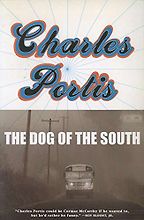
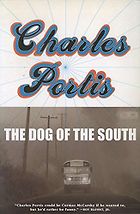
Let’s get to the novels. Charles Portis has been called America’s “least-known great novelist”. He is best known for the bestseller True Grit. You chose his novel Dog of the South, first published in 1979.
Dog of the South doesn’t really add up to much, plot-wise. The plot of the book is the protagonist following his wife who has run off with her first husband. He goes after them, mainly to get the car back. I don’t think he ever catches up with them, but it’s an amazingly funny chronicle of his adventures on the road. In one chapter he goes on for several pages about a deer head mounted above a bar along the way, and whether the deer is degraded by the cigarette dangling out of its mouth – he wants to stand on the bar and slap it out. So the protagonist is narrating the comic scenes that play out in his head as he drives down to Mexico.
The critic Ron Rosenbaum calls Portis “an American analogue of Gogol, both hilarious and profound”.
I don’t agree with that. Ron Rosenbaum likes making pronouncements, doesn’t he? I saw him taking credit for Steve Jobs recently. Comic novelists make profound statements in the context of their writing. Portis is a great stylist and he deals with interesting issues, but I wouldn’t call him any more profound than Jasper Fforde, who wrote The Eyre Affair books, or Max Barry who has written a number of books including Company. These are guys who do great work, but you don’t ever see them being lauded. The Ron Rosenbaum essay you’re quoting brought Portis out of obscurity. I agree he’s a great writer. But to say that he’s a great comic writer and profound is almost redundant. You kind of have to be profound to be a great comic writer.
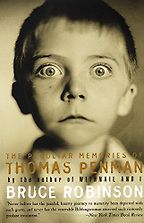
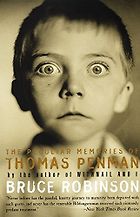
Bruce Robinson’s scatological coming-of-age story The Peculiar Life of Thomas Penman is your final choice. What is it about and why is it so worthy?
It’s a coming-of-age novel set in coastal England, filled with wonderful scenes and wonderful characters. The main character is a little kid with a poop problem. The first pages are about him getting over his obsession with leaving excrement in public places. It couldn’t sound less appealing but it’s so well done. The rest of the novel is more standard fare. The kid’s got this great relationship with his grandfather, a World War II veteran whom he communicates with via morse code even though they’re a half-building apart. He tries to teach himself key-making for the sole purpose of breaking into his grandfather’s copious pornography collection. There are parents at war with each other, and a girl he’s trying to get to know. It’s a beautifully done exploration of what’s funny and what’s not about adolescence.
Like you, Robinson also wrote for the screen. Does writing scripts for The Simpsons and movies, as you have, pose different challenges from writing novels or short prose?
Robinson wrote screenplays for films as serious as The Killing Fields, but he also wrote and directed Withnail and I which may be one of the funniest movies ever made. He just recently wrote and directed a new Johnny Depp movie called The Rum Diary, based on the Hunter S Thompson book.
The big difference between writing for readers and writing for the screen – aside from the fact that you get paid a lot better for one than the other – is that when you’re writing a book or a Casual for The New Yorker, you’re the author. People can like or not like it, but generally the final product is within your control. When you’re writing movies or television you are, at best, the person who is helping someone else get written what they want to get written. At worst, you’re like a monkey trained to type. You’re not the author – not legally or in any other way. The studios own the copyright.
Writing for Hollywood can be fun and it can certainly be rewarding, but when you write a book it’s your book. If you write a movie, unless you’re the writer/director and you have a certain amount of clout, it’s not your movie – even if the idea for a movie is yours. I had two original ideas which were made into movies. One was Duplex, directed by Danny DeVito with Ben Stiller and Drew Barrymore. The other was I Love You, Beth Cooper, based on my novel, which Chris Columbus directed. If either of those movies had been wildly successful, they would routinely be referred to as “Danny DeVito’s Duplex” or “Chris Columbus’s I Love You Beth Cooper”. The authorship is just not yours, even though both started with my completely original creations.
In his interview with us, Woody Allen noted that there are fewer outlets for comic writing today, and even The New Yorker has narrowed its hole for humorous prose. Is comedy doomed?
Everything is doomed, isn’t it? Is there any medium now that they’re not saying is doomed? Music is dead, magazines are dead, newspapers are dead. It is true that there used to be a lot more printed humour writing. Every magazine ran it and many newspapers even had a humour columnist. In The New York Times, for a long time, Russell Baker basically did a humour column.
Get the weekly Five Books newsletter
At the same time, today you have a huge amount of humorous content on television and online. When I was a little boy, the only topical humour you would hear would be from Johnny Carson on The Tonight Show. Now, every night there are six of those guys (all guys) doing jokes off the news. And then you have all of these websites that take a humorous look at the news.
For short comic fiction, The New Yorker is the only place left that runs it and Woody Allen is right – they used to run 2,000-word-long humorous stories, now they almost never run more than a thousand. So that limits the kind of piece that can get in there. My first piece that got into The New Yorker was 1,500 words long. It’s unfortunate, but things change. Then again, we didn’t have iPads when I was a kid and now I have an iPad. So maybe it’s even.
Five Books aims to keep its book recommendations and interviews up to date. If you are the interviewee and would like to update your choice of books (or even just what you say about them) please email us at [email protected]