What are you looking for in a political biography?
I’m looking for history presented in an exciting way. I think writing history about people is a good way of making it palatable. We are all spoilt nowadays, we want everything to be easily digestible and most of these biographies are just that. The authors have taken trouble to appeal to a particular audience.
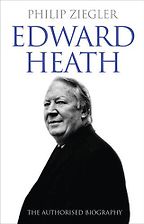
Well, let’s start with your first book, Edward Heath by Philip Ziegler, which is all about the political drama of the 1970s.
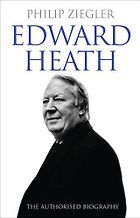
I worked for Ted Heath for nearly eight years so I knew him well and I admired him and I liked him, so that is why I selected this book. I also know Philip Ziegler quite well, so I was interested to see what he made of Ted Heath who really isn’t an easy subject, because he has the reputation of being bad-tempered and churlish. But there was another side to him that doesn’t usually come out and I think Philip has brought that out quite successfully.
What was the other side?
The other side was that he had a strong sense of humour – he made people laugh. He was very generous in certain ways. He was generous with his time and people enjoyed working for him. He had a certain magnetism and people were attracted to him. Other people were repelled and that’s the problem.
Why?
Because he was brusque. If you were a lady sitting next to him at dinner at some big Tory dinner you couldn’t be sure that he would actually converse with you. He might just stare at his plate or eat his supper without giving you much of a conversation. When I worked for him this was one of our problems. We had to encourage him to be nice and forthcoming and chatty which didn’t come easily to him because he was by nature rather reserved.
And he wasn’t much of a fan of Margaret Thatcher, was he?
He wasn’t, no. He behaved worse to her than she did to him. He thought it was wrong of her to put herself forward in 1975.
Because she was a woman?
Not because she was a woman, but because he thought she wasn’t up to the job and he never changed his mind.
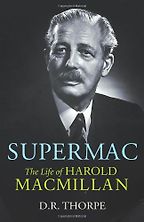
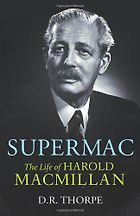
Your next book, Supermac by D R Thorpe, is all about Harold Macmillan.
Harold Macmillan was the Conservative Prime Minister from 1957 to 1963. And the title of the book is taken from the Vicky cartoons of Harold Macmillan in his prime. He did for a time give the impression that he was in charge of everything. He was unflappable and was not thrown off his balance by anything. But, actually, those who worked for him knew that wasn’t true. There were things that threw him off his balance. He had a strain of pessimism in him which meant that he always saw the worst of a situation and that threw him. He appeared to be languid and very self-contained but there were strong emotions bubbling away below the surface.
And he had an interesting background. His father-in-law was a duke and yet he was a crofter’s great-grandson.
Absolutely. He was an actor and he played the parts in turn. Sometimes he was a grandee and sometimes he prided himself on being, as you say, a crofter’s great-grandson. So he was very popular for a time but then things went wrong. We had the Profumo scandal in 1963 and he wasn’t at ease with the younger generation. He didn’t understand the world in which Profumo and Christine Keeler lived. He was not at his best and he didn’t handle that with his usual mastery.
He was one of the few people who stood up to Churchill and told him it was time to go.
Yes, he did do that. He didn’t lack courage. He was wounded in the First World War. But the business of being an actor really prevailed. For example, he lived for a long time after he resigned and he played at being a very, very old man and he had affectations and ways of speaking which were brilliantly satirised in the TV programme That Was The Week That Was. And he played different parts, as an actor does.
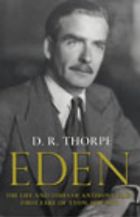
Your next choice is Eden: The Life and Times of Anthony Eden, First Earl of Avon, 1897-1977, which is also written by D R Thorpe.
D R Thorpe is a good example of something that British writers are good at, which is writing the story of history and the story of their times through the lives of particular individuals. I think we have got a string of authors now who are really producing very good work and I would include myself in that category. I thoroughly enjoyed writing the life of Peel and I am now enjoying writing the life of Disraeli and trying to make them palatable and interesting to people who don’t study history.
It’s all about getting the human interest story, isn’t it?
Yes it is. And with this book, Eden, it is a straightforward biography. It doesn’t gloss over the bad sides of him as a person. Eden had a bad temper and he was vain. But he was also an extremely skilful diplomat. He was Foreign Secretary when I joined the Foreign Service in 1952 and we admired him very much. He knew about negotiation. He knew how to get the best out of a situation and then in the end, of course, he became Prime Minister and he threw it all away. He made a mess of the Suez affair. All that is very fairly dealt with in Thorpe’s book.
It’s strange that he threw it all away if he was meant to be so good at negotiating and diplomacy.
It is indeed strange. He was ill much of the time and he just lost his balance. He started comparing the Egyptian President Nasser, who had nationalised the Suez Canal, to Hitler and Mussolini which was really absurd. He lost his balance, became ill and had to resign.
What do you think makes for a good Foreign Secretary?
I think you have to keep your balance. I put that very high. You have to be prepared to listen. A Foreign Secretary finds himself meeting some very disagreeable people. That is part of his job. And he has to put up with that and he has to listen carefully and know what he is talking about. He has to master his brief. If he has got those qualities it is a marvellous job.
And also they need to keep the best interests of Britain at the heart of everything.
Yes, that is what it is all about. The job is twofold. First of all you need to keep the interests of Britain at the centre of your life and, secondly, to try and help to create a slightly more decent world.
And what do you think of all the revelations coming from Wikileaks at the moment. Is that damaging diplomacy?
I think they are a pity. Not because they are disaster. They are not a disaster. Most of the leaks are about purely trivial things. And they don’t really matter a damn. But they are undermining the trust with which people talk to each other. And that in the end is a bad thing.
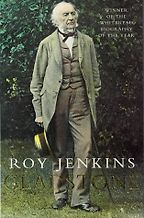
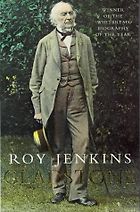
Your next choice is all about Gladstone, the man who was Prime Minister four times. And it is written by Roy Jenkins.
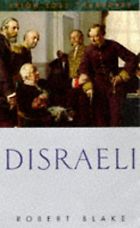
And my last choice is about Disraeli. Gladstone and Disraeli were the two boxing champions of the Victorian era. They disliked each other and they fought each other. They were in and out of power in turn. They were both very capable people. Disraeli didn’t smile or laugh much. But he was a brilliant orator. And Gladstone lost control of himself a bit. He got in a very bad temper from time to time. They were both intelligent people but they didn’t get on with each other at all.
And what new light does Roy Jenkins shed on Gladstone?
I think Roy Jenkins is too kind to Gladstone. I think Gladstone had his faults and I think Roy is slightly too favourable towards him. If you are writing a biography you need to like your subject – it is a mistake to write a book about someone you dislike. But you do need to balance that. You mustn’t go overboard and praise him for things that weren’t so.
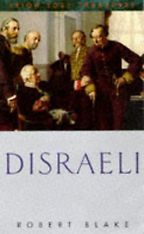
What about Robert Blake on Disraeli, because this book is described as one of the finest biographies ever written.
Well, that is a brilliant book. I am actually writing a book about Disraeli now and I use Robert Blake – of course I do. But I am trying to give Disraeli a slightly different flavour. And whether I will succeed or not I don’t know. But I know that it is going to be difficult, coming after Blake.
So what kind of flavour are you trying to give him?
Well, I am trying to ask why it is that this man, who had all kinds of faults and a very dubious background in certain ways, has such a hold over the Tory party. The myth is a very, very strong one. People are always quoting him and he is very quotable and that is one of the good things about him. But, like Macmillan, I think he was quite an actor. A lot of the roles that he took for himself didn’t really carry conviction.
Out of all of the characters that we have been talking about who do you admire most as a politician?
At the moment I admire Disraeli because I’m writing about him. They all have faults, but Supermac would be my choice.
And would you ever be tempted to write a book about Margaret Thatcher?
I don’t think I will. Lots of people have done that, she has done it herself, and lots of people will do it. It was an extraordinary thing working for her. I thoroughly enjoyed it but I think that will be a crowded space.
Five Books aims to keep its book recommendations and interviews up to date. If you are the interviewee and would like to update your choice of books (or even just what you say about them) please email us at editor@fivebooks.com
Five Books interviews are expensive to produce. If you've enjoyed this interview, please support us by donating a small amount.