Some of your book selections might not be thought of as traditional biography. What ties them all together?
These five all stretch the genre of biography. I’m interested in the frontiers of biography and where the genre can go. It’s a very old genre. There are traditional ways of doing biography, and every age had its own format. The Victorians had their two-volume life and letters, usually quite hagiographical. “Full-scale biography” was the admiring term, and it led to larger and larger biographies which tried to incorporate every factual detail – to be the last word on a life. But the examples I picked move the genre on from the traditional vast tome, which is highly sequential – pedigree to grave.
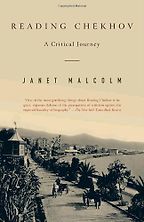
There is no such a thing as a complete life. It was a fiction of the marketplace. If you look at your own life and try to tell the whole truth about it, you can’t. There’s no way. I’m in sympathy with those who question it. For instance Janet Malcolm, in Reading Chekhov, quotes at length from The Lady With the Dog, a story set in Yalta. Malcolm is proposing that there is no way that we can know Chekhov – he was a reserved person – but that there is a kernel of his inward life that she can get at. She quotes Chekhov writing about one of his characters, but implies that this is Chekhov’s own voice:
“He had two lives: one, open, seen and known by all who cared to know, full of relative truth and of relative falsehood, exactly like the lives of his friends and acquaintances; and another life running its course in secret. And through some strange, perhaps accidental, conjunction of circumstances, everything that was essential, of interest and of value to him, everything that made the kernel of his life, was hidden from other people; and all that was false in him, the sheath in which he hid himself to conceal the truth – all that was open. And he judged of others by himself, not believing in what he saw, and always believing that every man had his real, most interesting life under the cover of secrecy and under the cover of night. All personal life rested on secrecy.”
I was delighted to come across this, as I began writing about TS Eliot with a similar assumption – that there was an inner life somewhat at variance with a strong façade.
So what is the essential purpose of biography? Is it to document a life or to explore that inner kernel?
That’s the question. If it’s a biography of a public figure active on the stage of history, then you will want to document. And documentation is part of it. If a poet writes a sonnet, it’s part of the intensity of that form that there are very strict rules. And there are strict rules of biography – you have to authenticate facts, you have to include that detailed back-matter to tell the reader where a fact comes from. On the other hand, documentation alone is inadequate for the kind of biography that interests me. You need some shell of the public life, but the deep matter of the biography is the “private life” that Henry James talks of – he meant the writer’s life, the inward life.
“If biography is to be an art, language is important. It’s not just facts, it’s how they are stated.”
And although it’s what one aims for, it’s impossible. The honest biographer would admit there’s no way you can fully reach that. It dies with the person. One of the most succinct statements of that is in a letter of Emily Dickinson’s. She said that “abyss has no biographer”. And that’s the problem. But not to attempt the abyss seems to me to miss the point.
And why should we read biographies at all? What is the reader’s harvest from them?
For me there is a fascination with character. You could say that novels are more enjoyable reading, but I’m interested in the authentic. And with literary figures there is always an interest in the work, in what is permanent in a life. For me that was always a starting point. I was captivated by a work, and wanted to understand how it came into being. TS Eliot famously posited the separation of the man and the work, but I think that was Eliot’s blind, his work is in fact quite autobiographical. And obscure lives are potentially as interesting as famous lives, except that with obscure lives the chances of material are slimmer – there have to be diaries or letters.
Above all there is curiosity, and a detective aspect to biography that is inescapable. Otherwise you’re just plodding along. You are fascinated to know how this life came to be. What is the plot of this life? There will be a plot imposed by circumstance but also, if it’s an imaginative person, they will have some conception of a life in mind. There’s something that Yeats says in A General Introduction to My Work: “The poet is not the muddle that most of us are when we sit down to breakfast. He’s reborn as an idea, something intended, complete.” He’s saying that there’s a conceived life. And that’s why I’ve added Eliot to the list. More than any of the other subjects that I’ve picked, Eliot has a predetermined pattern, which is the spiritual journey, the soul’s journey. And that’s why Dante is so important to him.
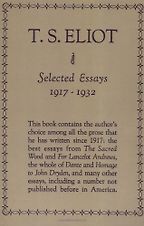
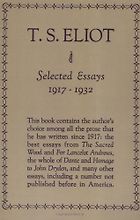
Let’s begin with Eliot then. His essay on Dante can be found in his Selected Essays. It doesn’t strike me as biography – why is it on your list?
It’s not a biography of Dante in the ordinary sense, and I don’t think Eliot thought of it as such. I chose it because he sets out a schema that was of huge importance to Eliot’s life and achievement. You don’t have to have read Dante’s The Divine Comedy to know that the inferno is followed by purgatory followed by paradiso. Eliot argues that this is a universal life and a universal pattern, and he wanted to tap into that pattern. It’s the schema of a life which moves from a sense of sin to an awareness of a broken-down life – a Waste Land life – and which moves deliberately through a purgatorial phase of suffering. One could say the equivalent was Eliot’s poem “Ash Wednesday”. In some sense Eliot remains a purgatorial poet, always looking towards a paradiso that he didn’t attain. He shared with Dante that sense of sin and introspection. Dante was, to him, the greatest exponent of the soul’s journey.
Eliot was actually critical of biography. He thought the writing of a real experience was not exactly that experience. He would use the word “transmuted” – that it is life transmuted into art. There is a source experience, but Eliot is most interested in the act of what he calls “sublimation” – of taking the material of life and looking at its most ideal or idealised form. He is interested less in the man, more in the universal schema.
This essay is about a poet who conceives of a plot, and insists that life will fit the plot. I chose it because it is a traditional plot in biography, shall we say. It’s the plot of Exodus, of moving through a desert to a promised land. It’s the plot of Jesus’s life, experiencing temptations in the wilderness. It’s the plot of Pilgrims’ Progress, moving through a slough of despond to a celestial city. And it’s the plot of the grail quests of the Middle Ages. It’s a plot you’ll find over and over again whenever the life of the spirit is involved, a plot of suffering and of looking at one’s flaws. It’s just such a pervasive biographical plot that I had to include it in some way.
What of Eliot’s own life? For his most active years of writing, he worked in a bank.
Eliot’s life as a banker was a way of funding himself. At the same time, he’s someone who is precise, hard-working, reliable – there is that meticulous, scrupulous side to him. But there was another side, which I can’t put into words in one sentence.
Shall we continue with The Ballad of Dorothy Wordsworth?
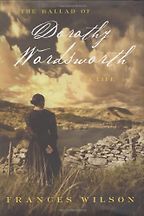
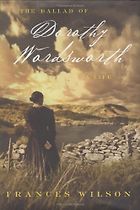
This book is a really interesting experiment. There are two things that most of us long for – creativity and depth of feeling. Most of us may not experience those two things, but Frances Wilson takes a women from the late 18th and early 19th century, William Wordsworth’s sister, who did – for a very short but intense period – experience creativity and depth of feeling. Wilson selects, with a very sharp focus, just a few years of Dorothy Wordsworth’s life, and moves quickly over what happened before and after. So it’s a satisfying biography in that you get the whole picture, but it’s not the “and then, and then” formulation of the 20th century biography. She just goes for the kernel of Dorothy Wordsworth’s life.
Perhaps I should put it in perspective. Part of the fascination is that Dorothy Wordsworth is a character you can never wholly know – and this interests me because of the kernel challenge I mentioned. She’s mysterious, you can’t typecast her, and you can’t typecast her relationship with William Wordsworth. They are brother and sister, but they were separated throughout their childhood. They were orphans, placed in different homes. All the children of the Wordsworth family were dispersed, and Dorothy had an unhappy childhood. And then, as a young adult in her early twenties, she comes together with her brother. They live together, and it’s an exclusive and indefinable union, but intensely close to what they see and feel in nature.
They practice a whole way of life together. There’s much roaming and walking – not ordinary walks but long treks in Wales or in the Lake District. Dorothy Wordsworth left a journal as well as letters, and this journal shows her as an observer of nature. It’s not an intimate, personal journal, it’s observation. And it is the material for this biography. In it, she describes the famous Wordsworth daffodils, and she uses the same words that Wordsworth does in his poem. They’re her words, perhaps words she uses to Wordsworth orally, and then he makes a poem. So it’s a symbiotic relationship from the creative point of view.
What do we know about the nature of the relationship?
That’s a question Frances Wilson addresses at length. She has a lot of domestic detail about how they lived together at Dove Cottage in the Lake District, near Grasmere – about the closeness and physicality of it. And she does put forward the question that has been around for some time: Was this an incestuous relationship? They hadn’t been together as children, they both felt akin as brother and sister, and there’s a lot of physicality. Wordsworth would lie with his head on Dorothy’s breast. They would lie together outside, close, looking up at the sky. They lived like a couple, but I was persuaded by Wilson that you can’t define it. She looks at this strange, indefinable symbiosis.
There were some blotted lines in Dorothy’s journal suggesting that she wore Wordsworth’s wedding ring to sleep the night before his wedding?
Yes, that is a wonderful detail. The climax of the biography is this statement in her journal, which is otherwise not full of personal details. She slept a good night. She rose. And then there is a dawn ceremony between them, a very strange ceremony which somebody crossed out in the journal, but which was recovered in the 1950s through infrared treatment:
“I gave him the wedding ring, with how deep a blessing. I took it from my forefinger, where I had worn it the whole of the night before. He slipped it again onto my finger and blessed me fervently.”
Now those last words, “blessed me fervently”, could have been a misreading by a scholar in the 50s, and may have read “I blessed the ring softly”. But Frances Wilson says it’s still fervent, whether it’s a misreading or not.
Wordsworth goes away and gets married, and then the crisis moment comes when Dorothy looks out the window and sees the bridal pair coming back, now married. At that moment she falls on her bed in a trance-like state. Wilson quotes a psychologist calling it a vegetative retreat – an animal curling up in the face of tragedy and disaster. It was a curious, curious thing. Dorothy was absorbed into the marriage. She is there all the time during the honeymoon. In the carriage she sits between the bridal pair. She is there, they look after her, she is beloved. She shares in the children who are born of the marriage. She has a say in their fates. Yet the great period is over, and in a way it’s also over for Wordsworth. There was the great decade, from 1795 to 1805 and The Prelude, and then he was never so great again.
Let’s turn to Reading Chekhov.
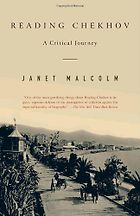
I reread much of this last night. It is a hugely fine biography and I’m a great admirer of Janet Malcolm, who is a journalist as well as a biographer. She has done something very original here. The book is called Reading Chekhov but it has the subtitle “A Critical Journey”. The word “journey” is important, because it is an intermingling of biography, travel and criticism. There is a lot of reading of Chekhov’s stories, and her footsteps approach to Chekhov worked brilliantly. She starts out in Yalta, where Chekhov was living at the end of his life – he was forced to leave Moscow because of his tuberculosis. He had the experience of living in the provinces, where he was probably longing for the capital, as so many characters in his plays and stories did.
She begins with the end of Chekhov’s life, focusing on one particular story, The Lady with the Dog, but what I enjoyed very much was the presence of Janet Malcolm herself in this biography. It’s very unusual for a biographer to do that. She tells us about the tour guides who are either guiding her well or misguiding her. Her treatment of the visit to the ersatz dacha of Chekhov’s outside Moscow was amusing and delightful. She wasn’t going to allow the guide to put it over that here we worship Chekhov, because she thinks that Chekhov wouldn’t have liked it. His real dacha had been demolished in 1920 and rebuilt, and even though it was redone tastefully it wasn’t the real thing. She found the guide there outrageous, sanctimoniously spouting the facts of Chekhov’s life without thinking it important to read him.
She doesn’t speak Russian, and is reading Chekhov in translation, right?
Yes. The reason I picked up the book – besides admiring Janet Malcolm as a writer – was the admiring reviews from Russian translators of Chekhov who thought she was a great reader of Chekhov. I went into Blackwell’s [bookshop] in Oxford to look for it, and remember causing some consternation because they didn’t know where it would be shelved. It wasn’t shelved with biography. They took the title literally as criticism of Chekhov and filed it in the Russian section, but actually it is something different. It was feeling with Chekhov through his life and its settings in order to read his stories.
She doesn’t see the stories in terms of their realistic casing, which would lead one into a rather gloomy place as a lot of his characters are frustrated and melancholy. She sees a poetic kernel to Chekhov’s stories. She is sceptical all the time of what she is being shown. She is thinking about everything she sees. She admits to disappointment, which is very honest when writing a footsteps biography. Also, she is extremely sceptical of the genre of biography. She gives six instances of biographers writing about the last days of Chekhov’s life, and they’re all different. She wants to show us how slippery biographical facts can be.
There are so many differing versions of Chekhov’s last moments – Raymond Carver even wrote a short story, “Errand”, about them. Is there an overlap with fiction in biography which one inevitably slips into? Or a temptation to fictionalise?
When writing biography there isn’t license to write fiction. But I think documentary fact on its own would give you just a dead shell. One solution is something Virginia Woolf suggests in her essay The Art of Biography in 1940, and she’s spot on. She says, “We can distinguish between the dead fact and the creative fact, the fact that suggests and engenders.” That’s stayed with me always – that one can slough off the dead facts, or keep a thin shell of formal facts but one must select for the living fact.
So that’s one answer. The second point I would make is: Can imaginary truth coexist with documentary truth? I believe it must. I’ve always had the image of a glacier in mind – I don’t know why, as I’m from South Africa and have never seen a glacier. Say you’re descending into that glacier, and your footholds are all the facts that you’ve collected from archives. Then you take hold of a rope and let yourself down into the abyss. That would be supposition, that would be a likelihood of imaginative truth. And I think it’s alright so long as you alert the reader that it’s a different kind of truth – it isn’t documentary, it’s speculative, and then we return to documentary truth. It’s like a little excursion. But it’s a risk.
But even when shaping a narrative out of authentic facts, there’s some element of fictionalising there as well.
Yes, exactly. I would say that in the latter half of the 20th century, the ideal was objective truth. The biographer would have tried to disappear. They wouldn’t have used “I” and would have tried to present a lasting compendium of truth, arranged chronologically. Whereas I accept there’s a subjective element in biography. I once heard [the biographer] Richard Holmes giving a lecture on Coleridge. He said it’s critical to decide where you begin and end a chapter, because those are strong points in a biographical narrative, and there’s a subjective choice here. Frances Wilson could have given a lot more weight to the fact that Dorothy’s mind deteriorated at the end of her life. It would have been objective to give equal weight to the more crazy period of her life. But she made what I think is the right and admirable decision to focus on what was creative, what was living.
Does the same apply to memoir, that you fictionalise your own life?
Yes. That would be more subjective, of course, because you don’t need the documentation with memoir which is so vital to the authentication of traditional biography.
Let’s use that as a segue to Lost in Translation.
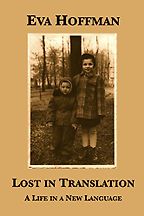
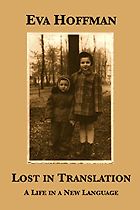
I think it was a brilliant idea to approach one’s past through language. Eva Hoffman grew up in post-Holocaust Poland. At the age of 13, because of anti-semitism, her family emigrated to the west coast of Canada. And she spent the bulk of her middle years in the United States before she came to live here in England. She tells us in Lost in Translation that she felt very rooted in Krakow, Poland – her life was flourishing, and against her will she was transported to a different country and a different language. So there is the trauma of someone who for a certain period in her life feels that she is – she uses the word “oxymoron”. “Could I be an oxymoron?” she asks, “or could I be a hybrid?” If biography is to be an art, language is important. It’s not just facts, it’s how they are stated.
So she feels that a different language impacts upon her sense of identity?
Yes. There’s a telling detail in the middle of the biography, a section titled “Exile”, when she is very shaken by the complete destruction of the “me”. Her’s is a searching mind. She is an intellectual. Looking for the meaning of existence, she feels that language makes it. That you can’t search for meaning without the language in which meaning is encased. She decides to keep a diary, and she is in the space between two languages, a kind of no-man’s land. She thinks of keeping the diary in Polish, because that is her real self, that’s where her kernel lies. But she decides she’d better keep it in English, because Polish is now the past and English is the present.
Get the weekly Five Books newsletter
She admits in this powerful passage that she doesn’t fully write as herself in English. She writes a language of abstraction. Later on, she says that Polish feels to her a warm language, full of emotive words. She uses the word tesknota, which she says is “nostalgia” but with tonalities of sadness and longing – that’s the Polish Eva speaking in her native language. To her, English is a language of will and abstraction. Only a foreigner can tell you that. For you and me, English is filled with all our emotive output, because it’s not a language of just will and abstraction – but it’s interesting that an outsider to English sees it that way. She writes:
“The diary is about me, and not about me at all. On one level, it allows me to make the first jump. I learn English through writing, and in turn writing gives me the written self. Refracted through the double distance of English and writing, this self, my English self, becomes oddly objective. More than anything, it exists more easily in the abstract sphere of thoughts and observations than in the world. For a while this impersonal self, this cultural negative capability, becomes the truest thing about me. When I write, I have a real existence that is proper to the activity of writing. This language is beginning to invent another me.”
That seems to me the critical sentence. It is through writing and speaking English that she begins to invent her English self.
How is memoir different to biography? Telling one’s own story instead of someone else’s?
The advantage with memoir is it can be endlessly introspective. But Hoffman is also disciplined. There’s a lot she doesn’t tell you about her life. She tells you more deeply about her past, because it’s over. We learn about a young man whom she adored and was parted from forever. That is a deep sorrow in the book, and she can write about him. But she doesn’t reveal intimate details in the last part of the book, in America. She chooses very carefully what she writes about. I admire the book for being the opposite to a misery memoir. It’s not slam-slam, tug-tug, feel-feel. It’s refined in its intellectual cogitation.
Last on your list is Jane’s Fame by Claire Harman.
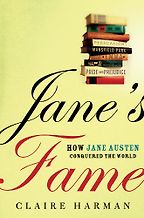
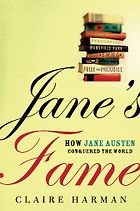
This is a completely different experiment. It’s a two-fold book. A chunk of it is a flashback to Jane Austen’s actual life, but the bulk of the book is about her afterlife, the making of her reputation. In 21st century, post big-tome, biography it has become more common for biographers to be interested in the myths that surround a life. That’s now vital to the genre.
What are those myths, in Jane Austen’s case?
Jane Austen died in her forties – she had published, but not under her own name – and her family immediately presented a certain wariness of her genius. They offered an image of a properly modest lady who gave no evidence that she was writing, did all her womanly duties and was “a dabbler”. They kept her behind this screen. But when her fame grew, her family reconstructed this image and she became “divine Jane” on a pedestal. Her family holds onto her papers, manipulates her image and even doctors her physical looks in pictures so she looks more prettified and feminine.
What’s the reality?
The kernel for Harman – and I find her very persuasive – is that Austen was a witty girl, hungry for attention, not so self-effacing, quite waspish in her later years, full of spirit and life. A far cry from the image of impeccability that the family fostered. One phrase which I liked particularly is Jane Austen’s humorous boast in a letter, “I write only for fame.” So Harman has a spirited image of Austen that combats the family myth, and enables her to write wittily about all the different aspects of the idealisation of Jane Austen.
Get the weekly Five Books newsletter
I’ll give you an example of her wit. Claire Harman describes how Hollywood – armed in 1940 with Laurence Olivier’s Mr Darcy – changed the period of Pride and Prejudice to 40 years later than it should be, so that the costumes could be more elaborate. The costumes were devised by someone who had been involved with costumes for Gone With the Wind. According to Harman, this designer felt that “the fashions of 1815 didn’t afford her enough scope. The resulting dresses were fantastically extravagant. The Bennet women hardly fit in the milliner’s shop, in the opening scene they are wearing such huge hats and crinolines. And when Darcy and Elizabeth sit together on a bench, it’s not pride nor prejudice which seems to keep them apart so much as their clothes.”
As we’ve discussed, all biography has elements of myth-making, “imaginative truth” and subjectivity. So does the real truth matter?
I think it does. It is fashionable at the moment to publish fictional treatments of real lives. I find some of them unconvincing. I would rather read something closer to the truth, because fiction allows itself so much licence with facts. Might it be legitimate for a novelist treating Henry James’s life to suggest that James killed his sister? I’d say no. On the other hand there are the great imaginative treatments of lives, like Shakespeare’s Richard III. In this case the drama is so convincing that it has shaped the image of Richard III as a murderer ever since. There are abundant precedents of fictional or dramatic treatment of historical or literary figures that persuade one of the authenticity of the view.
If new documents came to light showing that Richard III was actually a loving father and a wonderful chap, would the world change its mind?
It’s an interesting question. My own attempts at biography have been, like Claire Harman’s, to resist the myth – to go back to the archives and see which myths don’t hold. But I’ve found that it’s really hard to budge the legend. I’ll give you an instance. In 2007 it was the 150th anniversary of Mrs Gaskell’s Life of Charlotte Brontë. The Brontë Parsonage invited four biographers to talk about Mrs Gaskell’s view of Charlotte Brontë. All four of us all said we beg to differ, because we know now that the Brontës were much more embedded in society than Mrs Gaskell’s romanticised view of roamers of the moors. Not that they didn’t roam the moors, but that idea needs counterbalancing. The audience listened to us courteously, but then someone burst out at the end, “But I like the romantic story!”
Five Books aims to keep its book recommendations and interviews up to date. If you are the interviewee and would like to update your choice of books (or even just what you say about them) please email us at [email protected]
Five Books interviews are expensive to produce. If you've enjoyed this interview, please support us by donating a small amount.