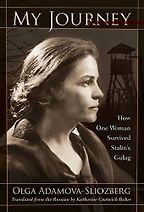
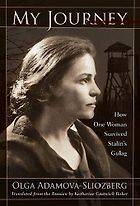
Tell us about the first of the books from the KGB archives you’re recommending. This is Olga Sliozberg’s My Journey.
I absolutely adore this gulag memoir. It’s special. I don’t normally read this sort of literature because it’s so gloomy and actually quite dull, this monotonous suffering and nothing else. Usually, if you do read this kind of book, you certainly don’t want to reread it. But this is completely different. She writes so well: a light, beautiful, elegant kind of writing. Its main message is that what you have at the end of your life is not the result of the circumstances in which you’ve been living but of what is inside you and what you did with that. She tells you about the people she met and the friends she made. Most of them are dead because she was in her 90s when she wrote the book. So she was probably the only witness in the world to tell about these people and the friends who supported her. She talks about bad people, too, but they are not the main characters, the heroes of the book, because, although she spent over 20 years in prison, it was not a bad place, because there were such stories, such friendships, such wonderful people.
Who was she and how did she come to be in prison?
She was just an ordinary woman born into an intellectual family, married to a man for whom she got into trouble, a scientist, a professor. It was the usual story. When the purges started in the early 30s she was sure that it was only bad people, traitors, spies, who were being sent to prison. She started to hesitate when she heard that her housekeeper, who was a peasant woman, whose whole family died because they’d been taxed in the dispossession of the kulaks. She went to her husband and he said, well, it’s such a difficult time now in the history of our young country that inevitably some mistakes occur. You can’t blame the system for that. It’s unfortunate but you can’t blame our beautiful young country. And then six months later the husband is arrested one night and, as she discovered in the 1950s, was shot. And then she herself was arrested, leaving behind her very young children – a boy aged two, a girl aged six – though luckily their grandparents looked after them. She returned as an old woman 20 years later. I love this book and I hope it gets a translator. She died in 1991, you know, the year the Soviet era ended. I wish I’d met her.
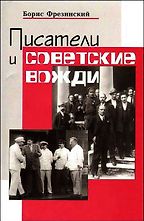
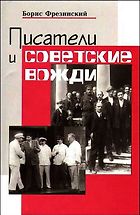
Now, Writers and Soviet Leaders, which has not been translated into English.
This book by Boris Frezinsky describes the relationships between the communist intellectuals and the ruling élite. It’s a fascinating subject and a great book, and there are great photos in it too: Gorky, Lenin, Mayakovsky, Trotsky and so on.
What sort of shape does the book take?
It’s mostly documents. He writes introductions to every section – for example, the relationship between Ilya Ehrenburg and Nikolai Bukharin who was Ehrenburg’s friend and patron. And then he publishes letters and so on. So it’s a rare thing. It’s interesting to see characters that people think they know and then find out what they were really like: who turned out to be a coward and who possessed great will and courage in the face of this very dangerous time, the 1930s.
In particular, I was struck by Ilya Ehrenburg, who was the great ideologist of communism and the Soviet state whom the Soviets used so effectively during the war as a cultural link between Russia and the West. Bukharin was a very powerful man, one of the original Bolshevik revolutionaries. Ehrenburg had been his schoolmate and loved to send him all sorts of complaints, about how Pravda was shortening his articles, how he hadn’t been paid enough money. At first you think he’s not a nice person, that he’s a bit of a shit. That’s your initial impression. But then when Bukharin gets into terrible trouble, Ehrenburg refuses to speak against him at his trial and takes a great risk to do this. And for the rest of his life he tries to do whatever he can for Bukharin’s widow. He even tried to write a chapter on Bukharin in his memoirs. Of course, he wasn’t allowed to, but he still manages here and there to insert a paragraph about this person who was his great friend.
Which archive did he draw his material from?
That’s a very good question. He worked mainly in the literature and art archive, the RGALI archive. Then he worked in the archive of the history of Moscow. But it’s mainly the RGALI that he looks at because, of course, a lot of stuff on his subject would be in the KGB archives at the Lubyanka—but there’s no way of getting in there.
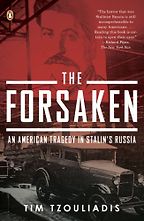
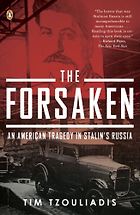
What about The Forsaken by Tim Tzouliadis?
I’m sure this will be of interest to a Western audience. Its subject is those former American citizens who were made to give up American citizenship in exchange for Soviet citizenship.
How were they made to do it?
There’s this group of people who arrived from America which consisted of two types. The first were people who came for ideological reasons, who had socialist or communist views and who wanted to take part in the construction of socialism. These people, of course, quite willingly took Soviet citizenship and gave up their American passports. But the second group were victims of the Great Depression who came to Russia to find jobs and support their families. For them it was different. The Soviet authorities used all sorts of tricks to get them to take up citizenship. They were told that they had to hand over their American passports temporarily, and they never saw them again. And then they lost any rights that American citizens have or legal grounds to be protected. It was a great tragedy.
Was there no attempt by America to intervene on their behalf?
They intervened in one or two cases, but they didn’t acknowledge that they were aware of it happening on a large scale.
Where does the information for this book come from?
Tzouliadis did a lot of work here, or at least he did a lot of work through researchers. A lot of it comes from the former Party archives, and also some of it from the regional archives – also people’s personal archives.
The American ambassador at this time was William Bullitt, wasn’t it? Who had come to Russia very much in sympathy with the Soviet regime.
Yes, and he probably judged it wiser to turn a blind eye to what was really happening. Of course, everybody now is incredulous, that Russians were shooting dozens of Americans and sending them to labour camps. But this really was the case.
The Russian state archives were opened to foreigners in 1991. Since then you’ve helped research several books by Western authors, including Antony Beevor’s Stalingrad. Have you found that gaining access to the archives has become more difficult since the early days of democracy in Russia?
Well, to be honest, I think many foreign authors exaggerate the scale of changes in the Russian archives. All of them give researchers exactly the same material as they did in the early 90s, with the exception of the former KGB archive, which even in the early 90s did not give permission to everybody. Maybe a few more people were allowed then than now, but I think it’s normal for a secret service archive not to welcome all-comers.
I suppose in the West the prejudice is that the former Soviet Union and the present Russian Federation are different countries with different flags and that there is no reason for modern Russia to protect its past.
They see themselves as successors of the Soviet Union and they keep these archives classified. I can see the reasons. I heard about a British researcher recently trying to get access to the MI5 and MI6 archives and he was denied.
Yes, it’s true, they’re classified. But let’s talk about your fourth book, which concerns the same subject as Antony Beevor’s history of the siege of Stalingrad.
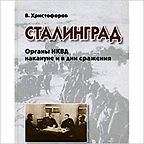
Yes, by V Khristoforov – it’s also called Stalingrad and was published a couple of years ago by the Russian Academy. He’s a historian, and he did have access to the KGB archives. That’s his book’s main value. Some documents are very interesting: what the NKVD was doing during the terrible days when the Germans were going to take Stalingrad. Everybody was sure that the Germans would take it, even Stalin, because he’d lost communication with the city.
This collection of documents shows the NKVD in readiness to blow up all the industrial enterprises. It shows how they were stopping the troops bolting from the battlefield and searching for spies and saboteurs, how much they fought. It’s invaluable for any researcher writing on the subject. So thank you very much, Mr Khristoforov.
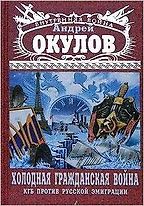
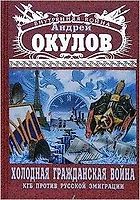
And the final book, The Cold Civil War.
It’s by a writer called Andrei Okulov. He’s a writer and journalist whose mother was a dissident. She went to prison here in Brezhnev’s time for publishing some leaflets against the Soviet authorities, and then was forced to emigrate. So the author grew up in Germany and at some stage was asked to join a secret organisation fighting against the Soviet regime. He describes very interestingly his training in London in the 70s and 80s and tells about the Russian émigrés who were the leaders of this organisation, many of whom were old revolutionaries. But, as soon as the Soviet Union collapsed in the 90s, the organisation ceased to exist: they had nothing to fight against. The author’s got a great sense of humour.
Five Books aims to keep its book recommendations and interviews up to date. If you are the interviewee and would like to update your choice of books (or even just what you say about them) please email us at editor@fivebooks.com
Five Books interviews are expensive to produce. If you've enjoyed this interview, please support us by donating a small amount.