To many of us, the popular uprisings in the Middle East and North Africa and regime overthrows in Tunisia and Egypt seemed to come out of nowhere. For people like you, who have been watching the region closely, were they not as sudden and surprising as they were to some of the rest of us?
They weren’t that surprising and they certainly didn’t come out of nowhere. For most people who follow the region closely, the previous decade of the 2000s was full of popular mobilisation and political protest. What made 2010 and 2011 a surprise was that by the end of the 2000s it seemed to most of us that the authoritarian regimes had won, that they had managed to defeat most of the protest movements. They seemed to be comfortably in control. The surprise was not that people rose up, but that they were able to win in a couple of countries.
What do you think will happen now?
The popular mobilisation and general shift towards popular protest is going to continue. I don’t think there is any going back to the way Arab politics was before. But you’re not going to see one single outcome across the entire region. There will be change in some countries and regimes surviving in other countries. It’s going to be very interesting, because one of the things about Arab politics over the years is that everything has tended to look the same. Either the entire region was in turmoil or everything was very tightly controlled. In the next few years you’re going to see a lot of variety. Some countries in turmoil, some very stable, some democratic, some still rigidly authoritarian. That’s going to create a very interesting dynamic in regional politics.
What do you think of the term “Arab Spring”? I’ve read articles saying it’s more of an “Arab awakening” in that it’s going to take a long time. There’s been too much emphasis on regime toppling when it’s really about broader societal changes.
I was saving this line for my book, but I guess I’ll use it now. The term “Arab Spring” is about as useful as you’d expect from something that suggests spring begins in December. It’s pretty useless. I prefer to call it the Arab upheaval or the Arab uprising. The reason for that is that it is genuinely Arab. It’s not something that’s happening country by country. It’s happening across the entire region simultaneously, with everybody really intensely conscious of the regional nature of it. Al Jazeera and social media – Facebook, Twitter – have really helped unify political space in a fundamental way, and that means that you’re not seeing a series of parallel political crises. There’s a very strong sense that these are organically and intimately linked to each other. People in Yemen are paying attention to Tunisia, and people in Jordan are paying attention to Morocco. This is something which has been developing over the last decade and a half, but you’re really seeing it powerfully right now.
The reason I like the term “uprising” is that it captures the extent to which this is a popular mobilisation against the authoritarian status quo. The term that many of the activists prefer is “revolution”. I don’t like that because I haven’t seen any revolutions yet. The term I’ve seen more and more frequently in the Arab media is intifada – with the idea that these are Arab intifadas similar to the Palestinian intifadas of the past [against Israel].
This unification of political space is also something you’ve focused on in your own research in the past.
The role of Al Jazeera and new social media in transforming the nature of Arab political activity is something that I wrote about five years ago in my book Voices of the New Arab Public. That book shows that this is something that has been developing for over a decade and is fundamentally changing the nature of politics. Authoritarian regimes have lost the ability to control the flow of information and the way people communicate with each other, and that has major implications across almost all parts of politics.
In China, I keep hearing how cellphones and social media are going to transform the authoritarian regime. But I’ve become so used to the fact that the government always wins that I despair that anything like that is ever going to make enough of a difference. It’s really exciting that in the Middle East, it has.
It’s an important point. People often say that American political scientists didn’t predict the [Arab] revolutions. The fact is that the activists themselves didn’t predict it either. As late as December 2010, in Egypt especially, they didn’t expect to win. They were very demoralised and confused about what the next steps should be. At the beginning you mentioned surprise – there’s surprise and then there’s surprise. Were we all taken by surprise that this happened the way that it did in December 2010? Sure. Nobody predicted that. Who could have predicted Tunisia? But it was more about the timing than the fact. What was not surprising was that there was this growing and powerful popular mobilisation – this new generation of activists and a widespread discontent with authoritarian rule. We were all studying that, and we did see it coming.
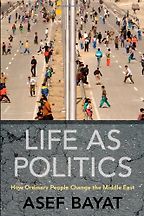
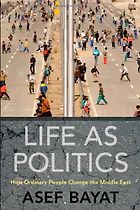
Let’s start on your book selection with Asef Bayat’s Life as Politics: How Ordinary People Change the Middle East.
This is a wonderfully written book. Bayat shows that there has been ongoing popular dissent over the entire modern history of the Middle East. What he does beautifully is take that out of the formal political realm and show how these political engagements take place at all levels of life – everything from neighbourhood politics to labour strikes to contention within universities. He is particularly strong at showing the evolution of a youth culture, and how that youth culture can be political. This is one of the books that got it right and that people really should be reading. It was ahead of the curve in locating politics at the popular level.
One of the reviews mentioned housewives showing their discontent by hanging out their washing in places they shouldn’t. Is the idea similar to that of James Scott – that small acts of resistance can make a big difference?
Sort of, although Bayat also looks at organised politics. James Scott is a place you can look for this notion that just because the formal political realm is closed, it doesn’t mean people simply give up and become apathetic. They adapt, they’re creative, they’re restless and they try to find ways to solve their problems – and that’s politics.
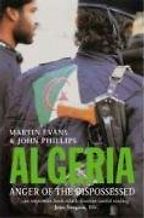
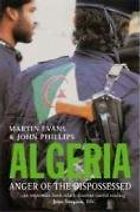
I was pleased to see a book about Algeria on your list, Algeria: Anger of the Dispossessed by John Phillips and Martin Evans. You mentioned to me earlier that although Algeria hasn’t played a big part in the Arab upheaval yet, you chose this book because it best captured the sense of popular dissent and despair.
Yes. There were a lot of books I thought about including that are single country studies which capture the dynamics of authoritarianism, violence and protest. The reason I like this one is it shows that even in a country where – over the last few decades – you had both stifling authoritarianism and horrific civil war, you still have this persistent, regular, almost ongoing popular protest and popular mobilisation. Sometimes it’s Islamic, sometimes it’s more leftist and class-based. It really captures the sense of society in ferment, of people constantly seeking to assert their rights and demand respect even under a stifling military regime. So for people who think [the uprising] came out of nowhere, if you go back and read a historical study like this you’ll be disabused of that view very quickly.
Support Five Books
Five Books interviews are expensive to produce. If you're enjoying this interview, please support us by donating a small amount.
What is happening in Algeria?
One thing is that precisely because there is always so much agitation in Algeria, the introduction of more protests hasn’t registered as much as it did in, say, Tunisia. If I had to make a prediction – which is hard – I’d say Algeria is going to continue muddling along. But it’ll be impossible for them to resist the pressures for change if the regional environment continues to go in that direction. Especially in North Africa, Algeria tends to be more interdependent with that subregion than with the broader region as a whole. I would keep an eye on North Africa – what’s happening in Libya and Tunisia, what could happen in Morocco.
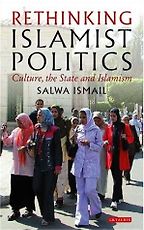
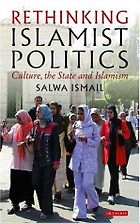
Your next book is Rethinking Islamist Politics by Salwa Ismail.
I like this book a lot. Salwa Ismail got inside the Islamic trend – especially in Egypt but also around the entire Middle East – and really broke out the wide variety of different strands in Islamist politics. The differences between the Muslim Brotherhood and the conservative Salafi trend, between official Islam and neighbourhood level, popular Islam. It is going to be an important guide for people who are trying to make sense of the resurgence of Islamist movements in this coming period.
What she shows is that there isn’t a single, monolithic Islamist movement. For example, when we look at Egypt right now, or Tunisia, people in general have been stunned at the sudden appearance of these very large, powerful Salafi trends. Salwa Ismail was writing about this years ago. This is a 2006 book. She saw the Salafi trend coming long before Mubarak fell. The other important thing about Ismail’s book is that she shows how deep the transformation of public culture has been. Islamism is not just a shallow political trend – it has fundamentally reshaped identities and public cultures around the region, and people shouldn’t expect that that is going to simply evaporate overnight. This is a process which has been going on for decades.
You write quite a bit about political Islam. These uprisings originally didn’t have much to do with the Islamists, but now they’re supposedly the best organised. What role do you see them playing going forward?
The Islamists didn’t start these uprisings, but they have a wide and deep presence in society. As society becomes more empowered, naturally Islamists will be more empowered also. If these countries become more democratic, they are necessarily going to play a major role. But again, one of the things Ismail points out – I think effectively – is that we shouldn’t expect there to be a single unified Islamist bloc. What you’re already seeing in Egypt, Tunisia and across the region is different Islamist groups competing with each other for the same votes – arguing with each other, splintering, forming competing parties. I think that’s going to be the trend. Islamism and Islam have to play a role if there’s going to be any real democracy there. But I’m less worried than others that you’re going to see an Islamist sweep of elections, or Islamists imposing harsh Islamic law on their countries.
Because they’re almost as diverse and divided as the secular forces?
Especially in a place like Egypt. The Muslim Brotherhood was able to maintain its unity because it was under so much pressure from Mubarak. With Mubarak gone, the movement is splintering, because there are lots of different trends and internal disagreements.
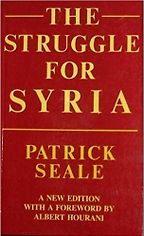
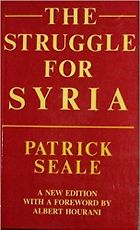
What about Patrick Seale’s The Struggle for Syria? I’ve heard a lot of good things about this book, but tell me why it made your list.
I chose The Struggle for Syria partly because it’s a wonderful read and partly because it captures the sense that what’s happening right now is not necessarily historically unique. I suspect there will be a lot of resonances between what happened in the 1950s and what we’re going to see unfold as these authoritarian states open up. The Struggle for Syria is about the great Arab cold war of the 1950s and 60s between the pan-Arabist trend – led by Egypt – and the conservative forces. It played out in the domestic politics of states like Syria, Jordan and Lebanon. It was an intense war of ideas. You had extremely high levels of popular mobilisation and people in the streets. You also had the transnational media. For example, when Egypt’s Voice of the Arabs radio would beam out King Hussein of Jordan, thousands of Jordanians would take to the streets, burn things down and riot. It was a period of intense popular mobilisation within a regional framework. People who read this book and see how turbulent the region was back then will, I think, feel a shock of familiarity.
But ultimately it ended in authoritarianism across the region.
And that’s a very cautionary tale. After the 1967 war, the oil crisis flooded money into the hands of the conservative regimes, and made Saudi Arabia in particular indecently rich. So the pan-Arabist side of the Arab cold war lost, and all of the rulers in the region – whoever was on the throne circa 1970 – used the money to build massive state security apparatuses and patronage networks, and create the stifling repression that we’ve come to associate with Arab politics. In a sense that’s new. If you go back to the period before 1970, it was the opposite. The states were extremely weak. Governments were overthrown at the drop of a hat. To a large degree, the authoritarianism we associate with the region was a response to the instability and turbulence of that Arab cold war. If you really wanted to be a pessimist, you could say that one of the possible pathways we could be walking down is an even deeper return to authoritarianism, at the hands of whoever surmounts this round of turbulence.
But you’re more optimistic?
I am on my good days. Malcolm Kerr wrote the other great book about that period, The Arab Cold War. In the preface to the final edition, which came out in 1971, he writes something along the lines of, “This is going to be the last edition of this book, because Arab politics isn’t fun anymore.” There was this sense of the passing of an era.
Do you think there’s a chance of a return to authoritarianism now?
I think they’ll try. But with the changes in information technology and in the expectations of the mobilised youth, I just don’t think it would be allowed.
What do you think will happen in Saudi Arabia?
They’re far more vulnerable than people think they are. They have all the ingredients for instability, but – for now – they also have a huge amount of money to throw at the problem. That does help.
But ultimately they won’t be able to escape the regional trends?
I don’t think so.
Your last book is also about Syria. Should I attach any significance to the fact that two of your five books are about one country?
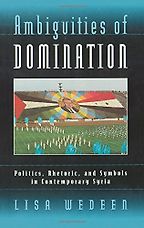
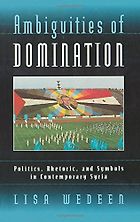
No, it’s just coincidence, although Syria is very interesting. They’re very different books. Lisa Wedeen’s Ambiguities of Dominationis an absolutely brilliant dissection of the role that the personality cult around Hafez al-Assad played in maintaining authoritarian rule in Syria. It shows how the ability of these states to force people to publicly say things which were absurd was a very deep form of power. This is a notion that’s familiar from Vaclav Havel’s discussion of the Soviet bloc, and even goes back to Orwell – if you can force people to say these things then, in a sense, you’ve forced them to internalise the reality of domination. She goes into this in great depth.
What’s especially interesting about the book for me is not just its description of the way Arab authoritarianism worked, but also that the Internet and Al Jazeera exploded that. All of a sudden people were freely mocking Arab leaders who, in the past, they had been forced to pretend to respect. People were making jokes on Facebook, or there would be talk shows on Al Jazeera openly mocking people like Hafez Al-Assad. It really eviscerated those cults of personality, and made it not just legitimate but even encouraged to become critical in public. That’s an extremely underrated precursor of these uprisings.
Because people had thought he was rubbish all along but there was nowhere they could say so publicly?
And the fact that people agreed with them. Then they could see that it’s not just thatI think Bashar al-Assad is a moron, everybody else does too. It’s a hugely powerful thing to suddenly realise that you are not the lone misfit, that in fact almost everybody agrees with you. People talk a lot about how the uprisings broke the fear barrier. That’s very important. But what happened over the previous decade was that the Internet and Al Jazeera destroyed that public culture of conformity. I think that is one of the most profound things that set the stage for these public uprisings.
August 5, 2011
Five Books aims to keep its book recommendations and interviews up to date. If you are the interviewee and would like to update your choice of books (or even just what you say about them) please email us at editor@fivebooks.com
Marc Lynch is associate professor of political science and international affairs at George Washington University and senior fellow at the Center for a New American Security. He has written widely on the Middle East, and writes an influential blog at Foreign Policy
Marc Lynch is associate professor of political science and international affairs at George Washington University and senior fellow at the Center for a New American Security. He has written widely on the Middle East, and writes an influential blog at Foreign Policy