Your novel Bitter Bitch has become part of the feminist canon. How did you become prominent in the feminism movement?
These subjects have always interested me as a woman. I used to be a journalist,before I became a writer, and you simply can’t open a newspaper or switch on the television without being upset by the injustices and discrimination suffered by women. Finding these women whose books I’ve chosen – who described situations I could identify with – was important for me. It’s natural to read stories that deal with subjects about you and about your life.
So it’s a natural reaction to the world if you are an observant person?
Yes, if you try to understand the world and try to understand what is going on. I read many of the books I’m going to talk about now when I was 17 or 18. I was so confused, and I wanted to find out more about why I felt so confused about the world.
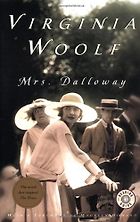
The first one is Mrs Dalloway by Virginia Woolf.
It’s one of the saddest books I’ve ever read. I could really identify with Clarissa, this empty, poor person who is going out to find some flowers for a party. At the same moment, we are following her out into the beautiful morning as the story starts. It’s clear very soon that Clarissa is a woman who has lost her soul among all the duties and conventions of a boring marriage. That loss is so overwhelming and confusing that she loses contact even with her own body. She describes feeling young, but at the same time really old. I don’t know why I identified with her so strongly.
At the time I read it I was married, and maybe I knew what was coming. I read it again recently and it felt so accurate, even though things have of course changed. We have legislation against gender discrimination, the right to vote, free abortion, daycare – at least in Sweden we do. But even so, it felt modern because family conservatism as the norm is stronger than it’s ever been. People today are marrying more traditionally than ever. In Sweden we have a huge wedding industry – people putting down a lot of money and energy, which is kind of weird in a way.
Why do you find it weird? Would you advise people to not get married?
No, but today we are free to organise our life however we want to. We have all different kinds of family. When Virginia Woolf wrote this book, you needed to be married, there were no options. But today, for my generation, there is no need to get married. Not so many of us are religious, and a woman can be fine without a marriage.
But we fall in love as much as we ever did.
Yes, but falling in love is something else. The ritual of marriage is old-fashioned, if you think about it. We are living in a time which is very conservative when it comes to family issues. We had a women’s movement in the 70s that talked about our liberation and freedom, so it’s strange that my generation, the daughters of these women, have effected a backlash. Have you seen Mad Men? It’s not a coincidence that it’s so popular right now. There is a passage in Mrs Dalloway where Clarissa says she can’t think, write or play piano – she mixes up Armenians and Turks and doesn’t know where the Equator is. This made me think about Lady Diana. She was also an unhappy woman who lost her soul in marriage and convention. It also made me think about Desperate Housewives – women today who are dealing with their looks instead of using their brains.
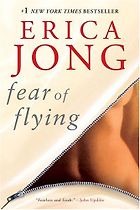
Now we’ve got Erica Jong, Fear of Flying.
I was looking for books that dealt with these issues of family, love and the ability to live. When I was starting to write Bitter Bitch, I looked for literature dealing with the issues burning inside me. That is, whether there was any possibility of living and loving within a romantic relationship. I couldn’t find anything written today. It was all written in the 70s. This is about Isadora, and her trip away from a psychoanalyst conference she is attending with her husband. She is 30, married for seven years, and she runs away. She has longings for other men and is confused because her husband is a very nice man. It’s a very funny book. She runs away with Adrian, whom she meets at the conference. You follow her background, childhood, how she grew up and how everything is linked together. It made a lot of people really upset.
Why was it controversial? It doesn’t sound that controversial.
I think it was because it was about a woman and her sexual needs. Though it isn’t actually that much about sex. It’s about her journey from a girl with fears and low self-esteem, and her way of becoming a mature woman who wants to own her soul. She finds out in running away that she needs to be true to herself, that she has an obligation to herself. She wants to own her soul and not feel guilty about it. It’s her journey of liberation.
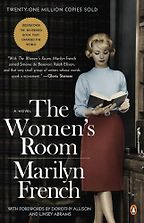
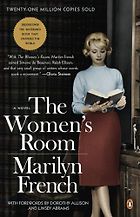
The next book is from the same period. Marilyn French The Women’s Room.
It’s the story of Myra, who is also unhappy in her marriage.
There’s a real theme here!
Yes. She’s trying to adapt to her marriage in an American suburb. She has two children, and finally she and her husband divorce, and she moves away and starts to study. It’s the beginning of the 70s and the women’s movement is really active at the university she goes to. It’s a success story because it ends with Myra really happy and free. It expressed the experience of a huge crowd of women, and it let all the women who read it understand that they were neither alone nor crazy.
Do you have an unhappy marriage behind you yourself?
No, it was happy. Even though we are divorced now, we are very happily divorced. I think there is a culture of silence within marriages and families that is really important to talk about. It’s why these books, and my novel as well, have meant such a lot to so many people. Women write to me thanking me for putting their feelings into words, and that’s what happened to me when I read Erica Jong and Marilyn French. You realise you’re not crazy. Someone is putting a puzzle together for you.
“If you look at same sex couples, they are also often unbalanced in terms of power. It may not be to do with gender.”
What I wonder about is this. It’s not realistic to suppose that women are going to live by themselves, or alone with their children, throughout the world. People do pair up, because in some ways things are easier that way. I wonder if all the problems women have within marriage are more to do with the difficulty of human relationships, and the fact that few human relationships are equal. If you look at same sex couples, they are also often unbalanced in terms of power. It may not be to do with gender.
I don’t necessarily agree that it is easier to be in a pair. My experience, and that of my divorced friends, is that it is much easier now. We have ex-husbands who share the child-care equally, and my life after divorce is so much easier. I have the children one week and he has them the other week. So one week I can work, sleep and see my friends, and the next week I have energy for the children, I have longed for them and I think I am a better mother for it.
Do the children not wish you would get back together again?
No. We didn’t have a destructive relationship. We didn’t shout or anything, but they see that we are both happy and that is what matters to them. They have a better and more present mother and father now.
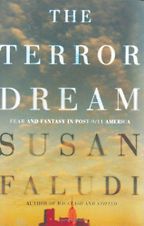
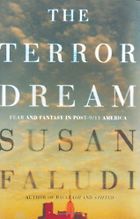
Now you’ve chosen The Terror Dream by Susan Faludi.
This is the book she wrote about 9/11 and how terrorism started a backlash against women – a reversion to mythical roles. I think she is the most important female writer working now. She has written so many important books. I really admire her. In this book she looks at what happened in America – how suddenly there was a feeling that women should go back to housekeeping and childcare instead of working. There was a new gap between men and women, where men should be like John Wayne and women should stay at home. She’s done a huge amount of research into the 9/11 attacks and what happened afterwards.
Five Books interviews are expensive to produce. If you're enjoying this interview, please support us by donating a small amount.
Two thirds of the people who died in the World Trade Centre were men. Many of the firemen who died did so because they had bad equipment, though this is hardly mentioned. Afterwards, the media constructed an image of strong firemen rescuing weak, vulnerable women. Nobody talked about the fact that the women on board one of the planes also resisted and tried to stop the hijackers. The stewardesses threw boiling water at them, but it didn’t really get reported. It was all brave men trying to wrestle the terrorists down.
Why do you think this was?
She draws a line back into history where feminism has always been seen as unpatriotic, as a threat to society, because feminism isn’t interested in fairy tales about macho men. That’s why it’s so threatening. Then she goes back several hundred years to when the Indians were at war with the white population, and she sees that there are similar myths about strong white men rescuing weak women.
“Feminism isn’t interested in fairy tales about macho men. That’s why it’s so threatening. ”
The stories aren’t true. Sometimes women got kidnapped by the Indians, but many of them didn’t want to be rescued and sometimes went back to the Indian family!
But we must like these stories, if they are endlessly created.
Yes, because they are about patriotism and war. The myth of weak women who need to be rescued by strong men. Faludi finds so many of these stories.
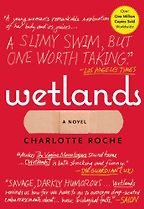
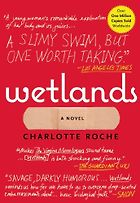
Finally, we have Wetlands by Charlotte Roche.
This is a recent book by a German writer. It caused huge controversy when it came out because she writes explicitly about her very special sex life. It’s one of the funniest books I’ve ever read. It’s so absurd and really twisted.
What is special about her sex life?
Oh, I couldn’t tell you! You’d be shocked. It’s about a girl who is twenty-something and in hospital for a haemorrhoid operation, but she gets a terrible infection and it’s a really humiliating situation. There’s a lot about body fluids. You get to follow this special girl called Helen and her thoughts. She’s flirting with a male nurse and she wishes her parents would get back together. Then there’s a dark story from her childhood and she isn’t sure if the memory is real or not – a memory of her mother trying to kill her and her little brother.
It’s very unusual to read a book that shocks you, but this book shocked me. It was painful to read some of it because it’s just so disgusting. But at the same time it’s liberating. While there is all this explicit stuff about her body, it is also a brilliant outburst against the sexism about and against our bodies that women have internalised – that we must shave and wax and trim our bodies. This is a woman who does whatever she likes, in a macabre way, without the least bit of guilt. It’s an attack on the beauty industry. It’s not an erotic novel.
No, it doesn’t sound like one.
One men’s magazine put her at the top of a list of the world’s least sexy women. That’s what’s so liberating. She’s not trying to be sexy or convenient for men. She’s disgusting and strange.
It’s not that I disagree with anything you’re saying, but I wonder whether there’s an extent to which we are just mammals. Mammals make an effort to attract the opposite sex. We are social mammals who raise our children in a partnership. It’s difficult to get away from that.
Sure, but the idea of not having hair on your legs is just cultural convention. Beauty trends have varied, so it’s not something that is part of the status quo.
What do you think women should be fighting for at the moment? What are you still horrified about?
I think there are still huge problems within families and relationships. Women are still the ones doing 90% of unpaid household work, and we are supposed to work as well and take care of the children like a family project leader.That makes many women miserable, because it stresses them and takes all their time and creativity away. These are important hours stolen from us. That’s the revolution I would like to see happen first. If women were liberated from this – if men and women shared equally the responsibility of children and the running of the family – it would be a big change in many women’s lives. If men took responsibility as fathers and did half the cooking and cleaning, it would be a huge revolution.
Five Books aims to keep its book recommendations and interviews up to date. If you are the interviewee and would like to update your choice of books (or even just what you say about them) please email us at [email protected]