The veteran journalist, who has lived in India for most of his life, talks about the country’s new-found self-confidence and recommends books to better understand its history and complexities
You were born in Calcutta and have lived in India for most of your life. What for you are the biggest changes that India is going through?
One thing which is hugely different for me personally is the way that I have been able to live my life in India now, compared with how I did as a child – because as a child we were deliberately stopped from having contact with India. Parents were very anxious that we should be brought up very strictly as English children. We had a European nanny whose job was to stop us getting too close to the servants and to stop us playing with Indian children. I was sent to a school which was strictly for British children only.
Obviously, life has become completely different with the change to independent India. Over the many years I have lived here I have made a huge number of Indian friends, and I speak Hindi so the whole thing has been different. Those are the changes on the personal level. On the other level, what has happened over the past 40 years since I have been here is that India seems to have got over what I would call the colonial hangover. There was a general feeling of despair and people were wondering where the country was going. They were beating their chests and thinking that there was a sort of innate inferiority which was not allowing India to make very rapid progress.
Do you feel India has found its identity now?
Yes, and very much its self-confidence.
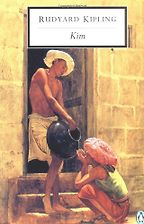
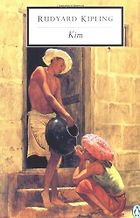
Let’s have a look at some of your books. Your first choice is Rudyard Kipling’s classic, Kim, which is set in the 19th century.
Kim is the story of a young boy who falls in with a Tibetan lama and joins in with the lama’s search for his spiritual goal. I have always loved the book because of Kipling’s wonderful writing. I think it is Kipling’s greatest book. I also love it because the descriptions of India at that time are so vivid. Bear in mind what I said earlier about the way that the British were, on the whole, encouraged not to get too closely involved with India – encouraged to live separate lives. One of the great features of Kipling’s genius is the way that he did learn so much, and did get so involved in the life of India and Indians.
And that is reflected in the character of Kim.
It is very much reflected in Kim, and in all the other characters as well. I think perhaps my favourite bit is that wonderful description of them going down the Grand Trunk road.
Kim was also part of the Great Game, recruited as a spy.
Yes, the Great Game is a theme of the book as well. Although I love the theme of the Tibetan lama searching for his spiritual goal.
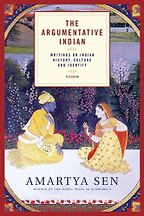
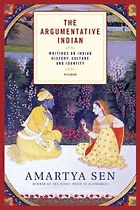
Next up is The Argumentative Indian by Amartya Sen.
I like this book because it argues that Indians are by their very nature deliberative, they like discussing. I like this because I think it is one of the great features of India which people in the West can learn from – that Indians don’t see things in black and white in the way that we do. They don’t take polar opposite positions in the way that we do. Instead they like to discuss and to debate. I would argue, although this isn’t absolutely spelt out in the book, that this is all about trying to find the middle way, trying to find compromise rather than having conflict.
Get the weekly Five Books newsletter
The book also explores the idea of India as a multicultural and religious society, and being good at accommodating that.
Yes, it is a multi-religious society and it accommodates different religions because its basic philosophy does not say that there is only one way to God. Its basic philosophy says that whenever you speak about God you always have to add “not this, not this” – in other words, indicating that nobody has a monopoly over the knowledge of God, and nobody can exactly describe God. If you contrast that with the semitic religions, you can see why India is able to accommodate a wide variety of religions and culture.
And the book argues that – while the British think that they introduced the idea of democracy to India – it was actually there long before the British arrived.
This is absolutely true. Of course if you look at the greatest Indian of the last century – Gandhi – one of his greatest messages was that you need democracy from the bottom up, which I think is a very important lesson. For Gandhi this meant democracy from the village level upwards. The most functioning democracies are really those where as much power as possible is put down to the village level. Interestingly, this coincides with the whole European Commission idea of subsidiarity.
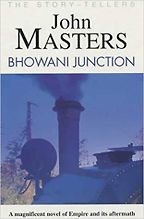
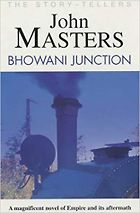
Bhowani Junction
is written by a British officer, John Masters, and set just before India gained its independence.
There are three reasons why I chose this book. Firstly because I don’t want to give the impression of never reading light or story books, and this is a great story. It is a story about a time when I was a child, and so for me it has some reminiscences. And it is a story about railways, which I love. I love Indian railways and I have travelled thousands of miles on them. So basically it is just a jolly good story about a subject and a time I thoroughly enjoyed.
It is a love story between a British army officer and a very beautiful Anglo-Indian girl. As you know, the British were not very kind towards the Anglo-Indians. They had a very condescending view of them at best. The beautiful Anglo-Indian girl is also loved by an Anglo-Indian railway officer, so it is a triangular love story in a way.
And it was made into a film.
It was indeed, and the main star was Ava Gardner. I have sadly never managed to see the film. Perhaps I should get onto YouTube now!
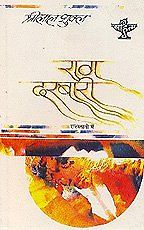
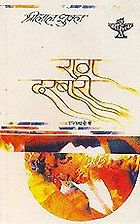
Your next choice, Raag Darbari by Shrilal Shukla, is also set around the time of independence but is more about rural India.
I must admit that the translation is by my partner, Gillian Wright. I love this book because it is a rather cynical, but wonderfully humorous, portrayal of life in an Indian village in Uttar Pradesh, around the time of independence and a bit later as well. I have been in many of these villages and written stories about villages myself, and I think that it is much the best book I have ever read about that sort of life in India. So many of the books that are highly praised about India are about the middle classes, or else they are about urban India and present a very bleak, black-with-no-white picture of it. This one has black, white and grey. It has enormous humour and is about rural, semi-rural and urbanising India. I find it absolutely fascinating and also a very good laugh.
You said that India has recently gained its confidence, but there is also the persistent idea that rural India is being left behind in the new “India Shining”.
This is something that you can’t see in black and white. There are changes occurring in rural India very rapidly. Communications are opening up. There is far greater aspiration amongst rural people than there used to be. They are making far more demands on the administration and the government. I think India’s standard of government is what stands in the way of cashing in, if you like, on these new ambitions that people have in rural areas.
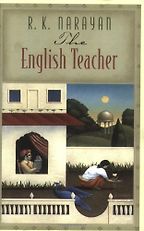
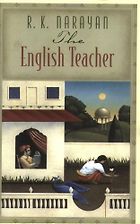
Your last choice, The English Teacher by RK Narayan, looks at the life of Krishnan, who is an English teacher in his old school.
Krishnan is often seen as RK Narayan. I have chosen it as a tribute to Narayan, who was internationally discovered by Graham Greene. I love the writing of Graham Greene and I love the writing of Narayan, in part because it is such clean writing. I get terribly bored with overly adjectival writing. I get bored with writing which is unnecessarily complex and unnecessarily descriptive. You can hardly get a more lean writer than R K Narayan. And again he is writing about very ordinary people. There is nothing sensational, heroic or deeply tragic about his writing. Of course it is very sensitive and understanding, but there is nothing of the grimness which there is in so much of the writing about India.
August 17, 2011
Five Books aims to keep its book recommendations and interviews up to date. If you are the interviewee and would like to update your choice of books (or even just what you say about them) please email us at [email protected]
Five Books interviews are expensive to produce. If you've enjoyed this interview, please support us by donating a small amount.
Mark Tully
Sir Mark Tully was born in India. He was the BBC bureau chief in New Delhi for 22 years and is regular presenter of the BBC Radio 4 programme Something Understood. He was awarded the Padma Bhushan award in 2005, and was knighted in 2002. In addition to his distinguished broadcasting career, he has written several books about India, including No Full Stops in India and The Heart of India. He lives in New Delhi
Sir Mark Tully was born in India. He was the BBC bureau chief in New Delhi for 22 years and is regular presenter of the BBC Radio 4 programme Something Understood. He was awarded the Padma Bhushan award in 2005, and was knighted in 2002. In addition to his distinguished broadcasting career, he has written several books about India, including No Full Stops in India and The Heart of India. He lives in New Delhi