I’m going to start by throwing down the gauntlet. You teach classics at Cambridge – is a degree in classics still relevant?
It depends what you think education is for. There’s a terrible tendency for the present government and some mums and dads to see university as some kind of professional training. Of course, there are some excellent subjects like that – say, medicine and law. But for me university is all about training the brain. With classics you are studying so many things, philosophy, archaeology, language, all of which help you in almost any job you want to go for. I know I would say that, but classics is inherently interesting and absolutely relevant.
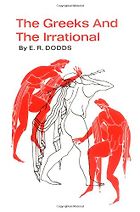
Can you describe what your first book, The Greeks and the Irrational, is about?
This is one of the books that made me decide that classics was worth spending a lifetime on. It starts with this extraordinary anecdote which is very meaningful for many readers. Dodds was at an exhibition of the Elgin Marbles at the British Museum and he got talking to a schoolboy. The boy told him: ‘I know it’s a terrible thing to say, but I don’t really like this stuff – it’s all so rational.’ Well, that got Dodds thinking about this common idea that the ancient Greeks were all very cerebral, gliding about in white gowns. But was Greek culture so fantastically rational? So Dodds wrote the book to explore that idea.
Why should it matter to us if it is rational or not?
It mattered to me because in order to understand about us, we have to understand what was at stake in the past. What is interesting is that you can take one of the most formative intellectual cultures and show that just underneath that sparkling surface is a seething heart of irrationality that results in madness and murder. Dodds wrote this book just after the Second World War and I think one of the questions in his mind was, not just that nice encounter in the British Museum, but how could European society have gone so mad that it did what it did. I wouldn’t say there are direct links between Hitler’s Germany and ancient Greece, but there are indirect links about where the non-rational elements are in any culture and how they work, how you can understand them and what difference that makes.
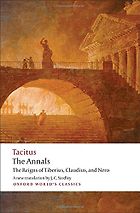
From the Greeks to ancient Rome – tell me about The Annals by the great Roman historian, Tacitus.
This is the best work of history ever written – that’s a big claim.
It’s been described as ‘tragic’ historiography and full of dramatic events.
Oh yes, just take the murder of Nero’s mother. There is no better story than Nero’s attempts to murder his mother with whom he is finally very pissed off! Nero the mad boy emperor decides that he is going to get rid of mum by a rather clever collapsible boat. He has her to dinner, waves her fondly farewell. The boat collapses. Sadly for Nero, his mum, Agrippina, is a very strong swimmer and she makes it to the land and back home. And she’s clever, she knows boats don’t just collapse like that – it was a completely calm night, so she works out Nero was out to get her. She knows things are going to end badly. Nero can’t let her off, so he sends round the tough guys to murder her. Agrippina looks them in the eye and says, ‘Strike me in the belly with your sword.’ There are two things going on. One is: my son who came out of my belly is trying to murder me. But the other thing we know is that they were widely reputed to have had an incestuous relationship in the earlier days. So it’s not just Nero the son murdering his mother, but Nero the lover murdering his discarded mistress. And if you read Robert Graves’s I, Claudius, some of it comes directly from this.
It’s better than a Hollywood plot.
Yes but it’s not just that. What he does is seduce you with an extraordinary tale, but there is also a cynical, hard-hitting analysis of corruption. Reading Tacitus in Latin is like reading James Joyce. It’s language which is really at the margins of comprehensibility as well as being very exciting. But, actually, he wants to talk about the corruption of autocracy. It’s about one-man rule going bad.
The author of your next book gets a bad press. I’m talking about Edward Bulwer Lytton who wrote the much-quoted and ridiculed opening line: “It was a dark and stormy night.”
Bulwer Lytton has this terribly bad press and there is even an annual competition in his name to find the worst opening to a book!
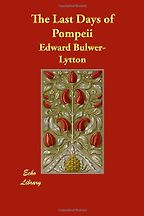
Considering he has been so marginalized, why recommend The Last Days of Pompeii?
Well, I’ve been drawn into this, partly because I’ve been writing about Pompeii. But also there is this incredible influence it has on anyone studying Pompeii. It’s the classic Pompeii disaster story everybody replays when they write about Pompeii. When he went to Pompeii it was a ruin. These days they’ve done a lot of work on it. What Lytton did was build it up layer by layer. And what you get is a fantastic reconstruction of the ancient world. Christians who are going to escape, the nasty priest of Isis, the sacrifices and the gladiators. The cultural backwash that came out of it was extraordinary. The characters, statues, movies.
Five Books interviews are expensive to produce. If you're enjoying this interview, please support us by donating a small amount.
So a bit like Harry Potter.
Yes, what you have to understand is that this book was phenomenally successful in the 19th century. You can be sniffy about Harry Potter and you can be sniffy about Bulwer Lytton, but when these books touch a generation there’s a reason for it.
Your next book sounds altogether more sober.
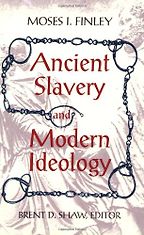
Oh very sober, very sober! I think I’ve chosen these books because all of them made a big difference to me. I wouldn’t be the person I am today without them. With Ancient Slavery and Modern Ideology by Moses Finley it’s all about politics.
One of the things that people often imagine about studying something as remote as the ancient world is that it’s not engaged with the big issues that we face. Finley was a Marxist refugee from McCarthy who left the US before he was pushed and came to the UK. I was actually one of his students. But, before that, when I read his books it was the first time I realized that there could be, and ought to be, an explicit connection between a modern political stance and the ancient history that I was studying.
“I’ve chosen these books because all of them made a big difference to me. I wouldn’t be the person I am today without them”
Slavery is a classic case for thinking about those connections. Greece and Rome were one of the few mass slave-owning societies that there have ever been. What Finley was interested in doing was looking hard at ancient slavery and thinking about how it was the same or different from modern slavery. One key difference that comes out is that modern slavery is tinged by racism, whereas ancient slavery wasn’t. He was the first person I had read who looked ancient slavery in the eye and said it was something really terrible. All the stuff that I had read before had been slightly embarrassed about ancient slavery and saw it as a blot on the landscape. They said: ‘The Greeks were so wonderful and slavery was a bit of a problem but you shouldn’t think about it. It was more like domestic service really!’ And Finley says you can’t let the ancient world off the hook. You have to have a moral stance on this one.
As you would with modern-day slavery.
Yes, and we need to think about the way people’s freedom can be taken away from them across the periods.
Your final book, Purity and Danger, is considered a key text for social anthropology students. Why?
It’s regarded as quite old-fashioned now and the author Mary Douglas, who died recently, somewhat recanted on many of the things that she said. But, for me and still for many of my students, it’s a book that really opened my eyes. It showed me that you could theorize about things that you had always taken for granted and thought didn’t need explaining. Douglas set out to defamiliarize our own culture. One of her favourite party pieces is she goes through all the dietary prohibitions in Leviticus. She said, look at these carefully and you will see there’s a logic to them. What’s being prohibited in terms of eating is very often those animals or foodstuffs which don’t fit into a set category. For example, pigs don’t fall into any particular category because of their feet. In order to make sense of society, cultures like to group things. When objects fall outside those groups they are either reviled or revered.
The great thing for me is that I could take her theory back to the ancient world and use it in my studies. And the very first piece of work I had published was actually applying those kinds of ideas to the famous Vestal Virgins, priestesses of Rome who, I tried to argue (I’m not sure I believe this any more), were seen to be holy because they were made to fall between the different categories of gender. They were dressed partly as married women but they were made to be virgins. So, whether it was right or not it was reading Mary Douglas which made me think you could do something like that in the ancient world. It was really exciting.
Five Books aims to keep its book recommendations and interviews up to date. If you are the interviewee and would like to update your choice of books (or even just what you say about them) please email us at editor@fivebooks.com