The prominent left wing blogger tells us what books have shaped his worldview. He explains why America needs to wake up to the forces preventing change, and better understand the root causes of its political deadlock
As a blogger, what do you see as your main contribution to the progressive cause?
The main thing I try to do is to connect events in the news to elements of a bigger picture. I spend a lot of time reading things, researching topics and then trying to shed a little bit of light – going a little bit deeper than what you see in news accounts – on what the real policy dynamics are.
I particularly enjoy your blog’s rebuttals of Wall Street Journal opinion page pieces, which often – especially when it’s a politician writing them – are based on emotion or personal experience, without much regard for the facts. Having a blogosphere that subjects these claims to more rigorous analysis strikes me as an important counterbalance that was missing even a decade ago.
Part of the way op-ed pages work is that people get access to them by virtue of holding, or of having held, political office, or as a reward for a career of good service at a newspaper. Oftentimes they don’t really know a great deal about the issues that they’re writing about, and it is possible to try to provide some sort of corrective.
Do you get a lot of feedback?
I get lots and lots of feedback from different people, of all different kinds. The thing about writing online is that you get a ton of constant feedback and comments – on email, on Twitter, on Facebook. One criticism I sometimes get is of not being totally in touch with the human element of everything. I’m not doing a lot of narrative reporting.
Do you feel that you’re making a difference to people who hold different political views from yours?
On the good days, you get feedback from someone who you’ve actually persuaded of something. Mostly people write in to complain. But as long as people are bothering to complain, I take some pleasure in the idea that they’re bothering to come and read me. Because it’s not the same as an op-ed that’s been plopped into a major newspaper – people are only coming to my site voluntarily.
These are important issues you’re scrutinising, though. For example, I thought the back and forth you had with Greg Mankiw – chairman of George W Bush’s Council of Economic Advisors – after he posted a link on his blog suggesting that the American tax system was the most progressive in the developed world, was fascinating. But isn’t one of the main problems that the majority of people don’t think about the progressiveness of the tax system at all? They vote Republican because they’d like their own taxes to be lower, or they think George Bush would be nice to have a drink with.
There are a lot of different aspects to it. But yes, one is that people are not actively engaged as much as they should be. Not just in formal political activity, but in talking to other people – to co-workers, to family members – about what they care about. That’s something I really encourage readers to do. Don’t just participate in self-selected online communities, express your political views in other communities that you’re part of. Try to engage more people. The other thing is that public policy is always difficult. It’s not just raw competition of power, there are tricky issues in play. I’m always trying to understand them better, and trying to help other people to understand them better. Even with people who have all sorts of convictions in terms of their values, it’s always possible to gain better knowledge of these things.
Yes, in the discussion you had with Mankiw – even with explanatory comments from others who weighed in – I was left undecided whether you were right or whether Greg was. It’s incredibly complicated.
Sometimes it’s hard to know. It is difficult. Sometimes people develop a very cartoonish understanding of good guys versus bad guys – that we need to get together and beat the bad guys. Certainly there is some of that in the political world. But there are also just questions of what the best way to handle things is, and how to make the world a better place. These are questions of knowledge that are not simple to overcome.
I know you studied philosophy, and some of the books you’ve chosen are pretty highbrow. Your first choice is by Ronald Dworkin, Sovereign Virtue:The Theory and Practice of Equality. Is that ultimately what the progressive movement is all about – equality?
I really like this book a lot. Even though it’s not the best-known, big philosophical book in this regard, I think putting the value of equality front and centre really expresses progressive politics in the right way. People sometimes feel that there is a disjoint between economic issues on the one hand, and social and cultural politics on the other. That these are in tension with one another, or that there is some kind of trade-off between them. One of the main messages of Dworkin’s concept of equality is the idea that government needs to be equally concerned with the welfare of everybody. It sounds almost banal. But actually it has quite radical implications for what constitutes a fair society and a just political order.
Give me an example.
OK. So we’re having this very intense debate about the budget right now. There’s a lot of talk about taxes and a lot of talk about spending programmes, the consensus now being that the retirement age for social security will have to be raised. If you really drill down and look at it, what does it mean to raise the retirement age for social security? You see that for some people, it’s actually a relatively modest change. We are living long lives nowadays, thanks to advanced medicine. We have comfortable jobs, we’re bloggers or lawyers or whatnot. But for other people – a substantial minority of the population – who have low income, much lower life expectancy, who are doing more physical labour and have much worse career prospects, it’s a giant change. For some of the worst-off people it’s a very real blow to their living standards. So if your starting point is “I’m seriously considering the interests of everybody equally”, then this idea – which now passes as common sense in Washington – suddenly starts to look quite horrifying. There is a consensus around this small change, but it’s a change that has a drasticallydifferential impact on people, with the most negative impact on the most vulnerable.
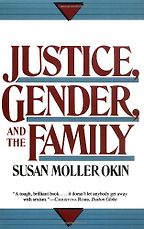
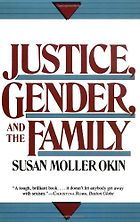
Let’s go on to your second book, Justice, Gender, and the Family, which focuses on social justice for women. It turns out that most political theorists have been, or are, men – and even their theories leave a lot to be desired in terms of how they think about women.
This is definitely a book I recommend to men. A lot of men who have left-wing political views of one kind or another say, “Well of course I’m a feminist! Of course women’s equality is important.” They pay lip service to that goal. But being men, they do not necessarily have a visceral sense of what these questions are all about. Susan Okin has written a book which is not visceral at all. It’s an intellectual book, it’s very abstract. It engages with all of the “great men” of political theory through a feminist lens, in a very rigorous and analytical way. She shows that the exclusion of women from centuries of conversation – about what equality, liberalism and freedom mean – has had a really distorting influence. I think the main message of her book is that you can’t take a political order that’s been constructed over hundreds of years on the basis of the disempowerment of women, and then one day say, as a kind of add-on, “oh and also we’ll treat women fairly”. Once you take seriously the idea that women are equal, you actually have to rethink social and political institutions from the ground up.
The workplace as we know it will have to be completely transformed if it’s going to be fair on women.
Yes, and everything else. The question you have to ask isn’t “How can we take these institutions that we have built up and stop discriminating in them?”, it’s “What kind of institutions would we have built if it had been an equal partnership all along?” That means a very different attitude towards family and social life. It probably means different ideas about work and workplaces. It has implications for all kinds of things.
This book came out in 1987. Looking at the progressive cause today, what’s your view about how far there is to go still for women? Are there some facts or statistics that shock you?
Well, we take for granted the fact that women are a minority in parliaments (everywhere except Rwanda and Andorra). That alone tells you something. I don’t think there’s any Fortune 500 company that has a female majority of directors. That’s not a coincidence, and it’s not going to change as a result of some law next year. But it will, and should, change over time. It’s something that should be taken seriously.
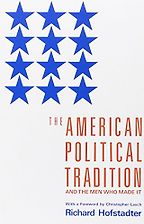
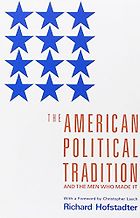
Next up you’ve chosen an oldie, Richard Hofstadter’s The American Political Tradition, which dates back to 1948.
I read this when I was a teenager. My father had it on his shelf. I’m sure it’s been superseded in the scholarly world by more up-to-date work, but Hofstadter is a great writer. He’s someone who is both an interpreter of historical figures, but also helped shaped the progressive tradition in America. The book is about a paradox that runs through American history, that a lot of progressive change and reform has happened over the years even though as a country we’ve never had a politically influential left-wing. There has never been a radical takeover of the government. Hofstadter explores those paradoxes – how reform and conservatism can co-exist, how a country that was founded in a revolution can become, in some ways, so consensus-oriented. How it is that change happens in a country that seems resistant to it.
One of his examples is Franklin Roosevelt, isn’t it? FDR had quite conservative tendencies, but had to become progressive when faced with the huge economic problems of the 1930s.
Also, in a lot of ways, you should see FDR as a conservator of the American tradition. He was not so much a driver of radical change. The country was in a desperate state by the time he was elected. And somewhat against his family background, his personal inclinations and everything else, he implemented lots and lots of changes. But the purpose of all that was to keep in place the American system. The US emerged from World War II a very different country from what we were before, yet less transformed than the rest of the developed world. That, in some ways, was FDR’s signature achievement.
So progressivism has never been politically popular in the US? Liberalism has always been a bad word?
Yes. When I look at the complaints different people have about President Obama, I think that – in terms of Hofstadter’s book – there has never been an American president who the left-wing people of his era were super-pleased with. It’s not new to Obama, it wasn’t new to Bill Clinton, it wasn’t new to FDR or Abraham Lincoln. All these people became key reformers in our history, but there was never a moment when the left actually broke through and ran the show. It’s an interesting fact about our history in this country.
We Europeans are naturally much further to the left than Americans. Why there is that difference, I don’t really understand.
It’s difficult to understand, although I think the Hacker and Pierson book on my list helps us understand some of it.
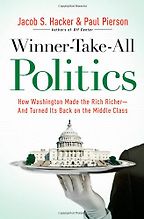
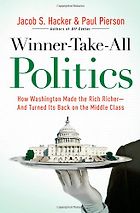
Tell me about that book, Winner-Take-All Politics. The economist Robert Shiller also recommended it in his top five. It’s about the hyper-concentration of wealth at the top of society – Hacker and Pierson argue that it’s as a result of politics. How does that work?
There’s a lot of moving parts to this book. I have to say that when I first read it, I wasn’t as blown away by it as some other people were. At a micro-level, I don’t think they’ve fully nailed down the economics of what they’re talking about. But the more I’ve thought about it, the more I’ve come to appreciate some of their conceptual insights. The American political system is resistant to change in a very literal sense. It’s just difficult to pass laws. We have many different branches of government, and a lot of diffusion of power. Consequently, we have what they call a policy drift. Things change in the world – things that have caused income to tend to concentrate at the top. There are some very natural responses to that. We should have stepped up progressive taxation, and we should have introduced certain reforms to our financial system and to our intellectual property laws. In a lot of other countries, it’s relatively simple to implement those kinds of reforms. You need to win an election, form a government, and then you write some laws for a while. But in America it doesn’t work that way. Even defeated minorities have this enormous ability to block change, as we saw in the first few years of President Obama’s administration. The situation can keep drifting and drifting over time, and then it starts to feed back on itself. As wealth becomes more and more concentrated at the top, the wealthy have more and more influence over the political system, and it becomes more and more difficult to dig us out of this spiral of inequality.
So it’s about money in politics?
Yes, but also the slow accumulation of these kinds of problems. The underlying economy changes, but the politics don’t change to lean back against it. That in turn changes the political system, and then the political system starts to undermine the traditional sources of power – labour unions and other things that provided a counterweight to wealthy individuals. So then you have more change in the economy, more change in the politics. All countries are somewhat susceptible to this. But in America – even when we have breakthrough, populist electoral moments – the way Congress works makes it difficult to translate those election gains into major reforms. You have the possibility of what’s going on now – you have a brief reform moment and you get some very important things done. But you don’t come close to accomplishing everything that was on the list, and then the backlash comes.
Is there anything that can be done?
There are always things that can be done. This particular book doesn’t have all the answers, and neither do I. But I do think that just trying to understand the situation better helps. To some extent, when the Democrats came in in 2009 they didn’t have the best understanding of what had happened to American politics and to the American economy. They weren’t quite prepared, on a tactical level, to understand what the roadblocks were that they needed to get rid of. There’s never an easy way to defeat the power of the powerful. That’s what makes them powerful. Progressive change is necessarily difficult. But it’s made easier if you understand the situation correctly. And I think the Hacker-Pierson book is really crucial for that – for understanding what the nature of the problem is.
Has the book had a big impact in Washington?
It’s had a huge impact among people who are inclined to read and talk about books. I’m not sure how far that goes in Washington. Unfortunately, one of the problems with becoming a powerful politician is that you don’t really have time to read anything. But its importance is definitely not just an idiosyncratic inclination of mine. Everyone has been reading it. Everyone has been writing and talking about it. I should also point out that Jacob Hacker was one of the major intellectual movers behind what became the healthcare reform law, the signature achievement of the Obama era. These are people who have the capability to make a difference, but the timing isn’t quite right for it just yet.
The right time is coming, is it?
I hope so.
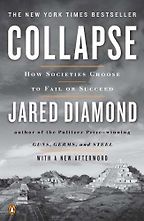
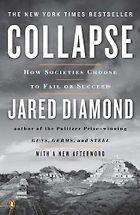
Tell me about the Jared Diamond book, Collapse: How Societies Choose to Fail or Succeed. Why did this make your list?
I wanted to get a book on my list that is actually enjoyable to read, so not everything is quite so dry and dull as a narrative. I also wanted to include something that reflects the growing importance of environmental and ecological concerns to progressive politics in America. This is relatively new to the agenda – it’s only been in the last 30 to 35 years. But going forward, one of the most important things for progressives in the US, and all around the world, will be to prevent industrial economics from killing itself.
Broadly construed, capitalism and development has been a great thing for the world. It’s inspiring to look at people in China, India and Brazil and see how much wealthier those countries are becoming. These are rays of good news in times which are pretty bleak for the US. But if you have more than six billion people living the lifestyles of contemporary Americans, that’s clearly not going to be sustainable. What Diamond shows us is that the idea of a society creating an ecological disaster that kills itself is not as crazy as it sounds. People don’t realise it, but there are many, many historical examples of this taking place. For example he tells the story of the Viking colony in Greenland, and he points out that it lasted for 400 years, which is longer than we’ve had a United States of America. The mere fact that we’ve gotten on OK for a while shouldn’t give us undue confidence that we’re not vulnerable.
So far I’ve only read the chapter on Montana, which he seems to think has already reached an unsustainable situation.
He’s a bit of an alarmist. Some people dispute some of the details of that, which is fine. But the historical facts he points to are striking. There are many, many examples of advanced societies moving backwards, and the reason is almost always that the political system could not manage the natural resource base correctly, which leads to different kinds of calamities. This is not exactly a risk for next year, but it’s a real and growing problem.
I like the way he puts a human face on it. It’s not that anybody was behaving evilly. In fact everybody was behaving fairly sensibly, according to their own worldview. But somehow the combination can lead to disaster.
Yes. He also shows how these things can work for a long time and then stop working. People don’t want to make major changes, which is very understandable. In particular, people don’t think they should stop doing things that they’ve been doing for a long time without there being any problem. But he shows that these things can really accumulate, that institutions can be quite bad. [Whether societies collapse or survive] is tied into how intelligent the political system and the political process is.
If you were all-powerful and there was one thing you could change tomorrow, what would it be?
I wish people – both as individuals and as political actors in the political system – could take the world in all its bigness more seriously. The US is a very large country in the scheme of things, but we let our people – our politicians, our citizens and our media – become very parochial at times. We don’t think about the international dimensions of our economics, or our environmental policies, or even of historical and social change. To me, that is always frustrating.
I like that about your blog, that you often make comparisons to Europe and the wider world. Obviously we have our own problems in Europe. But sometimes, living in the US, I get the sense that Americans think that everything America is always better. It’s not. Some things are better, some things are worse, and hopefully, in this global age, we should all be able to learn from each other.
Yes – and also things being bad abroad can be bad for us. It’s not just that Americans sometimes have an arrogant sense of superiority, it’s that we have a false sense of invulnerability. It matters to us what happens elsewhere in the world, as well as there being things we can learn from it.
Five Books aims to keep its book recommendations and interviews up to date. If you are the interviewee and would like to update your choice of books (or even just what you say about them) please email us at editor@fivebooks.com
Five Books interviews are expensive to produce. If you've enjoyed this interview, please support us by donating a small amount.
Matthew Yglesias
Matthew Yglesias is an American political blogger. His blog at ThinkProgress.org is one of the most prominent voices online in the American left. He has written for American Prospect, The Atlantic and New York Times Magazine. He is the author of Heads in the Sand, a book about US party politics and foreign policy, and has recently announced on his blog a forthcoming e-book with the working title The Rent Is Too Damn High
Matthew Yglesias is an American political blogger. His blog at ThinkProgress.org is one of the most prominent voices online in the American left. He has written for American Prospect, The Atlantic and New York Times Magazine. He is the author of Heads in the Sand, a book about US party politics and foreign policy, and has recently announced on his blog a forthcoming e-book with the working title The Rent Is Too Damn High