You’ve started with Nabokov’s collected short stories.
This is my favourite collection, and a lot of my own work on Nabokov deals with the stories. About 60 of them were written in Russian, ten in English. They cover four decades of Nabokov’s literary life and are representative of his dynamic as a writer both in Russian and in English, and as both a European and an American émigré. If you want to see his various predilections, the aesthetics and politics of Nabokov’s work, then the stories are a great place to go. Nabokov leaves a mark on the genre – some have argued that they are among the very best Russian, European, American short stories ever written. They are a great example of late, blazing modernism.
After Lolita made Nabokov famous, he oversaw the enterprise of Englishing his Russian works, and the stories are done very well. Back in the 1930s – he was already a famous émigré author but unknown in the English-speaking world – several stories had been translated, by Gleb Struve and others. In the 1940s Nabokov had collaborated with a man by the name of Petr Pertzoff, producing exemplary translations of his finest Russian stories. Subsequently, he worked closely with his son Dmitri Nabokov, who is a dedicated son and a gifted translator. Vladimir Nabokov would say that, unless a translator was working directly from the Russian, they should work from an existing English translation – not necessarily a kosher procedure, strictly speaking, but a valid one in Nabokov’s case. If you were to compare some of the Russian originals with the English versions line by line, they would not be identical. But Nabokov got to have a second go at the stories, in a way, and he made changes. I don’t want to say he improved them, but they tell a more complete story – in English – of his literary career.
Nabokov’s stories go back to Chekhov and Bunin and the great Russian love story, in which desire and memories interact, mostly in unhappy ways for the characters, but happily for the reader. The writing displays the perfect command of the form. In ‘Spring in Fialta’, penned in 1936, an artist realises that the death of his beloved has been a turning point of his own artistic creativity. But the stories, art and artistry notwithstanding, do address politics and ideology, too. It amazes me to this day that some readers think of Nabokov as this ivory tower artist, a vertiginous craftsman above all, without knowing or acknowledging that at key points he was capable of expressing his strong ethical and historical views in no uncertain terms. He might have been the first American writer, for example, to write about the falsification of the Holocaust, in a story published in the New Yorker in June 1945. So there is a lot there in the stories. They are a treasure trove.
Now you’ve chosen Nabokov’s Glory.
I love Glory and am in a minority group among Nabokov fans in that. Andrei Bitov, a prominent Russian author who had first read Nabokov in Soviet samizdat, once declared that you were either a Gift-ist or a Glory-ist. If I had to choose I would say I am a Glory-ist. In some ways, it is the most purely Nabokovian novel.
What is it about?
In the aftermath of the Russian revolution, Martin (in Russian, Martyn) Edelweiss, a part-Swiss Russian émigré, finds himself at Cambridge, where Nabokov himself went. Estranged from his surroundings, Martin contemplates crossing the border from Latvia into the Soviet Union where he plans to do something, perhaps political subterfuge. But really it is not essentially about politics or ideology but about the character’s disappearance into the realm of pure art. The end is incredibly haunting. Martin’s English friend Darwin (a very suggestive name) brings news of Martin’s disappearance to his mother. There is a path winding through the woods. The end. Nabokov hinted at wanting to take all the people out of fiction so that it should be more like a landscape painting, a pure realm, a path winding into perfect art. It’s very hard to do this in the practice of fiction – you can’t be too schematic and theoretical, but you can’t underplay the narrative hand, either. Imagine, the years are 1930-32, Nabokov was still a young writer, it was his fourth novel, and in a sense his vision here is so complete. Glory is a Russian novel written in Berlin, originally serialised in an émigré quarterly, and many years later translated into English by Dmitri Nabokov and his father – very well translated, I think.
Now, Pnin.
I deliberately chose Glory over The Gift, but I have to get the American years in. There is Lolita in the back of everybody’s mind, of course, and 95 per cent of the students who take my undergraduate course are doing it because of Lolita. But I’m choosing Pnin instead for two reasons. Firstly, Lolita looms so large that I don’t have to choose it, but, secondly, because Pnin is the immigrant of Nabokov’s American novels. The main character is a Russian professor at an American college, and the novel is to a large extent about Russian culture misunderstood by Westerners. But it is also a truncated love story with a moral dilemma. Pnin himself is not Jewish but Mira, once Pnin’s beloved, is Jewish, and she died in Buchenwald. The story is punctuated by the tension of his trying to forget and being incapable of unremembering. Nabokov was one of the very first American writers to write extensively about the Shoah in a work of fiction. Nabokov wrote Pnin in the 1950s and parts of it were published in the New Yorker, so it is astounding how far ahead of his literary contemporaries Nabokov was in his thinking about the Shoah and how it might be remembered and memorialised.
Is it autobiographical?
Slightly. Not in any direct way, but insofar as Pnin is a Russian intellectual in America in the post-war period, and also in the main character’s connection with a female Jewish identity. Nabokov’s wife, Véra Nabokov (born Slonim), was Jewish. So, yes, Nabokov is mulling over themes he mulled over throughout his life – here he does not reference his life so much as his thinking. Pnin is a novel about Holocaust memory and the kinds of things that other European émigré intellectuals – Adorno, Arendt – were thinking about at the time. Yet Nabokov creates a perfect work of art, a work that succeeds on aesthetic grounds but does not distract the reader from the various political, intellectual and philosophical battles of his novel.
Pnin has survivor’s guilt, though he is not guilty. He keeps seeing and imagining how Mira died in Buchenwald. Then Pnin doesn’t get the tenure he was after, at which point Nabokov pulls a trick that he pulls again and again – putting himself into the story. A great Russian émigré called ‘Vladimir Vladimirovich’ arrives to take over, in the way he may well have done at Cornell in reality, and he offers Pnin the chance to stay on. Pnin doesn’t want to exist in a world where the authorial presence is so close and so in charge, so Nabokov releases Pnin. Pnin departs, but his legend lives on. Nabokov ends his novel with Pnin’s disappearance and also with a joke that takes us back to the beginning.
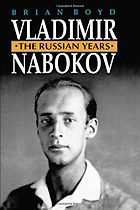
Now we have Brian Boyd’s biography of Nabokov.
Note that I’m deliberately choosing English-language books on Nabokov that are in print and are likely to remain in print for the years to come. There are a number of wonderful books by other Nabokov scholars, some of these books no longer available in print. So, Boyd’s biography… It’s huge. Two enormous volumes. Monumental. It still remains the single most important book on Nabokov, having eclipsed a lot of things when it was published. It is reliable and readable. Boyd had access to Nabokov family materials. The field has changed in the past 20 years and there have been other biographies, including two Russian-language ones, neither one particularly outstanding. If I’m asked which biography is the best, I’d say the Boyd, even though I do have some reservations about it. I think in a way it’s almost too perfect, and in places it perfects and corrects Nabokov himself. That’s not to say that Boyd is avoiding contention or does not ask the hard questions, but you wonder if the story isn’t told almost exclusively through the Nabokovian lens. But we could not have done without Boyd’s work in the field.
What are some of the specific things one might have done differently?
It’s hard to write a biography in English of a person who is equally important to Russian, European and American cultures without getting bogged down in various cultural or ideological contexts.
For example, Nabokov’s great personal tragedy was that he wasn’t a great Russian poet. It had always been his ambition and it continued to be his ambition, but by the early-1930s he was writing less poetry, and when he resumed, off and on, he seemed to sense his limitations. Not that as a poet he wasn’t an accomplished craftsman, but Nabokov’s poetry lacked genius, a unique intonation. If you read a poem by Blok or Akhmatova, you would know it was written by them. With Nabokov’s poetry you probably wouldn’t know. This was a huge source of dissatisfaction to him as an artist, and in the story of his life it deserves more attention.
I suppose it would probably be a cavil to say that in Boyd’s biography the map of 20th-century Russian literature has one principal edifice. Some of the Russian works and authors, both Soviet and émigré, who had influenced Nabokov in profound and various ways, appear as hillocks and mounds, not literary mountains. It’s a bit like a map Nabokov himself might have drawn.
Get the weekly Five Books newsletter
Another underappreciated matter would be the importance to Nabokov of his marriage to a Jewish woman and the effect that had on his life and career. I think it changed him as a person. Nabokov had to negotiate Jewish questions in his marriage, his son was halachically Jewish, he stayed in Nazi Germany until 1937 with a Jewish wife and son… but also it affected his writing and vision. I think there is a web of Jewish references and a significant trace of Judaism that we are only beginning to come to terms with in Nabokov’s writing. The late Véra Nabokov and Dmitri Nabokov participated in the creation of Boyd’s biography as advisers and readers, and they have both been reticent on this and other matters.
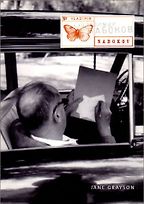
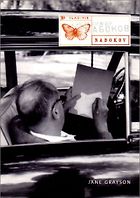
Now Jane Grayson’s short life of Nabokov.
I like this book very much. It’s short and beautifully illustrated, and you can read it in one sitting. When I teach graduate students I make them read it before the first session of the seminar, so that they have an overview in advance. Thirty years ago Grayson wrote a very important book called Nabokov Translated; she is a serious scholar. But this is a slender book for the general public, and it does not shy away from the hard questions.
What are the hard questions?
Well, consider this, for example. The year is 1937, and Nabokov is in the grip of a passionate love affair in Paris, all the while sending tender letters full of affection that a person couldn’t fake back to Véra, who is in Berlin with their son. And yet he is … he is with another woman. Soon after his reunion with his family in Czechoslovakia in May 1937, Nabokov wrote the story ‘Cloud, Castle, Lake’, in which he talks about addressing a real person, the only woman he has ever loved but cannot be with. And there is an otherworldly feminine presence there, too, present in the lives of both the main character and his fictional creator. This incredible story about a Russian émigré is set in Nazi Germany. So, what is one to make of all that? Grayson address Nabokov’s affair soberly and with clinical precision and artful brevity.
Why would anyone expect a great writer not to have had affairs?
Certain things have been obfuscated, which is inevitable. In the aftermath of fame Nabokov, aided by diligent Nabokovians, carefully constructed a public myth of his past, and his family life withstood a great deal of curiosity and was seen as impermeable, impenetrable. That was until some archival materials came to light, and they almost always do eventually, including some letters. Of course, it is one thing to look at them as private facts, and another to look at Nabokov in light of some of the revelations and personal testimonies. All I can tell you is that when I came to this country 23 years ago and, as a young poet, actively took part in Russian émigré cultural life, I met intellectuals and writers of the first and second waves of immigration who had known Nabokov… The kinds of responses they had to him as a man made me very uncomfortable because I had idealised him from the life inferred from his art. People said he was unkind, unfriendly, haughty… these are things that may or may not become subjects of further investigation. All in all, I would predict that there is going to be a revisionist Nabokov biography. Not by me, I assure you, I have my own literary garden to tend at this point!
But, in a way, as regards Nabokov’s life, my Pnin, my Glory and my stories are enough for me…
Maxim D. Shrayer’s answers copyright 2010 © by Maxim D. Shrayer
Five Books aims to keep its book recommendations and interviews up to date. If you are the interviewee and would like to update your choice of books (or even just what you say about them) please email us at [email protected]
Five Books interviews are expensive to produce. If you've enjoyed this interview, please support us by donating a small amount.