
The Best Memoirs and Autobiographies
Last updated: March 18, 2025
At least as long ago as St Augustine wrote his Confessions, people have enjoyed books where people describe their own lives, their inner thoughts and struggles. Many memoirs chronicle difficult political realities, such as the Armenian genocide or living under Communism in Eastern Europe. The most frequently recommended autobiography on Five Books is Speak, Memory by the Russian-American writer Vladimir Nabokov.


The Best Memoirs: The 2025 NBCC Autobiography Shortlist, recommended by May-lee Chai
The last year has been one of the best for autobiography and memoir in recent memory, says May-lee Chai, chair of the judging committee for the National Book Critic Circle Prize for Autobiography. Their 2025 shortlist includes a posthumous memoir by Alexei Navalny, former leader of the opposition in Russia, and a travel memoir with a surrealist twist.


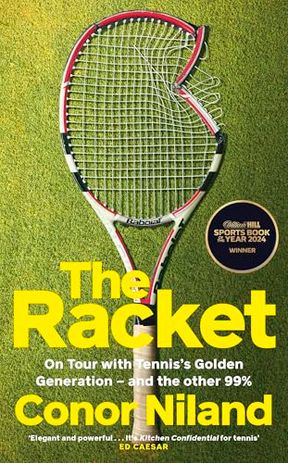


Award-Winning Memoirs of 2024
Whether you fancy a quality sports autobiography or an artfully-illustrated graphic narrative, we’ve got suggestions for you. Here, we’ve put together a concise round-up of the award-winning memoirs of 2024 to help you find highly-acclaimed new books you might otherwise have missed.


Memoirs of Girlhood, recommended by Tyler Wetherall
Our teenage years are often fraught with emotion, experimentation and the crises that arise with the coming of age. Here, the novelist and memoirist Tyler Wetherall discusses the memoirs of girlhood in which she found echoes of her own experiences—and perhaps you will too.
-

1
I Would Meet You Anywhere: A Memoir
by Susan Kiyo Ito -
2
Secret Harvests: A Hidden Story of Separation and the Resilience of a Family Farm
by David Mas Masumoto -
3
Rotten Evidence: Reading and Writing in an Egyptian Prison
by Ahmed Naji, translated by Katharine Halls -
4
How to Say Babylon: A Memoir
by Safiya Sinclair -
5
Story of a Poem: A Memoir
by Matthew Zapruder
The Best Memoirs: The 2024 NBCC Autobiography Shortlist, recommended by May-lee Chai


The Best Memoirs: The 2024 NBCC Autobiography Shortlist, recommended by May-lee Chai
It's been a “phenomenal” year for autobiographical writing, says May-lee Chai—the award-winning author and chair of the judges for this year's National Book Critics Circle prize for autobiography. Here she offers us a tour of the five memoirs that made their 2024 shortlist.


Favourite Memoirs, recommended by Calvin Trillin
A successful sense of place is the most satisfying part of any book, argues American journalist and humorist Calvin Trillin. He picks out five of his favourite memoirs — and says that part of what he likes about them is that they’re short.


The Best Addiction Memoirs, recommended by Matt Rowland Hill
The author and recovering addict Matt Rowland Hill dissects the ‘addiction memoir’—its literary potential, its formal conventions and its offer of hope and catharsis—as he recommends five books that exemplify the form, from Thomas De Quincey’s Confessions of an English Opium Eater to Mary Karr’s bestselling Lit.


The Best Hiking Memoirs, recommended by Gail Simmons
Accounts of journeys on foot capture the imagination; partly this is a function of the satisfaction of following a linear journey from start to finish, and partly it is a quality inherent to walking itself—a freeing of the mind. Gail Simmons, who follows an old English pilgrimage route in her book Between the Chalk and the Sea, selects five hiking memoirs that celebrate the liberation that comes from putting one foot after another.


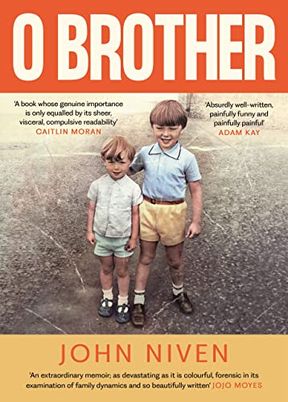


Notable Memoirs of 2023, recommended by Cal Flyn
Five Books deputy editor Cal Flyn selects the best recent autobiographical writing in this round-up of notable memoirs of 2023—taking in new work from such literary giants as Janet Malcolm and Annie Ernaux, the writer other writers are raving about, and a humorous debut depicting life in a haunted antiquarian bookshop.


Memoirs of the Armenian Genocide, recommended by Thomas de Waal
More than 100 years after the Armenian genocide, author Tom de Waal chooses books that sidestep the politics and bring us back to the human story. He picks the best memoirs of the Armenian genocide.


The Best ‘Anti-Memoirs’, recommended by Yiyun Li
Yiyun Li, author of Dear Friend, from My Life I Write to You in Your Life, on the sheer messiness of life, the irrelevance of ‘I’, and why brutal honesty is often the truest way to capture the people we love the most
