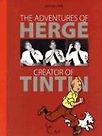
Before we get to the books you’ve chosen about Tintin, what is a Tintinologist and why does it deserve its own term?
Somebody who discovers and loves Tintin is obviously a Tintinophile. My own love of Tintin began as a four-year-old reader. The idea of a Tintinologist developed for people who do more than that – who spend time studying Tintin and Hergé. It’s not something I’ve invented or promoted, but I prefer to be called a Tintinologist than one or two other things so I’m quite happy with it. And I find there is some credibility in the title. It’s even got to the stage where universities send me students’ graduate dissertations to be marked. I’ve had dissertations from Oxford and Cambridge. Tintinology has almost become a science.
Why have the Tintin books endured so?
Tintin is a mirror not only of the 20th century – his adventures always mirror contemporary events – but also of life. If you know and love your Tintin, there are Tintinesque moments in your everyday life. He’s also a very moral figure, an example of good behaviour and a good approach to life which stems from Hergé’s boy scouts background. That’s why Tintin is a shining example to young readers. That you can read a Tintin adventure any number of times is a test of its extraordinary qualities and a key reason why it has endured since Hergé’s death in 1983.
What are your impressions of the Tintin film?
The film is a good thing because it will bring more new readers to Tintin, particularly in America where they have a different strip cartoon tradition. It is likely to be considered imperfect by anybody who is totally buried in the books and there are purists who have not liked it. But I think they’re rather missing the point. Both Stephen Spielberg and Peter Jackson, who made the film, are committed Tintin fans so they haven’t mucked about with it. What they’ve done is considered and careful, and often brilliant. What I like best about it is that you’re sitting on the edge of your seat, just as the books themselves are page-turners. It emulates that sense of non-stop adventure and excitement. It is also funny, and the humour is terribly important in the books. Hergé was one of the most humorous people I’ve come across.
Tell us the circumstances of your meeting Hergé, and what was he like in the flesh?
It was one of those Brussels summers where the politics shuts down, and there isn’t much to do if you’re working as a journalist in Brussels as I was. I was looking for something to do and since I was a huge Tintin enthusiast I thought, why not try and meet Hergé? All my French colleagues said he is publicity shy and will say no, but I telephoned the studio anyway. I was talking to the assistant when I heard someone mumble something in the background and take the phone. It was Hergé. I said who I was and asked would it be possible to take him out to lunch? He said immediately “Pas de question”, so I thought: Oh well, forget it. But then there was a pause and he asked if I would be free the following Thursday.
“Tintin is a mirror not only of the 20th century – his adventures always mirror contemporary events – but also of life”
He invited me to this wonderful restaurant, still the best in Brussels, called Comme Chez Soi. I had a very memorable lunch with him. He was a celebrity and did indeed hate publicity. We sat in a corner which was screened off so other people didn’t see that he was there, which was rather typical of him. It was a marvellous lunch with good wine – Hergé was a great connoisseur of wine – but one of the worst interviews I ever had. He didn’t want to talk about himself. Whenever I asked him a question, he turned it around and asked me one. But it lead to further encounters, a bit of a friendship and real insight into his work.
For instance?
We mentioned humour. If you didn’t meet Hergé, you wouldn’t realise how funny he was – he saw the humorous side of almost everything. He was visually terribly aware, he didn’t miss anything which he saw. He was in his seventies then and I was in my mid-twenties, and I think that’s the reason why he agreed to see me. Younger, a French-speaking British journalist, I was slightly exotic and that intrigued him. Hergé was terribly young for his age. To use an expression that was used more then than now, he was very “with it”. When we got talking about music, he asked me what my favourite Pink Floyd songs were.
You see all this in the books. In many respects, Hergé is Tintin himself.
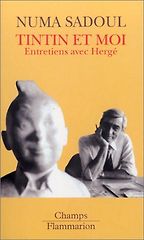
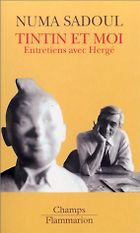
Let’s continue in this biographical vein with Tintin et Moi: Entretiens avec Hergé.
This came out in 1975. Numa Sadoul was a young student in the south of France who also asked to interview Hergé. He went along with his tape recorder and the interview just went on and on. He took 14 hours of material. Hergé, for the first time, came out and talked about his life, which as I said he had always been reluctant to do. So for anyone interested in Hergé this is a basic background document, because it’s where he spills the beans on himself.
What are some of those beans?
Hergé had a rather tortured life, which he never talked about. He had a great sense of humour, but like a lot of comics he also had a very strong depressive side. Tintin was a struggle for him and Hergé was a victim of his success. From the moment Tintin first appeared Hergé was under pressure for the rest of his life to perform at that level, which was very demanding. That and other things plunged him into serious bouts of depression, which undermined his work in the 1950s.
He had two nervous breakdowns.
At least two. Hergé had a very rough period from the end of the war until he met his second wife in the late fifties – a much younger and very beautiful woman who worked in his studio, and who gave him a more positive approach to life than the frame of mind he’d been in for some time.
I notice Sadoul is Congo-born. I was shocked when I first picked up Tintin in the Congo – Tintin’s second adventure – by its often downright racist content. How can a Tintin fan reconcile this?
I don’t think it needs reconciling, I think it needs explanation. Tintin in the Congo was written in 1931, and I would challenge you to find any book written about Africa in 1931 with a different viewpoint. This is how Europeans saw Africans at the time – very paternalistic, very patronising. They were childish, they were simple, they needed to be made sophisticated by the Europeans. That was simply the dated, inaccurate European view of Africa, in literature and in cinema. It’s unfortunate, but that’s how it was. We should read it as a document of its time and not put our politically correct spectacles on.
The other thing is that I’ve travelled widely in Africa, as Africa correspondent for The Daily Telegraph, and the hardest book to buy in Francophone Africa is Tintin in the Congo – not because it’s politically incorrect but because they love it so much it’s sold out in bookshops. Africans I’ve spoken to have said what a privilege it was that Tintin came to their continent.
I remember reading Tintin in the Congo as a very small child, four or five, but I was most upset by the wholesale slaughter of wildlife, which is also something quite objectionable in the book by today’s standards. But at that time Europeans went to Africa as big game hunters and came back with their trophies. Now we go with cameras not guns, and it’s a different world. Hergé always referred to it as a sin of his youth – he was only 21 or 22 when he did it.
The other accusation against Hergé, albeit on very thin grounds, was that he was a Nazi collaborator.
That’s again a misinterpretation by people who were jealous of his success. The story behind it is that Tintin had been appearing in the children’s magazine of a paper called Le XXe Siècle. And the moment the Germans occupied Brussels in 1940 Le XXe Siècle was closed down, on the basis that it was a Catholic newspaper. Hergé was upset because he was out of work, but very soon afterwards he received a phone call from the editor of Le Soir, Belgium’s leading newspaper, asking if he’d bring Tintin over to them. Hergé was of course delighted.
In a matter of weeks Le Soir had come under control of the Germans, and began to feature reports of Wehrmacht successes on the Eastern front and stuff like that. So Hergé was writing for a paper which was collaborating, and it was embarrassing. But a lot of Belgians in the resistance said they still read Tintin because it lifted their morale. That was why Raymond Leblanc, one of the leading resistance figures, set up Tintin magazine after the war. Talking with Hergé, he said of course that with hindsight he would have done things differently. But he only collaborated accidentally and certainly his politics were not of that kind. If you look through the Tintin books, you’ll find German villains littering them.
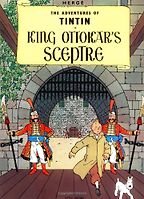
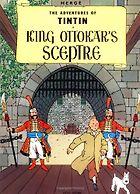
Let’s take that as our segue to one of the two books of Tintin adventures you’ve chosen – King Ottokar’s Sceptre.
Yes, this is a wonderful example. The villain, Müsstler, is a combination of Mussolini and Hitler. King Ottokar’s Sceptre, dating from 1938-39, mirrors the Anschluss of Austria by Hitler. Here we have a small Balkan state, Syldavia, facing the threat of a fascist takeover. Hergé was thinking very much in terms of Romania, which had a king being pressured by a right-wing political group, and also Albania. It’s a great anti-fascist statement, and sure evidence that Hergé was not one himself. The villains are the neighbouring Bordurians, a fascist state under the dictatorship of Müsstler. As I said, all the Tintin books mirror 20th century politics. And this one does the whole Nazi takeover of middle-European countries.
Why else did you choose this book in particular?
It’s a wonderful book, and Tintin is of course quite heroic in thwarting this fascist takeover. The narrative is very strong, it’s beautifully drawn in a picturesque setting, and we have the first appearance of Bianca Castafiore. There are many great elements to it, and it would definitely be one of my desert island Tintin adventures.
It’s also an expertly-crafted detective story, in the mystery of how the titular sceptre is stolen from a closed room. The Castafiore Emerald is another such detective story. Is that as much an appeal of Tintin as the political resonances?
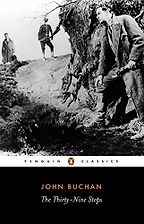
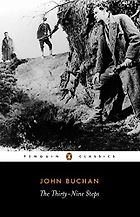
Yes. The quality of the Tintin books is a combination of quality of drawing – which is very high – and quality of narrative. Hergé was a huge film enthusiast from his early childhood on. During the occupation of Belgium in World War I, his mother would take him to small cinema theatres to see black-and-white silent films with a lot of slapstick – which was very important to the development of his strip cartoon. Early Hitchcock was also a great influence. And it was through Hitchcock that Hergé discovered John Buchan’s The Thirty-Nine Steps, a book that mirrors the way Hergé constructed a narrative.
Tell us more about how The Thirty-Nine Steps influenced Hergé and why it features on your list of books about Tintin.
Having first discovered the Hitchcock film, Hergé discovered Buchan’s book. Then he created The Black Island, the adventure where Tintin comes to Britain, stopping off in Dover and Suffolk before going north to Scotland. And of course it is a reflection of the flight northwards of Richard Hannay in The Thirty-Nine Steps. Buchan’s construction of his narrative was precisely the same as what Hergé was striving to do. So John Buchan is an author after Hergé’s heart. He creates wonderfully exciting adventures that are very much in the spirit of Tintin. Like them, Tintin is a thriller, a page-turner, and like you said a detective story.
Hitchcock said of The Thirty-Nine Steps that it was a wonderful book to film because you didn’t need to do a storyboard, it was all there already. It’s exactly the same with Hergé, and Spielberg said the precise same thing – that one of the reasons why he wanted to film Tintin was because the adventures are themselves storyboards.
Another similarity is that both Tintin and The Thirty-Nine Steps were published serially. Is that important to remember when thinking of Tintin?
The advantage of the serial form is that you must leave the reader hanging in anticipation of what comes next. They have to wait until the next installment. For many writers that is very positive, whether it’s Dickens or Buchan or Hergé in their different fields. It means you have a rattling good story.
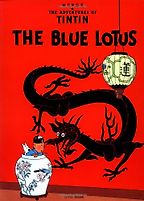
Shall we move on to the next of the Tintin books you’ve chosen: The Blue Lotus?
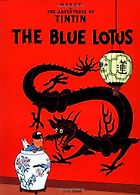
I think one can safely say that The Blue Lotus is the most important Tintin adventure. Tintin first moves East with The Cigars of the Pharaoh. The Blue Lotus, written in 1934, continues the adventure in China. When he started it, Hergé got a letter from a priest at Leuven University [near Brussels] saying: “I gather you’re sending Tintin to China. Be sure that you mug up on things Chinese and don’t just stereotype. We have a number of Chinese students here who you could talk to.” Hergé took up this offer and met several of the students. One of them in particular, called Chang Chong Chen, had tea with him on Sunday May 1st 1934 and they immediately struck it off. They were born in the same year, they had the same sign of the zodiac, the same interests, and Hergé was delighted to learn about China through this young Chinaman. A great friendship developed instantly. Chang would come every Sunday for tea, Hergé would give him his latest plate drawings for The Blue Lotus, Chang would write in the Chinese ideograms and they would have long discussions about art and philosophy and everything Chinese.
The result is a masterpiece. Tintin is immersed in extreme realism – Shanghai exactly as it was in 1934. It takes Tintin to a level we hadn’t seen before, because the previous adventures were approximations of a country or whatever Hergé could discover about them. They didn’t have the rich, accurate detail of The Blue Lotus. It is beautifully drawn by both of them, because the Chinese detail was done by Chang. Hergé suggested that Chang’s name should be on the title page, but he declined. Chang then went home and they lost contact for a very long time, but their friendship was reflected in the book in the character also called Chang Chong Chen – the orphan boy who is saved from the flooded waters of the Yangtze by Tintin, and who becomes Tintin’s closest friend in this adventure. That was mirroring in the book what was happening in real life. After The Blue Lotus everything was totally different.
Your final selection is Honore de Balzac’s great cycle of stories and novels, La Comédie Humaine.
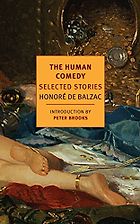
Hergé was not a huge literary man. He liked books but he didn’t spend his time reading. Cinema and art were more his things. But he did love Balzac. He read a book in the fifties which was an academic analysis of the use of characters in Balzac’s novels, and how recurring characters gave a structure to the sequence of Balzac’s books which was part of its appeal. This made a deep impression on Hergé because he realised he had already started doing this when he introduced Tintin’s arch-villain – Moriarty.
Erm, I think you’re confusing your arch-villains…
Sorry, Rastapopoulos! Freudian slip. Rastapopoulos is the Moriarty to Tintin’s Holmes. This is another literary allusion because Hergé also knew his Sherlock Holmes and his Conan Doyle. It was another important literary source for him.
Rastapopoulos, Tintin’s nemesis, is introduced in Cigars of the Pharaoh. This was in 1933-34, but Hergé didn’t know then that Rastapopoulos would be there throughout the series – and very possibly at Tintin’s end in the unfinished Tintin and Alph–Art. But there he is. Then we have Bianca Castafiore, and Chang Chong Chen, and Thomson and Thompson, and of course Captain Haddock and Cuthbert Calculus. So there is this wonderful cast of recurring characters, and some of the characters introduced early on in Tintin pop up unexpectedly later. Hergé developed this in the fifties, after rereading a lot of Balzac’s novels which he had enjoyed as a younger man. He realised that what Balzac did was highly applicable to his own art. La Comédie Humaine was a huge literary influence, and has not a main cast but a cast of secondary characters.
I always thought of Hergé’s secondary characters as more comic than anything else. Even Rastapopoulos is the butt of the joke in Flight 714.
But only there, and after Flight 714 Hergé was unsure of whether he was right to have done that. Otherwise Rastapopoulos is fearful, a very unpleasant man and downright sinister. He should send a shiver down your spine. When Hergé was dying and he did the last drawing of Tintin, in Tintin and Alph-Art, about to be cast as a statue by Rastapopoulos as if so he could be exhibited in a museum – that is a really horrific, frightening moment. No, I don’t think the secondary characters are all comic. Of course they are very amusing but they are more than just that.
What else did Hergé take from Balzac’s cycle of 91 finished works?
Balzac was a prolific writer – much more so than Hergé – and the model is particularly the use of characters, but also the building up of tension. But Balzac’s stories were spun out over thousands of words whereas Hergé’s adventures were limited to the final format – the 62 pages agreed with his publisher at the end of the war.
One of the things that struck me as I got sucked into Tintin is that you start off thinking that it’s great art, and you finish thinking that it’s very good literature. Hergé I view as a literary figure more than an artist. It has become clearer and clearer to me that his actual narratives are so strong and so well-constructed. An important point is that Hergé did it all himself. He was very fussy and a perfectionist with total control over his creation, which is why he didn’t want anyone to continue it after his death.
This interview was published in 2011.
Five Books aims to keep its book recommendations and interviews up to date. If you are the interviewee and would like to update your choice of books (or even just what you say about them) please email us at editor@fivebooks.com
Five Books interviews are expensive to produce. If you've enjoyed this interview, please support us by donating a small amount.