The distinguished art critic and art historian Michael Fried talks about the importance of philosophy to his work. He recommends the best books on the 'philosophical stakes of art.'
What you mean by ‘the philosophical stakes of art’?
I’ve been deeply interested in the relation between art and philosophy for many years. My most sympathetic and engaged readers include a number of philosophers. They tend to be supportive of what I do, which is not always the case with art historians. I believe that art, and modern art in particular, does a great deal of philosophical work. The kind of reflection that takes place in philosophy carries on elsewhere in the culture, and very significantly in art. My interests have always crossed between art and philosophy, without ever leaving historical thinking behind.
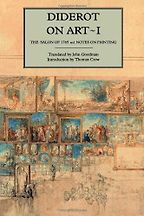
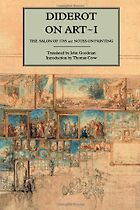
Your first author, Denis Diderot, seems to share that point of view.
Yes, Diderot is a great philosopher and arguably the best-ever art critic. My own work as an art historian has engaged closely with his, especially Salons (the art-critical texts) and his related writings on painting and the stage. In my early book, Absorption and Theatricality: Painting and Beholder in the Age of Diderot, I discovered something about Diderot previously not recognised: the importance he placed on the relation between the painting and the viewer. That issue was central to the development of French painting in the mid-18th century – between Chardin and Greuze – and Manet and his generation over 100 years later.
It’s a topic with resonance beyond the modern period. The basic idea is that painters inevitably construct a certain sort of relationship with the viewer. In the 1750s, Diderot put forward a set of claims as to how that relationship was supposed to work for a painting to be successful. I argue in my book that those claims and imperatives turned out to be foundational for modern painting and modern art generally.
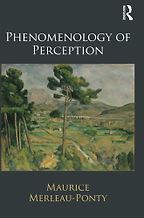
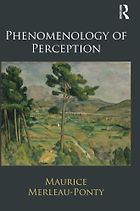
This relationship between viewer and art continues with your second book, Maurice Merleau-Ponty’s Phenomenology of Perception.
Yes. Merleau-Ponty was a French philosopher from the 40s and 50s, a contemporary of Sartre and De Beauvoir. I read him for the first time in my early 20s before his works were translated. He represents so-called ‘existential phenomenology’. Of fundamental importance to him was that we are ‘embodied’ creatures, not disembodied perceptual systems and free-floating intelligences. He understood painting to be involved in a network of relations in which embodiment is crucial to the creation and experience of the work.
Why does he consider embodiment so important?
He takes it to be a fundamental truth about our being in the world. This truth is something that philosophy has tended to ignore, or minimise, in the interest of a more abstract view. He insists we are in the world, not as minds conjoined to mechanical bodies, but as fully incarnated creatures. In his view, perception itself is a bodily activity. We are not separate from the world; we are woven into it. He sees certain painters – Cézanne, obviously – as registering the fact of embodiment in their art. His early essay, Cézanne’s Doubt, is one of the great texts on 20th century painting.
Merleau-Ponty has meant a great deal to me. My own feelings about art as a young man were intensely ‘bodily’. It was marvellous to discover that’s how he thought it should be. The consideration of embodiment has been basic to almost everything I’ve done in art criticism and art history until now.
Specifically, the issue of embodiment plays a key role in my Caravaggio book. Because of the brilliance of the realism in his paintings, they have tended to be seen in ‘optical’ terms – as if depiction in his art is equivalent to what one might see in a mirror. I’m not claiming this is wholly wrong, but that manifestly at work there’s a relation to his own embodiment and activity in making the paintings – and that we, as viewers, relate to them in a similar way.
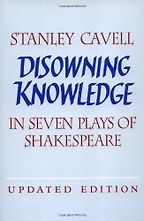
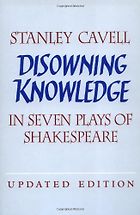
Your next choice, Disowning Knowledge in Seven Plays by Shakespeare, is written by a friend of yours, Stanley Cavell.
Cavell is an American philosopher in his mid-eighties who taught for many years at Harvard. We met in 1962 and became close friends when he began teaching there a year later. I’m not alone in finding his books and essays the most profound and helpful works we have on Wittgenstein, arguably the deepest philosopher of the 20th century. My own work has a close connection to both thinkers.
I could have selected Cavell’s philosophical masterpiece, The Claim of Reason, but I chose the Shakespeare book because it has a bearing on my thinking in The Moment of Caravaggio. Shakespeare and Caravaggio were almost exact contemporaries. The great tragedies date from the 1590s and early 1600s, and Caravaggio’s art comes from this period. He died in 1610.
Different as the two men and their cultures were, it makes perfect sense to think of them as contemporaries. Their respective visions are, in a certain sense, complementary, because certain philosophical issues are at stake in their bodies of work. The most important is scepticism. Cavell’s key insight into Shakespearean tragedy is that it expresses the prevalence of a sceptical worldview – we cannot truly know what’s in someone else’s mind. This, Cavell suggests, is why Othello falls prey so easily to Iago. Othello is startled by the sexual feelings he has awakened in Desdemona and is appalled not to know everything she’s thinking. Has she really been unfaithful? How can he be certain? This is also why Leontes in The Winter’s Tale conceives the insane idea that his wife has been unfaithful with his best friend, and that his son – his spitting image – is not, in fact, his son. Cavell detects a philosophical underside to such jealousy, the demand that another person – typically a loved person – be entirely transparent to one’s own, not quite sane, desire for absolute knowledge. All this connects closely with Cavell’s understanding of Wittgenstein and with an emphasis on what Cavell calls ‘acknowledgment in place of knowledge’.
Support Five Books
Five Books interviews are expensive to produce. If you're enjoying this interview, please support us by donating a small amount.
In Caravaggio, we have something very different – the emergence of a new and powerful convention in painting that I call ‘absorption’. There’s a painting of a young woman sitting on a low chair, looking down, with her hands crossed in her lap. A single tear glistens on her face but she isn’t otherwise in a state of obvious distress. But we know she represents the Magdalene reflecting on her past. The critical rhetoric of the painting testifies to its ability to persuade viewers that the young woman is deeply moved. Too deeply, we might say, for outward expression of her feelings. This is, I would claim, the magic of absorption. As viewers, we are somehow led to project into the painting the intense feeling that we think we find there.
Put this alongside Shakespeare and it can seem they are antithetical. No one is actually there in the Caravaggio: it’s just a depiction. But we’re led to attribute great emotional depth to the figure. It’s as if we’ve been given unimpeded access to the contents of her mind. In other words, we have an extraordinary situation. Radical scepticism leads to stupendous tragedy in England, and the ‘invention of absorption’ holds scepticism at bay in contemporary Rome. The fact that these two major artistic achievements took place at the same time is deeply interesting.
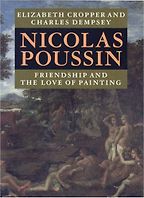
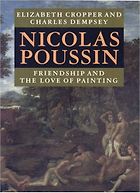
Your next choice is Nicolas Poussin: Friendship and the Love of Painting by Elizabeth Cropper and Charles Dempsey.
I’ve included one art-history book. It’s a terrific study of a magnificent painter, French by birth, who lived and worked in Rome. Poussin was from the generation that came along after Caravaggio, and he represents a kind of recuperation of classical values after the truly volcanic upheaval caused by Caravaggio’s art and life. He famously remarked that Caravaggio was born to destroy painting.
Cropper and Dempsey’s book is a masterly study of Poussin’s art, thought and milieu, including his relation to the Stoic philosophers and the great French writer, Michel de Montaigne. But I also chose it because they were my colleagues at Johns Hopkins University for at least 20 years and I could never have written The Moment of Caravaggio without their friendship, teaching and support. Both have written brilliantly about Caravaggio. I dedicated my own book to them in recognition of the intellectual debt I owe them.
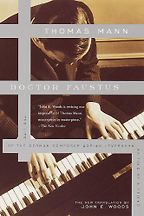
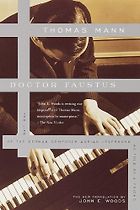
Your final choice is Doctor Faustus by Thomas Mann.
I almost surprised myself when I included this. But it’s a book I love. Writing during World War Two, Mann reflects on modernism in the arts, the tragic history of modern Germany and the persistence of Nietzsche in the German imagination. It’s a work of extraordinary intellectual seriousness and ambition.
Get the weekly Five Books newsletter
It may seem risky to say this, but why should historical writing about art not try to achieve a comparable seriousness and ambition? Could not a study of Caravaggio or Manet, or some other important figure, aspire to a similar intensity and depth of engagement? Some studies have tried: T.J. Clark’s chapter on Malevich and communism in his great book, Farewell to an Idea, is a case in point.
Why do you think people writing about figures in the arts don’t aspire to that kind of seriousness?
I don’t know. It would probably strike most art historians as hubristic, as going beyond the accepted norms of their discipline. For me, Mann’s great novel is a fictional ideal of what it might mean to grasp art in its philosophical depth.
February 9, 2011
Five Books aims to keep its book recommendations and interviews up to date. If you are the interviewee and would like to update your choice of books (or even just what you say about them) please email us at [email protected]
Michael Fried is a poet, art critic, art historian and literary critic. He is currently the James R. Herbert Boone Chair of Humanities at Johns Hopkins University. A man of eclectic tastes, including modernism, realism, theatricality and portraiture, he is the author of books on 18th and 19th century painting and literature, a collection of criticism of contemporary art, and several volumes of poetry.
Michael Fried is a poet, art critic, art historian and literary critic. He is currently the James R. Herbert Boone Chair of Humanities at Johns Hopkins University. A man of eclectic tastes, including modernism, realism, theatricality and portraiture, he is the author of books on 18th and 19th century painting and literature, a collection of criticism of contemporary art, and several volumes of poetry.