Fear is a great examiner of one's character, argues the World War II veteran and eminent historian of war, Sir Michael Howard. He recommends the best books on war—two on strategy and three on what it's actually like for soldiers and commanding officers.
Of the five books that I’ve chosen, two of them are analyses of war as a whole, that is to say, Clausewitz On Warand Sun Tzu The Art of War. The other three describe the actual experience of war as it is fought, which gives a three-dimensional picture of the whole activity.
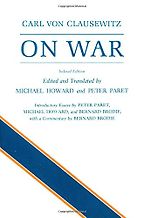
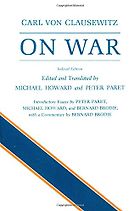
I’d like to start with Clausewitz who sets the whole scene. Clausewitz himself was a Prussian general who fought in the Napoleonic wars from the very beginning to the very end and saw how the whole nature of war changed. He started in the 1790s and the early years of the French Revolution when war was still fought by regular armies. By the end, by 1815, it was being fought by whole nations. The very limited activity of 18th-century warfare had expanded into something like the total war which was to distinguish warfare in the 19th and the 20th centuries. So that set him analysing the whole thing and trying to see what was the essence of war and how it was changed by its political, ideological and social context.
I know that some people consider ‘Clausewitzean war’ to be over. Would you agree with that?
Clausewitz’s definition of war applied to all the various changing natures of war. He comes from giving a broad analysis of what war is and what war was going to be to then focus on the kind of war he experienced. From the point of view of his own experience, a great deal of what he said has changed and is no longer relevant, but overall his analysis of war and the nature of war and the problems confronting anybody going to war still do remain as valid now as they were then. ‘Clausewitzean war’, as describing the war which he experienced in his own lifetime, is very narrow and a mistaken interpretation of him. In the first place he says that war must be regarded as a method of conducting national strategy, the way in which nations or states conduct their relationships with one another. The use of force is one tool they use in that. The use of force is determined by the policy of the states and that applies irrespective of the kind of force used. Certainly the kind of force which people now use is quite different from that used in Napoleonic times, but the use of force as a tool of politics is still there, as much in applying a no-fly zone to Libya as it was when the Duke of Wellington was fighting Napoleonic armies in the peninsula. To that extent Clausewitz remains a universal guide as to the nature and the conduct of war.
Let’s move on to the Sun Tzu.
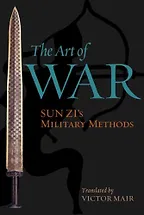
Sun Tzu is completely outside the whole Western way of looking at politics and at states. For him, war was an art and an art being practised by generals, by individual commanders. In a way it was a game and he describes how apparently weak players can outsmart strong players, how strong players can apparently misuse their strength to be baffled by weak players, how war is really determined by the mental calibre of the actual generals fighting it. In one way it was a very much more limited way of looking at war, but in another it was very much more ingenious and imaginative.
And how did he think weak players could outsmart stronger players?
Oh, you’ll have to read him. It’s not very long. The thing is, he regards war as a sort of chess, one which could be played by all kinds of players against one another. He powerfully influenced Mao Zedong and developed a way of looking at war, which was then use by Mao Zedong first against the Japanese and then against his rivals. He was basically a rebel, building up from the status of a rebel commander in a tiny outpost in the provinces until he expelled the Japanese, the nationalists and the Americans and was ruling the whole of China by the use of totally different kinds of tricks which took Western armies completely by surprise. Those ideas have been inherited by rebels and partisans throughout the whole of the last three or four decades and Sun Tzu is regarded as being a valuable guide to irregular or partisan warfare.
Can you give me an example of one of the tricks Sun Tzu suggests using?
The main thing he said was that if you are weak you must give the appearance of being strong and if you are strong you must give the appearance of being weak. You persuade people you are weak and are going to be a pushover so that the adversary attacks.
It would be quite difficult for America to pretend to be weak. There is so much public knowledge these days.
Well, let me give you an example. In the Second World War when we, the British, were very, very weak in dealing with the Germans, we used deception in order to give the impression that we and the Americans had built up an enormous army, so that when we actually landed in Normandy and were very vulnerable there, the Germans did not use their entire force to destroy us because they believed we were going to land in the Pas-de-Calais with a very much stronger force at any moment. In fact we didn’t have such a force, but the Germans held back a lot of their force, which made it possible for us to establish ourselves in Normandy as we did. That was an excellent example of Sun Tzu’s type of strategy, although we’d never heard of him then.
Were you personally involved?
I was not personally involved in that particular bit. I was down in Italy at the time. I could talk about that for a very, very long time. I was a very junior infantry officer. I landed at Salerno and we found ourselves confronted with very steep mountains, and with very, very great difficulty we slogged our way up until we reached Austria and then we stopped.
That wasn’t very long at all.
Well, it took from September 1943 to August 1945 and it seemed a very long time, I must tell you.
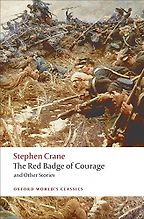
The Red Badge of Courage is a novel about the American Civil War, I think?
I chose these next three examples about the actual experience of war. This is a novel about a young soldier volunteering in the American Civil War who has no experience of war at all, has no idea whether he is going to be brave or whether he is going to be cowardly. The way in which he suddenly finds himself caught up in a battle is absolutely brilliant in its description of the battle itself and the emotions he feels, the way he reacts, the impression made on him by fear, horror, dread, exhilaration, triumph, exhaustion, hunger sweeping over him in great waves. He stumbles through these battles and emerges at the end saying, that was what it was like and I have survived. Even if one has no interest in war at all and dislikes the whole idea, it is a great novel. It is very short, incredibly vivid and I would put it on my list of the best 12 books that everybody ought to read.
Does he lose his idealism in the process?
He starts not as a grand idealist. War is like an examination. You are discovering the kind of person that you are. I had my own examination. Like the hero of this novel, I started not knowing what to expect, not knowing how I was going to behave. Was I going to be cowardly? Was I going to be heroic? Was I going to be ingenious? How was I going to stand up to it all? At the end of it I had been through a number of experiences which did show me the kind of person that I was. By the end of the war I was grown up. One of the few things that war does help one to do is to get to know oneself in depth. There are some things one discovers about oneself which are lamentable and others which are rather surprising.
Do you think of young men today, who haven’t fought in any wars, as being rather callow by comparison?
Well, they’ve been through different kinds of experiences which have matured them, but war is a maturing process and there is nothing quite like it in the world. People are trying to kill you and you discover yourself in a situation in which people really are trying to get you. It is very interesting and scary. There is nothing quite like it in civil life. Fear is a great examiner of one’s character.
The thing that I find talking to people who have fought, is that they start off very clear about what they’re fighting for, but after all the horror of it, it becomes much less straightforward.
Yes. Yes. Indeed. Much less. It’s a very complicated business and the personal experience is a very interesting test.
It’s interesting that it comes back to the personal experience, because it often starts out as a rather grandiose mission for one’s country.
It really comes down, irrespective of who the enemy is and what the cause is, to some people over there who are trying to kill you and it is your job to try to kill them. It becomes very basic to that extent. I certainly didn’t go to war in a state of high idealism. I found myself in an intensely disagreeable situation in which the war seemed to be a necessity and my taking part in it at that particular age was also a necessity. I’d have been faintly relieved if I had not had to do it but, as it was, it was a job that had to be done. I think an earlier generation that went into the First World War had greater expectations and higher ideals of the kind that I certainly didn’t have, if only because the First World War had knocked that out of people.
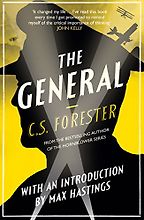
Tell me about the C S Forester book.
The General is about the experience of high command, what it is like having to take appallingly tough decisions in which the lives of hundreds of thousands of people are going to be risked. It also shows the experience of somebody who starts off with high ideals about the way a war should be fought and is then exposed to the full storm of industrial war. An officer in the British army wins his spurs in the Boer War, who therefore regards war with all the idealistic belief and heroism that had hitherto been appropriate to the conduct of war, though even in 1900 things had begun to look a little more complicated. He then finds himself in command of a battalion in 1914 at the very, very beginning of the First World War, thrown into the full holocaust of the Western Front. He shows all the qualities of courage, initiative, self-reliance and good leadership and he is promoted rapidly and ends up commanding an army corps in 1917 with hundreds of thousands of men under him. He is engaged in a kind of war for which there had been no precedent at all, a war in which casualties numbered not in hundreds or thousands but tens of thousands, where the kinds of tactics that had been useful for hundreds of years were no longer valid and were suicidal. Where everything which he’d learnt as a soldier and brought up to believe in as a gentleman ceased to make any kind of sense, and this describes the manner in which he adjusts himself to this, not very successfully. It does explain why the war on the Western Front was fought in the way that it was.
I have never read a book which describes the thing so clearly. Not the drama, tragedy and squalor of the trenches, which has been agonisingly well described, but what it was like having to put these people into action and put them through it all. This is a book that has been largely forgotten but which I very strongly recommend to anybody who wants to understand the First World War. It’s very short. C S Forester was a very considerable novelist, the author of the Hornblower series about the Napoleonic Wars and all those qualities of courage, heroism and patriotism, which a century later caused disaster.
Does he talk about how he felt afterwards? I was in the map room under Whitehall the other day, and at the time, in the Second World War, they were just trying to win but now, looking at all the pins all over the world, they seem to represent mass slaughter.
The thing is, what matters at the time is – you’ve got to win. What really matters in the front line is courage, what really matters in high command is skill, wisdom and cunning, and the pins in a map you try to move around in such a way as to achieve a result with the least possible damage to your own people. The people in the war rooms in Whitehall…remember those people there were being bombarded almost every night from the air. They are not miles behind the lines. They are in the thick of it. What they are looking at, much more than troops on the ground, was moving ships around, to keep the supply lines open and safe from submarines. That was the way in which the war could be lost, very nearly was lost. The agonising emotions they must have felt as they saw these convoys being launched across the Atlantic and falling into the grip of the submarines and getting sunk – not simply losing the lives of the men but the goods, food, ammunition that made it possible to conduct the war at all. There was the sense that this is a war that could be lost, is being lost, and are the things that we’re doing going to save us? It is not simply a game, it is existential. It’s about survival. It’s that kind of devastating responsibility on the shoulders of individuals, which one has got to bear in mind.
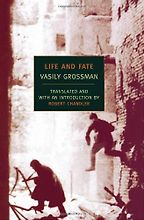
Quite a few people have chosen the Vasily Grossman book.
Yes, Life and Fate. I wanted a book about the Second World War and where that war was really fought, apart from in the Atlantic, was on the Eastern Front between the German and Russian armies. Vasily Grossman was himself involved in the battle of Stalingrad, but he was also a frontline spectator of the rest of the war. He set out to write the equivalent of Tolstoy’s War and Peace. Well, he didn’t quite succeed in doing that, but it is nonetheless an amazing and terrifying account, not simply of the battles, but of the armies fighting them. Not simply the armies, but the regimes. Of course, behind the German army was the Nazi regime, the Holocaust, not just of the Jews but the massacres taking place as the German army advanced, committing mass murder of the civil populations they overran. Not to get rid of the partisans but because they were eliminating the Jews, eliminating Ukrainians and eliminating anyone who was going to get in the way of their conquering these countries. They were joined in that by other nationalities who did their dirty work for them as well. So there is the combination of the nightmare of the mass murders, mass shootings and the nightmare of the front line.
On the other side are the Russians, fighting desperately to protect their own country, commanded by a fanatical regime, concerned not simply with defeating the Germans but with preserving a totalitarian regime and eliminating anybody who they think presents a threat to them. So, in the Russian army, a general who is fighting skilfully, courageously, bravely against appalling odds, suddenly finds himself ripped out of the front line because he is regarded as being politically unreliable and either shot or sent to a prison camp. Behind them all are these terrible camps without which the Soviet regime could never have survived. So there is total war at its most terrifying in a way which has very seldom been seen in human history before. A nightmare world in which force, violence and terror permeates not only the front lines but the very societies of the people fighting. It’s a nightmare book and a nightmare experience. Although it’s a damn great thick book and not an easy read, anybody who wants to understand what war at its most extreme can be like has got to read it.
May 3, 2011
Five Books aims to keep its book recommendations and interviews up to date. If you are the interviewee and would like to update your choice of books (or even just what you say about them) please email us at editor@fivebooks.com
Five Books interviews are expensive to produce. If you've enjoyed this interview, please support us by donating a small amount.
Michael Howard
Sir Michael Eliot Howard (1922-2019) was a military historian. He served as Regius Professor of Modern History at Oxford University and Robert A Lovett Professor of Military and Naval History at Yale University. He fought in the Italian Campaign in the Second World War, was twice wounded and won a Military Cross for his bravery at Salerno.
Sir Michael Eliot Howard (1922-2019) was a military historian. He served as Regius Professor of Modern History at Oxford University and Robert A Lovett Professor of Military and Naval History at Yale University. He fought in the Italian Campaign in the Second World War, was twice wounded and won a Military Cross for his bravery at Salerno.