The best books on Chaos in the 17th-Century Mediterranean
recommended by Molly Greene
Princeton professor of Hellenic studies says the 17th-century Mediterranean is fascinating because it was a time when nobody was in charge. And yet, it was possible to have "order without law"
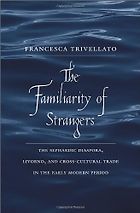
Tell me about your first choice, The Familiarity of Strangers: The Sephardic Diaspora, Livorno, and Cross-Cultural Trade in the Early Modern Period by Francesca Trivellato.
Francesca’s book is a very recent book and I find it inspirational because her Sephardic merchants show that cross-cultural trade co-existed quite easily with the religious prejudices of the time. I think there is often this idea that if people trade with each other they become friends and if societies are less cosmopolitan then there are automatically higher levels of religious tolerance. She shows that both can exist.
Francesca is concentrating in particular on the Sephardic Jews of Livorno who are operating in a very Catholic environment, so we are talking about tension between Jewish traders and let’s say Catholic authorities in Genoa. I found evidence of lots of that in my book as well. In the Mediterranean people have been trading with each other for ever and yet a certain level of enmity remains in place. Christians and Muslims are trading across this Christian-Muslim boundary and, despite all the trading, no one challenges the essential rightness of this ideological vision of the world. They are trading out of convenience but that doesn’t change how they view each other.
I also examine the complexities of enmity. Supposedly you have a whole world divided between Muslims and Christians but, in fact, there are divides within Christianity as well. For example, with the corsairs in Malta they hate the Orthodox Christians just as much as the Muslims. And the Greeks, although they have many trading ties with Muslims back in the eastern Mediterranean, they try and downplay these as part of their attempt to receive compensation for their merchandise in Malta.
I thought that Francesca was good at looking at the ability of people ordering their business trade through language, customary norms and social networks more than the power of state and legal institutions, and this is something that interests me a lot. I keep writing about the 17th-century Mediterranean because it is a time when nobody was in charge. For various reasons the powers that had been patrolling the sea in the 16th century aren’t there any more. So there is this situation of how people do business in a fairly chaotic environment where no state is in a position to really exercise its sovereignty.
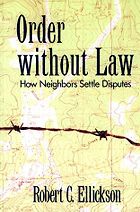
This theory leads on well to Robert Ellickson’s book, Order Without Law: How Neighbors Settle Disputes.
That is precisely why I was drawn to this book. Ellickson is interested in how people navigate and solve their problems from the bottom up. He talks about the requirements of neighbourliness in terms of what I do if my cattle have strayed on to your land, and how the people in the area he is writing about are very committed to this idea and those who are not are shunned in various ways and made the subject of gossip. So people set up their own community and he says that people do it not in the shadow of the law but really in ignorance of, or indifference to, the law.
What is interesting about the book is that it is set in the modern day in a county in California. Supposedly one of the salient divides between the developed and developing world is the rule of law in the developed world and how people know their rights and this creates order, and yet Ellickson shows that the people in this county have no idea of the laws but it doesn’t matter because they work it out for themselves. In that way, he ties in very well with the first book where Trivellato is saying that, actually, the rise of the modern state and legal tribunals are not so central to the story. So it is getting away from that state-centric focus which has particular reverberations when it comes to the Muslim world.
Despite the differences in time and geography, there are also definite parallels between Ellickson’s book and mine. At the centre of my book there are these pirates but what really interests me are the Greek merchants who are in this difficult position. They need to get from point A to point B to sell their goods but it is a chaotic sea. So how do they manage it and solve their problems like trying to retrieve their goods and pay the right amount of customs dues? I am interested in looking at it from the businessman’s point of view. In the same way Robert Ellickson is looking at things from the point of view of the cattlemen. And Ellickson talks about how order often arises spontaneously.
That also appeals to me because there’s a tendency when people talk about the Muslim world, even today and at the time of the Ottoman Empire, to describe this iron hand of the state which was there up until the end of the 16th century, and then when the Sultan died everything is seen as going to hell in the 17th and 18th centuries.
And you still have echoes of that today when people discuss the Middle East. There is this idea that unless it is ruled with an iron hand the region will spin out of control. And Ellickson takes a focus that is non state-centric and I think I am always drawn to books that do not have the state at the centre. So his book is very much about that. Now, in important ways my book diverges from Ellickson’s. As I mentioned, he looks at how people operate out of an ignorance of the law. But in my study, and I find this fascinating, merchants way back in the 17th and 18th century were aware of the law and did go to court. You have women travelling all the way from islands in the Aegean to petition the Ottoman Sultan. People try Muslim courts and Christians courts in their search for justice. So back in the Ottoman Empire people seemed to be very savvy about their legal rights and we don’t really know yet why that was and how they had this knowledge.
Your next book is about some unknown pirates. This is Catherine Wendy Bracewell’s work, The Uskoks of Senj: Piracy, Banditry and Holy War in the Sixteenth-Century Adriatic.
Yes, Senj is an island and Uskoks is the name of this particular group of pirates. You can think of this book as a treatment of a group that is like another group which has been studied much more in the Mediterranean, the Barbary corsairs, as the pirates of North Africa were known. But it is a far more sophisticated treatment of a group that defines itself in terms of Muslim-Christian antagonism than you normally get. The Uskoks are a Christian group and the Barbary corsairs were Muslims.
Often when you get these pirates who define themselves in religious terms people say, well, they were just opportunistic bandits using religion, or, no, they were filled with religious fervour. She shows how they were both. They were on this little island and they needed to raid in order to sustain themselves, but they justified everything they did in terms of religion and really believed that they were Christian warriors. They also gained currency with the outside world through that ethos.
That is not that dissimilar to what the Knights of St John did when they were on Rhodes before they went to Malta in the early 16th century. There they are sitting in Rhodes, a small island surrounded by various Muslim principalities. They have to trade with the Muslims in order to get enough wheat for the island. But, in order to keep the money pouring in from Europe, they present themselves as carrying on the holy crusade against Islam. So with these groups it is not a question of ‘either or’ and I liked that about the book. She shows how their mentality works.
As I do with my books, she takes apart this overly simple idea of Muslim versus Christian enmity. She shows that these are Catholic pirates but the Venetians hate them as much as the Ottomans do. She also shows how people along the border, including the Uskoks and Ottoman commanders right across the border in the Balkans share a common culture despite their religions, and how that puts them at odds with the metropolitan centres. The Uskoks and the Ottomans capture each other. There is a lot of ransoming going on – they capture each other and sell each other back to the other side to make some money.
Support Five Books
Five Books interviews are expensive to produce. If you're enjoying this interview, please support us by donating a small amount.
The Venetians and the Ottomans and Hapsburgs say this is terrible, what are you doing; if you capture someone from the other side, kill them. This is a war. On both sides they send letters back saying, yes of course, and then carry on as before. This is the border mentality of people who need to make money, ignoring the metropolitan centres! So the book is very much a study of borderlands and their complicated relationship with the metropolitan centre. She shows that thinking about the Mediterranean in terms of Christianity versus Islam is too simplistic.
Let’s move on to another religious group – The Port Jews of Habsburg Trieste: Absolutist Politics and Enlightenment Culture by Lois C Dubin.
I like this book because I am drawn to groups that are slightly off-centre. I study a group that might or might not be considered European – the Greeks. They are in a border category all by themselves. They are Christians, but are they part of European history? I myself am a historian who works in the interstices; I study a Muslim Empire but I work on a Christian people. So I am drawn to these Jews of Trieste who are not the Jews of Berlin and Paris who are so much at the centre of modern Jewish history. These are Jews that don’t really fit into our story of 18th-century Jews. They are Jews on the border.
Dubin argues that the Jewish Enlightenment in Trieste was a less radical and revolutionary movement than in northern Europe because this group was very cosmopolitan, like the Greeks. Traditionally, they enjoyed a greater symbiosis with the surrounding culture. They weren’t as isolated as some other Jewish groups and were much more comfortable with tradition. They could also accommodate enlightenment but it didn’t necessarily imply this great break-away with tradition. I am interested in people who fit in, people who want to get along, rather than in revolutionaries and ideologues, so I am drawn to this particular community, a people who sit back and assess the world and work out how they can fit into the cracks and survive.
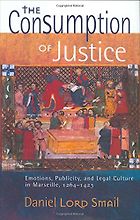
Your final book is The Consumption of Justice: Emotions, Publicity and Legal Culture in Marseille, 1264-1423 by Daniel Smail.
There is a practical reason I chose this book. I came to the study of the court in Malta because the records are so wonderful, but I am not trained as a western historian and legal records in the west are very different from those of the Ottoman Empire. So Dan Smail’s book was a tremendous help in figuring out the court system. In fact, Francesca Trivellato pointed out to me that there are few studies of actual court cases in pre-modern European history. Legal historians tend to operate in a zone separate from practice. Just reading his book was very helpful to me in trying to figure out what was going on in Malta with these court cases.
Get the weekly Five Books newsletter
I also very much appreciate his approach which is the consumer’s view of the law. Again, history from the bottom up. He asks why people went to court and he comes up with a surprising answer. He says that it was not so much for the actual compensation, which they often didn’t get, but rather for the emotional satisfaction. Now, I don’t think that applies to my plaintiffs in Malta. I still don’t have the answers for why my Greek merchants bothered to do what they did in Malta, because they were so often unsuccessful, but I appreciate that he asked the question.
And what were your Greek merchants doing in Malta?
They were trying to get compensation for goods that had been taken from them by raids conducted under the flag of Malta. At the centre of the book is a very simple desire, the desire on the part of merchants and sea captains to recover their goods. That is all they want and they will do what it takes to achieve it. So they go to the tribunal in Malta but, for various reasons, the tribunal is not motivated to see justice done. Nevertheless, they try and bend it to their will. Just as Dan Smail talks about why people come to court in Marseilles and why, even though they are unsuccessful, they continue to come. So that was a very inspirational book for me.
October 12, 2010
Five Books aims to keep its book recommendations and interviews up to date. If you are the interviewee and would like to update your choice of books (or even just what you say about them) please email us at editor@fivebooks.com
Professor Molly Greene is affiliated to both the Princeton History Department and the Program in Hellenic Studies. Her first book, A Shared World: Christians and Muslims in the Early Modern Mediterranean, examines the transition from Venetian to Ottoman rule on the island of Crete, which the Ottomans conquered in 1669. Her latest book is Catholic Corsairs and Greek Merchants: A Maritime History of the Mediterranean.
Professor Molly Greene is affiliated to both the Princeton History Department and the Program in Hellenic Studies. Her first book, A Shared World: Christians and Muslims in the Early Modern Mediterranean, examines the transition from Venetian to Ottoman rule on the island of Crete, which the Ottomans conquered in 1669. Her latest book is Catholic Corsairs and Greek Merchants: A Maritime History of the Mediterranean.