The investigative journalist says when he started out reporting PR copy was a real rarity. If you were writing about crime, you’d call the police station and speak to an officer.
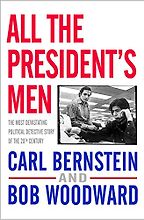
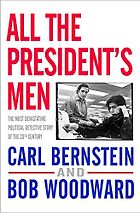
Thanks for speaking to us. I thought we’d dive in by discussing your first choice, All the President’s Men. Was this your inspiration? Isn’t that the dream: bringing down the government, exposing corruption?
[Laughs] Well I guess it is. Initially I didn’t mean to be a journalist. I planned to go to Latin America and become a revolutionary when I finished university. Not very realistic, I realise now, but I was quite serious about it. But Watergate was just hitting the headlines around then and it made me realise that I could “bring down the government” without having to move to Mexico City or learn Spanish.
What is so good about All the President’s Men is that most books about journalists are full of gun fights and car chases – but that’s just not what the job involves. Woodward and Bernstein simply wrote a great, really detailed account of the work that went into the case. I still use sections from it as case studies when I give lectures.
Certainly when I read it, it was the first time I realised how little they initially understood what they had stumbled upon – I’ve heard one investigative journalist, I think it was David Leigh, describing the beginnings of an investigation as being like wandering around in the dark with a knife.
Yes, that sounds like something he might say. Many investigations start like that – you’ll have one or two leads, and then you need your imagination to develop theories about what the truth might be. So you are in the dark about what the truth is.
You’ve had some pretty huge investigations in your time – most recently the News of the World hacking scandal. Have you ever felt really out of your depth? If you’re not sure where you’re going with the investigation you must have to be good at thinking on your feet.
You can feel out of your depth in more ways than one. Firstly you can feel out of your depth in terms of understanding – by that I mean in very complex and technical investigations like the ‘Tax Gap’ investigation that I worked on with The Guardian earlier this year. Or it might be simply because you don’t know where the investigation’s headed, and what exactly you want to find out.
Also, you can feel out of your depth when you find yourself in a risky situation. When I was working on my book Dark Heart – investigating poverty, working with child prostitutes, trying to get into crack houses – you do get into slightly dangerous situations. I’d be dealing with some big guys, who I’d definitely come off worse than in a fight.
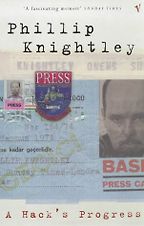
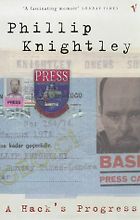
Philip Knightley’s book, A Hack’s Progress, is another investigative reporter’s memoirs, is that right? He was a pretty major player, working on the Profumo affair, and the thalidomide case.
Yes. Knightley is simply an amazing journalist. He was on the Insight investigation team at the Sunday Times while it was under the editorship of Harry Evans. And, as with All the President’s Men, it’s a book that has two different kinds of appeal – for a journalist, it’s full of technical insight about what works, but beyond that, for any reader, it’s just full of great tales.
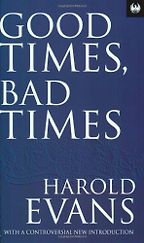
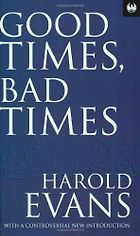
And Harry Evans is the author of your third recommendation – Good Times, Bad Times – which recounts the transition when Rupert Murdoch bought The Times and the Sunday Times in 1981.
Well, yes. But it covers a wider period than that. Harry Evans was a really wonderful editor – and a fantastic journalist. If you asked British journalists today who they think is the best journalist of all time I imagine a large proportion would say Harry Evans, straight off. Under his leadership, the Sunday Times was well ahead of the pack. And you couldn’t tell what its politics were. It’s a different paper now – I wouldn’t have it in my house these days.
The reason he was so good was that he understood reporting, which many editors don’t, and he really loved reporting, which many editors don’t. He would never back away from a fight.
Do you mean legal challenges?
Yes, but more than that. Take the Philby case, for example. They took on MI6. Many editors would back away from that.
When I first started working at The Guardian it suffered from a very weak leadership. I remember they would have stories and simply not print them. I did one investigation that wasn’t published, so I simply handed it to a politician who read out long passages in the Commons. As soon as that happened, and it all kicked off, The Guardian jumped on it and printed it without a problem. It’s not like that at all now.
Running the tax avoidance investigation must have taken some guts. Taking on the big guns.
Yes, The Guardian were brave with that. And all the more so because they had just finished a very lengthy and rather scary legal battle with Tesco over tax-dodging allegations. It must have been tempting to have backed away from printing this investigation, but Alan [Rusbridger, editor of The Guardian] is very good. It was a bold move, too, in that long articles about corporate tax aren’t going to sell millions of copies. But doing investigations like these is a very important job for newspapers. One of the reactions we had was from journalists on other papers saying that this was the kind of work they had come into newspapers to do and wishing that their newsrooms would let them.
Have you ever had problems with editorial interference – from an editor, or even an owner?
Not political interference. I’ve had weak editors pulling stories out of fear of one kind or another and you’ll get very commercially minded editors who interfere in the choice of stories and in the way that they’re written in order to sell the paper. There’s a lot of that in Fleet Street.
Even when writing Flat Earth News? That must have created quite a kerfuffle – turning on your own kind, so to speak.
Well, not before it was published. I was still being paid a freelancer’s retainer from The Guardian while I was writing the book, and that didn’t stop me writing quite a detailed chapter on some of the practices of its sister paper, The Observer.
Support Five Books
Five Books interviews are expensive to produce. If you're enjoying this interview, please support us by donating a small amount.
After it was published some people were quite upset with me – some named individuals who hadn’t come out of it very well, and some Fleet Street dinosaurs who simply didn’t want me writing about what goes on in the newsroom. But I also had a lot of feedback from journalists from all over this country – and then from all over the developed world, really masses of them – saying, effectively, “Thank God you wrote that, because it’s the same where I work”.
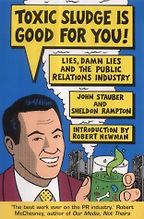
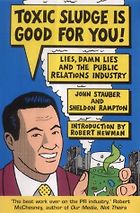
One of the issues you touch upon in the book is the prevalence of PR copy which worms its way into the newspapers. Stauber and Rampton discuss this in their book Toxic Sludge is Good For You, another of your recommendations.
When I started out in journalism, 30-odd years ago, PR copy was a real rarity. If you were writing about crime, you’d call the police station and speak to an officer. If you were writing about healthcare you’d probably speak to a doctor. But these days it’s all fenced off, with press officers and press offices, and all your potential sources have been warned not to speak to the filthy hacks.
This must be difficult from an investigative point of view – having to speak with press officers who don’t necessarily know the specifics of a particular issue, or are unwilling to answer detailed questions.
Yes. But what’s really alarming is that often a good press officer can pick and choose what is printed about their organisation. They send out press releases, hold a press conference and what gets said there is what gets printed. The point is that it should be journalists and editors who make the decisions about what gets published, not the people paid to promote companies or government departments.
I’ve got statistics in my book Flat Earth News of the number of press releases that make their way almost unedited into newspaper pages. And journalists don’t have the time to dig into these stories in the way that they used to.
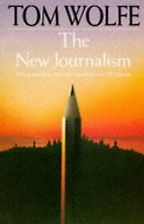
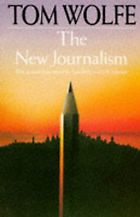
And finally, I’m quite intrigued by your final choice – The New Journalism, edited by Tom Wolfe. Now this was a movement in the 1960s and 70s – a brand of creative non-fiction. What made you pick this?
When this was first published, news writing was written in a very strict, often quite staid style. New Journalism used a range of literary techniques commonplace in fiction, for example the use of dialogue or first-hand narrative. At that time they were virtually unheard of in news writing.
They were writers like Tom Wolfe, Truman Capote… Tom Wolfe wrote an essay laying out this new type of writing at the beginning of his anthology, and the writing he included in the book embodied the style of the movement.
Get the weekly Five Books newsletter
I don’t know if you’ve read the Tom Wolfe book, but Nicholas Tomalin’s essay “Zap, zap, the general goes killing Viet Cong” is really fantastic. It describes an American general in a helicopter, shouting and smoking and shooting at the enemy. It’s as though you’re right there with him, and this one scene tells you so much about the politics behind the wider war.
And do you use these techniques yourself – purposefully?
I used to make a real effort to, about 10 years ago. But now I’m more relaxed. You have to do a huge amount of research to be able to justify writing like this. It puts great emphasis on truthfulness.
Do you mean emphasis on actually being there, part of the action as it happens?
No – that’s Gonzo Journalism – the style Hunter S Thompson was famous for – he would be dressed as a Hell’s Angel and in the crowd, part of the group starting the riot. New Journalism would involve arriving just after the riot was over, and speaking to members of the crowd, the ambulance crew, all the witnesses – by doing so much research you can recreate the scene, and get inside the head of the people who were involved.
Five Books aims to keep its book recommendations and interviews up to date. If you are the interviewee and would like to update your choice of books (or even just what you say about them) please email us at editor@fivebooks.com
Investigative journalist Nick Davies says when he started out reporting PR copy was a real rarity. If you were writing about crime, you’d call the police station and speak to an officer. If you were writing about healthcare you’d probably speak to a doctor. ‘But these days it’s all fenced off, with press officers and press offices, and all your potential sources have been warned not to speak to the filthy hacks.’ He chooses five books on investigative journalism including, of course, All The President’s Men.
Investigative journalist Nick Davies says when he started out reporting PR copy was a real rarity. If you were writing about crime, you’d call the police station and speak to an officer. If you were writing about healthcare you’d probably speak to a doctor. ‘But these days it’s all fenced off, with press officers and press offices, and all your potential sources have been warned not to speak to the filthy hacks.’ He chooses five books on investigative journalism including, of course, All The President’s Men.