The ODI research fellow discusses gender equality in the developing world and says that the authority to insist on safe sex and access to medical care is vital to establishing the most basic forms of gender equality
Before we talk about the books, can you tell me about the Millennium Development Goal related to gender equality?
MDG 3 is focused on womens’ and girls’ empowerment. It looks in particular at gender parity in education, especially at the primary and secondary school levels; the share of women in wage employment, and women’s political representation, specifically the proportion of seats held by women in national legislatures.
However, my own work and that of ODI colleagues has highlighted the fact that it is actually not enough just to look at Goal 3 from a gender perspective. Rather it is critical to apply a gender lens to all of the MDG goals so as to strengthen the likelihood of their achievement.
So we need to sharpen the concentration of everyone’s energies on the way that gender intersects with income poverty, for example, or its key role in tackling the health-related goals – Goal 4 on child mortality, Goal 5 on maternal mortality and Goal 6, which is about the so-called ‘killer diseases’ like HIV, TB and malaria. I think this overarching gender perspective is really critical for the discussions at the summit in New York around the ten-year anniversary of the MDGs and the big push before the end point in 2015.
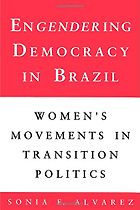
Let’s start with your first book,Engendering Democracy in Brazil: Women’s Movements in Transition Politics by Sonia Alvarez.
This is one of the earlier books that really shaped my thinking about the importance of having a dual-pronged strategy to promote women’s empowerment and reduce gender inequalities. It underscores the importance of both working through women’s movements which are outside the state and also encouraging and supporting women to work within the state and within political parties in order to achieve real change for women – and men.
What is so fascinating about this book by Sonia Alvarez is that it is an analysis of what happened during one of the most repressive political regimes in Latin America in the 60s, 70s and 80s but a period where you have the paradox of the emergence of a very progressive women’s movement that mobilised tens of thousands of women and really transformed the agenda of all the major political parties.
How did they manage it during the military regime?
The critical thing was the disappointment that many women felt about the authoritarian regime and its promises of modernisation. Even though the regime had been welcomed by many conservative women in the beginning they soon realised that women’s demands for better social services, such as adequate schools, health centres and transport, were not being met. While there was a lot of lip service given to supporting women in their roles as mothers, in reality they were not given the resources they needed. So one factor was the exposure of the hypocrisies of the military regime.
Another key contributor was the political activists who had gone into exile in Europe and who returned in the late 1970s radicalised by having joined women’s movements in Western Europe. These women had a very profound effect on mobilising women to take action against the authoritarian regime. One important example is the women who came back from Italy. They were able to make a convincing that it was possible to have a feminist movement in a predominately Catholic culture, because previously there had been quite a lot of scepticism about the extent to which Western feminism could be translated to and adapted within an environment like Brazil.
And what kind of impact has that had for women living in Brazil today?
The women’s movement in Brazil has contributed to the development of much more progressive legislation and policy frameworks on gender equality – eg, around employment rights, domestic violence, childcare. There has also been the development of social policies and programmes that are trying to reach the poorest women. You might have heard about Bolsa Família, which is a very large cash transfer programme that is reaching about 16 million people in Brazil. These transfers are targeted primarily at women out of recognition of the care work responsibilities, towards children, the sick, disabled and elderly, that they have, and evaluations have shown that they have contributed significantly to women’s empowerment within the household. So I think Brazil is a good example of where women have fought successfully to ensure that the state is supporting women in their culturally subscribed roles and responsibilities, even if transformations in gender power relations between men and women has been slower. And at the state level there has been improved representation of women both within political parties and also in governmental structures such as the bureaucracy and legislation.
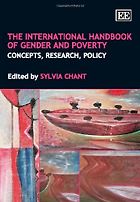
Your next book has a more global perspective of the issue – International Handbook of Gender and Poverty: Concepts, Research, Policy.
Yes, what is really compelling about this book is its sheer breadth – one hundred plus articles bringing together voices from both Northern and Southern analysts, feminists and non-feminists, who are looking at a whole range of different aspects. For example, there are discussions of gendered experiences of poverty with regard to migration, inheritance, health, sexuality and work. And also I think the book brings a real conceptual richness to thinking about gender experiences of poverty and vulnerability. One example is a focus on the concept of time poverty and the way that women shoulder disproportionate burdens of time poverty. And this tends to be heightened for some women, eg, indigenous women, in particular. For example, on average, women in Guatemala who work outside the home spend 32 hours a week on house and care work whereas men spend less than 15. This is a fairly typical pattern seen all around the world.
In terms of other conceptual approaches, there is a very interesting article on the Organisation for Economic Co-operation and Development’s new Social Institution and Gender Index (SIGI) which is trying to look much more systematically at the way that cultural and social practices undermine gender equality. So they are looking at institutions such as discriminatory family codes, son bias – the preference in some cultures for having a son which may lead to practices of female feticide in some parts of the world, particularly in India and China – or gender-based violence. This is a very exciting new initiative that the OECD has started as it aims to highlight the need to better understand deeply engrained social and cultural norms and practices held by men, women, boys and girls in order to promote gender equality.
And, apart from case studies, does it offer any solutions?
Yes, that is one of the reasons I really like the book. It has a rich array of possible solutions that it discusses. It looks, for example, at the way that social protection can play a very critical role in reducing gendered experiences of poverty and vulnerability. So, for example, cash transfers in Lesotho are proving to be a way to ease gender conflicts around resources in the household. The book also looks at microfinance strategies, gender responsive budgeting and the extent to which budgets are allocated to ensure adequate implementation of gender related laws and policies. In addition, there is a lot of discussion around decentralisation – as you bring local governments and power decision-making structures closer to people, to what extent are women able to be represented at that level and challenge the often informal old boys networks that tend to operate? And finally, there are also some interesting examples of programme approaches which seek to challenge typical norms and practices of masculinity. So, in short, there is a really rich cross-section of promising practices from different parts of the world.
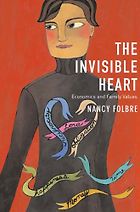
Tell me about your next choice, Nancy Folbre’s The Invisible Heart: Economics and Family Values.
This is a really entertaining and very easy read which I liked because it provides such an excellent picture of why we need to take the concept of the ‘care economy’ seriously. Nancy Folbre is a feminist economist and she has actually focused much of her work on the US, but I think her analysis is relevant to anyone looking at this issue. She argues that we need to focus much more on the values of love, reciprocity and family obligations and not only refer to the ‘invisible hand’ of the market but also look at the ‘invisible heart’ as well.
She highlights that we need to be very careful about, as she puts it, ‘letting men off the hook’ from taking on their fair share of the care burden, whether that be for the children, or the elderly or the sick. By separating care from power we risk reducing the overall support given to care roles and work. In particular, people in the care sector tend to be poorly remunerated, eg, childcare providers, and the issue is then not given that much prominence or visibility in most political agendas. So she sees this linkage between care and power as critical, and argues that we need to confront the real costs of care and not just assume that it is magically carried out by women behind closed doors in the household. We also need to distribute care work more equitably so that men take on more responsibilities. She wants policies not only to support women’s caring roles but also for men to take this whole issue on much more actively.
And also she makes a very compelling argument about the weaknesses of what she calls the purchased substitutes for care. So Folbre says that market-based care solutions such as childcare facilities or old age homes can be helpful and have their role but in many ways we need to think about care as more than a commodity. What is critical is the personal face-to-face and emotionally rich relationships that come with a lot of care.
She sounds like she wants to keep care within the family, so what is her solution for getting men involved as well, rather than keeping women at home to do all that?
She argues that the state has to provide much greater support for the family so that it is possible, and that we need to have much more progressive family leave options in the workplace that will not then penalise a woman or a man’s career. She looks to Western Europe as a possible model, so that you can balance what is unique about care with economic pursuits as the same time.
Your next book is a very interesting one about Confucianism and women. This is, Women and Confucian Cultures in Premodern China, Japan and Korea.
Contributing authors in this book played a very influential role for me. I did my PhD dissertation on the rise of the Korean Women’s Movement after the fall of the dictatorship there in 1998 and the rapid changes that South Korea, a country significantly shaped by Confucianism, has undergone in terms of gender roles in the last two decades. What I found particularly interesting about the arguments in this book is that it really takes away the common assumption that culture is something that is static. It paints a very dynamic picture about culture and gendered roles even in outwardly highly patriarchal societies.
For example, in Korea, which I know better than the other two cases, several of the articles in the book really highlight that during the Koryo Dynasty, which was from the 900s to the late 1300s, women actually had very strong political, social and economic freedoms. The Confucian Choson Dynasty (which was set up in 1392 and it went right through until 1910) saw progressive restrictions put on women’s mobility and the extent in which they could participate in the public sphere. Women became very much segregated within the home, but despite these critical changes there was still scope for agency.
However, there is a very interesting case made that with Confucianism what was critical was the nexus between education and political power. What you saw in Korea was women capitalising on this cultural space and becoming much more active participants in writing. King Sejong of Korea actually created a new script which was phonetic and this allowed women who had had less educational opportunities to men to start engaging in writing. So in this context women were not only engaging with the dominant male literary tradition but also with a new female literary tradition, and thereby defending a space for women’s perspectives.
September 24, 2010
Five Books aims to keep its book recommendations and interviews up to date. If you are the interviewee and would like to update your choice of books (or even just what you say about them) please email us at [email protected]
Five Books interviews are expensive to produce. If you've enjoyed this interview, please support us by donating a small amount.
Nicola Jones
Dr Nicola Jones is a research fellow in the Social Development Programme at the Overseas Development Institute (ODI) where she co-ordinates the Institute’s gender theme. Her research focuses on poverty reduction and social policies (especially social protection) in the developing world, and their impact on gender and generational relations. Publications include Gender and the Political Opportunities of Democratisation in South Korea (Palgrave, 2006) and a forthcoming book with A Sumner, Child Poverty, Evidence and Policy: Mainstreaming Children in International Development (Policy Press).
Dr Nicola Jones is a research fellow in the Social Development Programme at the Overseas Development Institute (ODI) where she co-ordinates the Institute’s gender theme. Her research focuses on poverty reduction and social policies (especially social protection) in the developing world, and their impact on gender and generational relations. Publications include Gender and the Political Opportunities of Democratisation in South Korea (Palgrave, 2006) and a forthcoming book with A Sumner, Child Poverty, Evidence and Policy: Mainstreaming Children in International Development (Policy Press).