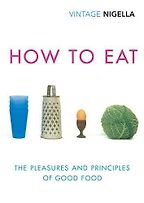
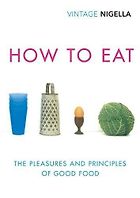
So your first choice is Nigella Lawson’s How to Eat. This was, I believe, her first book and the one that really launched her career?
Yes it was. If I could keep only one cookbook, this would be it. How to Eat suits the way I cook. It is as if Nigella is sitting on a stool next to me in the kitchen as I’m cooking. It’s almost like she’s chatting to me. There’s an intelligence to the way she writes and she expects a certain intelligence of her readers as well. Her recipes don’t patronise. There’s nothing reverential or sombre about the food she writes about, or the way she writes about it.
She mentioned at a talk in New York recently that when one of her recipes calls for two carrots that’s normally because that’s what she happened to have in her refrigerator. It’s really up to you if you want to put in one carrot or three…
There is a school of thought that recipes are set in stone and that you have to follow them word for word. The lovely thing about Nigella’s writing is that her recipes do work in spirit as well as in practice. You can do exactly that, you can think, ‘Well actually I’ve got three carrots, I’ll just put three in.’
“My recipes tend to be very chatty and informal, and, well, they are a bit vague sometimes”
She is always very generous, and it’s quite clearly written by someone who adores food. With every page, you know she loves this stuff, and she wants you to love it too. It’s a very, very special book for me. My own copy is falling apart.
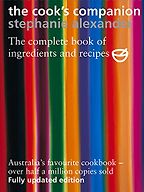
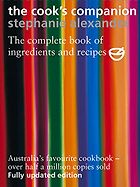
Your next choice, The Cook’s Companion, is by Stephanie Alexander – one of Australia’s most famous chefs. What can you tell me about this book?
This book is too big. It’s the heaviest book in my collection. But for all its sins of weight, it has a very clever balance between information and inspiration. So, for instance, if I turn to ‘peaches’ or ‘pork’, it gives enough background for me to know what I’m doing before I start on the recipes. It’s not a heavy read. Stephanie is obviously a very experienced cook: She’s been cooking in restaurants for pretty much all of her life. But she wears that knowledge and experience quite lightly, she doesn’t hit you over the head with it. And I like the way she cooks; it’s quite robust cooking. I tend to turn to her when I come across something that I want to know a bit more about. I wonder, ‘What does Stephanie say?’ She’s very good on ingredients, and because she’s had years and years of experience, it’s very, very first hand. I find that invaluable, those years of knowledge.
The Amazon reviews do seem to absolutely rave about it: ‘The greatest cookbook every published’; ‘My cooking bible’, etc. But is it more ingredients rather than recipes?
It is a bible. And no, there are a lot of recipes in there. They vary from the basic classics, some very simple things, and then she’s got her recipes from her restaurants as well. It’s a colossal work. It must have taken her years.
Is it very Australian? I know there’s kangaroo in there.
There is certainly an Australian slant. If you struggle you can probably get kangaroo here in London, but I’m not sure I want to. Apparently it’s very lean…
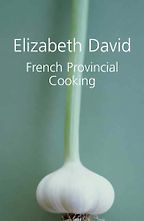
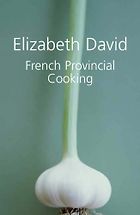
Your next choice is Elizabeth David’s French Provincial Cooking. Food writers always seem to love her, but for the rest of us is this more a work of literature than a practical everyday cookbook?
It is a beautiful read. I find the recipes intensely inspiring. But I don’t follow them word for word. One of the things that very few people dare to mention about Elizabeth David is that some of her recipes don’t work. It’s heresy to say so, but they don’t. It’s the spirit of her recipes, and the way in which they’re written that’s inspiring. I find her very grounding. When you read chef’s recipes, and you suddenly think, ‘It’s all too fancy. I want to go back to basic good cooking!’ then I pick up French Provincial Cooking. Yes, there are complicated pâtés and terrines in there. But many of the recipes are quite quick – you can knock up one of her chicken sautés or a little pork au pruneaux very quickly. I think because of her descriptions and the way she writes, sometimes her recipes seem more complex than they are. Another thing I like about this book is the fact that it doesn’t date. A lot of books written in the 1950s, 1960s and 1970s, when you look at them, they’re almost caricatures — you find it difficult not to laugh. Whereas this book, it’s as relevant today as it was then. She was lucky – she got to that classic stuff before anybody else did…
And what’s your favourite recipe in French Provincial Cooking?
I think the poulet à l’estragon. I use that a lot. It’s a very simple chicken dish with butter and tarragon. Elizabeth David’s recipes give you a sense of place: I feel as if I’m in France with her. For somebody who was so bad-tempered and snarly, that she should be able to write so beautifully, it’s amazing.
You knew her?
I didn’t know her, but I had the odd communication with her. She was a regular customer in a shop I once worked in. She was quite bad-tempered, but she wrote magically.
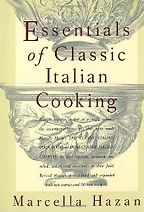
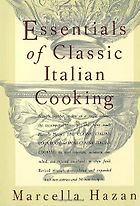
Now on to Marcella Hazan, Essentials of Classic Italian Cooking, which is hugely popular in the US. She was Italian, but married an American and learned to cook after moving to New York.
I like this book for exactly the opposite reasons that I like Elizabeth David. It’s not beautiful writing; I don’t read her for information; I don’t read her for a sense of place. I read Marcella Hazan purely for the way she writes her recipes. I think she’s a little humourless, and the tone is quite matriarchal. But there is no finer recipe writer. Her recipes are concise, they’re clear, they’re unfussy and she never leaves me in any doubt about what I’m supposed to be doing. I would have thought this is the perfect book for somebody who actually doesn’t know how to cook. She never patronises you, she never assumes you know anything much about practical cooking, and she guides you effortlessly through a recipe. And although there’s a strictness there that I bridle against, it’s an absolute gem of perfect recipe writing.
Get the weekly Five Books newsletter
And is it authentic Italian, or an Americanised version?
I think it’s quite authentic. She has spent a lot of time in America, an awful lot. But I feel it’s authentic, and certainly I know Italians who give her the thumbs-up and say it’s authentic.
So do you use it as model when you write your own recipes?
Well, actually no, because my recipes tend to be very chatty and informal, and my recipes, well, they are a bit vague sometimes, whereas Marcella’s are anything but.
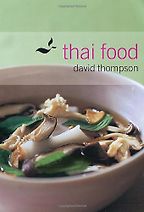
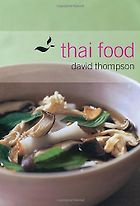
Lastly, you’ve chosen David Thompson’s Thai Food. He’s Australian as well.
Yes he is, though I think of him as being Thai. He has spent so much of his life in Thailand, and his partner is Thai, and he has cooked there for many, many years. What I love about this book is the way it is so uncompromising. It’s classic Thai cooking. It’s quite grand cooking, much of it: These are recipes you would probably do for a slightly special occasion. There isn’t much in there for someone who wants to throw something together when they come home. It’s ‘I’m cooking today’ type cooking. There’s no watering down of the traditional recipes for the sake of Mr and Mrs M who can’t get such-and-such an ingredient; there’s no, ‘Well, I won’t put that ingredient in because I can’t get it in my local Safeway.’ I think it will end up being an important historical record of Thai cooking.
And when do you find yourself using these recipes?
I find myself making these recipes when I want a breath of fresh air. They’re so different from everything else we cook here, because of the lemongrass, the chillies, the lime leaves, the ginger, the coriander and all the stuff that gets your heart racing. These Thai ingredients are all very stimulating, and they have a freshness to them. It’s very different to the comforting, cosy cooking that we do so much of here in England. It’s certainly not a book I turn to for a quick fix. But it’s a total blast of fresh air, and that’s why I do it, because I feel I need that.
Five Books aims to keep its book recommendations and interviews up to date. If you are the interviewee and would like to update your choice of books (or even just what you say about them) please email us at editor@fivebooks.com
Five Books interviews are expensive to produce. If you've enjoyed this interview, please support us by donating a small amount.